A hybrid sauna is one set up to be heated by both a wood-burning heater and an electric heater — either with both installed, or designed so you can use whichever suits the occasion. The appeal is flexibility: the traditional fire and independence from electricity when you want them, and the convenience of a switch-on electric heater when you don't. The trade-offs are the extra cost and complexity of accommodating two heaters, and the fact that each still carries its own requirements — a flue and combustion air for wood, an electrical supply for electric. A hybrid suits people who genuinely want both experiences and will use each; for most, a single well-chosen heater is simpler.
Wood or electric? For most sauna owners it’s an either/or decision — but a hybrid sauna offers a third path: both. Set up to take a wood-burning and an electric heater, a hybrid gives you the traditional fire when you want it and the switch-on convenience of electric when you don’t. It’s a flexible answer — at the cost of some extra complexity. This guide explains hybrid saunas and who they suit.
What a hybrid sauna is
A hybrid sauna is one set up to be heated by both a wood-burning heater and an electric heater — either with both installed, or designed so you can use whichever suits the occasion. The idea is simple: don’t choose, have both.
The appeal: flexibility
The wood-vs-electric decision involves real trade-offs, and a hybrid lets you sidestep it:
- Wood — the traditional fire, the ritual, independence from electricity — but time to light and tend.
- Electric — convenient: switch on, walk away, sometimes remote start — but no fire.
A hybrid lets you pick per occasion: a leisurely wood fire on a relaxed evening, quick electric heat when you’re short on time.
The trade-offs: cost and complexity
Having both isn’t free:
| Factor | Hybrid | Single heater |
|---|---|---|
| Flexibility | Both experiences | One |
| Cost | Higher — two setups | Lower |
| Complexity | More planning & space | Simpler |
| Requirements | Flue + electrical both | One set |
Accommodating two heaters costs more and takes more planning and space than a single one.
Each heater keeps its requirements
A crucial point: a hybrid doesn’t remove either heater’s requirements — it combines them:
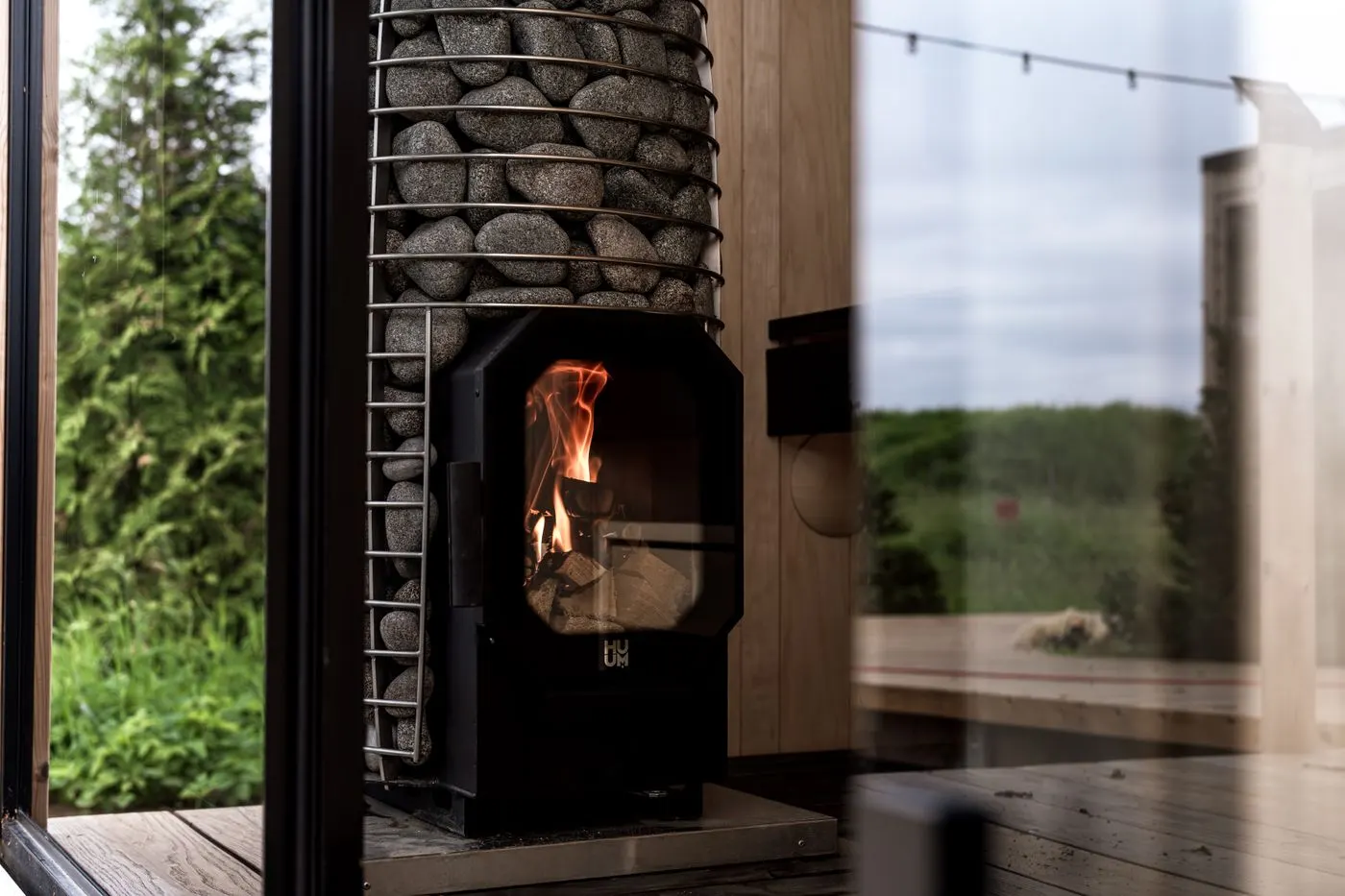
- Wood side — a flue to vent exhaust gases, combustion air, and carbon-monoxide safety.
- Electric side — a proper electrical supply installed by a licensed electrician to code.
Plus the space and safe clearances for whichever is in use. Plan for both sets of requirements.
Design it from the start
A hybrid needs to accommodate both heaters from the planning stage — the flue, combustion air and clearances for wood, and the electrical supply for electric. Retrofitting a second heater type into a sauna built for one is far more involved. If you want a hybrid, design for it up front, following each heater’s guidance and the relevant codes and clearances.
Is it worth it?
- Worth it if you genuinely want both and will use each — the flexibility is real.
- Not worth it if you’d mostly use one — a single well-chosen heater is simpler and cheaper.
Be honest about whether you’d use both. Many people find choosing deliberately serves them better than accommodating both.
Common mistakes
- Building a hybrid then only ever using one heater.
- Assuming a hybrid halves the requirements — it combines them.
- Retrofitting a second heater into a single-heater build.
- Underestimating the cost and space of two setups.
Next steps
If you truly want both the fire and the convenience and will use each, design a hybrid from the start, planning the flue and combustion air, the electrical supply, and safe clearances. If you’d mostly use one, weigh wood vs electric and choose a single heater — simpler, cheaper, and enough for most.
Frequently asked questions
What is a hybrid sauna?
A hybrid sauna is one set up to be heated by both a wood-burning heater and an electric heater — either with both installed, or designed so you can use whichever suits the occasion. It gives you the traditional fire and independence from electricity when you want them, and the convenience of switch-on electric heat when you don't. The trade-off is the extra cost and complexity of accommodating two heaters, each with its own requirements. It suits people who genuinely want and will use both experiences.
Why would you want both wood and electric heat in a sauna?
For flexibility. Wood gives the traditional fire, the ritual, and independence from electricity, but takes time to light and tend; electric is convenient — switch on, walk away, and it heats itself, sometimes with remote start. A hybrid lets you choose: a leisurely wood fire on a relaxed evening, and quick electric heat when you're short on time. If you value both experiences and would use each, a hybrid delivers the best of both; if you'd mostly use one, a single heater is simpler.
What are the downsides of a hybrid sauna?
The main downsides are extra cost and complexity. Accommodating two heaters, or a setup for both, costs more and takes more planning than a single heater, and each heater still carries its own requirements — a flue and combustion air for the wood heater, a proper electrical supply for the electric one. You also need the space and the safe clearances for whichever is in use. For many people the flexibility isn't worth the added cost and complexity of a single well-chosen heater.
Does a hybrid sauna still need a flue and electrical supply?
Yes — a hybrid doesn't remove either heater's requirements. The wood-burning side still needs a flue to vent exhaust gases safely and a supply of combustion air, with carbon-monoxide safety, and the electric side still needs a proper electrical supply installed by a licensed electrician to code. So a hybrid effectively combines the requirements of both, which is part of why it costs and takes more to set up. Plan for both sets of requirements, not one.
Is a hybrid sauna worth it?
It's worth it if you genuinely want both the traditional wood fire and the convenience of electric, and will actually use each — then the flexibility is real and valuable. But if you'd mostly rely on one, the extra cost and complexity of a hybrid isn't justified, and a single well-chosen heater is simpler and cheaper. Be honest about whether you'd use both. Many people find that choosing wood or electric deliberately serves them better than accommodating both.
Can any sauna be made into a hybrid?
Not simply — a hybrid needs to accommodate both a wood heater (with its flue, combustion air and clearances) and an electric heater (with its electrical supply), which affects the design, space and installation from the planning stage. Retrofitting a second heater type into a sauna built for one is more involved than planning a hybrid from the start. If you want a hybrid, design for it up front, and follow each heater's manufacturer guidance and the relevant codes and clearances.