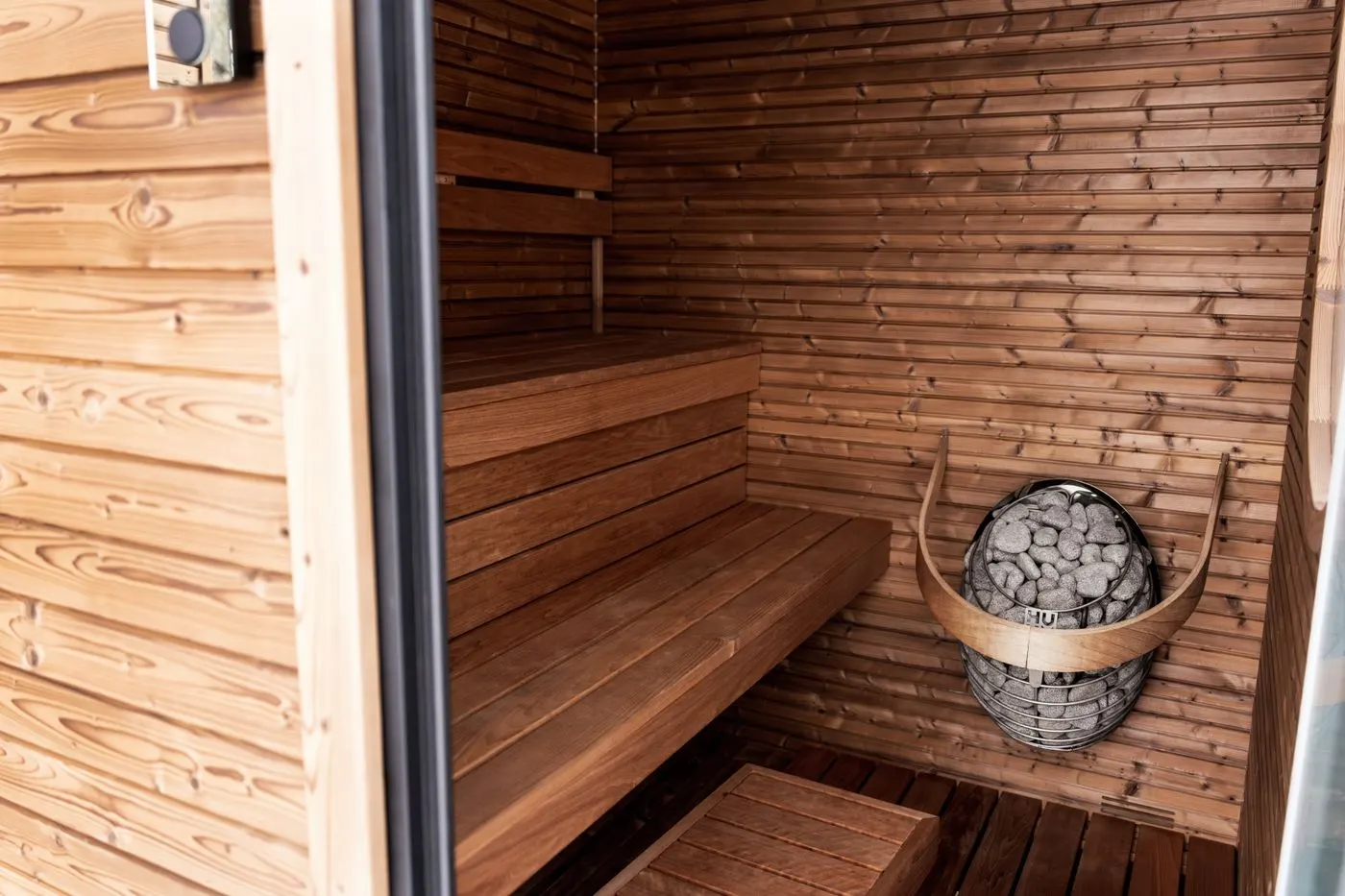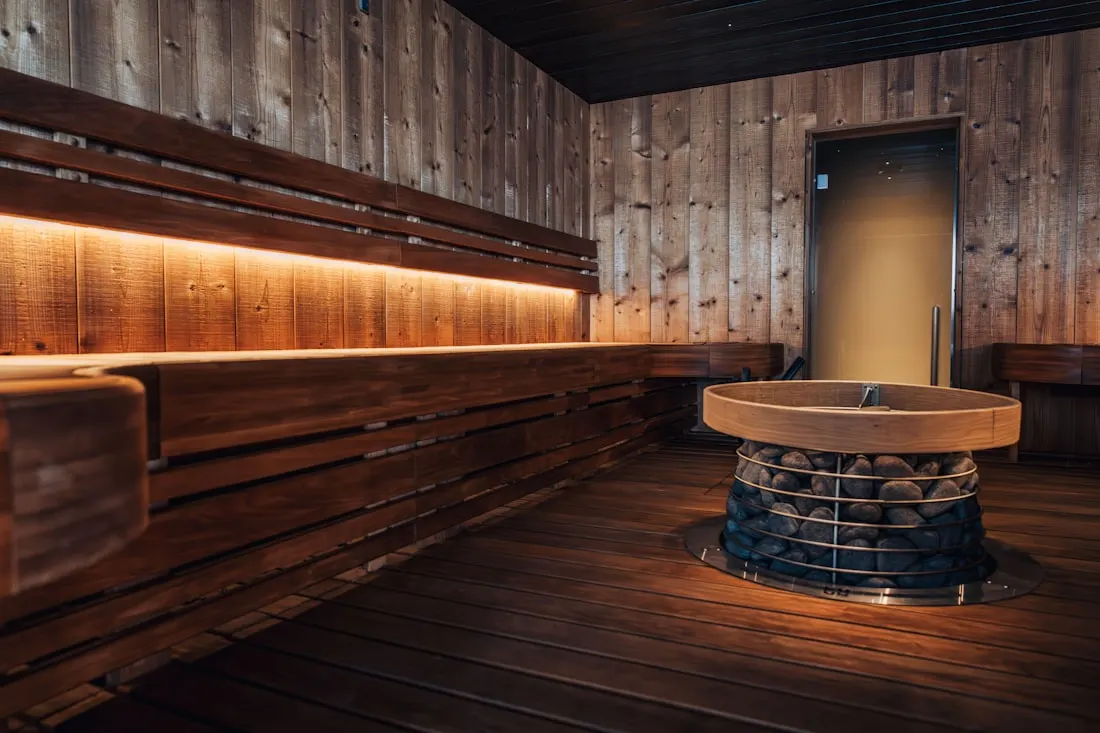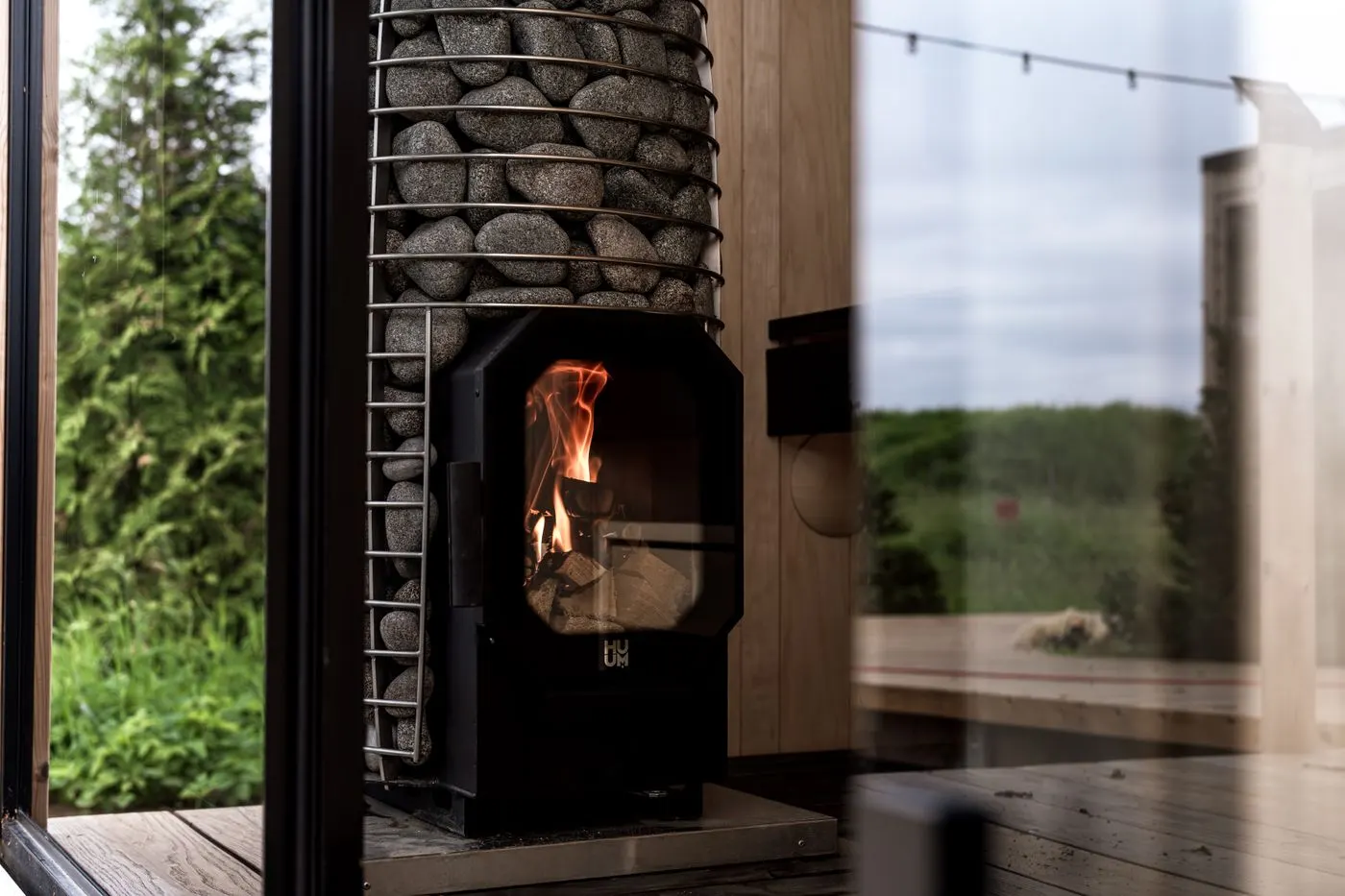
A wood-burning sauna heater is a stove with a firebox and a stone compartment, vented through a certified insulated chimney. It gives a strong, traditional heat and works off-grid, but it needs a proper chimney with correct height and clearances, non-combustible floor protection, adequate combustion air, a carbon-monoxide alarm, and routine ash and chimney maintenance. Clearances always come from the manufacturer's manual and local fire code.
For many people a wood fire is the sauna — the crackle, the aroma, the independence from the grid. A wood-burning heater delivers that, and it’s often the only practical choice on an off-grid cottage lot. It also comes with real obligations, because you’re running a fire in a small wooden building. Here’s how these heaters work and what they need to be safe.
How a wood-burning heater works
The heater is a stove with two key parts: a firebox where the wood burns, and a stone compartment heated by the fire. The stones store and radiate heat and produce löyly — the burst of steam — when you throw water on them. Combustion gases leave through a chimney (flue). The result is a strong, enveloping heat that many find unbeatable, available wherever you can safely run a stove and chimney.
What it needs — the non-negotiables
A wood-burning sauna heater is only safe with its full supporting system:
- A certified insulated chimney of the correct height, with proper clearances and a well-detailed roof or wall penetration and flashing.
- Certified clearances to combustibles — safe distances from the stove and chimney to walls, benches and ceiling.
- Non-combustible floor protection beneath and in front of the stove.
- Adequate combustion air so the fire burns cleanly and the chimney draws.
- A carbon-monoxide alarm (see CO safety).
Clearances come from the manual, not the internet
We don't publish universal clearance numbers, because the correct distances are specific to your certified stove and chimney system and must meet your local fire code. Using a generic value is a genuine fire risk. Follow the manufacturer's manual, and have a qualified installer confirm it.
Chimney, draft and creosote
The chimney does two jobs: it creates the draft that pulls air through the fire, and it vents combustion gases safely away. For reliable draw it needs the right height and an insulated, certified construction; a cold, short or dirty flue draws poorly. Burning wood also deposits creosote in the flue, which restricts draft and can catch fire, so regular chimney cleaning is essential — many owners clean at least once a season, more with heavy use.
Firewood
Use dry, seasoned wood. Well-seasoned hardwood burns hotter and cleaner, makes less creosote, and heats the sauna faster than green or wet wood, which smoulders and fouls the flue. How much you’ll use depends on the sauna’s size, insulation and the weather, so there’s no universal figure. Store firewood dry and under cover near the sauna, and keep a session’s worth to hand.
Living with a wood heater
Compared with electric, a wood stove is more hands-on — and for many that’s the appeal:
- Lighting and tending the fire during warm-up and use.
- Ash removal once the stove is cold, into a metal container.
- Chimney and stove maintenance through the season.
- Firewood handling and storage.
If you’d rather press a button and walk into a ready room, compare with an electric heater.
Sizing and stones
Size a wood heater to the room, adjusting for glass, any masonry and cold-climate outdoor use, following the manufacturer’s guidance — the same logic as electric sizing. Load the stones loosely so air and steam circulate, and keep an eye on them as a consumable.
Common mistakes
- Improvising the chimney or clearances instead of using a certified system to code.
- Skipping floor protection under and in front of the stove.
- Neglecting the chimney until creosote chokes the draft or catches fire.
- Burning wet or green wood, which smoulders and fouls the flue.
- No CO alarm or combustion air, compromising safe venting.
Next steps
A wood-burning sauna is deeply rewarding when it’s set up right. Get the chimney, clearances and CO safety properly handled with the manufacturer’s manual, your local fire code and a qualified installer — then enjoy the fire. Still choosing? Weigh it against electric in our heater comparison.
Frequently asked questions
How does a wood-burning sauna heater work?
A fire in the firebox heats a compartment of stones above or around it, and the stones radiate heat and produce steam when you add water. Combustion gases vent up a chimney. It delivers a strong, enveloping heat and works without electricity, which suits off-grid and cottage saunas.
Does a wood sauna heater need a chimney?
Yes, always. It needs a certified insulated chimney of the correct height, with proper clearances and a correctly detailed roof or wall penetration and flashing. The chimney is essential both for draft and for venting combustion gases safely — its specifics come from the stove's manual and local fire code.
What clearances does a wood sauna stove need?
The safe distances to walls, benches and ceiling are specific to the certified stove and chimney system and are set out in the manufacturer's manual, to be met alongside your local fire code. We don't publish generic clearance values because using the wrong number is a fire risk — follow the manual.
How much firewood does a sauna use?
It varies with the sauna's size, insulation, the weather and how long you heat, so there's no single figure. Dry, seasoned hardwood burns hotter and cleaner than green or wet wood. Store firewood dry and under cover, and keep a session's worth to hand near the sauna.
How often should a sauna chimney be cleaned?
Regularly — creosote builds up in the flue and is both a draft problem and a chimney-fire risk. Frequency depends on how much you burn and the wood you use; many owners clean at least once a season, more with heavy use. Have a professional handle it if you're unsure.
Is a wood-burning sauna safe?
Yes, when installed and used correctly: certified chimney and clearances, non-combustible floor protection, adequate combustion air, a carbon-monoxide alarm, and routine maintenance. Most problems come from improvised installations or neglected chimneys. Follow the manual, meet local code, and get professional help where needed.