A traditional sauna heats the air and stones to high temperatures and lets you add steam (löyly) by pouring water on the stones; an infrared sauna uses radiant panels to warm your body directly at lower air temperatures, with no steam. For an outdoor Canadian setting, traditional saunas suit the classic hot-and-steamy, cold-plunge experience and cope with the cold; infrared is gentler, lower-temperature and more common indoors. This site focuses on traditional outdoor saunas.
If you’ve shopped for a sauna, you’ve met two very different things sold under the same word: the traditional sauna — a hot, steamy room heated by a stove and stones — and the infrared sauna, a cabinet of radiant panels. They heat you in fundamentally different ways, and for an outdoor Canadian setting the choice is fairly clear. Here’s the difference.
How each one heats you
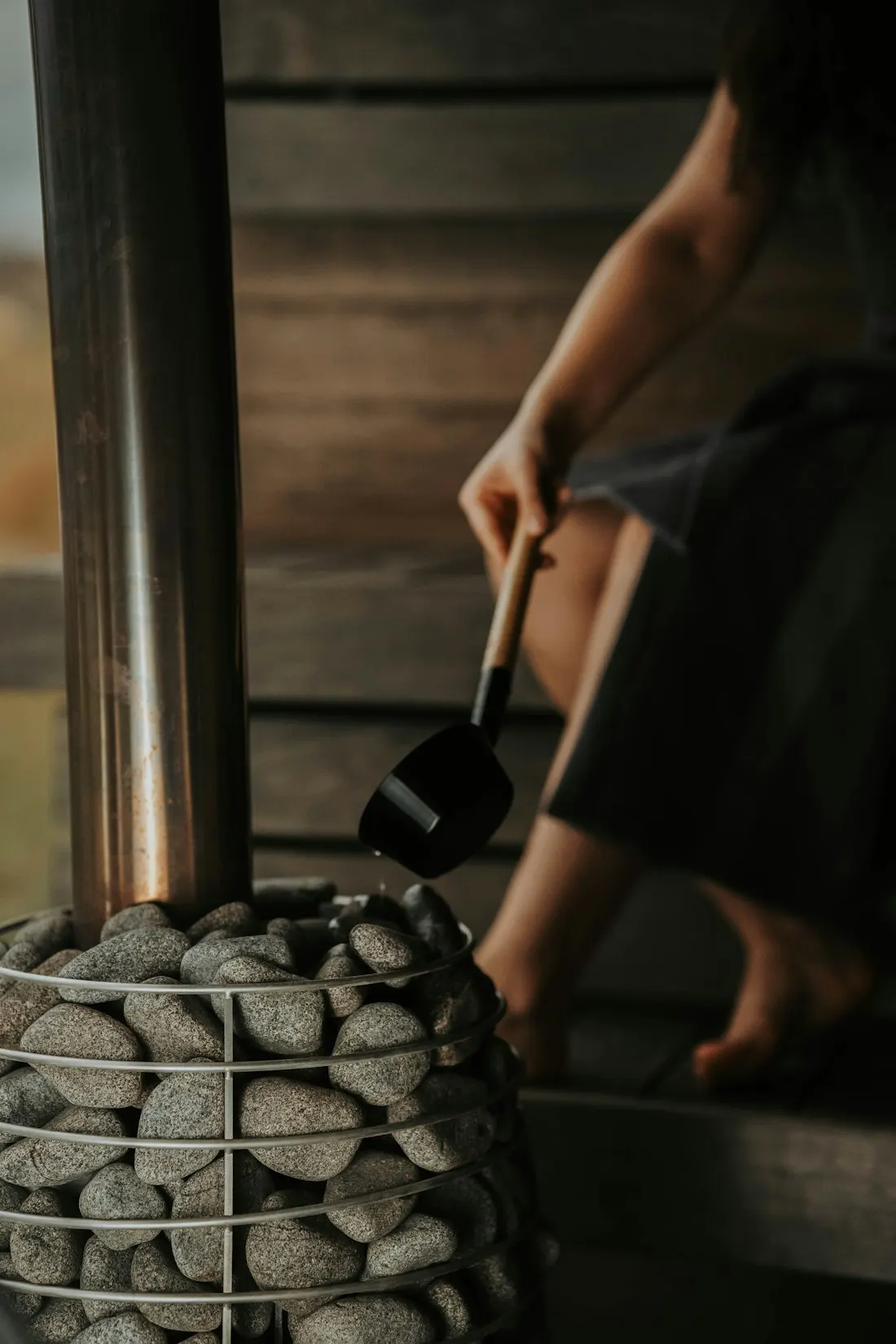
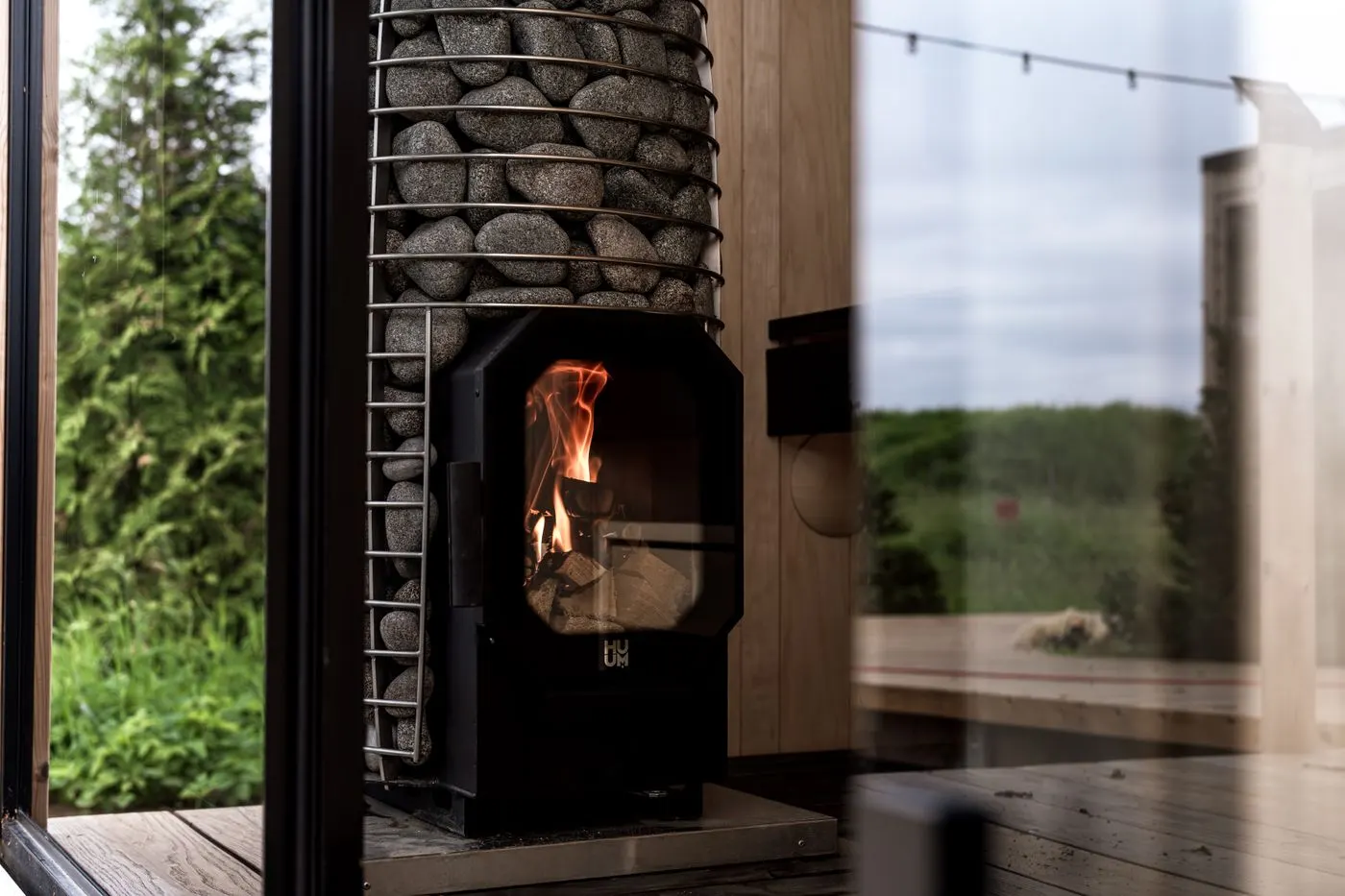
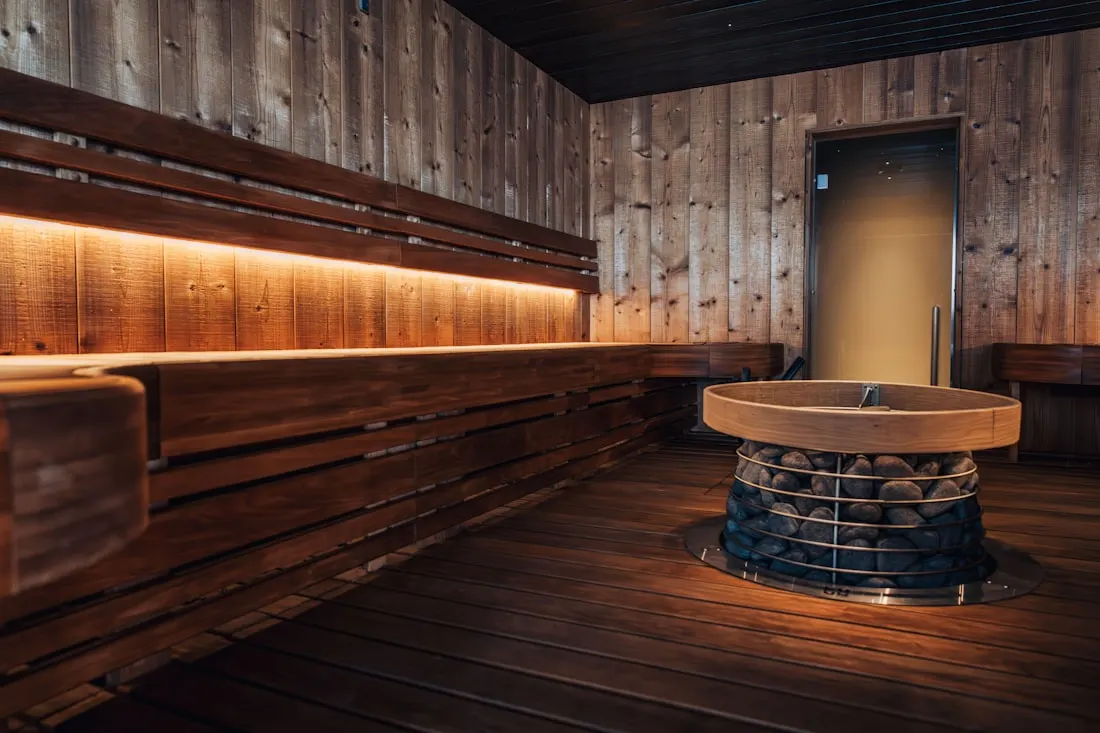
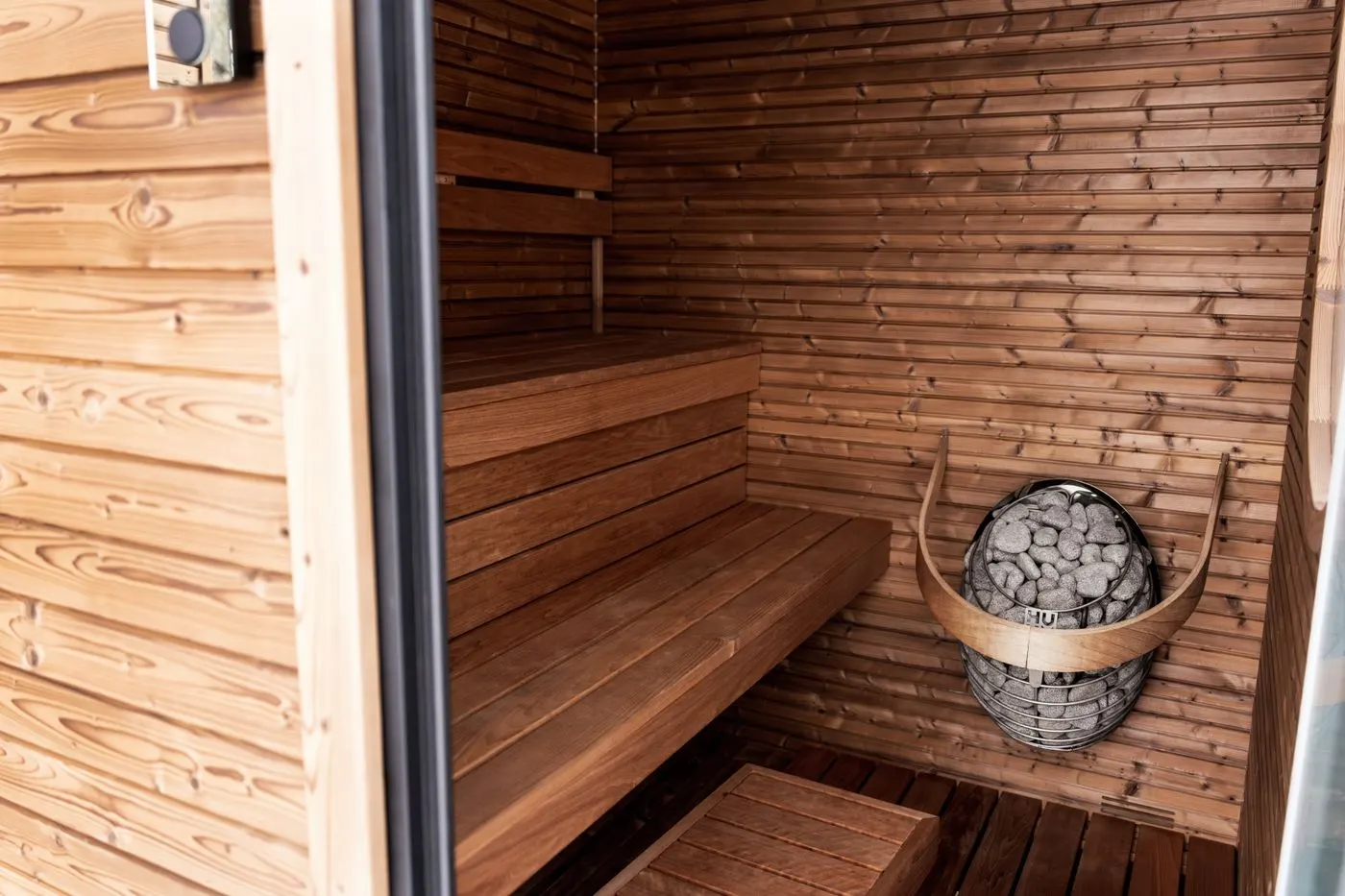
- Traditional sauna: a stove and stones heat the air and the room to high temperatures. You control humidity by pouring water on the stones to make steam (löyly). It’s hot, and it’s interactive.
- Infrared sauna: radiant panels emit infrared that warms your body directly, while the surrounding air stays much cooler. There are no stones, no steam, and lower air temperatures.
That’s the core distinction: heat the room (traditional) versus heat the body (infrared).
The experience
The two feel different:
- Traditional is the classic sauna: intense, enveloping heat, the ritual of the löyly, and the natural pairing with a cold plunge. It’s social, hot, and steamy.
- Infrared is gentler and drier — a lower-temperature, radiant warmth that some prefer for a milder, longer session. It’s usually a solo or two-person cabinet.
Neither is “better” in the abstract; they’re different products for different tastes.
Side by side
| Factor | Traditional | Infrared |
|---|---|---|
| Heats | The room, air and stones | Your body directly |
| Air temperature | High | Lower |
| Steam (löyly) | Yes — water on stones | No |
| Experience | Hot, steamy, social | Gentle, dry, radiant |
| Outdoor / cold-plunge fit | Excellent | Less natural |
| Typical setting | Backyard, lakeside, cottage | Often indoors |
For a cold-climate outdoor sauna
For the outdoor experience most Canadians picture — a genuinely hot, steamy room, the löyly, and a plunge into cold water or snow — the traditional sauna is the natural fit, and it copes with the cold when the heater is sized and the room insulated for it. Infrared can be used in a cold climate, but because it warms the body rather than the room, the surrounding air stays cooler, which feels different outdoors in deep cold, and it doesn’t deliver the steam-and-plunge ritual.
Why we focus on traditional
This site is about outdoor saunas in the Canadian climate — the hot, steamy, wood- or electric-heated room paired with a cold plunge, in a backyard or at the lake. That’s the tradition our guides cover. Infrared is a legitimate wellness product, but a different experience, more often installed indoors — so it sits outside our focus.
Common misunderstandings
- Thinking they’re the same — they heat you in completely different ways.
- Expecting steam from infrared — there is none.
- Assuming infrared is “hotter” — its air temperature is lower.
- Choosing infrared for the outdoor cold-plunge ritual — traditional suits that far better.
Next steps
If you want the classic outdoor, steamy, cold-plunge experience, you want a traditional sauna — start with choosing the sauna type and heater. If a gentle, dry, indoor radiant cabinet is more your thing, that’s the infrared route, and a different kind of product from the one these guides cover.
Frequently asked questions
What's the difference between infrared and traditional saunas?
A traditional sauna heats the room and stones to high temperatures and lets you make steam by pouring water on the stones. An infrared sauna uses radiant panels to warm your body directly at much lower air temperatures, with no steam. They're quite different experiences — hot and steamy versus gentle radiant warmth.
Is infrared or traditional better for outdoors in Canada?
For the classic outdoor sauna experience — high heat, steam and a cold plunge — traditional is the natural fit, and it handles cold-climate use with proper heater sizing and insulation. Infrared is lower-temperature and more commonly used indoors; it's less about the hot-cold ritual that defines outdoor sauna culture.
Can you get steam in an infrared sauna?
No — infrared saunas have no stones to pour water on and don't produce löyly. They provide dry, radiant warmth at lower air temperatures. If steam and the ability to control humidity by throwing water are important to you, a traditional sauna is what you want.
Does an infrared sauna work in winter?
Infrared can work in a cold climate, but it warms your body rather than the room, so the surrounding air stays cooler, which feels different outdoors in deep cold. Traditional saunas create a genuinely hot room that suits the outdoor, cold-plunge experience most people picture. Consider how you want it to feel.
Why does this site focus on traditional saunas?
Because it's about outdoor saunas in the Canadian climate — the hot, steamy, wood- or electric-heated room paired with a cold plunge, in a backyard or at the lake. That's the tradition our guides cover. Infrared is a legitimate wellness product, but a different experience, more often installed indoors.