An electric sauna heater warms a bank of stones with heating elements, controlled by a thermostat and timer. It's clean, quiet, precise and easy to use — with no fire, ash or chimney — but needs a dedicated circuit installed by a licensed electrician. Models are wall-mounted, floor-standing or open stone towers; for a cold-climate outdoor sauna, size it generously and follow the manufacturer's outdoor guidance.
For most backyard saunas on grid power, the electric heater is the sensible default: press a button (or tap your phone) and walk into a ready sauna, with no fire to tend, no ash to clear and no chimney to clean. Here’s how electric sauna heaters work and what matters when you choose and run one.
How it works
An electric heater is a metal body holding heating elements and a bank of stones. The elements heat the stones, which store and radiate warmth and burst into steam (löyly) when you throw water on them. A thermostat holds your set temperature and a timer limits run time. That’s the whole appeal: clean, quiet, precise heat with nothing to burn.
Types of electric heater
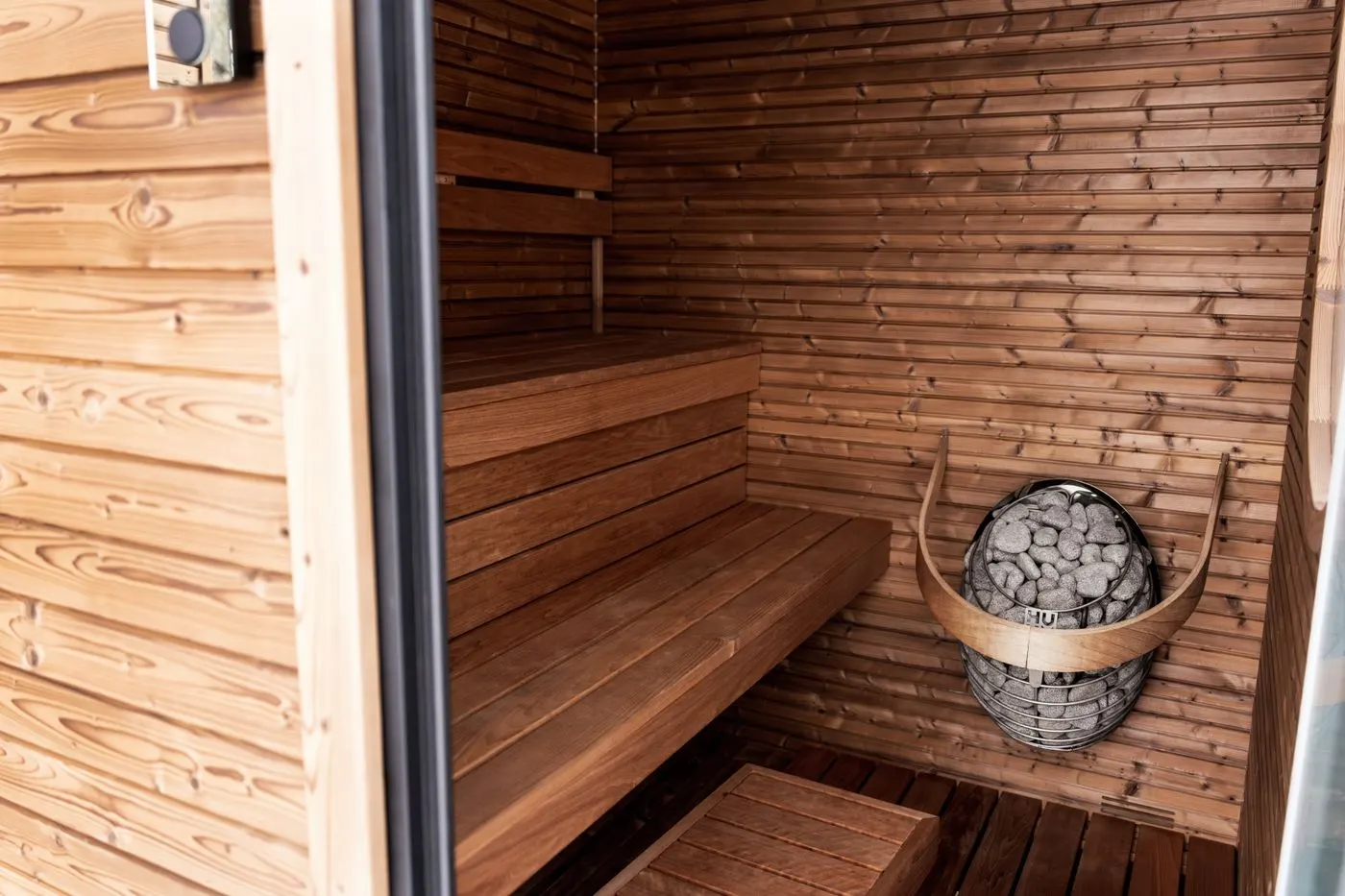
- Wall-mounted — compact, saves floor space, ideal for smaller saunas.
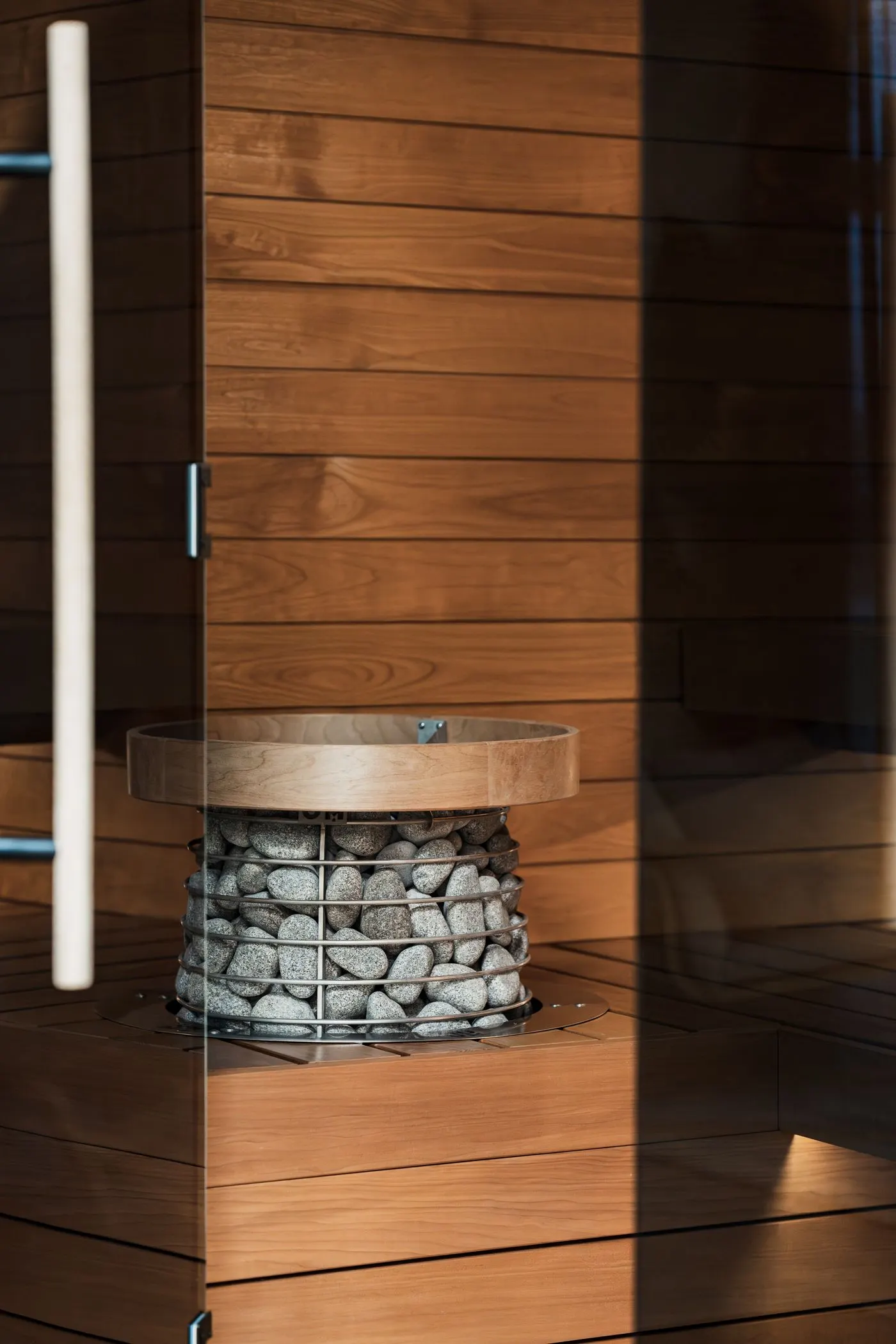
- Floor-standing — larger, holds more stone, suits bigger rooms.
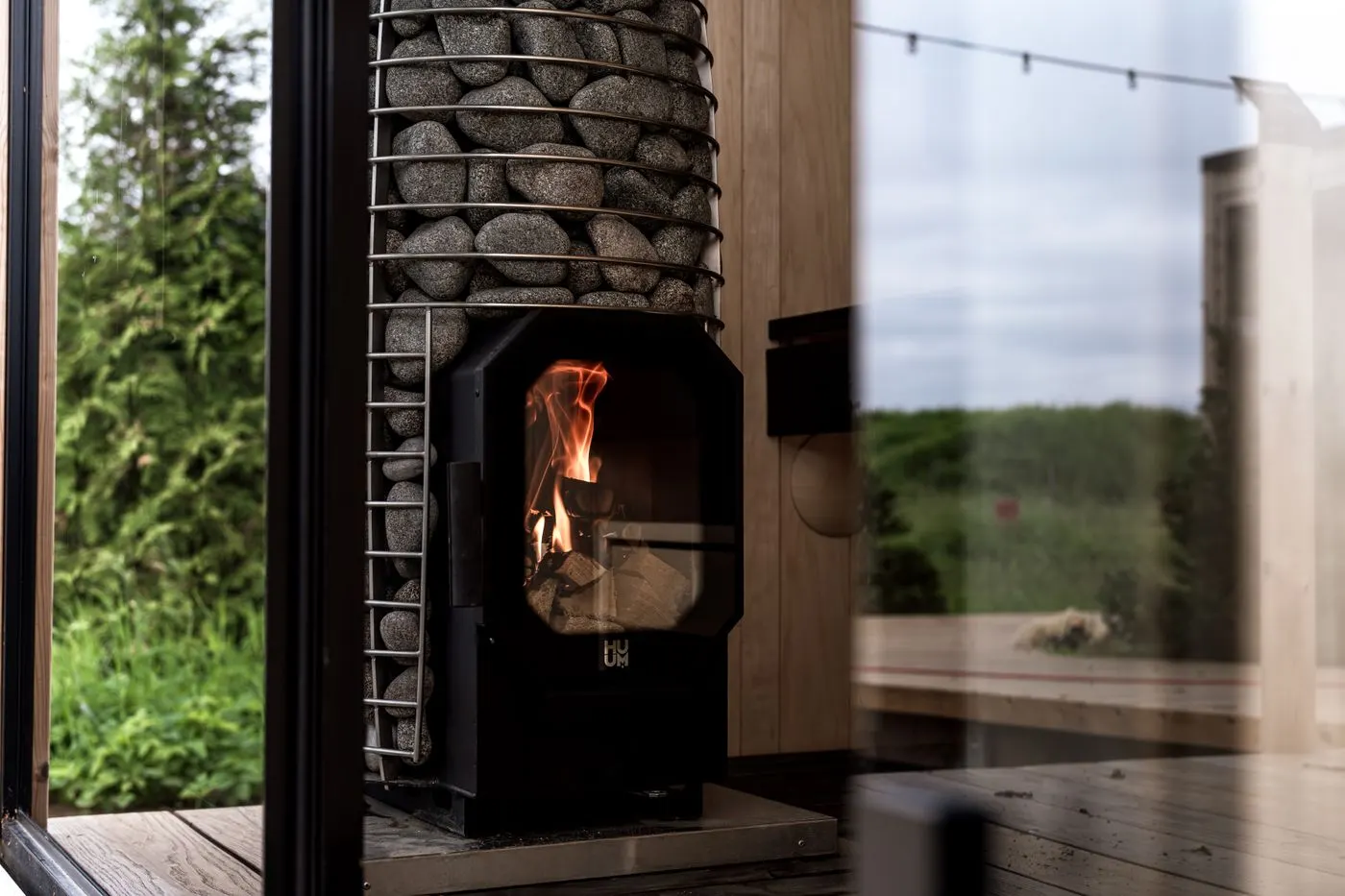
- Open stone tower / pillar — a tall column of stones for maximum stone mass, a soft, enveloping heat and a striking look.
More stone generally means a softer, more stable heat and better steam, at the cost of a longer warm-up — see stone capacity.
Power and the electrical connection
The non-negotiable: an electric heater needs a suitable dedicated circuit installed by a licensed electrician to your local electrical code. Larger, colder saunas need more kilowatts and a bigger circuit, so confirm your supply can handle the heater before buying. This is a code-regulated job — see electrical safety. Never DIY the connection.
Cold-weather operation
Electric heaters work fine below freezing; a cold outdoor sauna just takes longer to reach temperature and benefits from being sized up for the climate. Follow the manufacturer’s outdoor/cold-climate sizing, and use the timer or remote start to pre-warm the sauna so you’re not waiting in the cold. Good insulation makes the biggest difference to winter warm-up.
Pros and cons
Advantages
- Clean, quiet, precise heat
- No fire, ash, chimney or combustion gases
- Thermostat, timer and remote control
- Low maintenance
- Ideal for grid-connected backyards
Limitations
- Needs a dedicated circuit and licensed electrician
- Depends on adequate power at the site
- Running cost tracks your electricity rate
- Less of the traditional fire experience
Controls and convenience
Electric heaters shine on control. A thermostat and timer regulate the temperature and cap the run-time, and many models add built-in safety features — overheat cut-offs and maximum on-time limits — that a wood stove simply can’t offer. Some heaters also support scheduling or app control, letting you pre-heat before you arrive, which is a real convenience in a cold climate where warm-up takes longer — see smart saunas. Any remote start, though, has strict safety requirements and only belongs on a heater and installation designed and approved for it, with a clear heater area. Used within the manufacturer’s guidance, these controls make an electric heater the easiest option to live with day to day: set it, let it reach temperature, and bathe — no fire to lay, tend or clean up after.
Common mistakes
- Buying before confirming the circuit can supply the heater.
- Sizing on volume alone, ignoring glass and the cold.
- DIY wiring instead of a licensed electrician.
- Skimping on stone capacity and expecting a soft, stable heat.
Next steps
Choose an electric heater by sizing it correctly for your room and climate, decide electric vs wood if you’re still weighing fuels, and plan the electrical connection with a licensed electrician early.
Frequently asked questions
How does an electric sauna heater work?
Heating elements warm a bank of stones, which store and radiate heat and produce steam when you pour water on them. A thermostat holds the set temperature and a timer limits run time. It gives clean, controllable heat with no fire, ash or chimney — just a suitable electrical supply.
Do electric sauna heaters work in winter?
Yes. They operate fine below freezing; a cold outdoor sauna simply takes longer to warm and may need a larger heater. Size it for cold-climate outdoor use per the manufacturer, and have it connected on a dedicated circuit by a licensed electrician to your local code.
Wall-mounted or floor-standing electric heater?
Wall-mounted heaters save floor space and suit smaller saunas; floor-standing and open stone-tower heaters hold more stone for a softer, more stable heat and suit larger rooms. Choose based on room size, stone capacity and layout, and follow the heater's clearance requirements either way.
How much power does an electric sauna heater need?
It depends on the heater, which is chosen by sizing the room — larger and colder saunas need more kilowatts and a bigger circuit. Confirm your electrical supply can handle the heater before buying, and have a licensed electrician verify the panel and circuit. See our heater sizing guide.
Are electric sauna heaters safe?
Yes, when installed correctly on a suitable dedicated circuit by a licensed electrician, with correct clearances and a guard where needed. They produce no combustion gases, so there's no carbon-monoxide risk. Follow the manufacturer's clearances and operate the controls as intended.