Choose an electric sauna heater for simplicity, easy control and clean operation where you have adequate power; choose a wood-burning heater for the traditional experience, off-grid capability and independence from the electrical grid. Both perform well in a Canadian winter. The deciding factors are your power supply, how much maintenance you'll accept, and whether the ritual of a fire matters to you.
The heater is the heart of an outdoor sauna, and the first real fork in the road is the fuel: electric or wood. Neither is “better” in the abstract — they suit different sites, budgets and temperaments. Here’s how they compare on the things that actually matter through a Canadian winter.
The quick version
| Factor | Electric heater | Wood-burning heater |
|---|---|---|
| Power needed | Dedicated circuit; licensed electrician | None — works off-grid |
| Control | Precise; thermostat, timer, sometimes remote | Manual; tend the fire |
| Warm-up in winter | Predictable; set and wait | Fast once the fire is going |
| Running cost | Tracks your electricity rate | Cheap with own firewood; effort instead |
| Maintenance | Low; periodic element and stone checks | Higher; ash, soot, chimney cleaning |
| Experience | Clean, quiet, convenient | Traditional; the crackle and aroma of fire |
| Extra requirements | Suitable circuit and wiring | Certified chimney, clearances, floor protection |
Electric sauna heaters
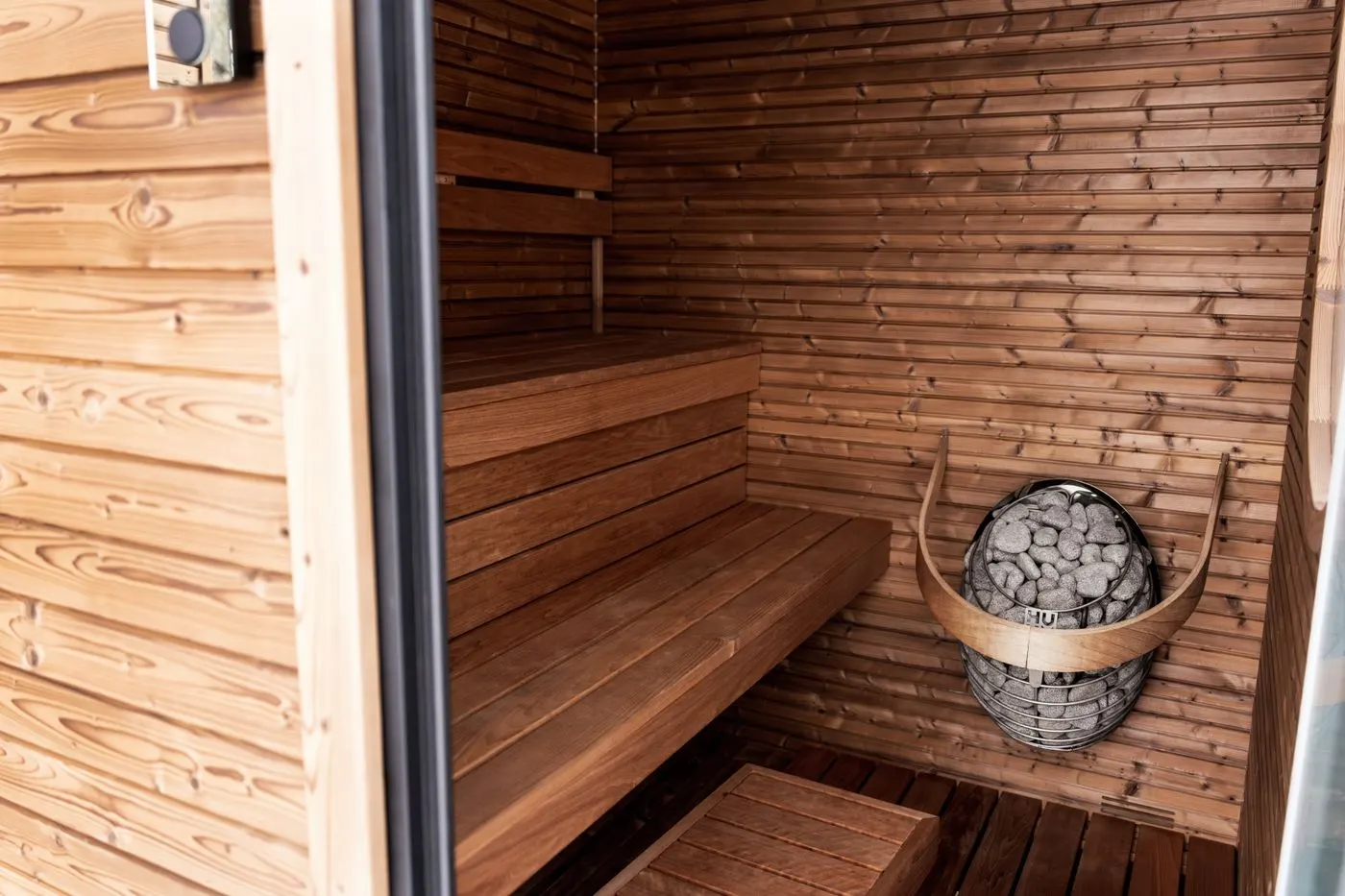
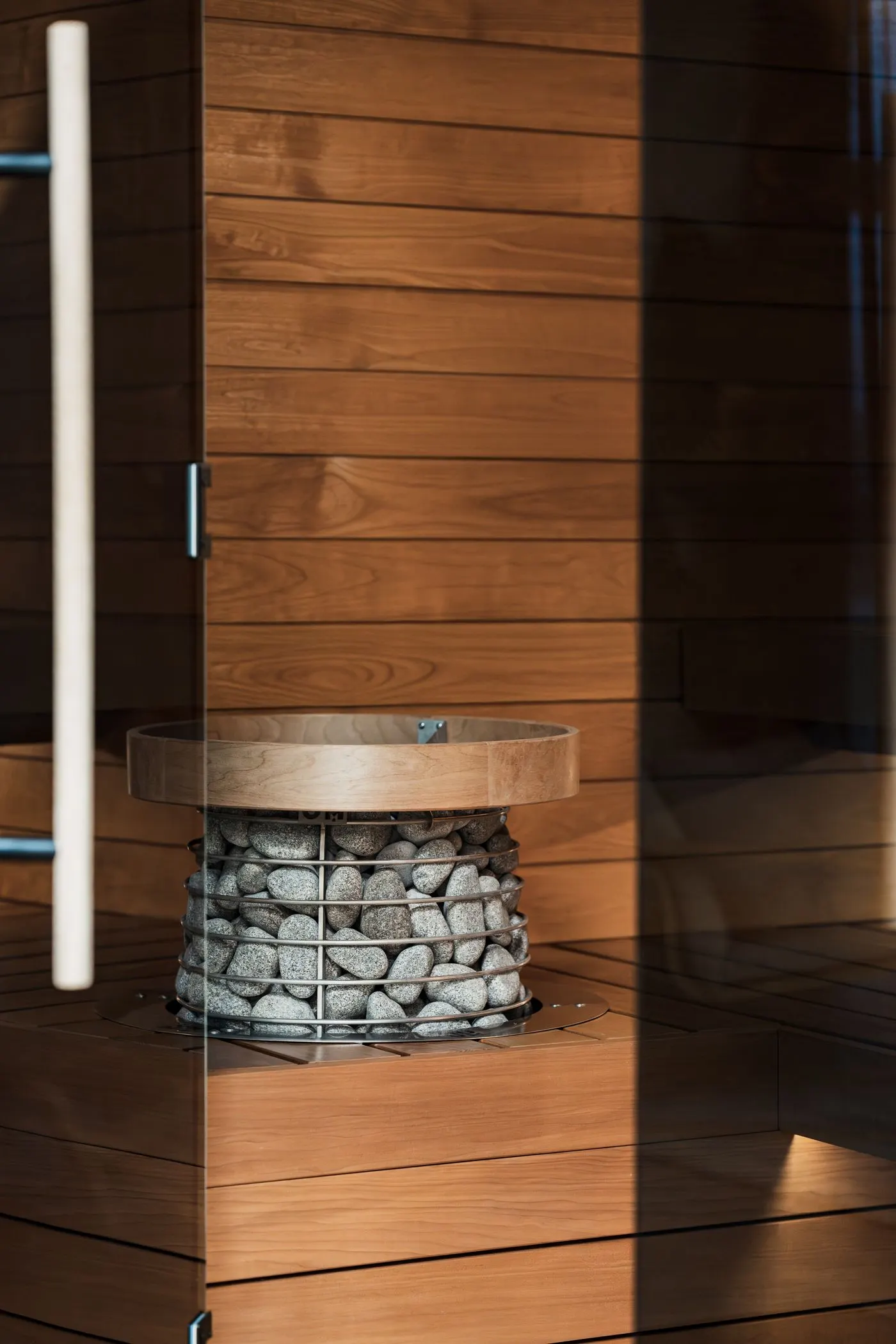
An electric heater warms a bank of stones with heating elements. Its great strength is control and convenience: set a thermostat and timer, or start it remotely, and walk into a ready sauna. There’s no fire to tend, no ash, no chimney, and very little routine maintenance.
The requirement is power. An electric sauna heater needs a suitable dedicated circuit installed by a licensed electrician to your local electrical code — this is not a DIY job, and you should confirm your supply can handle the heater before buying. In a cold climate, size the heater generously; an outdoor sauna loses more heat than an indoor one, so follow the manufacturer’s outdoor sizing guidance (see how to size a heater).
Best for: grid-connected sites, people who value convenience and precise control, and anyone who wants remote or timed starts.
Wood-burning sauna heaters
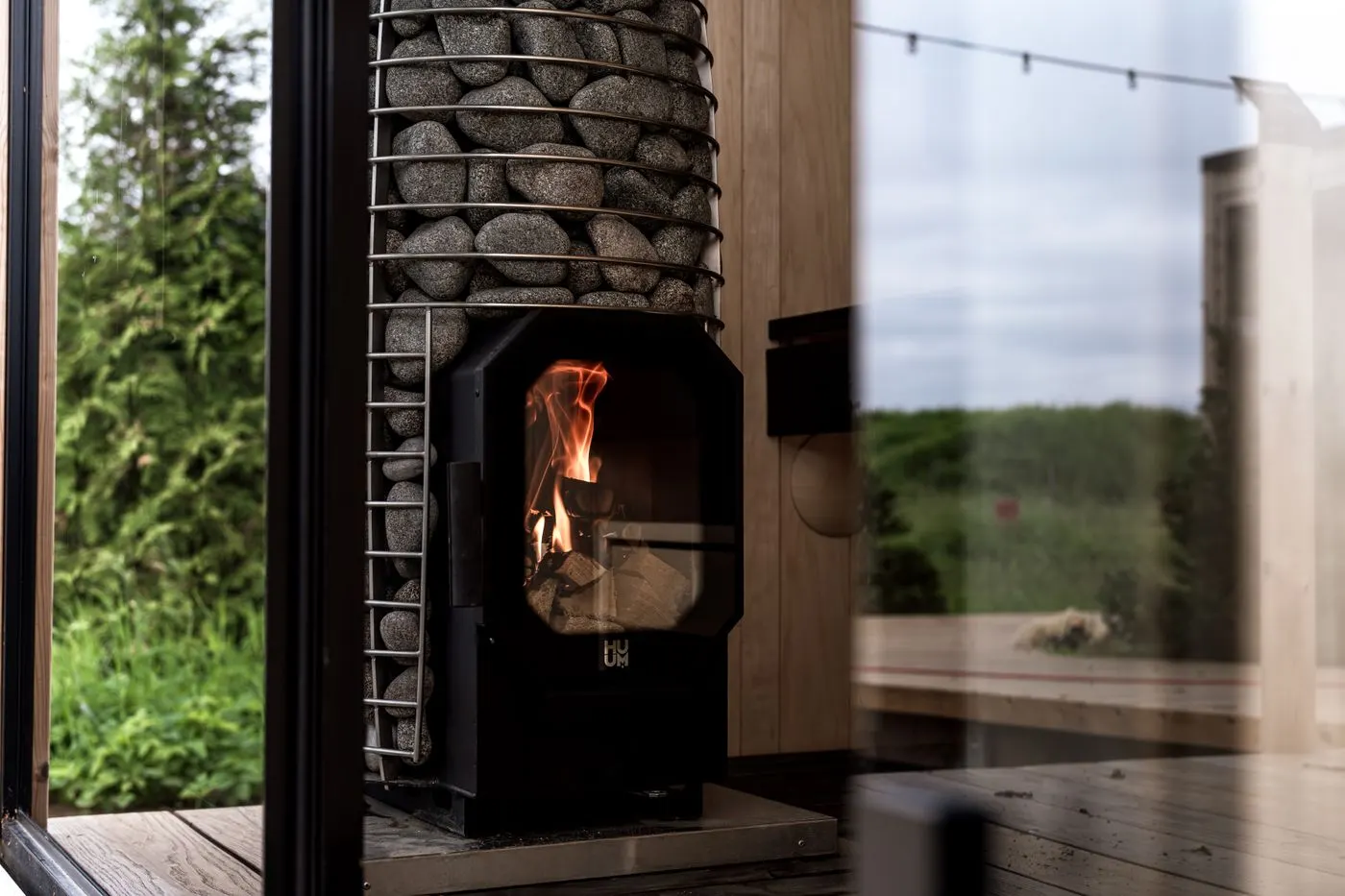
A wood-burning heater is a stove with a firebox and a stone compartment, vented through a chimney. It delivers a strong, enveloping heat and the ritual many people associate with real sauna — the crackle of the fire, the aroma, the independence from the grid. On a remote cottage lot with no power, it may be the only practical option.
That independence comes with obligations. A wood heater needs a certified insulated chimney of the correct height, clearances to combustibles, and non-combustible floor protection — all per the stove’s manual and your local fire code, never guessed. You’ll also handle firewood, lighting, ash and periodic chimney cleaning to keep creosote in check.
Best for: off-grid and cottage sites, traditionalists, and anyone who considers tending the fire part of the pleasure.
Both have a non-negotiable step
Electric heaters must be wired by a licensed electrician on an adequate circuit. Wood heaters need a certified chimney, manufacturer clearances and floor protection to your local fire code. Don't improvise either — get the details from the manual and the relevant professional.
Running cost and effort
There’s no universal winner on cost. Electric running cost simply follows your local electricity rate and how often you heat. Wood can be very cheap if you cut or source your own firewood, but you “pay” in labour, storage space and chimney upkeep. Factor in your real situation — power prices, firewood access, and how much hands-on work you want — rather than assuming one is cheaper.
Winter performance
Both heat a sauna through the coldest months. What decides winter performance is less the fuel and more the fundamentals: correct sizing for the cold, a well-insulated envelope, and proper ventilation. A wood fire gives fast, fierce heat once lit; an electric heater gives predictable, hands-off warm-up. Size either for outdoor, cold-climate use and both will deliver.
How to choose
Ask three questions:
- Do you have adequate power at the site? No power points you toward wood.
- How much maintenance do you want? Less points to electric.
- Does the ritual of a fire matter to you? If yes, that’s a strong pull toward wood.
Most people find one answer clearly dominates. When the site has good power and convenience matters, electric wins; when it’s off-grid or the fire is the point, wood wins.
Common mistakes
- Buying electric before confirming the circuit. Check the supply and have an electrician confirm it.
- Underestimating a wood heater’s requirements. The chimney, clearances and floor protection are essential, not optional.
- Undersizing for the cold. Whatever the fuel, size for outdoor winter use.
- Ignoring maintenance appetite. A wood sauna is more work; be honest about whether you’ll keep up with it.
Next steps
Whichever fuel you choose, get the sizing right and pair it with a properly insulated, ventilated room. Building around the heater from the start is what makes an outdoor sauna comfortable and efficient all winter.
Frequently asked questions
Is an electric or wood sauna heater better for winter?
Both work well in a Canadian winter. Electric heaters are easier to control and can be started remotely, while wood-burning heaters give a strong, traditional heat and work without electricity. Winter performance depends more on correct sizing, insulation and ventilation than on the fuel type.
Can an electric sauna heater work below freezing?
Yes. Electric heaters operate in sub-zero conditions; they simply take longer to warm a cold outdoor sauna and may need a larger size for cold-climate use. The heater must be on a suitable dedicated circuit installed by a licensed electrician to your local code.
Do wood-burning saunas need a chimney?
Yes. A wood-burning sauna heater needs a certified insulated chimney with correct height, clearances and roof or wall penetration, plus non-combustible floor protection. These details come from the stove's manual and your local fire code — never generic values.
Which is cheaper to run?
It depends on local electricity prices and the cost or availability of firewood. Electric running cost tracks your power rate; wood can be inexpensive if you have your own supply, but you pay in effort, storage and chimney maintenance. Neither is universally cheaper.
Can you have both electric and wood heat in one sauna?
Some saunas are set up for both, or switched from one to the other, but each has its own requirements — a circuit for electric, a chimney and clearances for wood. It adds cost and complexity, so most people choose one based on their site and how they'll use the sauna.
Is a wood-burning sauna more work?
Generally yes. You handle firewood, lighting and tending the fire, ash removal, and periodic chimney cleaning to manage creosote. Many people consider that part of the experience; if you want to press a button and walk in, electric is simpler.