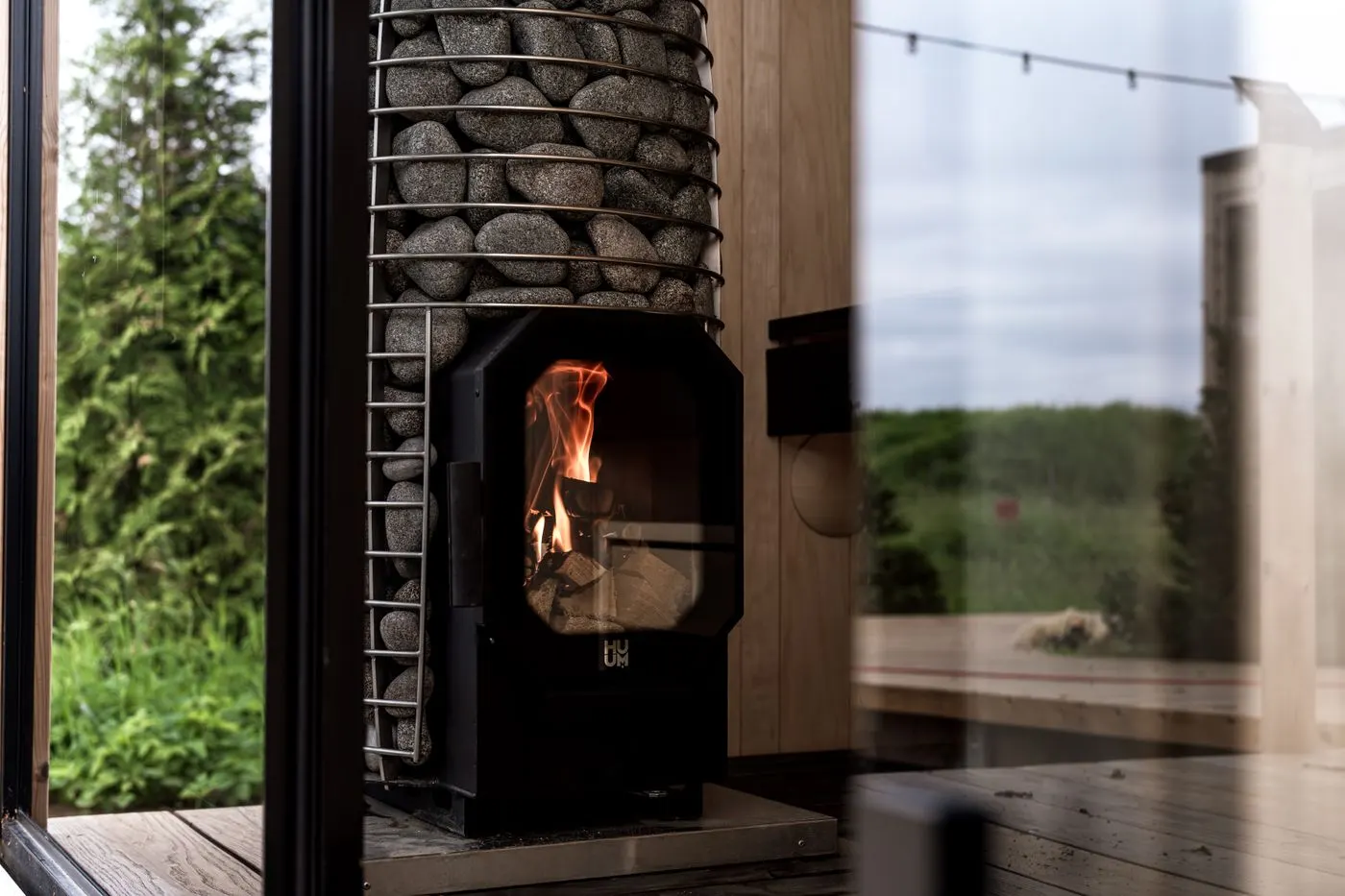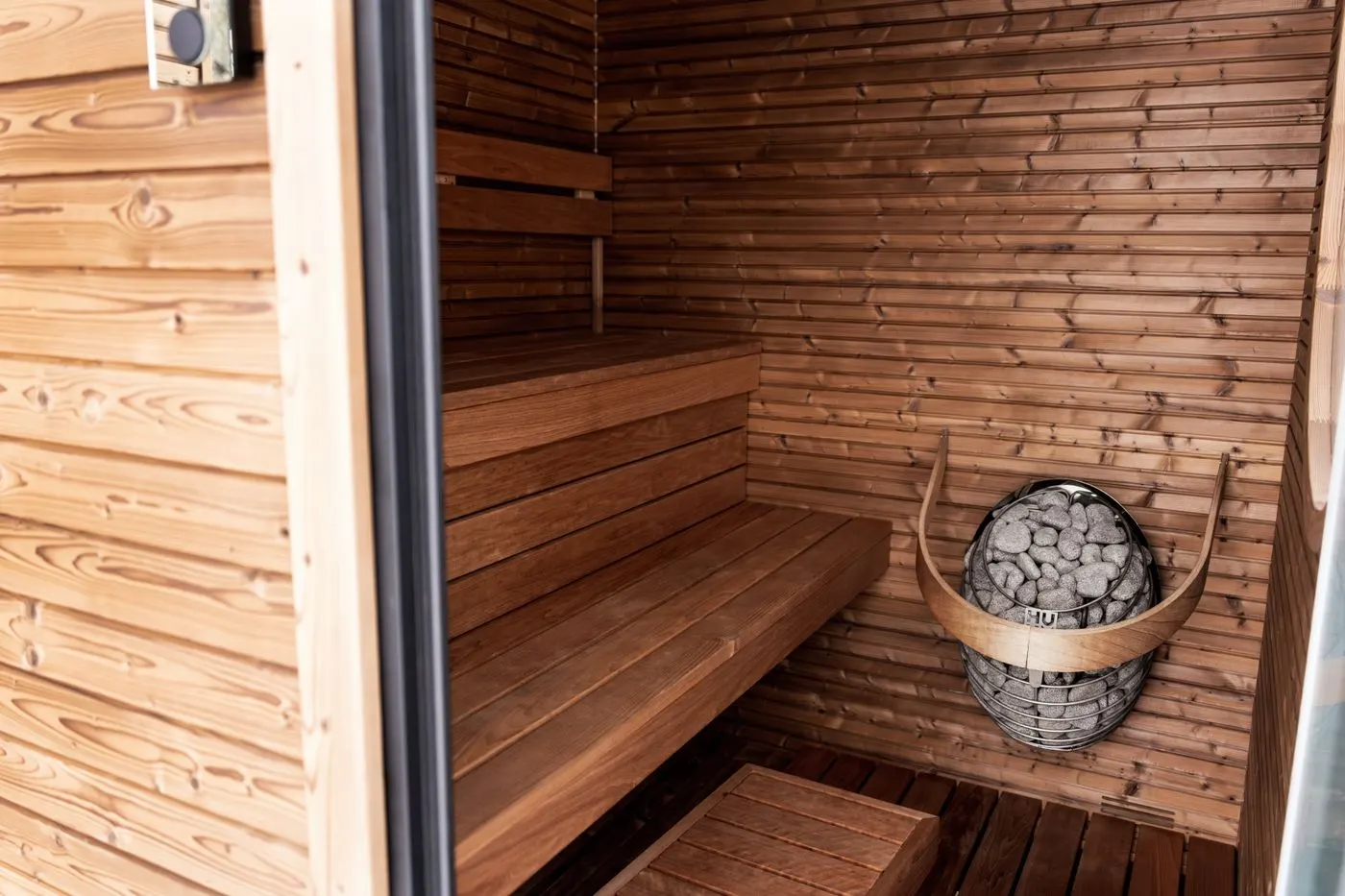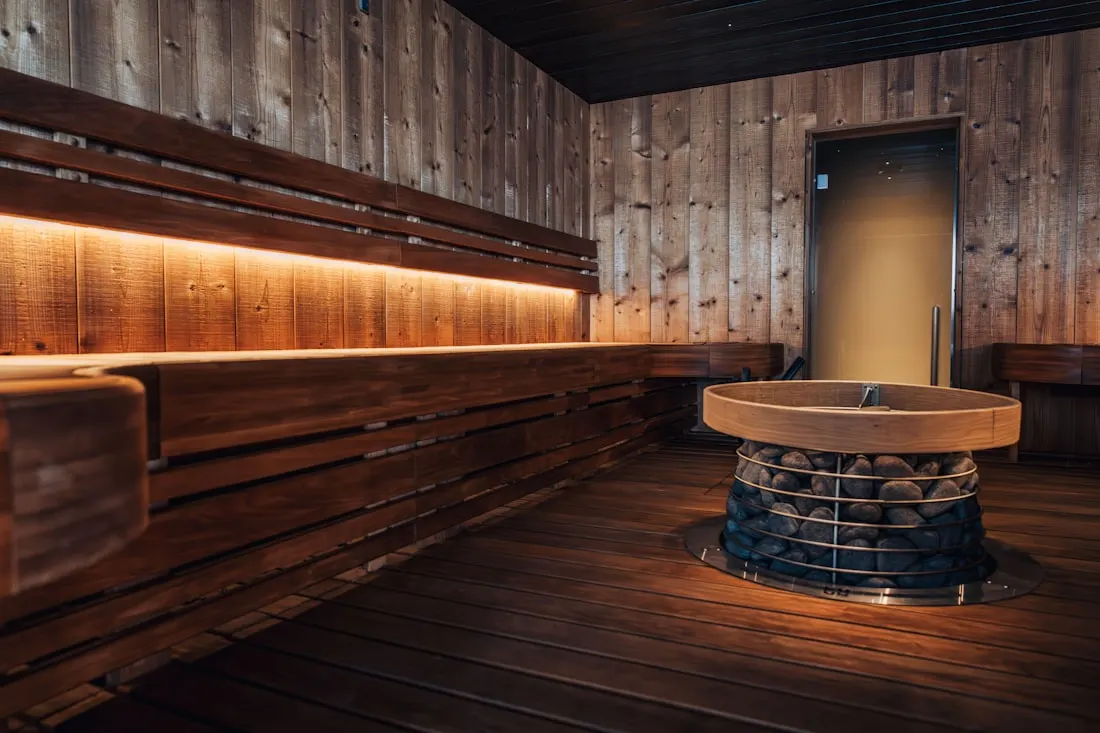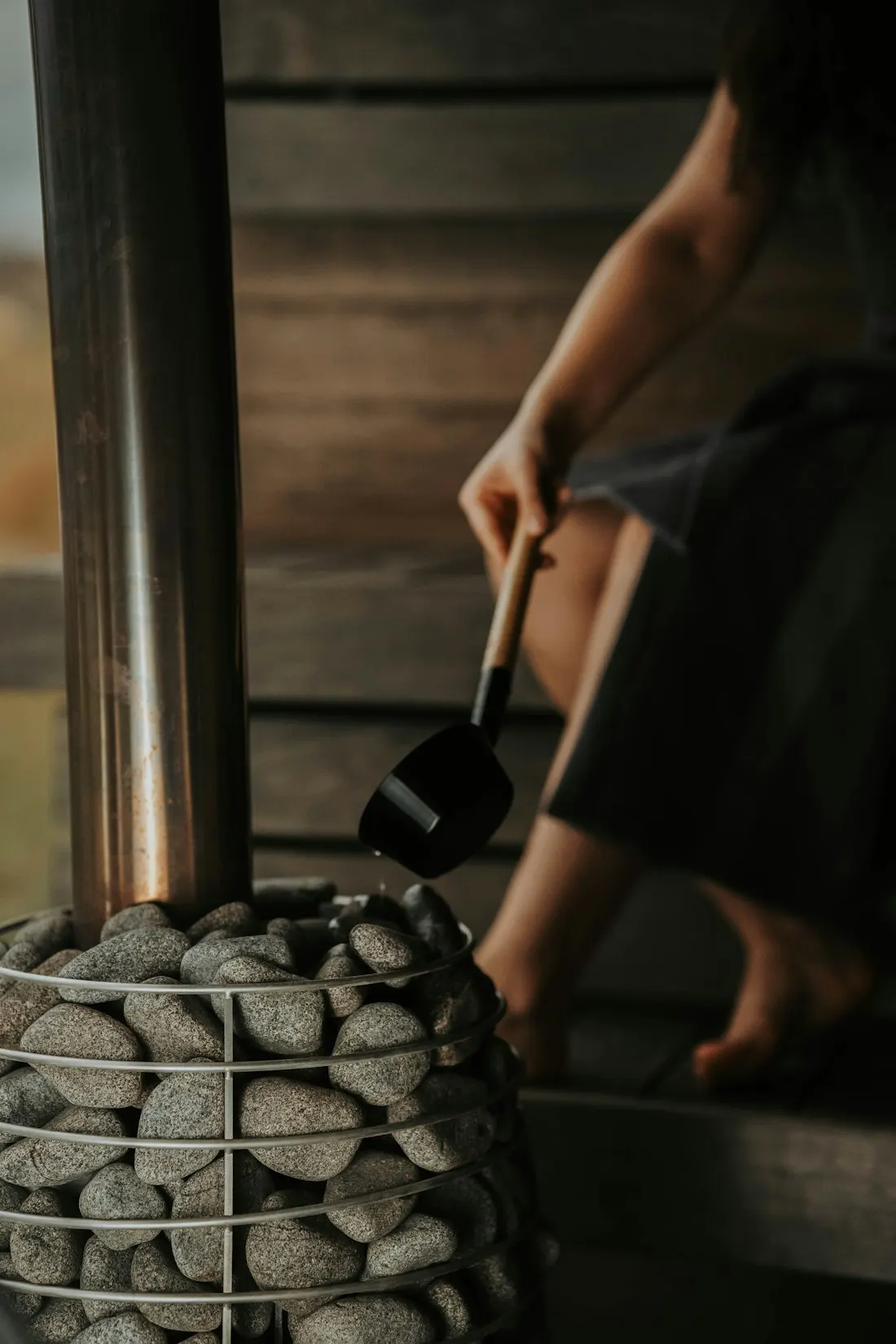
Stone capacity is the amount of stone a sauna heater holds, and it strongly shapes the experience. More stone stores more heat, giving a softer, more stable temperature and a gentler, more even löyly — valuable in a cold climate where you want the heat to hold. The trade-off is a longer warm-up. Choose a heater whose stone capacity suits your room and the heat quality you want, and never add stones to make up for an undersized heater.
Two sauna heaters with the same power rating can feel completely different — one sharp and swingy, the other soft and enveloping. The usual reason is stone capacity: how much stone the heater holds. It’s an underrated spec, and in a cold climate it’s worth understanding before you buy.
What stone capacity does
The stones are the heater’s thermal battery. They store the heat the elements or fire produce, radiate it into the room, and flash into steam when you add water. So the amount of stone shapes three things:
- Stability. More stone stores more heat, so the temperature holds steadier as the heater cycles and as the door opens.
- Steam quality. A larger, hotter stone mass gives a softer, more even löyly; a small mass gives a sharper, quicker-fading burst.
- Warm-up. More stone takes longer to bring up to temperature.
The trade-off
It comes down to stability vs speed. High stone capacity delivers a deep, stable, enveloping heat and lovely steam, but a longer warm-up. Low stone capacity heats fast but swings more and gives a thinner steam. Neither is wrong — it’s a preference, and a design choice built into the heater (a compact wall-mounted heater holds less; a floor-standing or tower heater holds more).
Why it matters more in winter
In a cold climate, a large stone mass helps hold heat against the constant loss of a cold outdoor sauna, keeping the temperature and steam stable through a session. That’s a real benefit — provided you accept the longer warm-up and pair it with good insulation and a correctly sized heater.
The rule you can’t break
Stone capacity is not a substitute for heater power. Piling stones onto an undersized heater won’t make a cold room hot — it just adds mass the weak heater can’t heat, and overfilling restricts airflow and can stress the elements or firebox. Size the power to the room first; then consider stone capacity for the heat quality you want. And always load stones loosely to the heater’s rated amount, largest at the bottom, so air and steam circulate.
Choosing for your sauna
- Small / compact sauna: modest stone capacity is fine and warms fast.
- Larger sauna, or you want a soft, stable heat: choose a heater designed for higher stone capacity.
- Cold-climate, year-round use: lean toward more stone for stability — and plan for the warm-up.
Arranging and maintaining the stones
Capacity is only part of the story — how the stones are arranged and maintained matters too. Stack them per the manufacturer’s guidance: loosely enough that air can flow between them, not packed tight, so heat circulates and water flashes cleanly to löyly. Good arrangement supports even heat and proper airflow around the elements. Over time, sauna stones degrade — they crack, crumble and break down under repeated heating and cooling — and degraded stones make poor steam, restrict airflow and can stress the heater, so they need replacing periodically. Check them as part of routine heater maintenance: remove any that are cracked or crumbling, and re-lay the rest. Well-chosen, well-arranged, sound stones in the right quantity are what give a sauna its soft, even, steamy heat — the payoff for getting capacity and upkeep right.
Common mistakes
- Overfilling a heater past its rated capacity, choking airflow.
- Adding stones to fix an undersized heater instead of sizing the power correctly.
- Packing stones tight; load loosely for airflow and steam.
- Ignoring stone capacity and wondering why the heat swings.
Next steps
Match stone capacity to your room and taste alongside correct sizing. Keep the stones healthy — replace them as they crack and crumble — and see the electric heater guide for how capacity varies by heater type.
Frequently asked questions
Does more stone make a better sauna?
Usually a softer, more stable one. More stone stores more heat, so the temperature holds steadier and the löyly is gentler and more even. The trade-off is a longer warm-up. For a cold-climate sauna, generous stone capacity helps hold heat, as long as you accept the extra warm-up time.
How does stone capacity affect warm-up time?
More stone means a longer warm-up, because there's more mass to bring up to temperature. A high-capacity heater rewards patience with a deep, stable heat once warm; a low-capacity heater warms faster but swings more. Insulation affects total warm-up more than stone capacity alone.
Can I add more stones to my heater?
Only up to the heater's rated capacity, loaded loosely so air and steam circulate. Overfilling restricts airflow and can stress the elements or firebox, and it won't fix an undersized heater. If you want more stone mass, choose a heater designed for it rather than overloading a small one.
Does stone capacity change the heater size I need?
The heater's power (kW) is sized to the room; stone capacity is a related but separate property of the heater's design. A large room needs both adequate power and, ideally, enough stone for a stable heat. Size the power to the room first, then consider stone capacity for heat quality.
Is high stone capacity better for winter?
It helps. A large stone mass stores heat and radiates it steadily, which holds temperature better against the heat loss of a cold outdoor sauna — a real benefit in a Canadian winter. Just plan for the longer warm-up, and pair it with good insulation and a correctly sized heater.