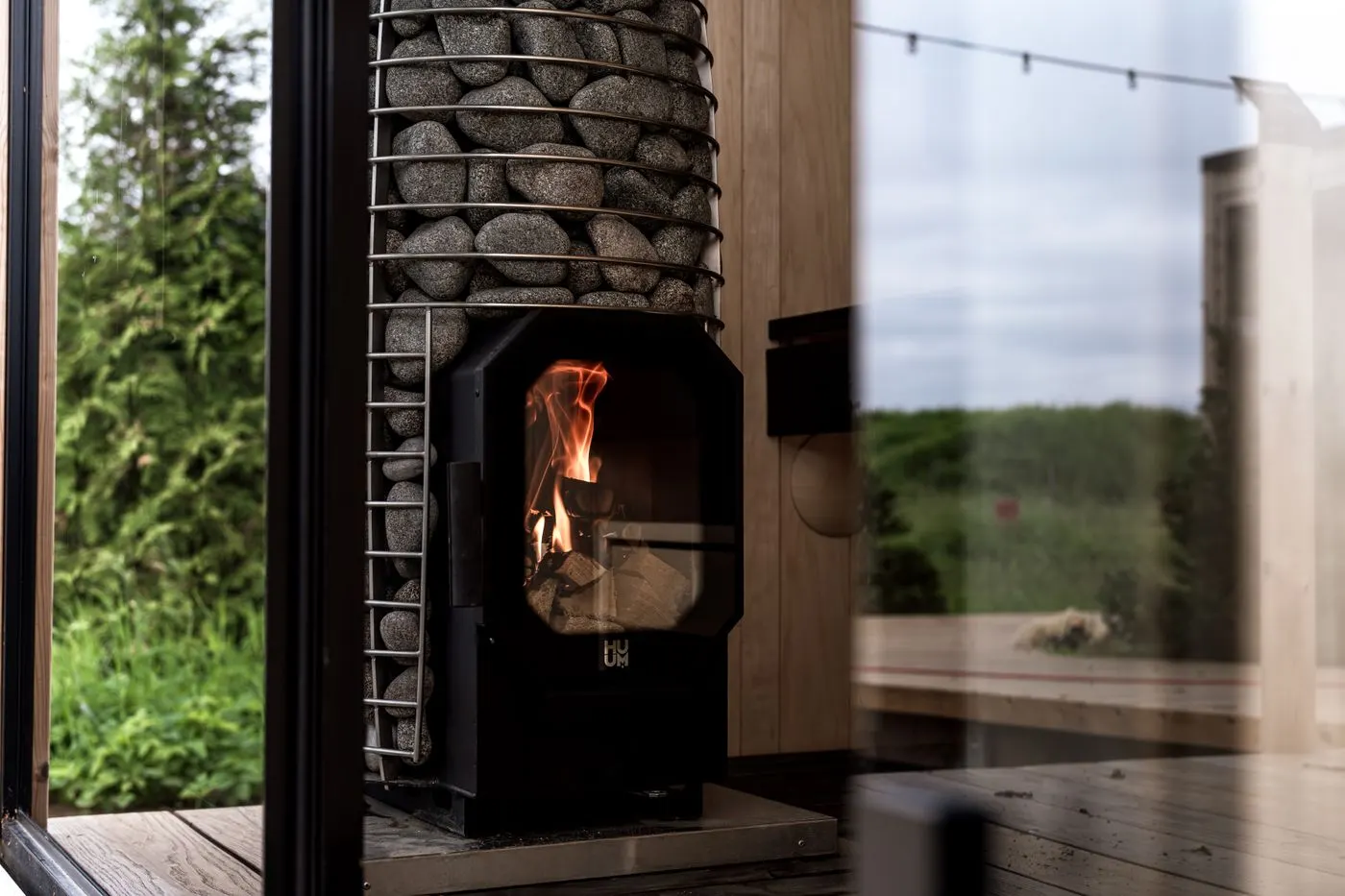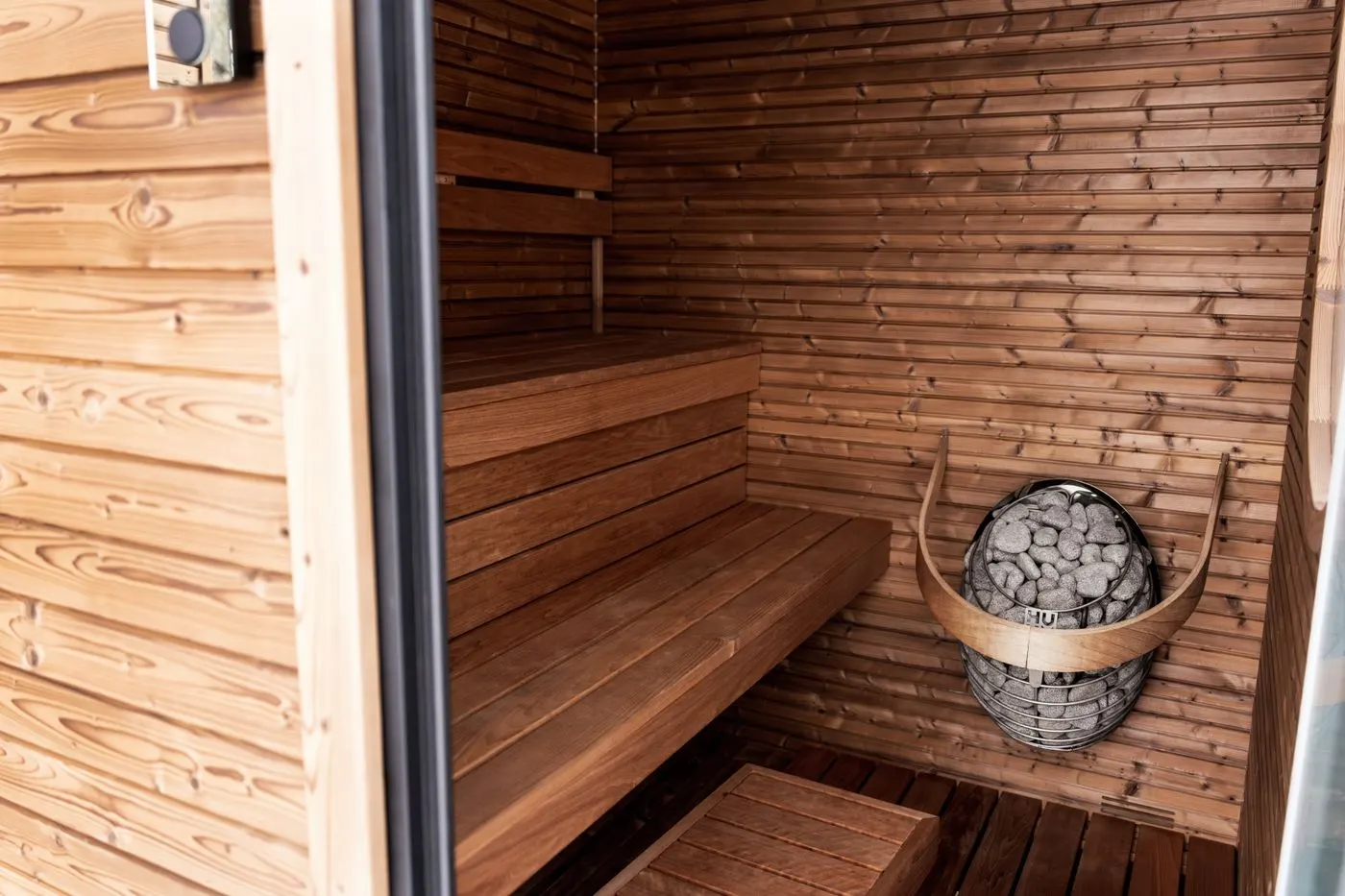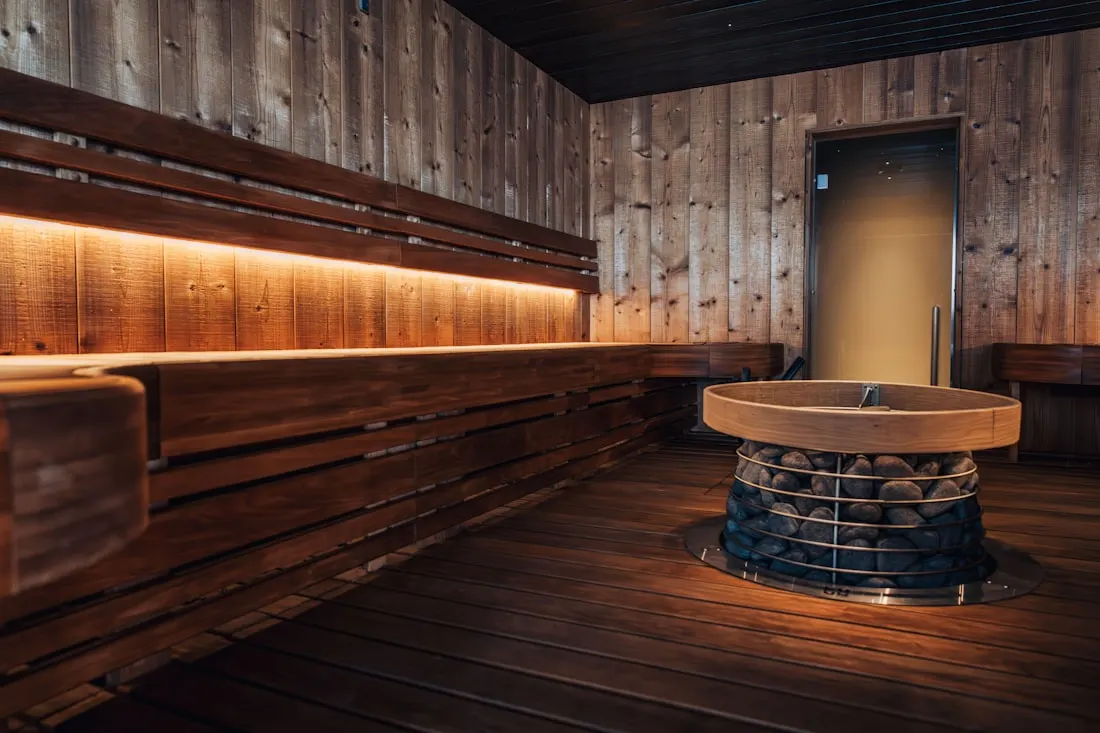
Wall-mounted heaters save floor space and suit smaller saunas, warming up quickly with modest stone capacity. Floor-standing and stone-tower heaters hold far more stone, giving a softer, more stable, more enveloping heat that suits larger rooms — at the cost of floor space and a longer warm-up. Choose by room size, the heat quality you want and available space; both need correct clearances and a licensed electrical connection.
Once you’ve chosen an electric heater, the next decision is where it sits: on the wall or on the floor. It’s not just about mounting — the two styles differ in stone capacity, heat quality and how much of your sauna they take up. Here’s how to choose.
The core difference: stone capacity
The real distinction is how much stone each holds. Wall-mounted heaters are compact, with modest stone capacity. Floor-standing and stone-tower (pillar) heaters carry far more stone. And stone capacity shapes the experience: more stone means a softer, more stable, more enveloping heat and a gentler löyly, while less stone gives a sharper, faster-responding heat that swings more.
Wall-mounted heaters
Strengths: compact, space-saving, quick to warm up thanks to less stone mass — ideal for small and two-person saunas where floor space is precious. They free up the floor and keep the layout simple.
Limits: smaller stone capacity means a slightly sharper heat and less of the deep, stable warmth a big stone mass gives. Fine for compact rooms; less suited to large ones.
Floor-standing and tower heaters
Strengths: high stone capacity for a soft, even, enveloping heat and excellent steam, well suited to larger saunas. Stone towers also look striking and radiate heat from a tall column.
Limits: they take up floor space (plus clearances), reducing usable room and bench area, and the larger stone mass means a longer warm-up. Overkill in a tiny sauna.
Side by side
| Factor | Wall-mounted | Floor-standing / tower |
|---|---|---|
| Stone capacity | Modest | High |
| Heat quality | Sharper, faster-swinging | Softer, more stable |
| Warm-up | Faster | Slower |
| Floor space | Frees the floor | Takes floor + clearances |
| Best for | Small / compact saunas | Larger saunas |
How to choose
- Small or compact sauna, want quick heat and max space? Wall-mounted.
- Larger sauna, want the softest, most stable heat and best steam? Floor-standing or tower.
- Either way: size the heater to the room and cold climate, plan the layout around its clearances, and have the electrical connection done by a licensed electrician.
It affects the whole layout
The choice isn’t only about the heater — it shapes the room around it. A floor-standing heater needs floor space and its own footprint, which affects where the benches and door go; a wall-mounted heater frees the floor but concentrates its weight and heat on the wall it hangs from. Either way, the deciding factor is the manufacturer’s required clearances to walls, benches and combustibles, which differ between models and must be met exactly — and a guard rail is worth fitting to prevent contact burns whichever type you choose. Plan the heater type, its placement and the bench layout together, from the start, rather than choosing the heater and forcing it into a finished room. In a small sauna especially, a wall-mounted unit can be the difference between a comfortable bench arrangement and a cramped one.
Common mistakes
- A big floor-standing heater in a tiny sauna, eating space and slowing warm-up.
- Expecting deep, stable heat from a small wall unit in a large room.
- Ignoring clearances when planning benches and layout.
- Choosing on looks alone rather than room size and stone capacity.
Next steps
Both types work beautifully when matched to the room. Get the sizing and stone capacity right, and see the full electric heater guide for the wider picture.
Frequently asked questions
Is a floor-standing or wall-mounted sauna heater better?
Neither is simply better. Wall-mounted saves space and heats fast, ideal for small saunas; floor-standing holds more stone for a softer, more stable heat and suits larger rooms. Choose by room size, the heat quality you want, and how much floor space you can give up.
Do floor-standing heaters give better steam?
Often, yes — they hold more stone, and more stone mass generally means a softer, more even löyly and a steadier temperature. Wall-mounted heaters can still make excellent steam, but their smaller stone capacity gives a slightly sharper, faster-swinging heat. It's a matter of scale and preference.
Do wall-mounted heaters heat up faster?
Generally yes, because there's less stone mass to bring up to temperature. That's an advantage in a compact sauna where quick warm-up matters. The trade-off is a less stable, less enveloping heat than a large stone mass provides. Insulation affects warm-up more than heater type.
How much floor space does a floor-standing heater need?
Enough for the unit plus its required clearances to benches and walls, which reduces usable floor and bench space — a real consideration in a small sauna. Wall-mounted heaters free up the floor. Always plan the layout around the heater's clearances, whichever type you choose.
Which is more expensive?
It varies by model and size rather than strictly by type. Large floor-standing and stone-tower heaters with high stone capacity tend to cost more than compact wall units, and need more power. Match the heater to the room; don't overbuy capacity a small sauna can't use.