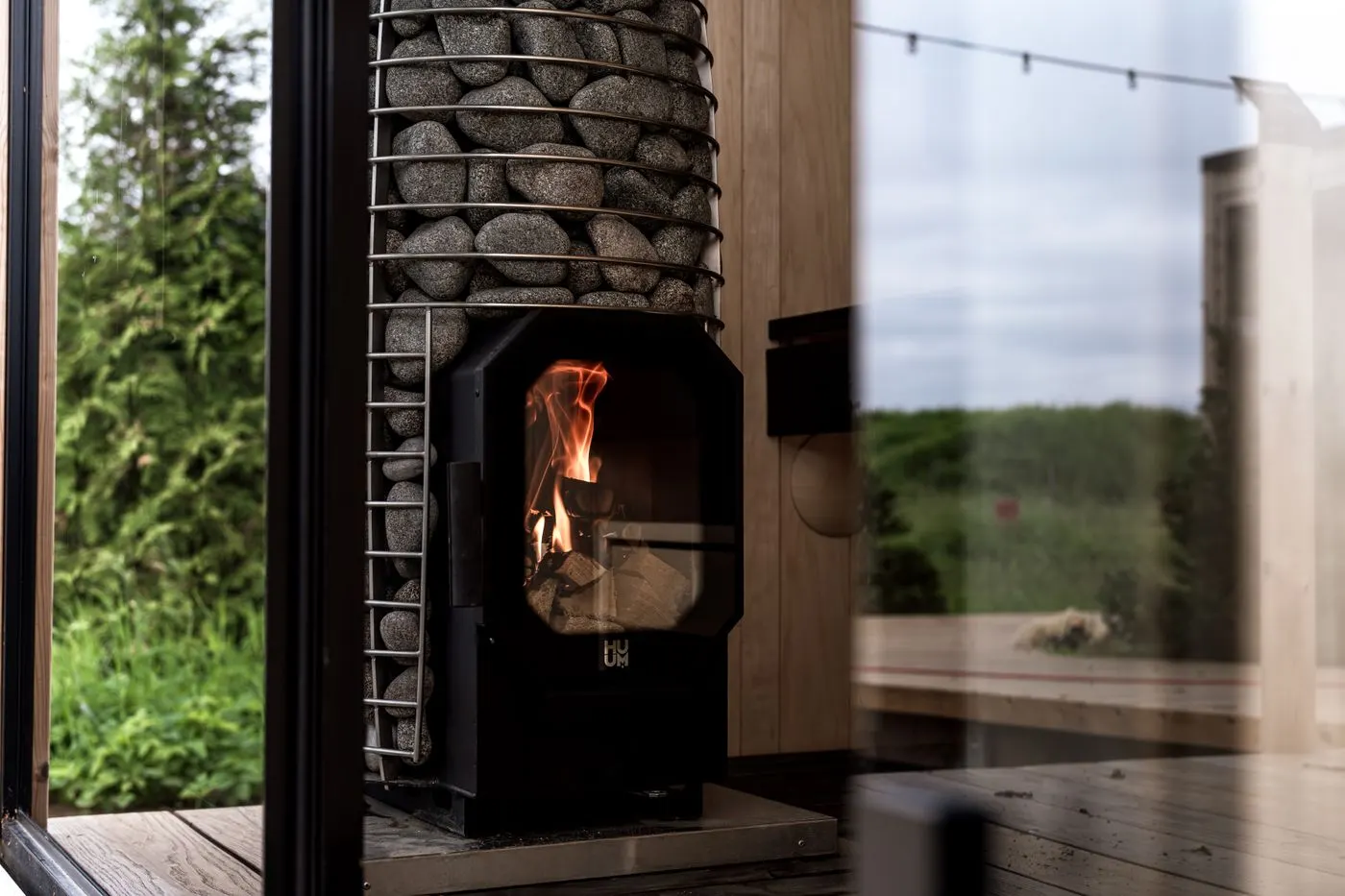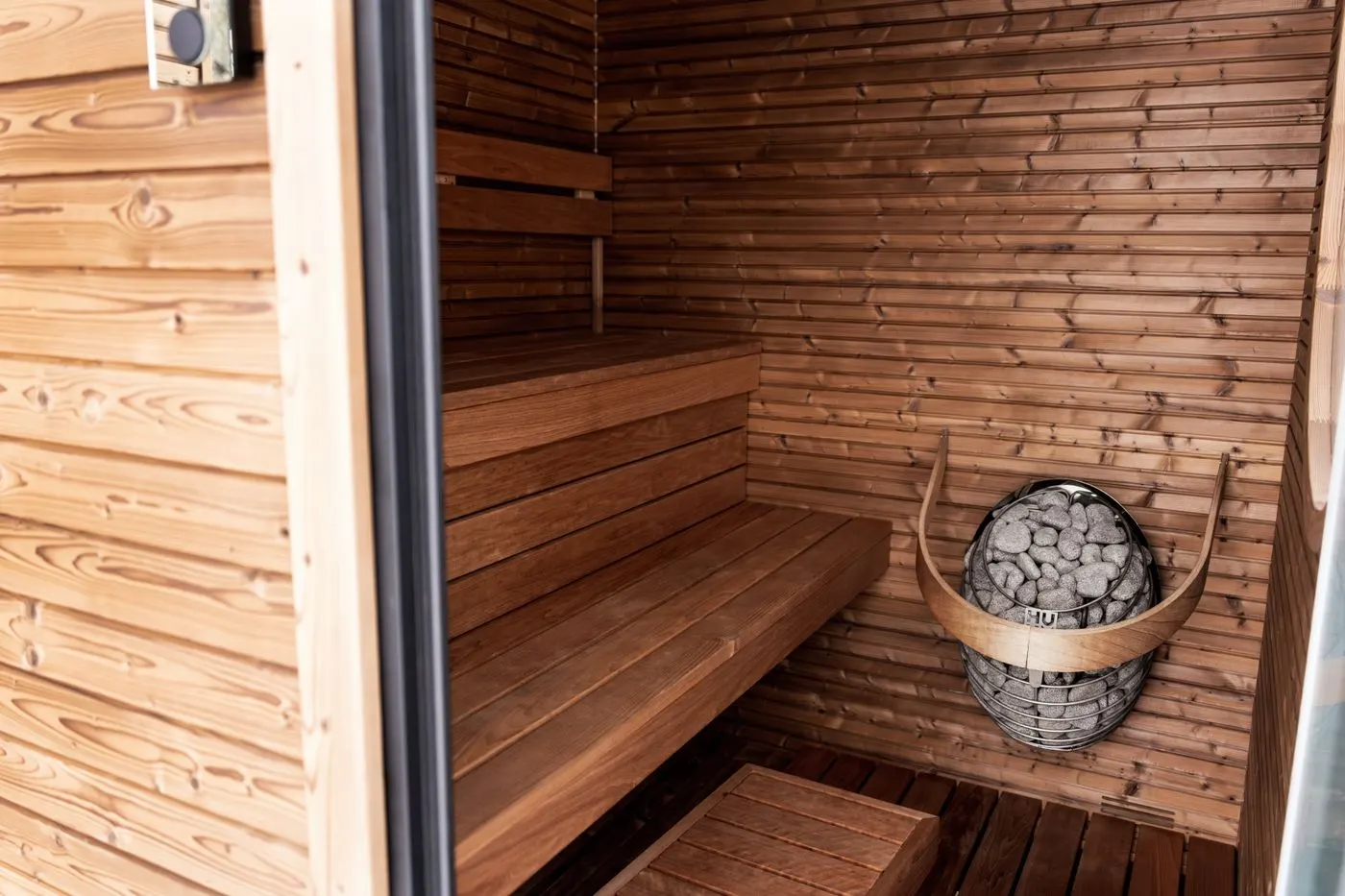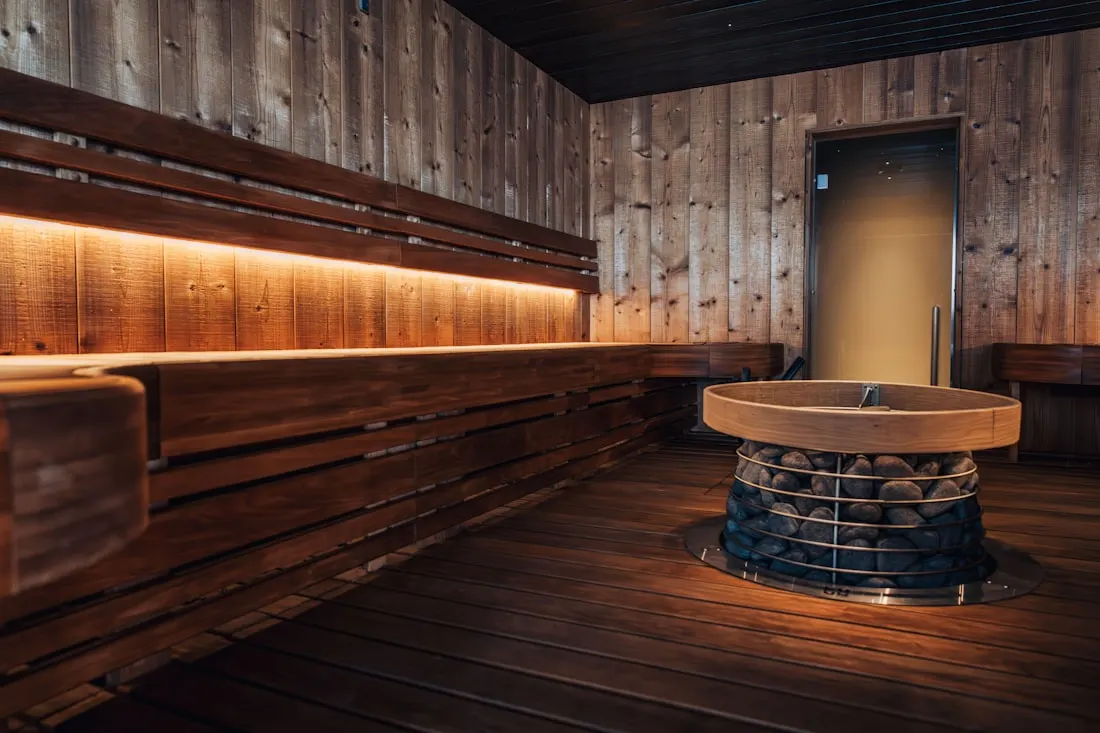
A sauna heater is commonly placed near the door, which keeps the hottest zone away from where people sit and lets cool incoming air from the nearby fresh-air intake feed it, but the exact placement must follow the heater manufacturer's guidance and maintain the required clearances from walls, benches and combustibles. Placement affects heat distribution, airflow, safety and how people move in the room, so it's planned alongside the bench layout, ventilation intake and clearances, not decided last. Getting the heater's position right — safe clearances, near the intake, clear of where people sit and pass — is fundamental to a comfortable, safe, well-circulating sauna.
Where the heater goes shapes almost everything about a sauna — how evenly it heats, how air circulates, how safely people move, and how comfortable the room feels. It’s not a “wherever there’s space” decision: heater placement is planned deliberately around clearances, the fresh-air intake and the bench layout. This guide covers where the heater should go and why.
The common arrangement: near the door
Sauna heaters are commonly placed near the door. This:
- Keeps the hottest zone away from where people sit.
- Sits near the fresh-air intake — typically low by the heater — feeding it cool air.
- Often suits the room’s circulation.
It’s a practical, common arrangement, though not the only one — the right placement depends on the specific heater, room and manufacturer’s guidance.
Clearances come first
Placement and heat distribution
Placement affects heat and airflow, not just space:
- The heater drives the convection that circulates warmth.
- Its position — with the intake near it and the exhaust opposite — shapes how evenly the room heats.
Placing the heater where cool air feeds it and warm air can rise and circulate helps the sauna heat evenly. That’s why placement is planned with the ventilation and bench layout.
Heater and intake: a pair
Heater placement and fresh-air intake placement go hand in hand. The intake is often low, near or beneath the heater, so incoming cool air is warmed as it passes the heater and stones, then rises to circulate. Plan them as a pair, following the heater’s ventilation guidance.
Planned with the layout, not last
Heater placement is decided alongside the bench layout, ventilation and clearances — from the start, not last:
| Placement must satisfy |
|---|
| Safe clearances from walls, benches, combustibles |
| The fresh-air intake and airflow |
| Keeping the hot heater clear of where people sit and pass |
| The manufacturer's guidance |
Getting it wrong compromises safety, heat distribution or comfort.
Common mistakes
- Placing the heater for convenience, ignoring clearances.
- Guessing clearances instead of following the manufacturer.
- Putting the heater far from its intake, hurting circulation.
- Deciding placement last, after the benches and layout.
- Blocking the path or seating with the hot heater.
Next steps
Plan the heater’s position early, satisfying the manufacturer’s clearances, pairing it with the fresh-air intake, and keeping it clear of seating and the path — often near the door. Coordinate it with the bench layout and ventilation, and have the heater installed to its guidance for a safe, even-heating sauna.
Frequently asked questions
Where should a sauna heater be placed?
Commonly near the door, which keeps the hottest zone away from where people sit and lets cool incoming air from the nearby fresh-air intake feed the heater. But the exact placement must follow the heater manufacturer's guidance and maintain the required clearances from walls, benches and combustibles. Placement is planned alongside the bench layout, ventilation intake and clearances. The goal is a position that's safe, well-fed with fresh air, and clear of where people sit and pass — not simply wherever there's space.
Why are sauna heaters often placed near the door?
Placing the heater near the door keeps the hottest zone away from the benches where people sit, positions it near the fresh-air intake that's typically low by the heater (feeding cool air to be warmed), and often suits the room's circulation. It's a common, practical arrangement, though not the only one — the right placement depends on the specific heater, room and manufacturer's guidance. The principle is to put the heater where it's safely clear of seating, well-fed with fresh air, and good for airflow.
How far should a sauna heater be from the wall and benches?
At the clearances specified by the heater manufacturer and code — the required safe distances from walls, benches and combustibles. These clearances are essential for fire safety and are not something to guess or improvise; they come from the specific heater's instructions. Heater placement must maintain them, which is why clearances are a key input to where the heater can go and how the benches are laid out around it. Always follow the manufacturer's clearance requirements. See our guide on heater clearances.
Does heater placement affect how the sauna heats?
Yes — placement affects heat distribution and airflow. The heater drives the convection that circulates warmth, and its position, together with the fresh-air intake near it and the exhaust opposite, shapes how evenly the room heats. Placing the heater where cool incoming air feeds it and warm air can rise and circulate helps the sauna heat evenly. So placement isn't just about safety and space — it's part of getting good, even heat, which is why it's planned with the ventilation and bench layout.
Should the fresh-air intake be near the heater?
Commonly yes — the fresh-air intake is often placed low, near or beneath the heater, so incoming cool air is warmed as it passes the heater and stones and then rises to circulate. This ties heater placement and intake placement together: they're planned as a pair. Putting the heater near its fresh-air supply feeds the convection that heats the room evenly. The exact arrangement follows the heater manufacturer's ventilation guidance, but heater and intake placement go hand in hand. See our fresh-air intake guide.
Can I put the sauna heater anywhere there's space?
No — heater placement must satisfy safe clearances from walls, benches and combustibles, suit the fresh-air intake and airflow, and keep the hot heater clear of where people sit and pass, all per the manufacturer's guidance. It's not simply a matter of available space. Placement is planned alongside the bench layout, ventilation and clearances from the start, because getting it wrong compromises safety, heat distribution or comfort. Always place the heater according to its manufacturer's instructions and the required clearances, not just convenience.