Air in a sauna stratifies — warm air rises and cool air sinks, so the top of the room is much hotter than the floor, which is why bathers sit on a high bench to reach comfortable heat. Circulation is the movement that mixes and refreshes this air: a fresh-air intake low near the heater feeds convection that rises past the stones and circulates, while an exhaust draws stale air out. Good ventilation and a bench set high in the warm layer are what make the heat even and comfortable rather than hot-headed and cold-footed.
Step into a sauna and you’ll feel it immediately: the air is far hotter around your head than your feet. That’s stratification — warm air rising, cool air sinking — and it’s not a fault but the physics a sauna is built around. Understanding how air stratifies and circulates explains why benches sit high, why your feet stay cooler, and how ventilation keeps the heat even. This guide covers the airflow inside the room.
Stratification: heat in layers
Warm air is less dense, so it rises; cool air sinks. The result is temperature layers:
- Hottest air near the ceiling.
- Coolest air at the floor.
A sauna uses this deliberately. The heater and stones create a hot upper layer where the benches sit, while the floor stays much cooler underfoot. It’s why your head feels hotter than your feet — normal, expected, and the reason bench height matters so much.
Circulation: how the air moves
Circulation is the movement that mixes and refreshes the air, driven by convection from the heater:
- Air warmed near the stones rises.
- This draws cooler air in from a low fresh-air intake near the heater.
- That air is warmed in turn and rises, setting up a circulating flow.
- An exhaust opposite and higher draws stale, moist air out.
This intake-fed convection plus the exhaust is what keeps the air moving, fresh and reasonably even rather than stagnant — see the full ventilation system.
Bench height: sit where the heat is
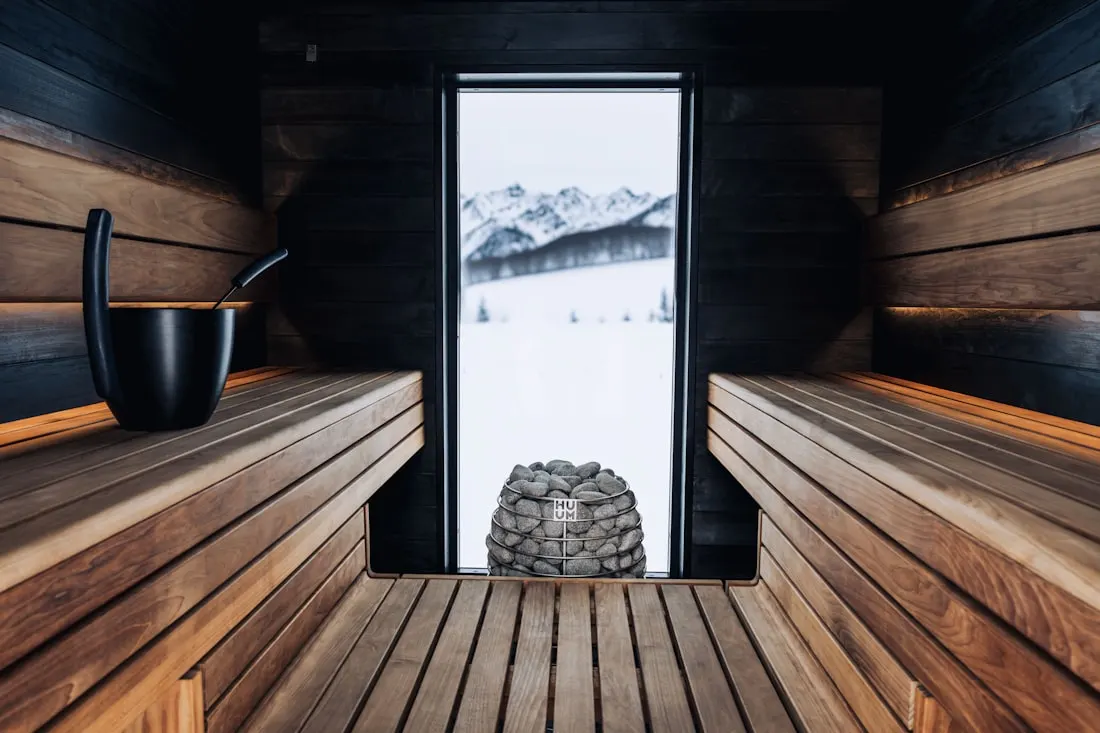
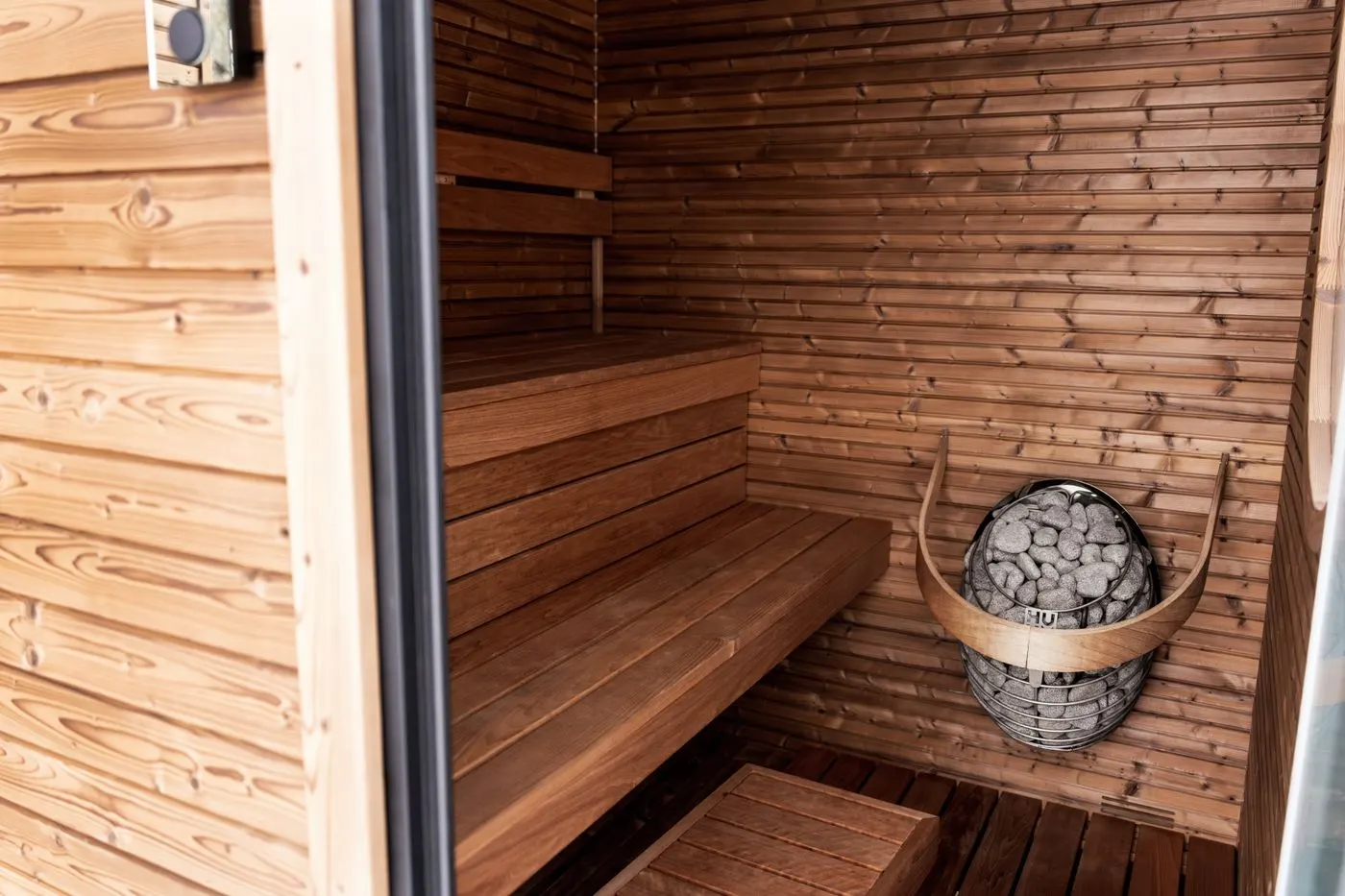
Because heat stratifies, where you sit determines how warm you feel. The benches — especially the upper löyly bench — are set high, up in the warm layer, often near the level of the top of the heater or its stones. Sit low and you’re in cooler air; sit high and you’re in the heat. The exact height depends on the heater and design, but the principle is simple: sit high, where the heat is.
Löyly: stirring the heat
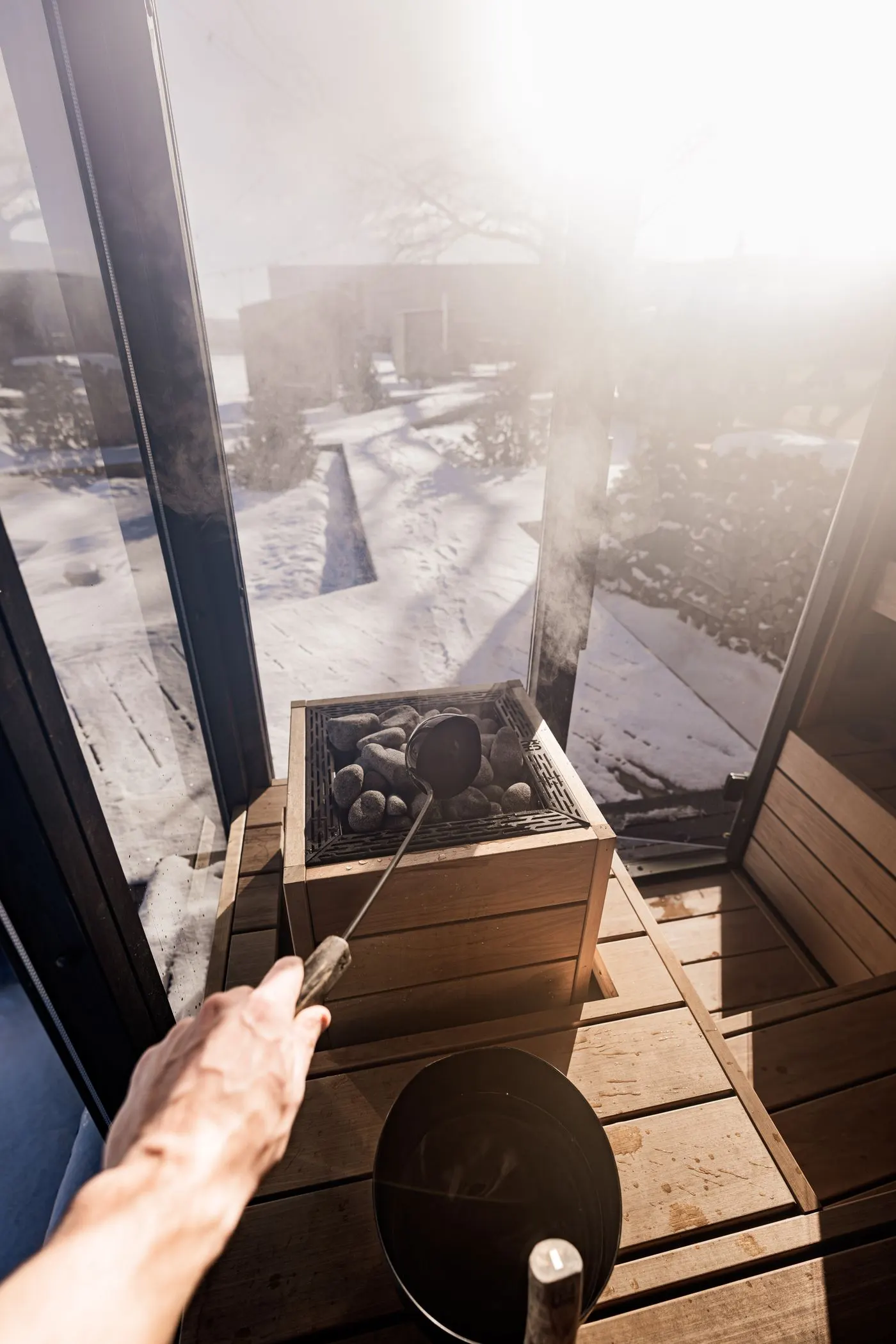
Throwing water on the hot stones — löyly — flashes to steam and sends a wave of heat and humidity through the room. It:
- Intensifies the heat you feel.
- Stirs and spreads the warm air, helping even it out.
Löyly works with the ventilation-driven circulation, not instead of it — it’s part of how the warm, moist air moves and feels even across the bench.
Making the heat even
If the heat feels uneven or hot-headed and cold-footed beyond the normal gradient:
- Check the circulation — intake low near the heater, exhaust opposite and higher (see fixing poor ventilation).
- Make sure the bench is high enough to sit in the warm layer.
- Use löyly to spread the heat.
Common mistakes
- Benches set too low, below the warm layer, so bathers feel cool.
- Poor circulation leaving stagnant, uneven air.
- Expecting a uniform temperature — some gradient is normal and intended.
- Blocking the intake, killing the convection that circulates heat.
Next steps
Work with the physics: a high bench in the warm layer, good intake-and-exhaust circulation, and löyly to spread the heat. Understand stratification and your sauna’s heat makes sense — hot where you sit, cool underfoot, and even across the bench where it counts.
Frequently asked questions
Why is a sauna hotter at the top than the bottom?
Because heat stratifies: warm air is less dense and rises, while cool air sinks, so the room forms temperature layers with the hottest air near the ceiling and the coolest at the floor. This is normal physics, not a fault. It's why bathers sit on a high bench to reach comfortable heat and why the floor stays much cooler — the löyly bench should sit up in the warm layer.
How does air circulate in a sauna?
By convection driven by the heater: air warmed near the stones rises, drawing cooler air in from a low fresh-air intake near the heater, which is warmed in turn and rises, setting up a circulating flow. An exhaust opposite and higher draws stale, moist air out. This intake-fed convection plus the exhaust is what moves and refreshes the air through the room.
What is heat stratification in a sauna?
It's the layering of air by temperature — hot air on top, cool air below — because warm air rises and cool air sinks. A sauna deliberately uses this: the heater and stones create a hot upper layer where the benches sit, while the floor stays cooler. Understanding stratification explains bench height, why your feet feel cooler than your head, and how löyly spreads the heat.
How do I make the heat more even in my sauna?
Improve circulation and use the löyly. Good ventilation — a low intake near the heater feeding convection and an exhaust opposite and higher — keeps air moving and mixing. Throwing water on the stones (löyly) sends a wave of heat that spreads warmth and evens the feel. And setting the bench high in the warm layer means you sit where the heat is even, rather than low where it's cooler.
How high should the sauna bench be?
High enough to sit in the hot upper layer — the upper bench is typically set well up toward the heater's heat, often with the löyly bench near the level of the top of the heater or its stones, so bathers are in the warm stratified air. The exact height depends on the heater and design, so follow the heater and design guidance, but the principle is: sit high, where the heat is.
Does throwing water on the stones affect circulation?
Yes — löyly (water on the hot stones) flashes to steam and sends a wave of heat and humidity through the room, momentarily stirring and spreading the warm air. It intensifies the heat you feel and helps distribute it, working with the ventilation-driven circulation. It doesn't replace ventilation, but it's part of how the warm, moist air moves and feels even across the bench.