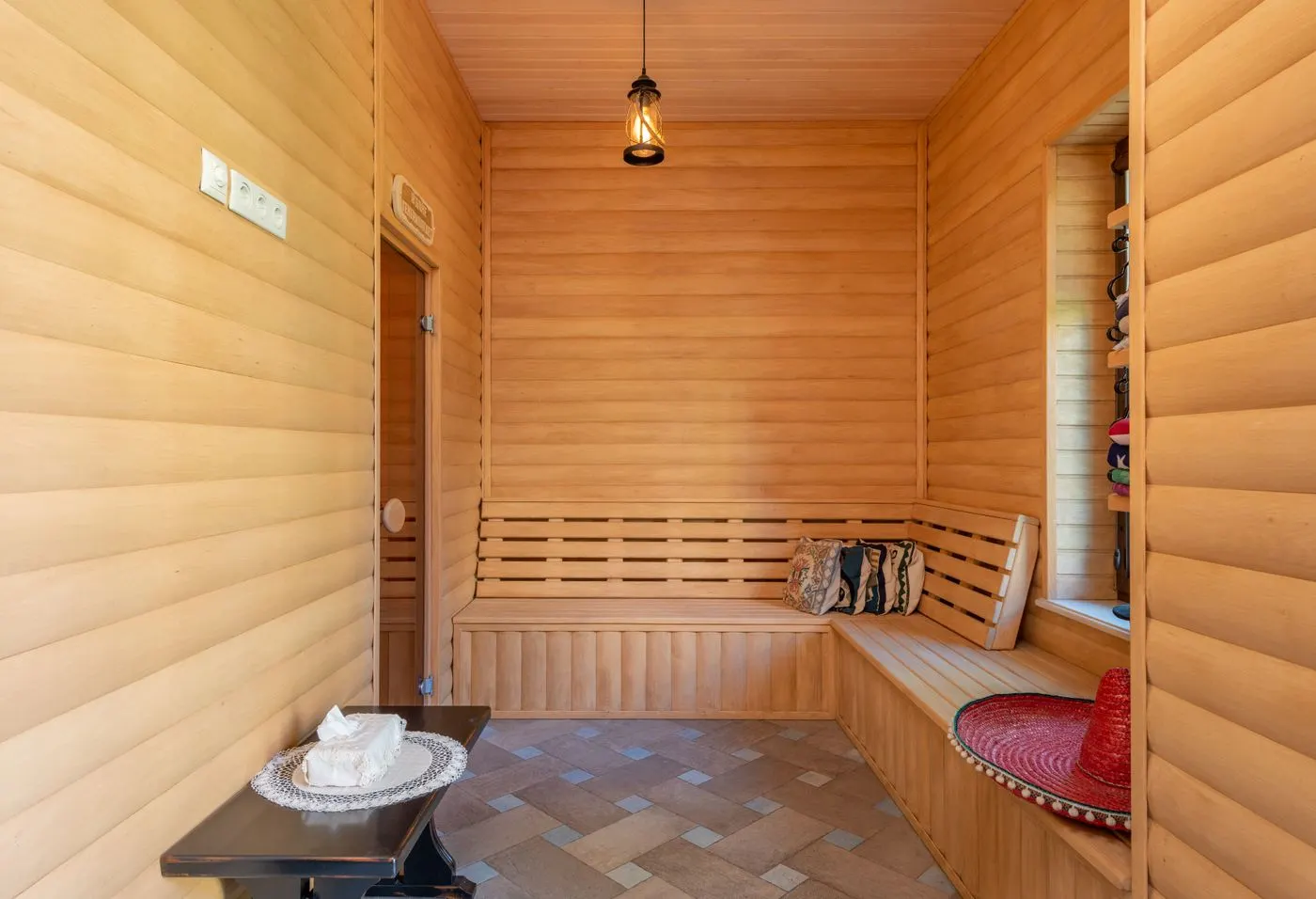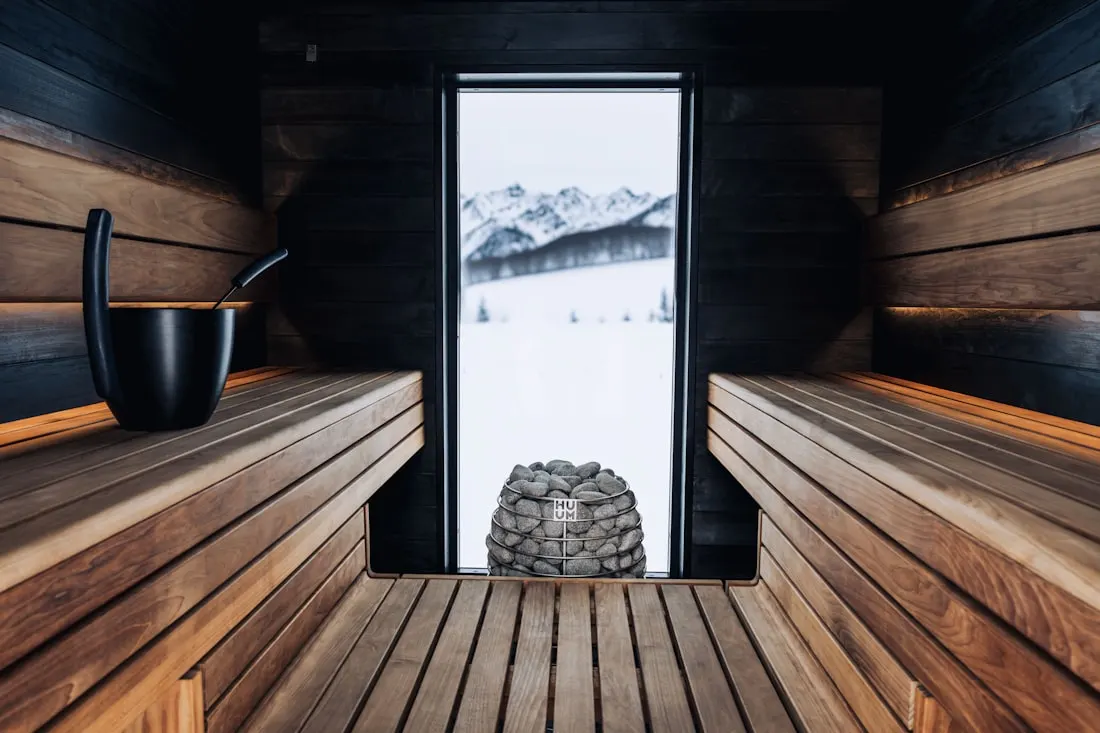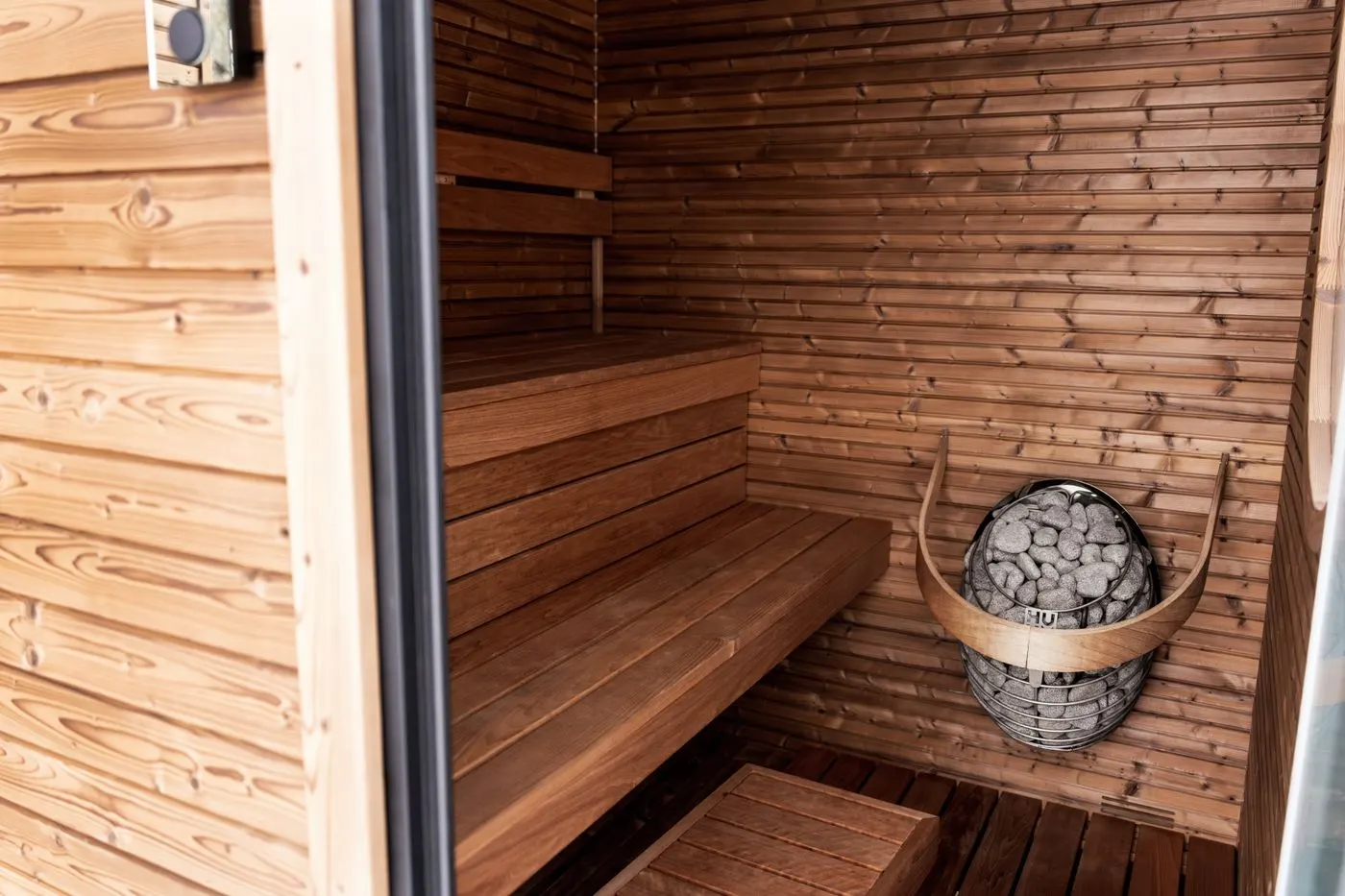
Good sauna benches use a two-tier layout — an upper bench at the height where you sit in the hottest air, and a lower bench for your feet or cooler bathing — built from a cool-to-touch, low-resin wood like aspen, cedar or hemlock. Set the upper bench high enough to reach the heat but with headroom under the ceiling, space the boards slightly for airflow and drainage, and round the edges for comfort. Bench height, wood choice and airflow are what make benches comfortable and durable.
The benches are where you actually experience a sauna — where you sit, sweat, and (if there’s room) lie back in the heat. Yet they’re often an afterthought, which is a shame, because a few simple decisions about height, wood and airflow make the difference between benches that are comfortable and durable and ones that are hot to the touch, cramped or quick to go damp. This guide covers designing and building benches that work.
The two-tier layout
Because heat rises, the height you sit at determines how hot your sauna feels. That’s why good benches use a two-tier layout:
- Upper bench — set high, up in the hottest air, for the full sauna experience (with headroom under the ceiling).
- Lower bench — sits below, cooler, serving as a step, a footrest, or a gentler place to bathe.
This lets bathers choose their heat, and makes a small room work for both sitting and, if size allows, lying down. The upper bench being genuinely up in the heat is the detail that makes a sauna feel right.
Bench height and headroom
The upper bench should be high enough to reach the hottest air while leaving comfortable headroom beneath the ceiling. Exact heights depend on your ceiling height and body, but the principle is fixed: get the upper bench up in the heat, with the lower bench a sensible step below. A low ceiling and a high upper bench put you right in the hot zone — efficient and comfortable.
Choosing the wood
Benches are where you’re in direct skin contact with the wood, so cool-to-touch, low-resin species matter most here:
- Aspen and thermo-aspen — especially popular for benches; they stay notably cool against bare skin and resist moisture.
- Cedar and hemlock — also comfortable and widely used.
- Avoid standard pine and other resinous woods, which can weep pitch when hot and feel hotter to the touch.
See best wood for a sauna for the full comparison — you can happily mix woods, using a cool species for benches and another for the walls.
Airflow and drainage
Space the bench boards slightly apart. Small gaps let:
- Air circulate for even heat.
- Water drain through rather than pooling on the bench.
- The wood dry between sessions, which helps prevent mould.
Solid, gapless benches trap water and heat unevenly, and stay damp. The spacing is a small detail with a real effect on comfort and durability.
Building the benches
Practical construction tips:
- Build a sturdy frame, anchored to the wall or floor.
- Top it with cool-to-touch boards, spaced for airflow.
- Round the edges and corners for comfort against skin.
- Use hidden or recessed fixings that won’t get hot against skin or corrode in the humidity.
- Make benches easy to clean — removable-friendly tops help.
Size for how you’ll use it
Bench length and depth decide how many people fit and whether you can lie down. Measure the usable bench, not just the room — compact saunas trade bench space for a smaller footprint, so if reclining or hosting matters, plan the benches accordingly. See two-person versus larger cabin layouts.
Common mistakes
- An upper bench set too low, out of the heat.
- Resinous wood like pine, hot and pitchy against skin.
- Gapless benches that trap water and stay damp.
- Sharp edges or hot, exposed metal fixings.
- Benches too short for how you actually use the sauna.
Next steps
Design benches with a high upper tier, a cool-to-touch wood, spaced boards for airflow, and comfortable detailing, sized for your use. Pair them with a sensibly low, well-insulated ceiling and good ventilation and drying, and the benches will be comfortable and long-lasting.
Frequently asked questions
How high should a sauna bench be?
The upper bench should be high enough to sit in the hottest air — heat rises, so higher is hotter — while leaving headroom under the ceiling. A lower bench sits below it for your feet or cooler bathing. Exact heights depend on your ceiling and body, but the two-tier arrangement, with the upper bench up in the heat, is the standard that makes benches work.
What is the best wood for sauna benches?
A cool-to-touch, low-resin wood — aspen and thermo-aspen are especially popular for benches because they stay comfortable against bare skin, and cedar and hemlock also work well. Avoid resinous woods like standard pine, which can weep pitch and feel hot. The bench is where you're in direct contact with the wood, so cool-to-touch matters most there.
Why do sauna benches have two tiers?
Because heat rises, so different heights offer different experiences: the upper bench sits in the hottest air for a full sauna, while the lower bench is cooler and serves as a step, a footrest, or a gentler place to bathe. The two-tier layout lets bathers choose their heat and makes the small space work for sitting and lying down.
Should sauna bench boards have gaps?
Yes — space the boards slightly apart so air can circulate and water drains through rather than pooling on the bench. Small gaps keep the benches drier, more comfortable and longer-lasting. Solid, gapless benches trap water and heat unevenly. The spacing also lets the wood dry between sessions, which helps prevent mould.
How do you build sauna benches?
Build a sturdy frame anchored to the wall or floor, then top it with cool-to-touch bench boards spaced slightly for airflow, with edges and corners rounded for comfort. Use fixings that won't get hot against skin or corrode in the humidity — hidden or recessed fixings are ideal. Make the upper bench reachable but with headroom, and keep it removable-friendly for cleaning.
How much space do sauna benches need?
Enough for how you'll use the sauna — room to sit comfortably on the upper tier, and ideally to lie down if the sauna's size allows. Bench length and depth drive how many people fit and whether you can recline, so measure the usable bench, not just the room. Compact saunas trade bench space for a smaller footprint.