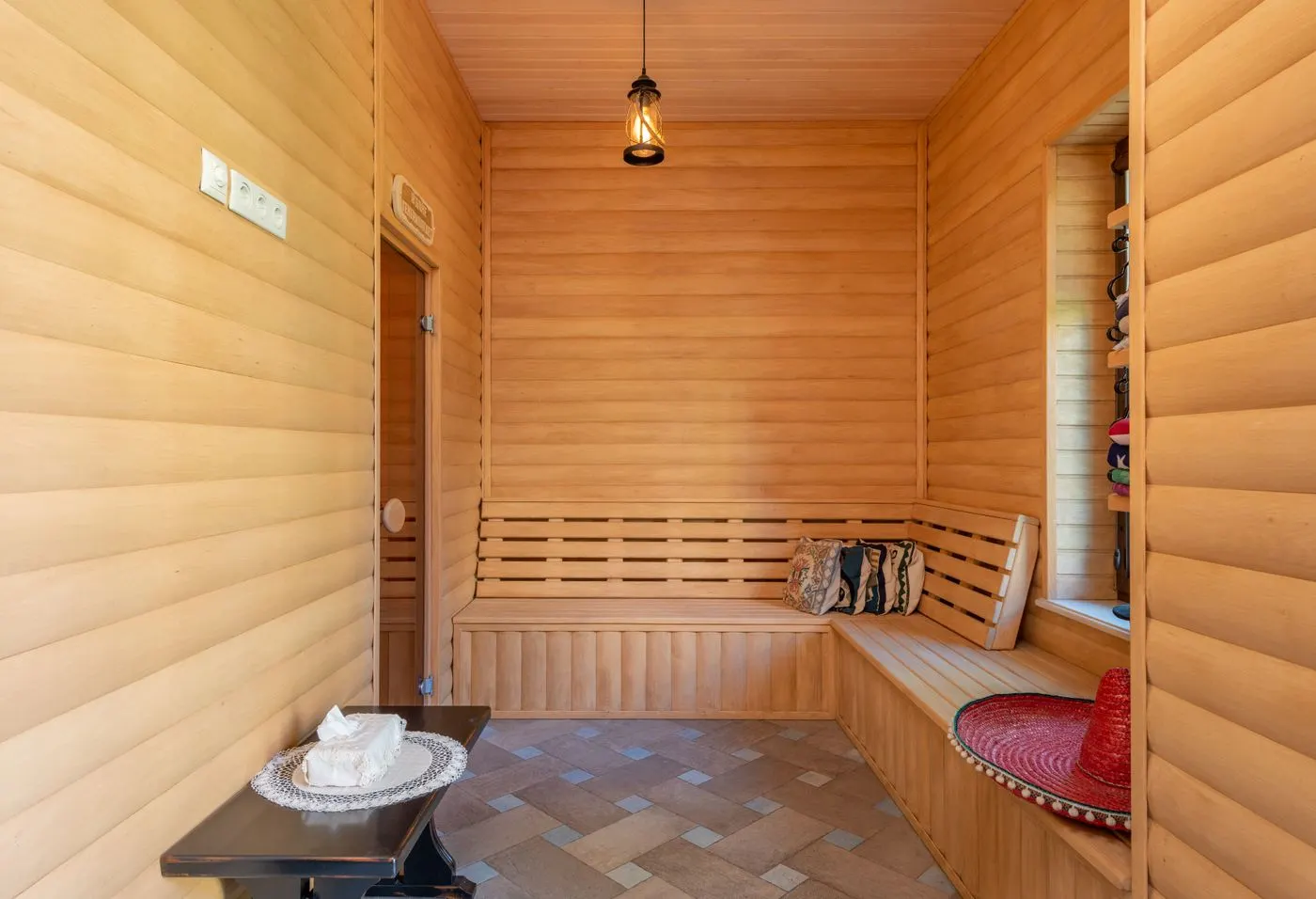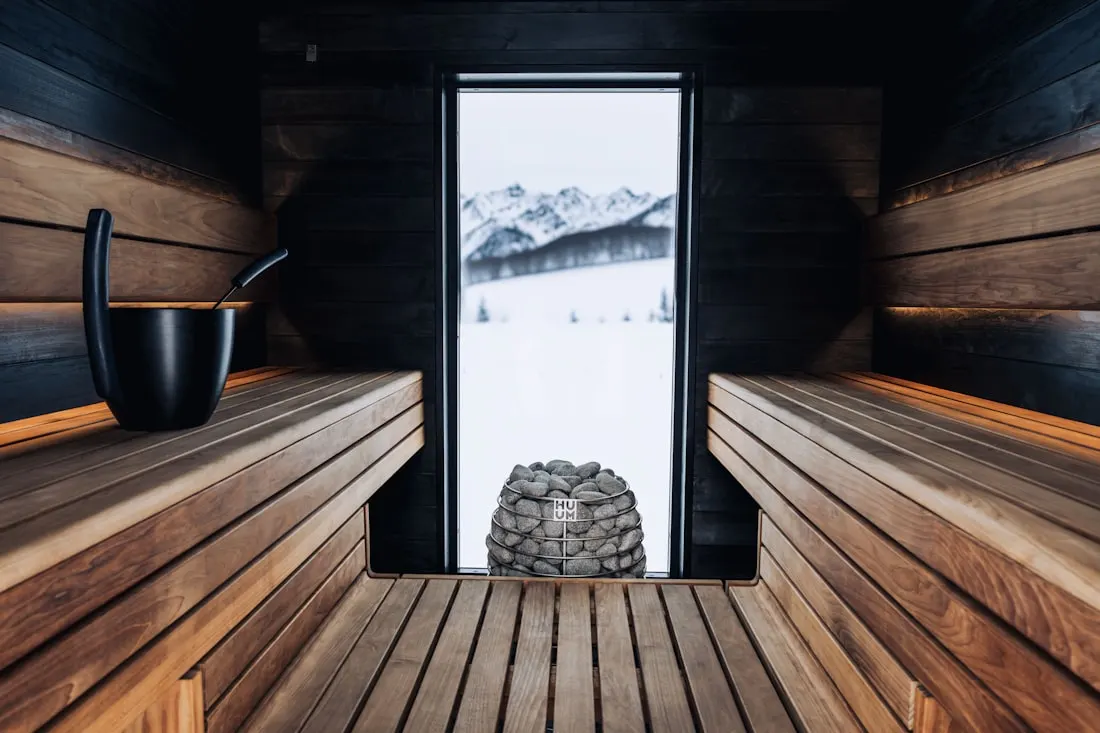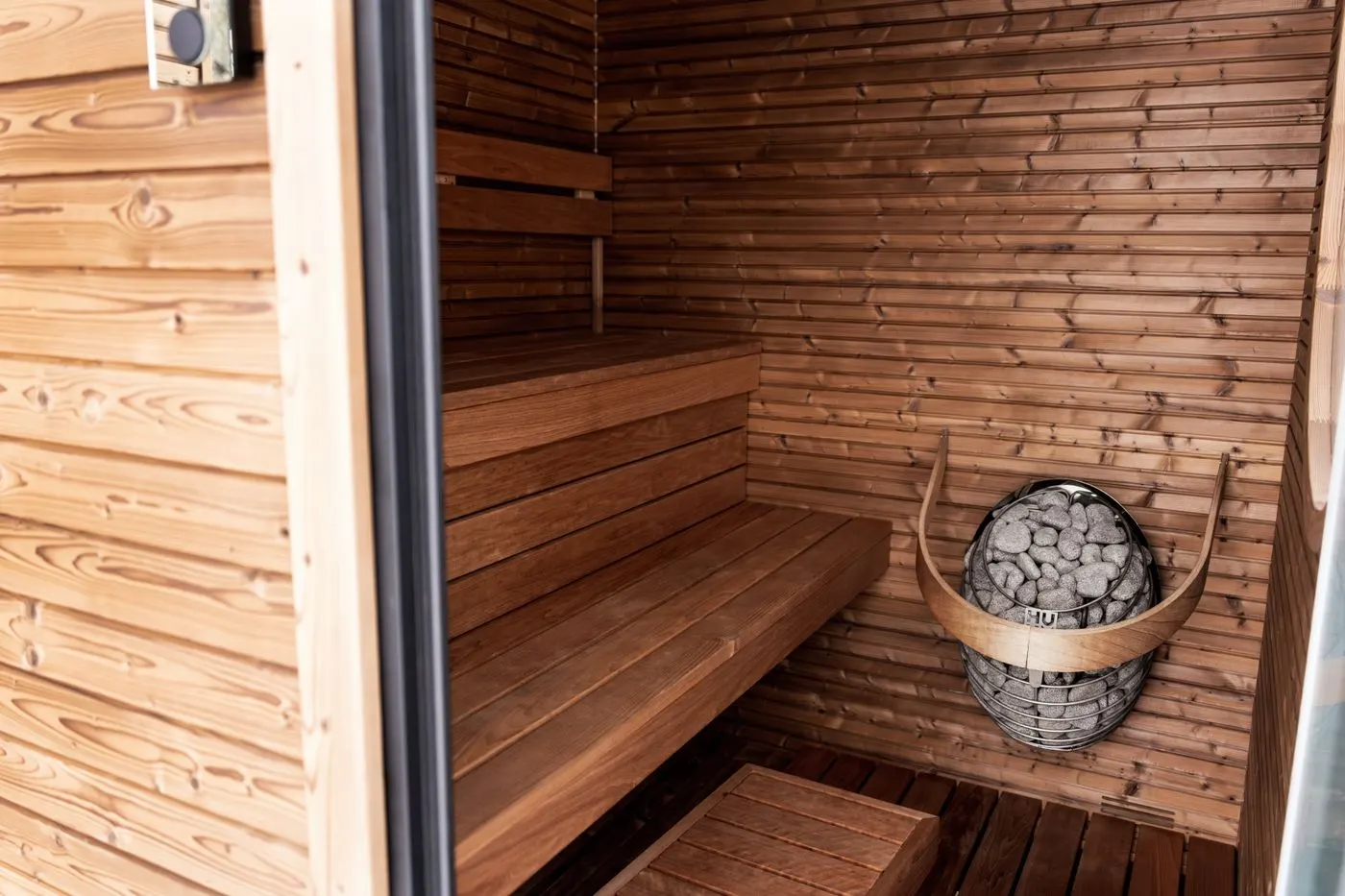
The best sauna woods are stable, low-resin softwoods and thermally treated woods that stay cool to the touch and resist moisture. Western and eastern red cedar are the popular premium choice for aroma and durability; hemlock, spruce and aspen are excellent, more affordable options; thermowood is very stable. Ordinary pine is generally avoided for benches and hot surfaces because its resin can weep and burn skin.
The wood you line a sauna with is one of the few choices you feel and smell every time you use it. It affects aroma, colour, how the benches feel against bare skin, and how well the interior stands up to heat and moisture over the years. Here’s how the common options compare — and why one familiar wood is usually kept out of the hot room.
What makes a good sauna wood
Good sauna woods share a few traits:
- Low resin. Resin (pitch) can weep when heated, stain the wood and burn skin. Sauna woods are chosen to be low in it.
- Stays cool to the touch. Lower-density softwoods don’t store and conduct heat the way dense hardwoods or metal do, so benches and cladding stay comfortable when the room is hot.
- Stable and moisture-tolerant. Sauna wood cycles between hot-humid and dry; it needs to resist warping, cracking and rot.
- Splinter-resistant and pleasant to sit on and look at.
The main options
| Wood | Aroma | Look | Notes | Cost |
|---|---|---|---|---|
| Western red cedar | Strong, classic | Warm red-brown | Durable, low resin, premium favourite | High |
| Eastern white cedar | Distinct, milder | Pale to tan | Durable, Canadian, knottier | Mid–high |
| Hemlock | Very mild / neutral | Pale, even | Smooth, affordable, low aroma | Mid |
| Spruce | Light, fresh | Pale, Nordic | Traditional, economical | Low–mid |
| Aspen / thermo-aspen | Nearly none | Very pale | Stays cool, great for benches | Mid |
| Thermowood | Mild, toasty | Dark brown | Very stable, moisture-resistant | Mid–high |
| Pine (standard) | Resinous | Yellow, knotty | Usually avoided in the hot room | Low |
Cedar: the premium favourite
Western red cedar is the wood most people picture: a warm colour, a strong, pleasant aroma, natural durability and excellent stability, all of which make it a premium interior choice. Eastern white cedar, common in Canada, offers similar durability with a milder scent and often more knots, usually at a lower price. If aroma and looks are high on your list and budget allows, cedar is hard to beat.
Hemlock, spruce and aspen: value and comfort
Not everyone wants a strong scent, and cedar isn’t cheap. Hemlock is smooth, pale and nearly odourless — ideal if you prefer a neutral room — and more affordable. Spruce is the traditional Nordic sauna wood: economical, light and fresh. Aspen (and thermo-aspen) is prized for benches because it stays notably cool to the touch, is very pale and resists moisture. Many excellent saunas use these woods throughout.
Thermowood: stability in a dark tone
Thermally modified wood is heat-treated to be more dimensionally stable and moisture-resistant, with a rich dark colour and low resin. It suits sauna interiors well and, in some species, exteriors. It can be a little more brittle and usually costs more than untreated softwood, but its stability is a real advantage in a climate of big humidity swings.
Why standard pine is limited
Ordinary construction pine is generally kept out of the hot room, especially for benches and surfaces you touch. It tends to contain resin that can weep and blacken when heated and can burn skin, and it feels hotter to the touch. Thermally treated or specially selected pines exist, but the yellow, knotty construction-grade board is not the right choice where people sit against the wood.
Benches vs walls
You can mix woods: a durable, aromatic wood like cedar on the walls and a cool-to-touch wood like aspen for the benches is a common, comfortable combination. Match the wood to the job.
Interior vs exterior
This guide is about the interior hot room. The exterior cladding is a different decision, driven by weather resistance rather than touch and aroma — cedar, thermowood and treated softwoods are all used outside. Whatever you choose inside, remember that the wood only performs if the wall behind it is properly insulated and vapour-controlled; otherwise moisture will find it.
Common mistakes
- Using resinous construction pine for benches or hot surfaces.
- Choosing on looks alone and ignoring how a wood feels when hot.
- Sealing sauna wood with the wrong finish — the hot room generally uses bare or sauna-appropriate treatment, not ordinary varnish.
- Great wood over a bad wall. Without insulation and vapour control, even the best wood goes damp.
Next steps
Pick your interior wood alongside the insulation and ventilation that keep it dry. And if you’re still choosing a sauna format, the wood options apply across all the types.
Frequently asked questions
What is the best wood for a sauna?
There's no single best — it depends on budget and taste. Cedar is the premium favourite for its aroma, low heat conductivity and durability. Hemlock, spruce and aspen are excellent value and widely used. Thermowood is very stable and dark. All are low-resin and stay comfortable to touch when hot.
Is cedar or hemlock better for a sauna?
Cedar offers a stronger aroma, natural durability and a warm colour, at a higher price. Hemlock is nearly odourless, pale, smooth and more affordable, which suits people who prefer a neutral scent. Both stay cool to the touch and perform well; the choice is mostly aroma, colour and cost.
Can you use pine in a sauna?
Ordinary pine is generally avoided for benches and hot interior surfaces because it contains resin (pitch) that can weep when heated, staining the wood and burning skin, and it can feel hotter to touch. Some thermally treated or specially selected pines are used, but standard construction pine is not ideal for the hot room.
What wood should sauna benches be made of?
Benches need a wood that stays cool to the touch, is splinter-resistant and low in resin — cedar, aspen, hemlock, spruce or thermowood are all good. Aspen and thermo-aspen are especially popular for benches because they stay comfortable against bare skin and resist moisture.
Is thermowood good for saunas?
Yes. Thermally modified wood (thermowood) is heat-treated to be more dimensionally stable and moisture-resistant, with a darker colour and low resin. It's well suited to sauna interiors and, in some species, exteriors, though it can be more brittle and usually costs more than untreated softwood.
Does the wood affect how a sauna feels?
Yes — in aroma, colour and touch. Cedar smells distinctive and looks warm; hemlock and aspen are pale and neutral; thermowood is dark. All good sauna woods stay cool enough to touch when hot, which is really a function of low density and resin rather than a dramatic difference between species.