Sauna heater clearances are the minimum safe distances between the heater (and, for wood heaters, the chimney) and any combustible surface — walls, benches, ceiling. They exist to prevent fire, and they are specific to each certified heater and system, set out in the manufacturer's manual and required to meet your local fire code. There is no universal clearance value, and using a generic number is a genuine fire risk. Always follow your heater's manual and local code, and have a qualified installer confirm it.
Of all the numbers in a sauna build, clearances are the ones you must not guess. They are the distances that keep a hot heater from igniting the wooden room around it, and getting them wrong is how sauna fires start. This guide explains what clearances are and why — unusually for a how-to site — the only correct answer we can give you is “read your heater’s manual.” That’s not a dodge; it’s the safe truth.
What clearances are
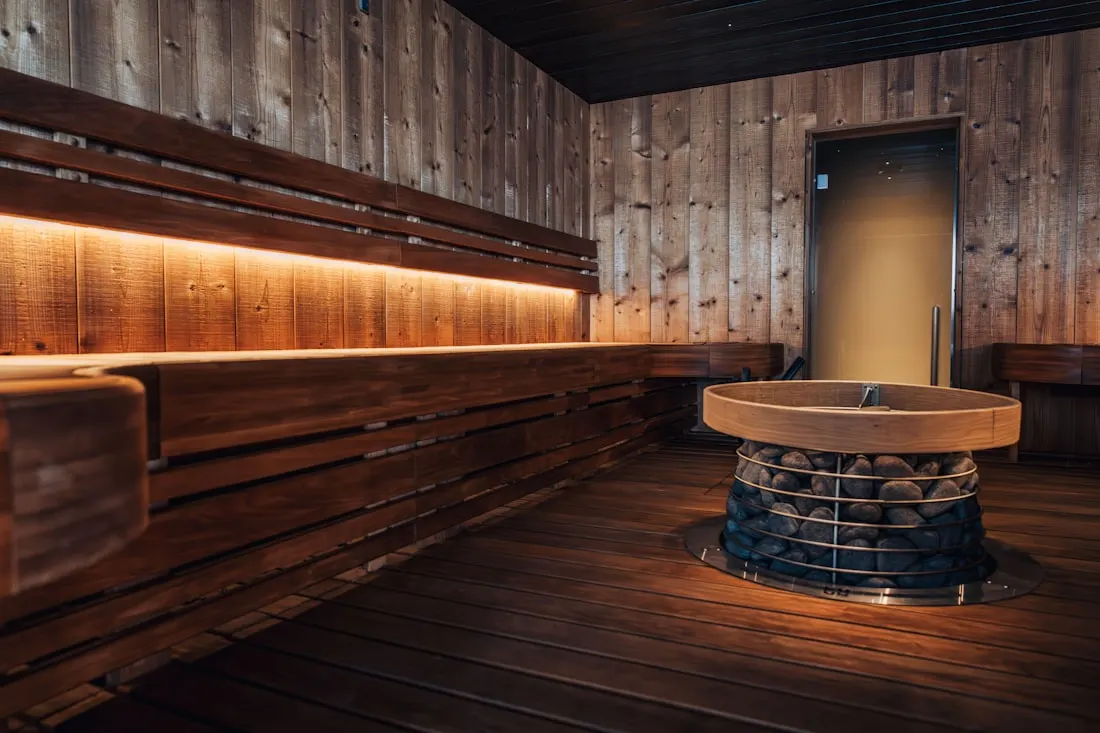
Sauna heater clearances are the minimum safe distances between the heater — and, for a wood-burning heater, its chimney — and any combustible surface: walls, benches, cladding and the ceiling. They exist for one reason: to prevent fire. A heater running at high temperature, too close to wood, can char and eventually ignite it. Correct clearances keep enough distance (or shielding) that this can’t happen.
Why there is no universal number
Here is the crucial point: clearances are specific to each heater. They vary by:
- The model, power and design of the heater.
- Whether approved heat shielding is used.
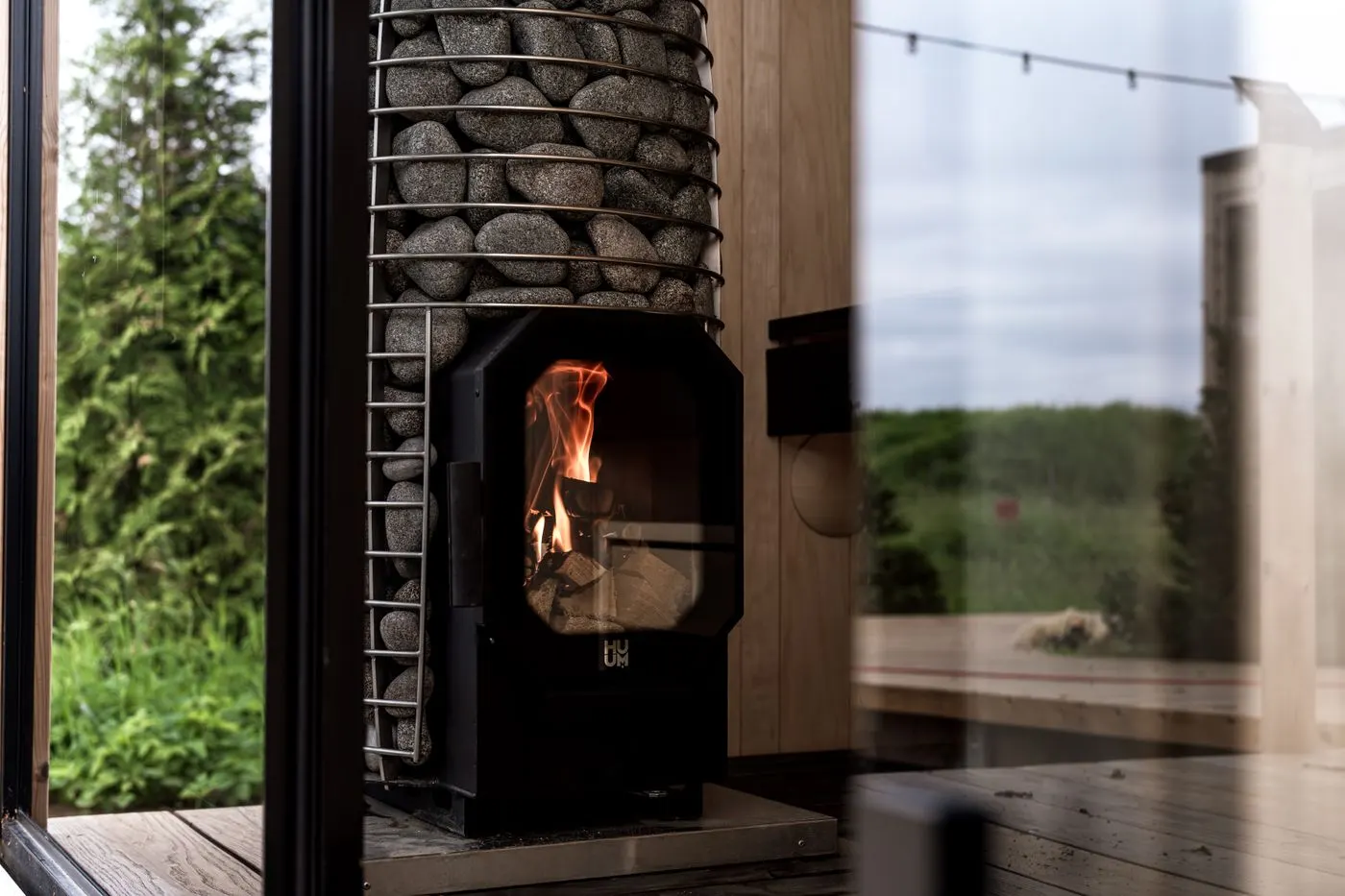
- Whether it’s electric or wood-burning, and the chimney system.
Because of this, there is no single clearance value that’s safe for all saunas. A number that’s correct for one heater can be dangerously short for another. That’s why the correct distances come only from your certified heater’s manufacturer manual, and must also meet your local fire code.
We don't publish clearance values — on purpose
You won't find a "safe distance" number on this site, because using a generic value that doesn't match your equipment is a real fire risk. The manufacturer's manual for your specific certified heater and chimney gives the correct clearances, floor protection and any heat shielding. Follow it, meet your local fire code, and have a qualified installer confirm it.
Heat shielding and reduced clearances
Some heaters allow reduced clearances when an approved heat shield or protection is fitted — but only exactly as the manufacturer specifies. You can’t improvise a shield or decide your own reduced distance. The shield type and the permitted reduced clearances are defined by the manual and must meet code. If you’re tight on space, look at what shielding your chosen heater’s manual sanctions, rather than shortening the distances yourself.
What too-small clearances do
Insufficient clearances are dangerous precisely because the risk builds slowly. Heat soaks into nearby combustible surfaces session after session, drying, charring and degrading the wood until it can ignite — sometimes long after installation. It’s one of the most serious shortcuts in a sauna build, and one of the hardest to see once the walls are closed up. This is why clearances must be right from the start.
Beyond clearances: guards and floor protection
Clearances are one part of heater fire safety. Alongside them:
- A heater guard where people could brush against a hot heater.
- Non-combustible floor protection beneath and around a wood-burning heater.
- Correct chimney clearances and detailing for wood heaters.
All, again, per the manufacturer’s manual and your local fire code.
Plan clearances into the build
Because clearances shape where the heater, benches and walls go, plan them from the start — see heater installation. Decide the heater and read its clearance requirements before finalising the layout, so the distances are designed in, not discovered too late.
Common mistakes
- Using a generic clearance number instead of your heater’s manual.
- Improvising a heat shield or reducing clearances yourself.
- Cramming a heater into a small sauna without meeting its clearances.
- Closing up the walls before confirming clearances.
- Skipping a qualified installer’s check on a wood heater.
Next steps
Read your certified heater’s manual for its exact clearances, heat shielding and floor protection, meet your local fire code, and have a qualified installer confirm it — especially for a wood stove. Then see the wider fire safety, chimney safety and heater installation guides, and our overall safety essentials.
Frequently asked questions
What are sauna heater clearances?
They are the minimum safe distances between a sauna heater — and, for a wood heater, its chimney — and any combustible material such as walls, benches, cladding and the ceiling. Keeping these distances prevents the heater's heat from igniting nearby surfaces. The specific distances come from the certified heater's manual and must meet your local fire code.
What clearance does a sauna heater need to the wall?
The exact distance depends on your specific certified heater and any heat shielding, and is stated in the manufacturer's manual, to be met alongside your local fire code. We don't publish a number because using a generic value that doesn't match your heater is a real fire risk. Read your heater's manual and, if unsure, ask a qualified installer.
Why don't you give clearance numbers?
Because there is no universal number. Clearances vary by heater model, power, design and any heat shielding, and using a value that doesn't match your equipment can cause a fire. The safe, honest approach is to direct you to your certified heater's manual and local fire code, which give the correct distances for your exact situation.
Can I reduce clearances with a heat shield?
Some heaters allow reduced clearances when an approved heat shield or protection is used, exactly as specified in the manufacturer's manual. You can't improvise this — the reduced distances and the shield type are defined by the manufacturer and must meet local code. Only reduce clearances in the way, and by the amount, the manual permits.
What happens if clearances are too small?
Too-small clearances let the heater's heat build up in nearby combustible surfaces over time, which can char, degrade and eventually ignite them — a serious fire risk. It's one of the most dangerous shortcuts in a sauna build. Meeting the manufacturer's clearances, and a heater guard where people could touch the heater, is essential.
Who should confirm my heater clearances?
Read the manufacturer's manual yourself, and for a wood-burning heater especially, have a qualified installer confirm the clearances, heat shielding, floor protection and chimney meet the manual and your local fire code. Clearances are safety-critical, and a professional check is worth it — a fire is far more costly than the advice.