Making an outdoor sauna fire-safe means respecting that it's a very hot appliance inside a wooden building. The essentials are non-combustible floor protection beneath and around a wood-burning heater, a heater guard where people could touch the heater, correct clearances so heat can't reach combustibles, keeping flammable items well clear, safe handling of hot ash into a metal container, and a carbon-monoxide alarm for wood heaters. All clearances and protection come from the manufacturer's manual and your local fire code.
An outdoor sauna is a wonderful thing and, viewed plainly, a very hot appliance running inside a small wooden building. Treat fire safety with that respect and it’s entirely manageable; ignore it and the consequences are severe. This guide covers the practical fire basics — floor protection, guards, keeping combustibles clear, and safe ash — that keep a sauna from becoming a fire.
Start with clearances
Everything begins with heater clearances: the safe distances between the heater (and, for wood, the chimney) and combustible surfaces. These come from your certified heater’s manual and your local fire code — never a generic number. Correct clearances are the foundation of fire safety; the measures below build on them.
Non-combustible floor protection
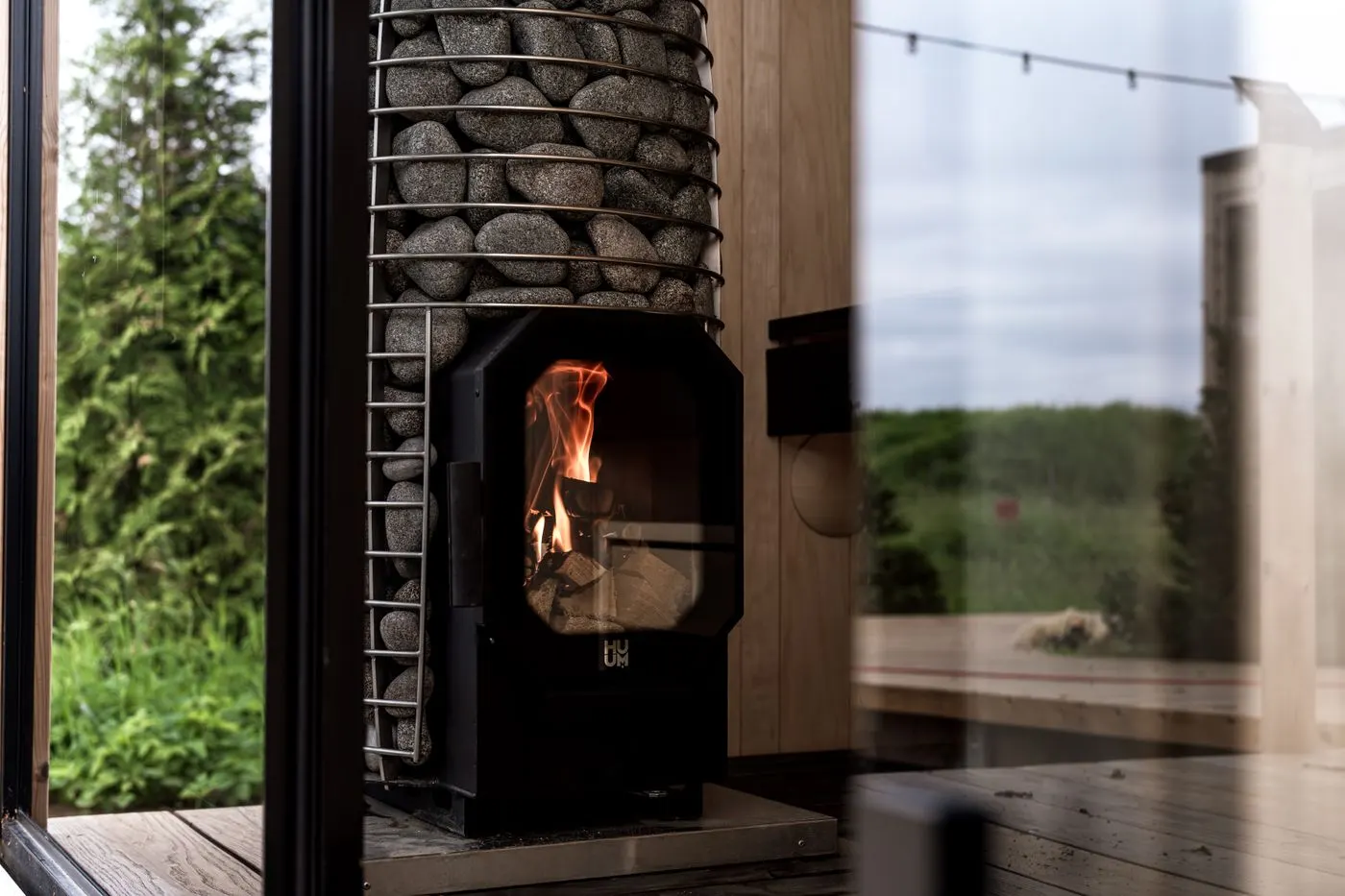
A wood-burning heater needs non-combustible floor protection beneath and in front of it — to catch embers and keep the fire’s heat off a combustible floor or deck. The type and extent are specified in the manufacturer’s manual and local code. Never set a wood stove directly on a wooden floor or deck. Electric heaters have their own mounting and clearance requirements but no ember or flame concern.
Heater guards
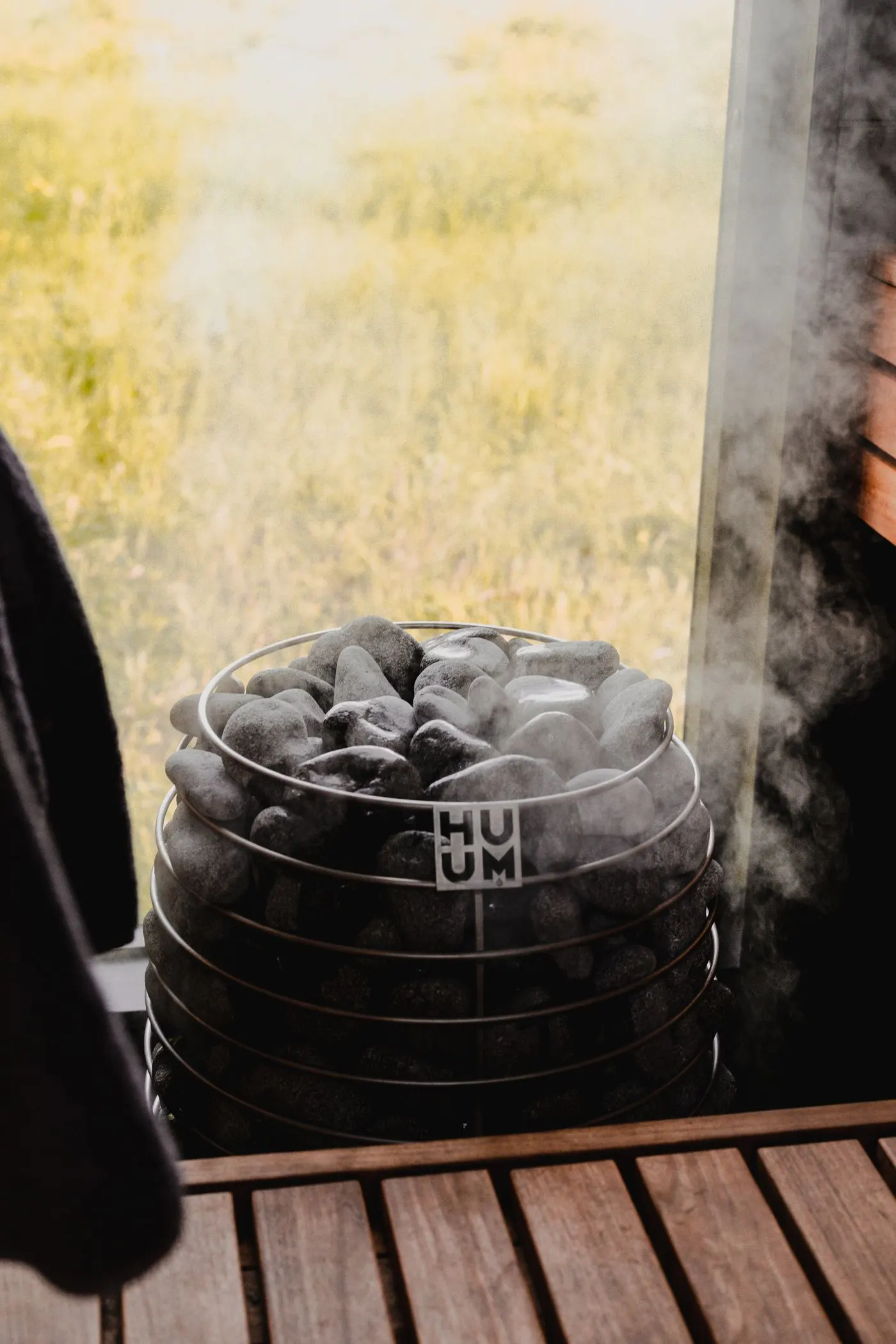
A heater guard protects people from burns where they could brush against or fall onto the hot heater — important in a compact sauna, and especially with children. A good guard prevents contact burns without blocking the heat. Use one suited to your heater; it’s a simple, worthwhile measure in any sauna.
Keep combustibles clear
Many sauna fires start from something flammable left against the heater. The rule is simple and absolute:
- Keep cladding, benches and structure beyond the required clearances.
- Keep loose flammable items — towels, clothing, kindling, cleaning products — well clear.
- Never dry towels or clothes on or near the heater.
The heater’s clearance zone must stay clear at all times, not just at installation.
The towel on the stove
Draping a towel or clothing on a hot heater to dry is one of the most common — and most dangerous — habits in a sauna. It's a direct fire risk. Hang towels well away from the heater, and keep its clearance zone clear of everything flammable, every time.
Safe ash handling (wood heaters)
Hot ash is a frequent, underestimated fire cause. With a wood heater:
- Let the ash cool, then remove it into a metal container with a lid.
- Keep the container on a non-combustible surface, away from anything flammable, until the ash is fully cold — embers can smoulder for a long time.
- Never put ash in a combustible bin or bag, or dump it where it could reignite.
A carbon-monoxide alarm
For any wood-burning (or fuel-burning) heater, fit a carbon-monoxide alarm. It’s part of the fire-and-combustion safety picture: it warns you if venting fails. Electric heaters produce no combustion gases.
Fire safety at a glance
| Measure | Applies to |
|---|---|
| Correct clearances (manual + code) | All heaters |
| Non-combustible floor protection | Wood-burning |
| Heater guard | All heaters |
| Combustibles kept clear | All heaters |
| Safe ash handling | Wood-burning |
| Certified chimney | Wood-burning |
| Carbon-monoxide alarm | Wood-burning / fuel |
| Licensed electrical install | Electric |
Common mistakes
- A wood stove on a combustible floor with no protection.
- Drying towels or clothes on the heater.
- Flammable items inside the clearance zone.
- Hot ash in a combustible bin or dumped where it can reignite.
- No heater guard where people could touch the heater.
Next steps
Fire safety is clearances plus floor protection, a guard, clear combustibles and safe ash — all to the manufacturer’s manual and local fire code. Pair it with chimney safety and carbon-monoxide safety for wood heaters, and see the overall safety essentials. For anything you’re unsure of, a qualified installer settles it.
Frequently asked questions
Does a sauna heater need floor protection?
A wood-burning heater needs non-combustible floor protection beneath and in front of it, to catch embers and keep heat off a combustible floor, exactly as specified in the manufacturer's manual and your local fire code. Electric heaters have their own mounting and clearance requirements. Never place a wood stove directly on a combustible floor or deck.
Do I need a guard around a sauna heater?
A heater guard is important wherever people could brush against or fall onto the hot heater, especially with children or in a compact sauna. It prevents burns without blocking the heat. Use a guard suited to your heater and follow the manufacturer's guidance; it's a simple, worthwhile safety measure in any sauna.
How far should combustibles be from a sauna heater?
Combustible materials — cladding, benches, towels, anything flammable — must be kept beyond the heater's required clearances, which come from your certified heater's manual and local fire code, not a generic number. Keep loose flammable items well clear of the heater at all times, and never dry towels or clothing on or near it.
How do I safely dispose of sauna ash?
Let the ash cool, then remove it into a metal container with a lid, and keep that container on a non-combustible surface away from anything flammable until the ash is fully cold — embers can smoulder for a long time. Never put ash in a combustible bin or bag, or dump it where it could reignite. Hot ash is a common cause of fires.
Can I dry towels or clothes on a sauna heater?
No — never drape towels, clothing or anything flammable on or near the heater. It's a direct fire risk, and it's an easy habit to slip into. Keep the heater and its clearance zone clear of all combustible items, and hang towels well away from it. Many sauna fires start from something flammable left against the heater.
What fire safety does an electric sauna need?
An electric heater needs correct clearances to combustibles, a guard where people could touch it, and a licensed electrical installation — but it produces no flame, ash or combustion gases. Keep combustibles clear and follow the manufacturer's clearances. The floor protection and chimney concerns are specific to wood-burning heaters.