Children can enjoy a sauna, but only with constant adult supervision and sensible limits, because they overheat and dehydrate faster than adults and are at risk from hot surfaces. Keep sessions much shorter and cooler for children, never leave a child unattended in or near a hot sauna, guard the heater against contact burns, keep them hydrated, and take them out at any sign of discomfort. When in doubt, keep it brief or skip it, and follow a physician's advice for a child's health.
A sauna can be a lovely family ritual, and children often love the novelty of the heat and the cold plunge after. But children are not small adults when it comes to heat: they overheat and dehydrate faster, regulate temperature less efficiently, and may not tell you when something’s wrong. With constant supervision and sensible limits, a family sauna is safe and enjoyable. This guide covers how.
Why children need extra care
Children are more vulnerable in a sauna than adults for physiological reasons:
- They heat up and dehydrate faster, with less efficient temperature regulation.
- They may not recognise or communicate when they’re overheating.
- They’re more likely to touch the hot heater or slip.
None of this means children can’t sauna — it means they need closer supervision and gentler limits than adults.
The non-negotiable: constant supervision
The single most important rule is simple: never leave a child unattended in or near a hot sauna. A supervising adult should be with the child throughout, keeping them within arm’s reach of the heater and watching for any sign of overheating. This applies inside the sauna and in the hot zone around it. Supervision isn’t a formality here; it’s the core of child sauna safety.
Shorter, cooler sessions
Children should have much shorter sessions at lower temperatures than adults. There’s no single safe number — let the child’s comfort and an adult’s judgement decide — but err strongly toward brief. A child who’s had enough after a couple of minutes has had enough. Keep the experience gentle, and don’t push a child to “tough it out” in the heat.
Guard the heater
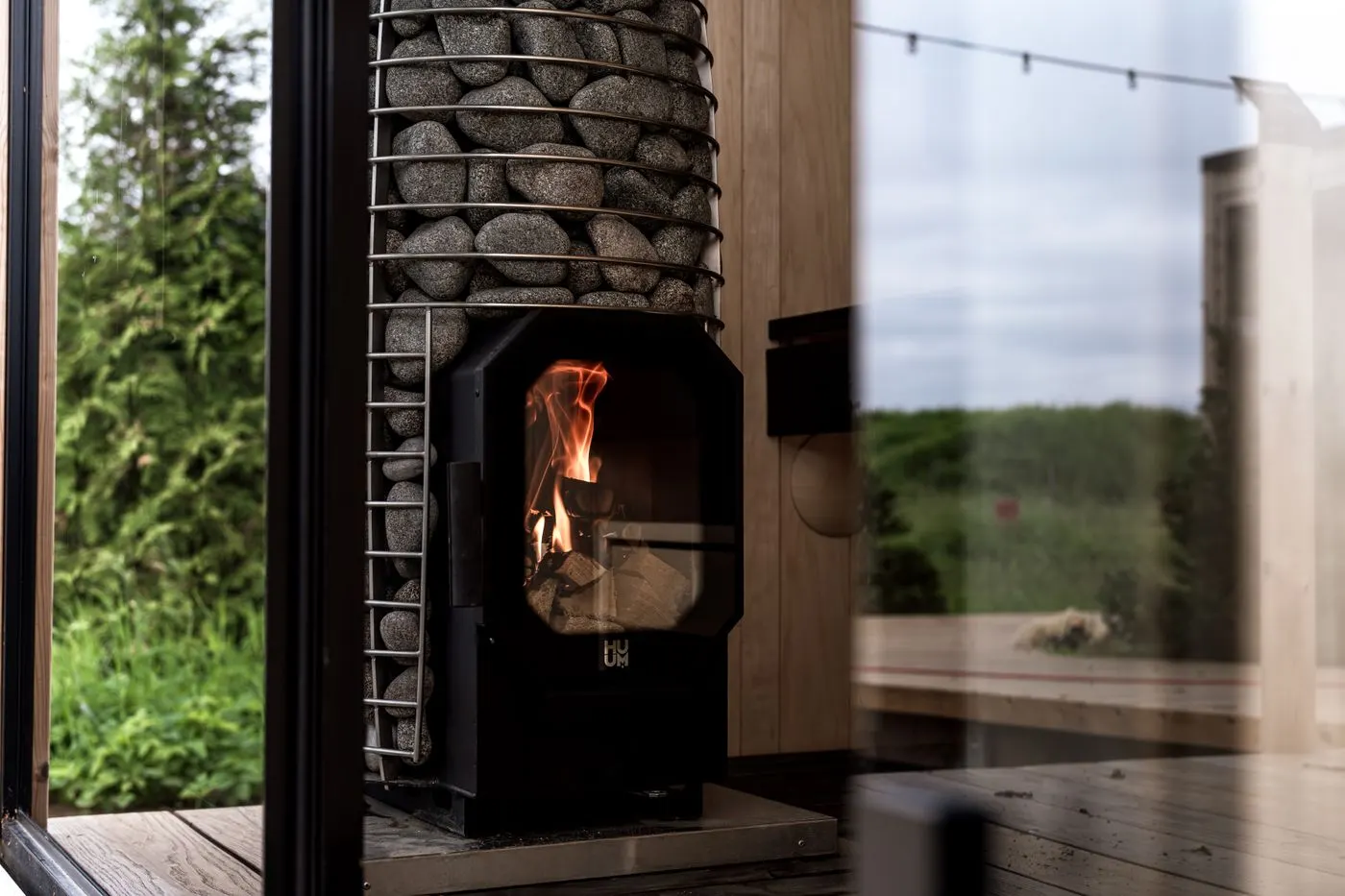
A heater guard is especially important with children, who may reach out or fall against the hot heater. A guard prevents contact burns without blocking the heat, and combined with close supervision, it keeps the most obvious hazard in check. Keep children away from the heater at all times.
Hydration and watching for trouble
Children dehydrate quickly, so keep them hydrated before and after, and watch closely throughout. Take a child out immediately at any sign of being:
- Too hot or flushed.
- Dizzy, tired or irritable.
- Unwell — or if they simply want to leave.
Because children may not clearly communicate overheating, err early and don’t wait for obvious distress. Cool them down gently, rehydrate, and don’t return them to the heat.
Age and health
There’s no universal age for sauna use, and practices vary; very young children tolerate heat poorly. Make this decision conservatively, and for young children or any health concern, with a physician’s advice. A sauna is not a treatment and isn’t right for everyone — see our safety disclaimer. Whatever the age, the rules hold: supervision, cooler and shorter, hydration, and stopping at any discomfort.
The cold plunge
If your family enjoys the cold plunge or snow after the heat, apply the same caution: keep it very brief and gentle for children, supervise closely, and skip it entirely if there’s any concern. The hot-cold contrast is stronger on a small body.
Common mistakes
- Leaving a child unattended in or near the sauna.
- Sessions that are too long or too hot for a child.
- An unguarded heater within a child’s reach.
- Ignoring early signs of overheating.
- Pushing a child to stay in the heat.
Next steps
Family saunas work with constant supervision, gentle limits and a guarded heater. Keep everyone hydrated, watch closely, and stop early. For the wider picture, see the safety essentials, the alcohol and hydration guidance, and — for any health question — a physician and our safety disclaimer.
Frequently asked questions
Can children use a sauna?
Yes, with constant adult supervision and sensible limits — much shorter, cooler sessions than adults have. Children overheat and dehydrate faster and are at risk from the hot heater and surfaces, so they must never be left unattended in or near a sauna. Keep it brief, keep them hydrated, and take them out at the first sign of discomfort.
How long can a child stay in a sauna?
Much less time, and at a lower temperature, than an adult — children overheat quickly, so short sessions are essential and you should watch them closely throughout. There's no single safe number; let the child's comfort and an adult's judgement decide, err strongly toward brief, and take them out at any sign of being too hot, dizzy or unwell.
Why are children more at risk in a sauna?
Children have a higher surface-area-to-body ratio and less efficient temperature regulation, so they heat up and dehydrate faster than adults, and may not recognise or communicate when they're overheating. They're also more likely to touch a hot heater or slip. This is why constant supervision, cooler shorter sessions and a guarded heater matter so much.
Should the heater be guarded for children?
Yes — a heater guard is especially important with children, who may reach out or fall against the hot heater. A guard prevents contact burns without blocking the heat. Combined with never leaving a child unattended near the heater, it's a key measure for a family sauna. Keep children within arm's reach of a supervising adult.
At what age can a child use a sauna?
There's no universal age, and practices vary; very young children in particular tolerate heat poorly. This is a decision to make conservatively and, for young children or any health concern, with a physician's advice. Whatever the age, the rules are the same: constant supervision, cooler and much shorter sessions, hydration, and stopping at any discomfort.
What signs mean a child should leave the sauna?
Take a child out at any sign of being too hot, flushed, dizzy, tired, irritable, or unwell, or if they say they want to leave — and always err early. Children may not clearly communicate overheating, so watch closely and don't wait for obvious distress. Cool them down gently and rehydrate, and don't return them to the heat.