Installing an outdoor sauna heater means planning the supply and the protection: for electric, a dedicated circuit connected by a licensed electrician; for wood, a certified chimney with correct clearances and non-combustible floor protection. Both need the manufacturer's clearances to combustibles respected. You plan the layout and supply; the licensed electrician or qualified installer does the safety-critical work to code. Never improvise wiring, chimneys or clearances.
The heater is the one part of a sauna where installation is genuinely safety-critical — high heat, and either significant electrical power or an open fire and flue. The good news is that the rules are clear: you plan, the professional does the safety-critical work to code. This guide covers what installation involves so you can plan it properly.
Two paths: electric or wood
Installation splits by fuel:
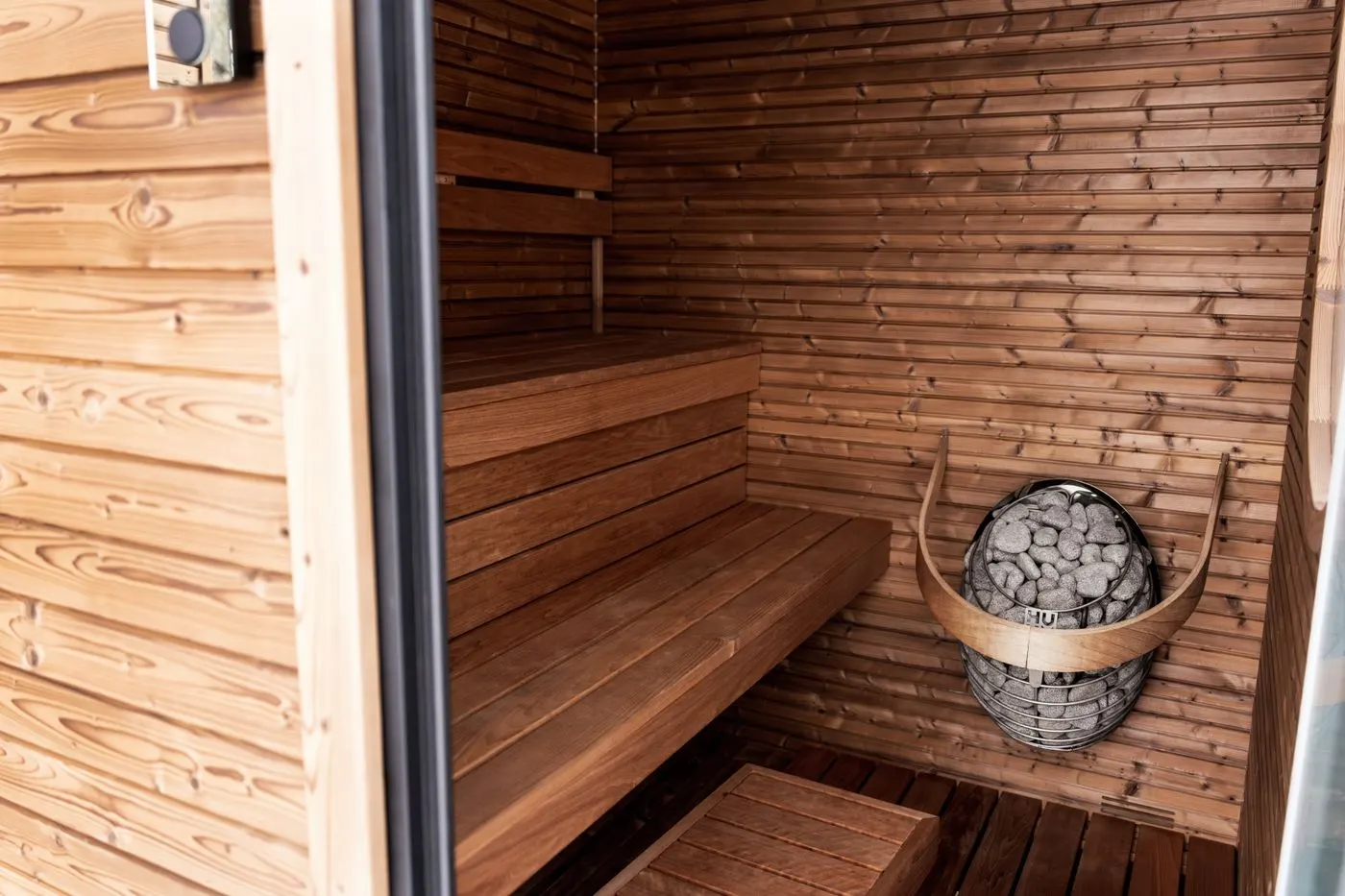
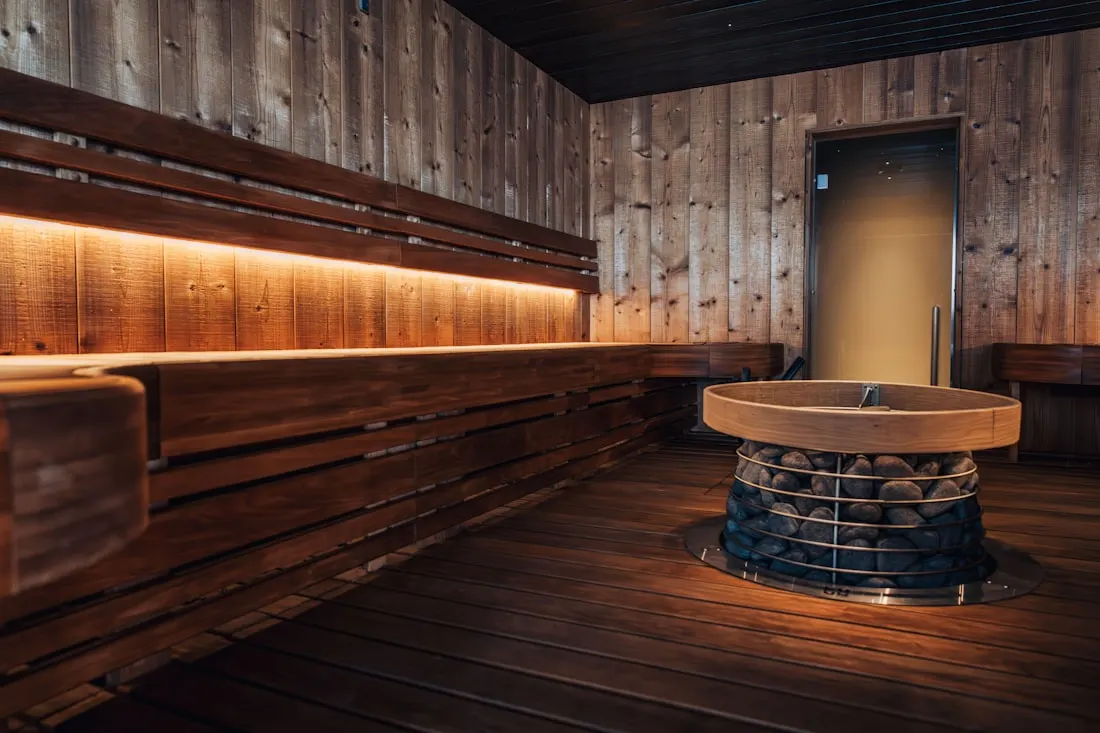
- Electric: a dedicated circuit with correctly rated, outdoor-appropriate wiring and protection, connected by a licensed electrician to your local electrical code, plus the heater’s mounting and clearances.
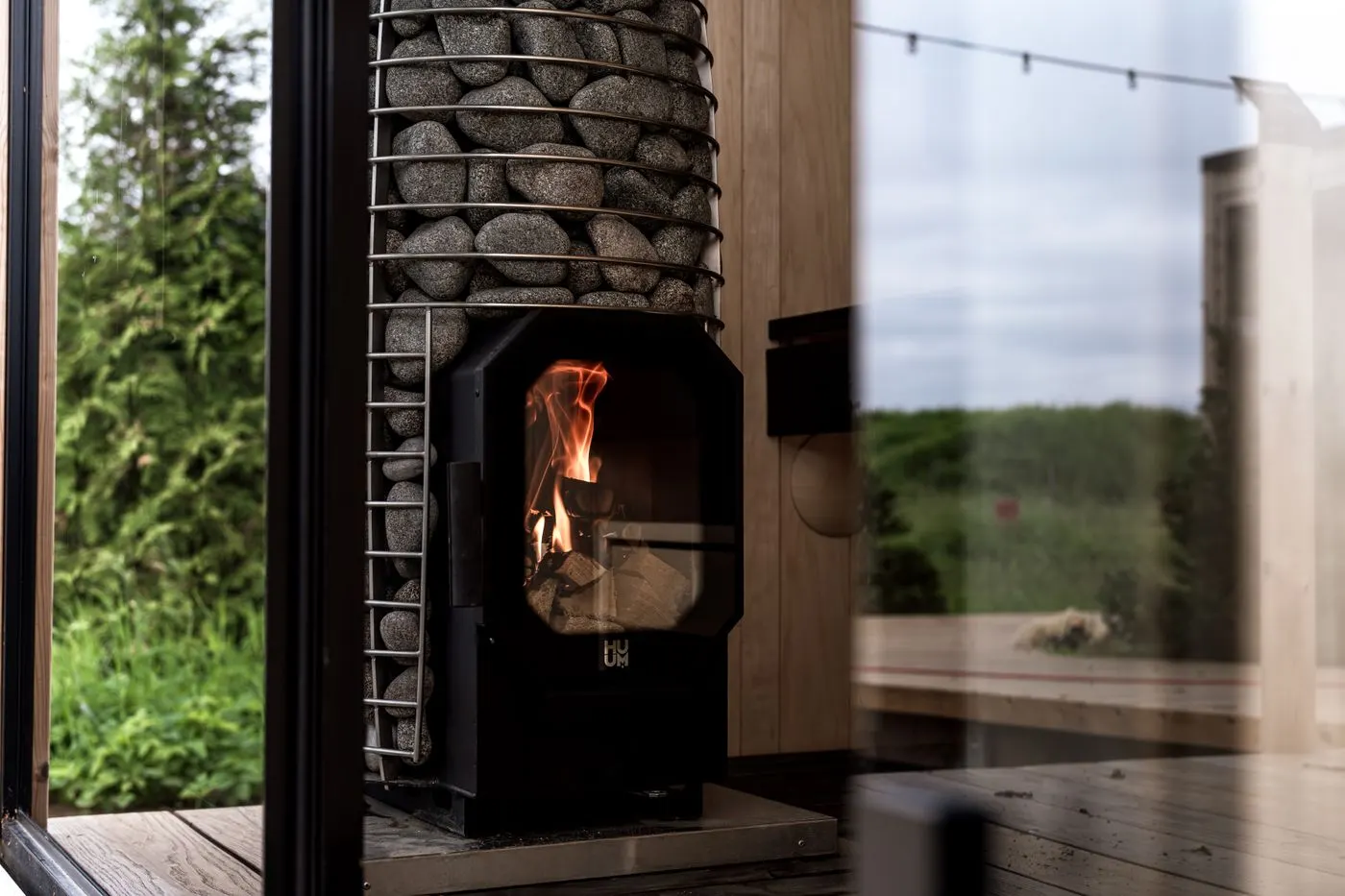
- Wood-burning: a certified chimney of correct height and clearances, a well-detailed roof or wall penetration, non-combustible floor protection, and adequate combustion air — to the manufacturer’s manual and your local fire code.
Both share one rule: the manufacturer’s clearances to combustibles must be respected.
Clearances: the manual, not the internet
We don't publish clearance values
The safe distances to walls, benches and ceiling — and, for wood, the chimney's clearances and height — are specific to your certified heater and system, and set out in its manual. Using a generic number is a real fire risk. Follow the manufacturer's manual and your local code, and have a qualified installer confirm it.
Plan it into the build
Because clearances, the wiring route and the chimney penetration all affect the structure, plan the heater from the start — not after the interior is finished. Decide the heater and its position early, and bring the electrician (or chimney installer) in before you close up the walls, so the supply and protection are designed in, not retrofitted. Retrofitting a circuit or a chimney into a finished sauna is costly and often compromised.
Permits and inspection
Installation is frequently permitted work. An electrical connection usually needs an electrical permit and inspection; a wood-burning appliance and chimney may need a building or fire permit. Requirements vary by municipality — confirm what applies before you install, and have the work inspected where required. This isn’t red tape for its own sake; it’s what keeps a fire-and-electricity appliance in a wooden building safe.
Who does what
- You: choose and size the heater, plan its position and the layout, confirm the supply, and prepare the space.
- Licensed electrician: the electrical circuit, wiring, protection, disconnect and certification.
- Qualified installer: the chimney, clearances and floor protection for a wood heater (and the electrical work if they’re licensed for it).
Inspection and the first firing
Installation isn’t finished when the heater is mounted and wired — it ends with inspection and a careful first firing. For an electric heater, the electrical work is inspected as the permit requires; for a wood or gas heater, the flue and clearances are checked before use. Many heaters also call for an initial break-in firing — following the manufacturer’s instructions — to cure the heater and burn off manufacturing residues before normal bathing, sometimes with the ventilation open and the room aired. Confirm the required clearances are all met, any heat shields or hearth are correctly fitted, and the heater’s safety features work, before the first real session. Treating the first firing as part of the installation — not an afterthought — is how you confirm everything is safe and ready.
Common mistakes
- DIY wiring or chimney work instead of licensed professionals.
- Guessing clearances rather than using the manual and code.
- Retrofitting the supply into a finished sauna.
- Skipping permits and inspection where they’re required.
Next steps
Choose and size the heater, decide electric or wood, and engage a licensed electrician or qualified chimney installer early — before the build closes up. Planning the install from the start is what makes it safe, compliant and painless.
Frequently asked questions
Can I install a sauna heater myself?
You can plan the layout and prepare the space, but the safety-critical parts are not DIY. An electric heater's connection must be done by a licensed electrician; a wood heater's chimney, clearances and floor protection must meet the manufacturer's specs and your local fire code, ideally by a qualified installer. Improvising either is dangerous.
What clearances does a sauna heater need?
The safe distances to walls, benches and ceiling are specific to your certified heater (and chimney, for wood) and are set out in the manufacturer's manual, to be met alongside your local code. We don't publish generic values, because using the wrong number is a fire risk. Follow the manual.
Does a sauna heater need floor protection?
A wood-burning heater needs non-combustible floor protection beneath and in front of it, per its manual and local fire code. Electric heaters have their own clearance and mounting requirements. Either way, follow the manufacturer's installation instructions for the floor and surrounding surfaces.
Do I need a permit to install a sauna heater?
Often. An electric connection typically needs an electrical permit and inspection, and a wood-burning appliance and chimney may need a building or fire permit. Requirements vary by municipality. Confirm what applies before you install, and have the work inspected where required.
Should I install the heater before or during the build?
Plan the heater and its supply from the start, because clearances, the electrical route or the chimney penetration all affect the build. Bring in the electrician (or chimney installer) early, ideally before the interior is finished, so the supply and protection are designed in rather than retrofitted.