Choose a sauna heater for a cold climate by matching four things to a Canadian winter: the fuel (electric for convenience on grid power, wood for off-grid tradition), size (bigger than volume alone suggests, using the manufacturer's outdoor guidance), stone capacity (more stone for stable heat), and controls (timer or remote start to pre-warm). Confirm the supply — power or firewood and a chimney — before you buy.
Choosing a heater is the most consequential decision in an outdoor sauna, and a Canadian winter raises the stakes: the cold punishes an under-specified heater. This buyer’s guide pulls the key decisions together so you choose once and choose right.
1. Fuel: electric or wood
Start with how you’ll power it:
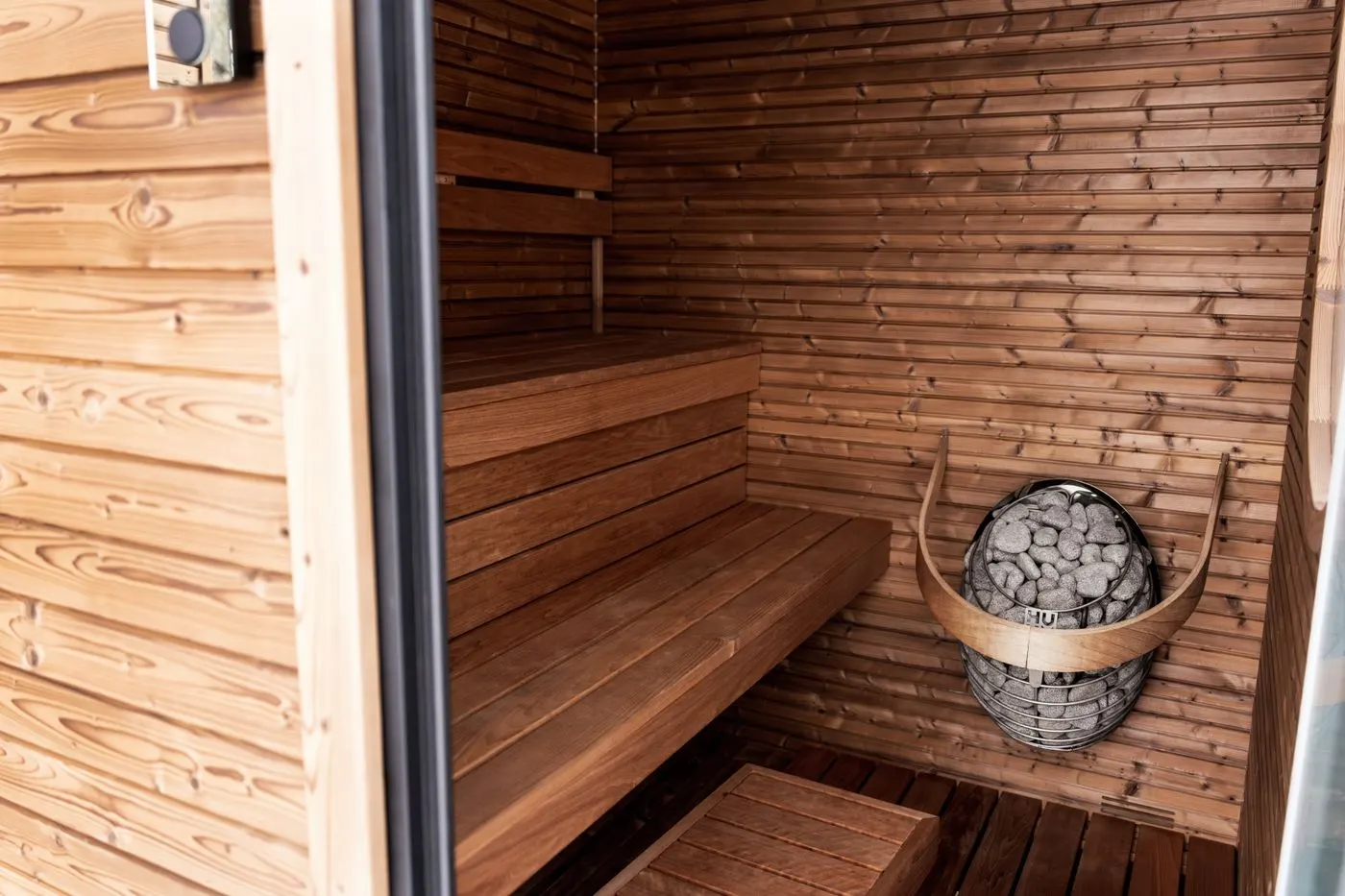
- Electric — clean, quiet, precisely controlled, and easy to pre-warm remotely. Needs a dedicated circuit and adequate power. The default for grid-connected backyards.
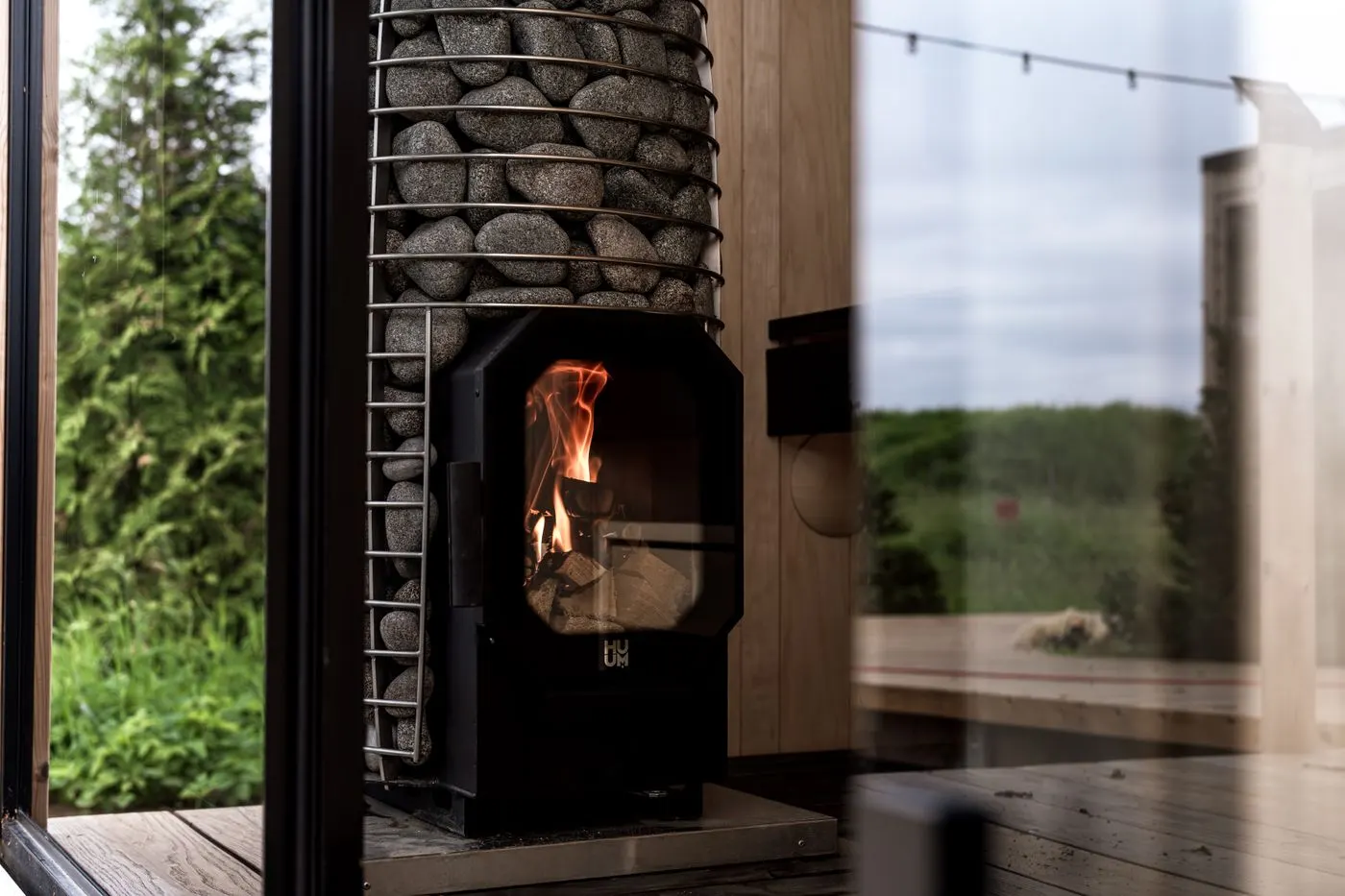
- Wood-burning — strong traditional heat, works off-grid, ideal for cottage and remote sites. Needs a certified chimney, clearances, firewood and tending.
Neither is universally best — see electric vs wood. Your power situation and how you like to sauna decide it.
2. Size up for the cold
The winter rule: an outdoor sauna needs more capacity than volume alone suggests, because it loses more heat and starts colder than an indoor one. So:
- Use the manufacturer’s outdoor / cold-climate sizing.
- Add for glass and any uninsulated or masonry surfaces.
- Within the chart’s range, lean to the larger option.
Good insulation reduces how much heater you need — spend there too. Our sizing guide has the method.
3. Favour stone capacity
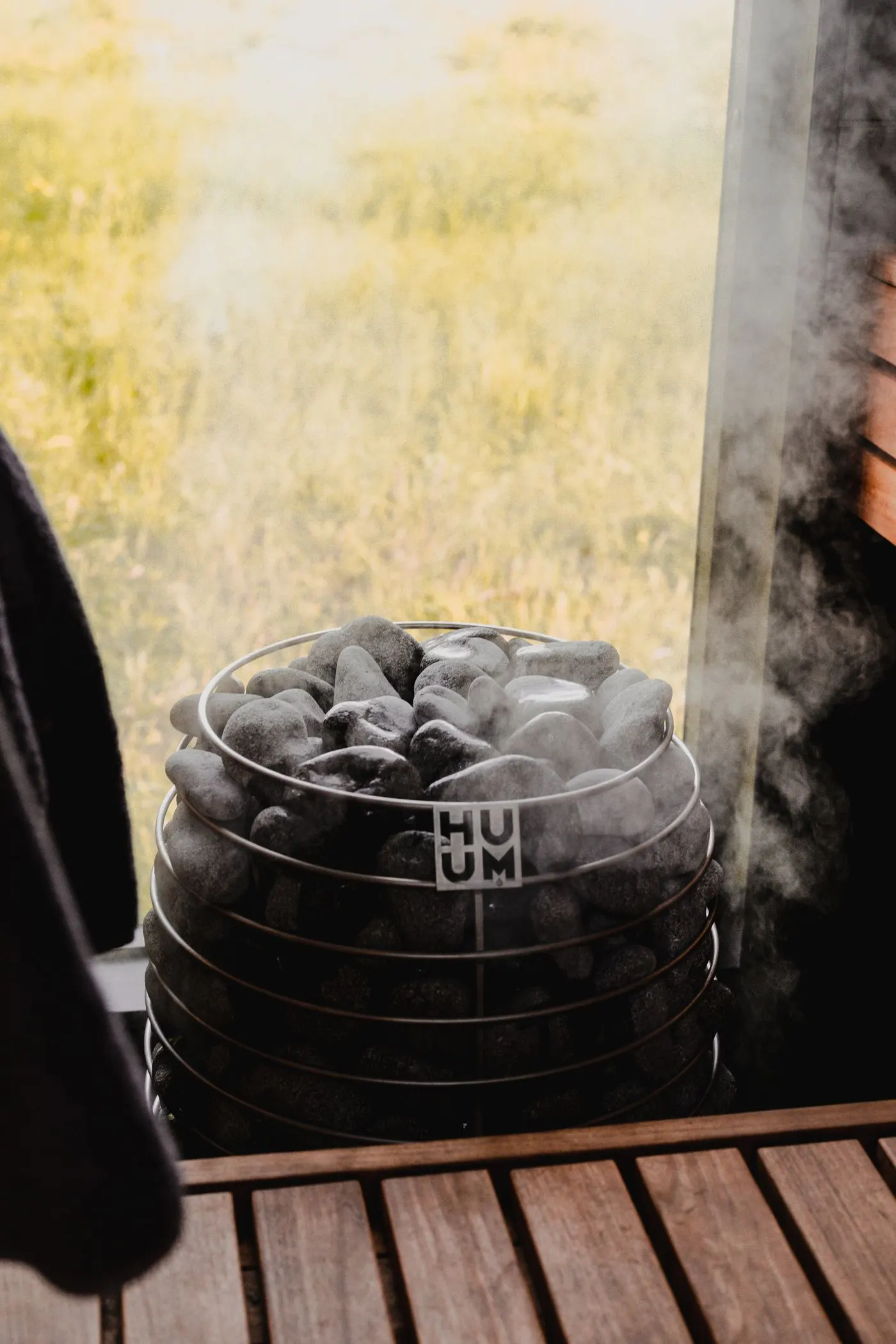
In the cold, a generous stone capacity helps the sauna hold heat — a larger stone mass radiates steadily and steadies the temperature against constant heat loss. Accept the slightly longer warm-up in exchange for a deeper, more stable winter heat.
4. Controls that suit winter
The convenience that matters most in January is pre-warming. A timer or remote/Wi-Fi start on an electric heater lets you heat the sauna from indoors so it’s ready when you step out into the cold — a genuine luxury on a −25 °C night. (A wood heater is tended by hand, and can’t be pre-warmed remotely.)
5. Confirm the supply first
Before you buy, confirm you can actually run the heater:
- Electric: does your supply and panel support the kilowatts, and can a licensed electrician connect it?
- Wood: can you fit a certified chimney with correct clearances, and store firewood?
Buying the heater before checking the supply is the most common — and most expensive — mistake.
A quick decision path
| Your situation | Lean toward |
|---|---|
| Grid power, want convenience | Electric, timer/remote, sized up for cold |
| Off-grid cottage, love the fire | Wood-burning, certified chimney |
| Large sauna, want stable heat | High stone capacity, floor-standing/tower |
| Small / compact sauna | Modest wall-mounted, still sized for cold |
Match the heater to how you’ll use it
Beyond fuel and size, the right heater depends on how you’ll actually use the sauna. If you value convenience and quick, controllable heat — and have the electrical capacity — an electric heater with a timer, and perhaps scheduling, suits frequent, spontaneous sessions and slow winter warm-ups. If you want the traditional fire, the ritual and independence from the grid — useful where outages are common — a wood heater rewards the extra effort of laying and tending a fire. Gas is a third path where a supply is available. Also weigh running cost, local fuel prices, and whether you’ll bathe alone or host gatherings. The best heater isn’t the most powerful or the cheapest — it’s the one whose trade-offs fit your climate, your site and the way you’ll bathe.
Common mistakes
- Under-sizing for winter — the classic cold-climate error.
- Buying before confirming power or chimney feasibility.
- Ignoring stone capacity and getting a swingy heat.
- Skimping on insulation, which makes any heater work harder.
Next steps
Decide the fuel, size it for the cold, and sort the electrical or chimney supply early. Get those right and your sauna will heat well through the hardest Canadian winter.
Frequently asked questions
What is the best sauna heater for a cold climate?
The one matched to your site and winter: electric for convenience and precise control on grid power, wood-burning for off-grid tradition. Whichever fuel, size it up for cold outdoor use, favour generous stone capacity for stable heat, and confirm you have the power or firewood and chimney to run it.
Do I need a bigger heater for a Canadian winter?
Usually yes. An outdoor sauna loses more heat and starts colder than an indoor one, so it often needs more capacity than volume alone implies. Use the manufacturer's outdoor or cold-climate sizing, add for glass, and lean to the larger option within their chart. Insulation reduces how much you need.
Electric or wood heater for winter?
Both work well below freezing. Electric is simpler, cleaner and easy to pre-warm remotely, but needs a dedicated circuit and adequate power. Wood gives a strong traditional heat and works off-grid, but needs a certified chimney, clearances and tending. Choose by your power situation and how you like to sauna.
Does stone capacity matter in winter?
It helps. A larger stone mass stores and radiates heat steadily, holding temperature better against a cold sauna's heat loss. Favour generous stone capacity for a stable winter heat, and accept the slightly longer warm-up. Pair it with good insulation and a correctly sized heater.
What should I check before buying a sauna heater?
Confirm the room's size and any glass for sizing, your electrical supply (for electric) or firewood and chimney feasibility (for wood), the clearances the heater needs against your layout, and that a licensed electrician can connect an electric model. Buying before checking the supply is the classic mistake.