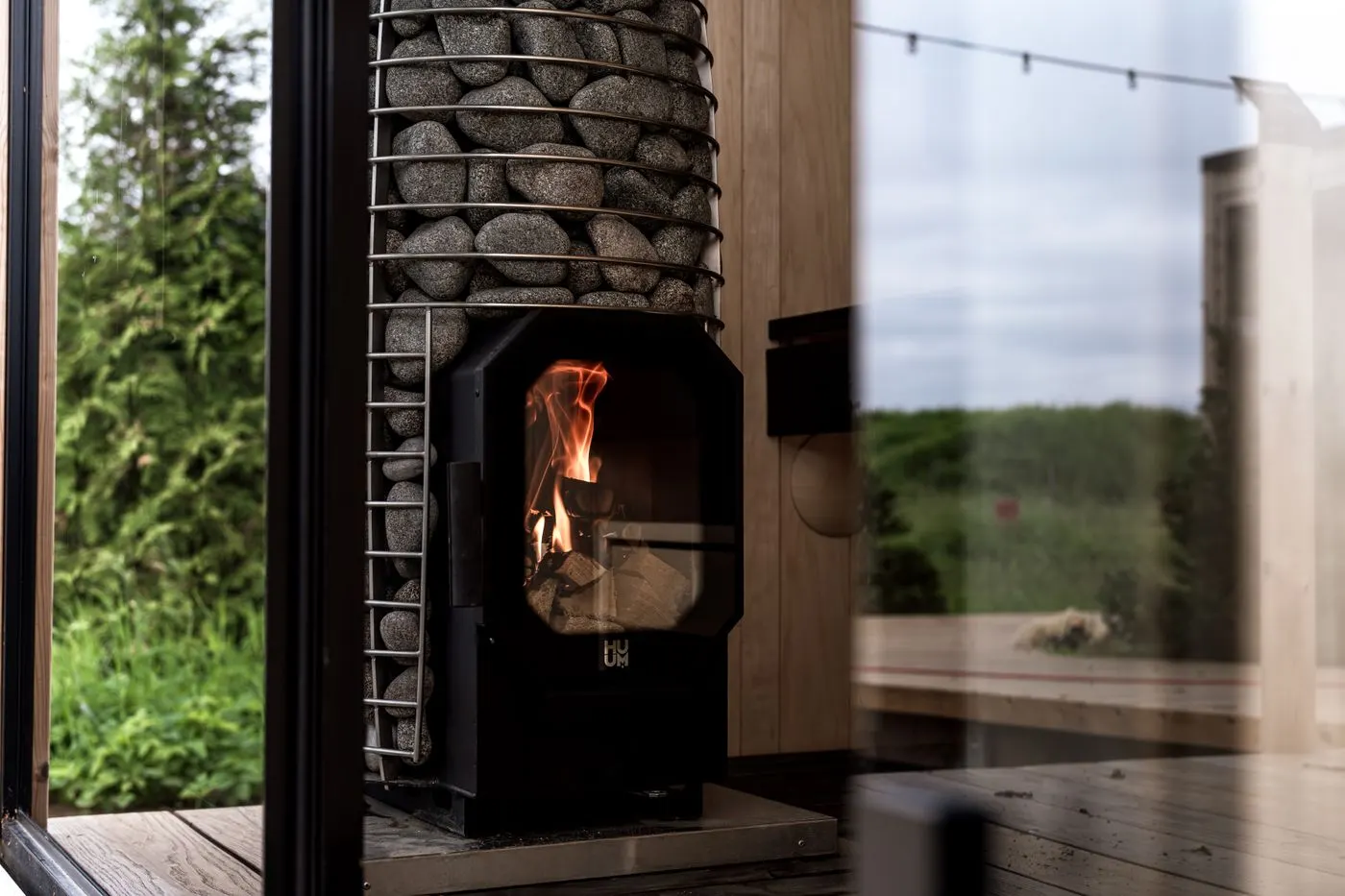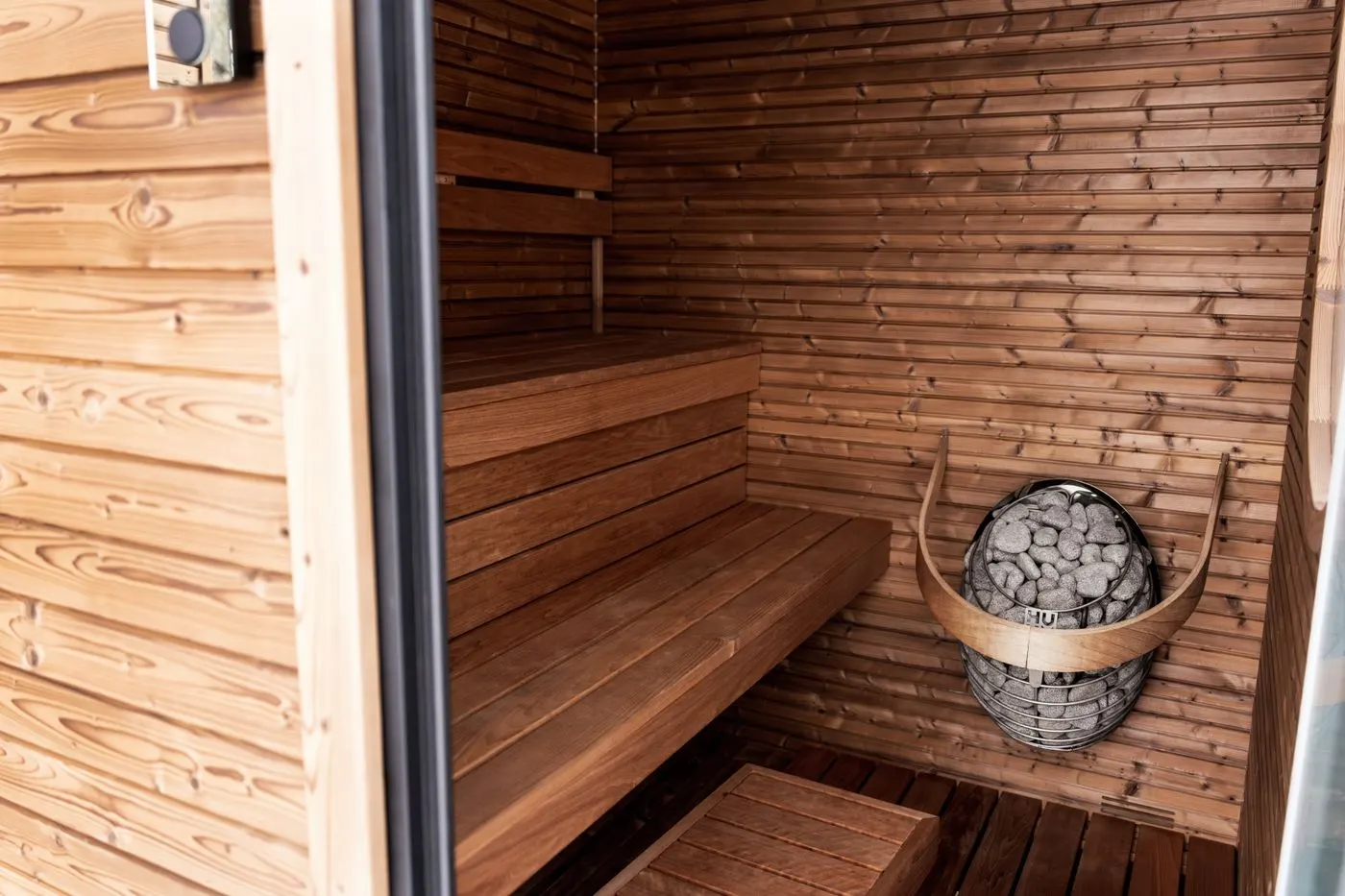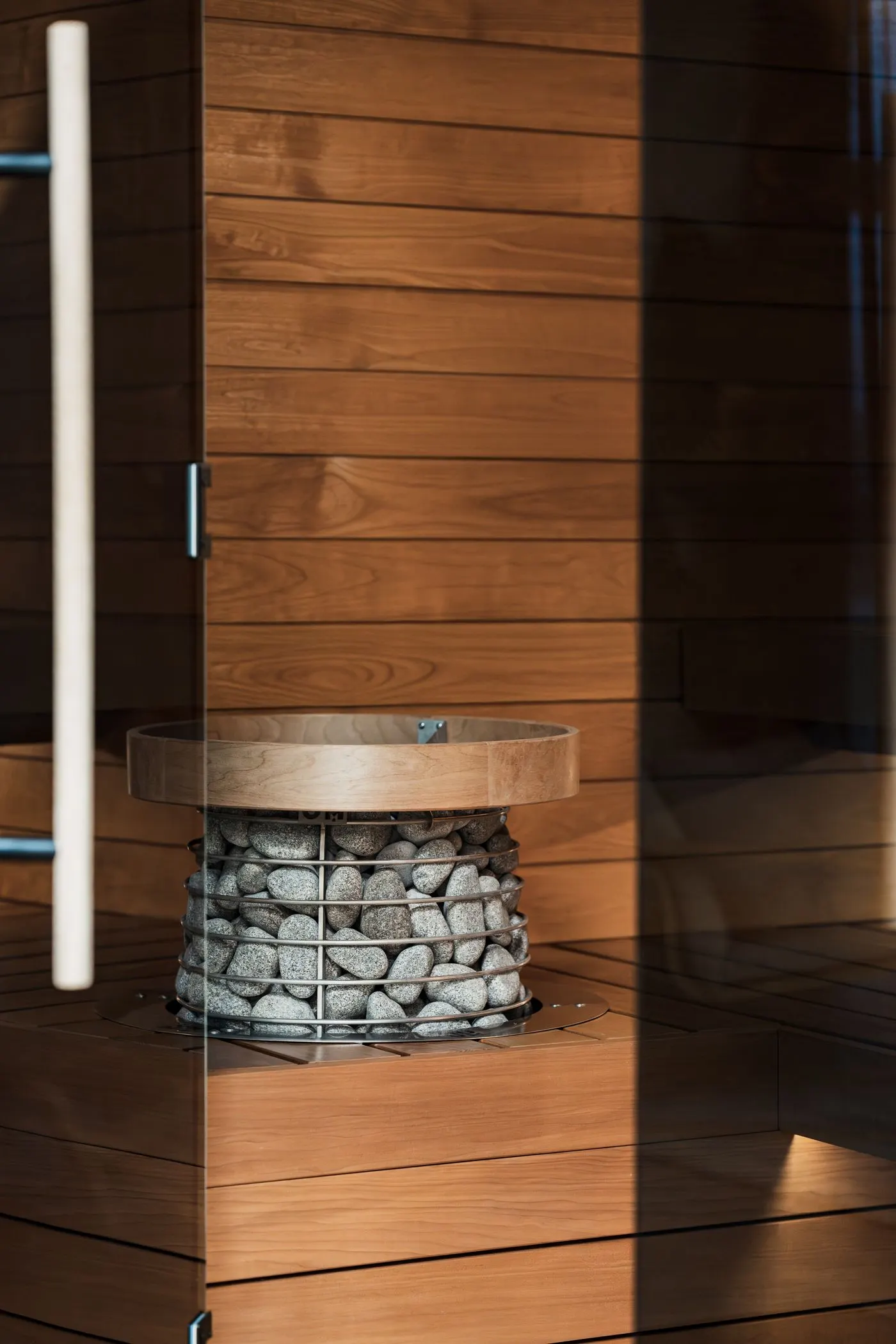
A gas sauna heater burns natural gas or propane to heat the stones, offering fast, hands-off heat without wood or a large electrical supply. It suits sites with a gas connection or propane and limited power, and larger or commercial saunas. Because it burns fuel, it needs proper venting, a carbon-monoxide alarm and professional gas installation. It's less common in home outdoor saunas than electric or wood, but a real option in the right situation.
Most Canadian home saunas run on electricity or wood, but there’s a third option that suits particular situations: gas. A gas sauna heater gives fast, hands-off heat without a wood fire or a large electrical supply — with the caveats that come from burning fuel.
How a gas sauna heater works
A gas heater burns natural gas or propane to heat the bank of stones, which then radiate heat and make steam like any heater. You get the convenience of push-button, thermostatically controlled heat — like electric — but fuelled by gas rather than the grid, and without the ash and tending of wood.
Where it makes sense
Gas is worth considering when:
- You have a natural gas connection or propane on site.
- Your electrical capacity is limited and upgrading it is costly.
- You want fast, hands-off heat for a larger or commercial-style sauna.
- Local gas is cheap relative to electricity.
In those cases it can be efficient and convenient. For a typical small backyard sauna on grid power, electric is usually simpler.
The catch: it burns fuel
Because it’s a combustion appliance, a gas heater brings obligations similar to a wood stove:
- Proper venting of combustion gases, and adequate combustion air.
- A carbon-monoxide alarm — see CO safety.
- Professional installation by a licensed or certified gas fitter, to the manufacturer’s specs and your local gas code.
This is safety-critical, code-regulated work — never DIY. Improper venting or installation risks carbon monoxide.
Running cost
Whether gas is cheaper to run than electric depends entirely on local energy prices. Where gas is inexpensive relative to power, a gas heater can be economical, especially for frequent or high-volume use. Weigh your local rates, and remember that venting and installation add to the upfront cost. See our running-cost guidance.
Pros and cons
Advantages
- Fast, hands-off, thermostatic heat
- No wood, ash or tending
- Suits sites with gas but limited power
- Can be economical where gas is cheap
- Good for larger or commercial saunas
Limitations
- Burns fuel — needs venting and CO alarm
- Professional gas installation required
- Uncommon for home outdoor saunas
- Running cost depends on gas prices
- Not for off-grid sites without propane
Ventilation, the flue and safety
Because a gas heater burns fuel, it carries the same core requirement as a wood heater: a flue to vent exhaust gases safely outside, a supply of combustion air, and proper carbon-monoxide safety. This is separate from the comfort ventilation every sauna needs, and it’s a genuine safety matter, not a detail. The installation — the gas supply, the burner and the flue — must be carried out by a qualified professional to code, never improvised, and the flue kept maintained so it draws properly and doesn’t leak combustion gases. An electric heater, by contrast, burns nothing and needs no flue or combustion air, which is why many find electric simpler for an outdoor build. If you choose gas for its convenient, controllable heat, budget for the flue and professional installation, and treat carbon-monoxide safety as a priority for the life of the sauna.
Common mistakes
- DIY gas installation instead of a certified gas fitter.
- No CO alarm or inadequate venting.
- Assuming it’s cheaper without checking local energy prices.
- Choosing gas for a small backyard sauna where electric is simpler.
Next steps
If you have gas and limited power, a gas heater is worth pricing against electric — including installation and venting. Whichever you choose, size it for the cold, mind combustion safety, and have it installed by a qualified professional.
Frequently asked questions
Are gas sauna heaters a good option?
In the right situation, yes — where you have natural gas or propane and limited electrical capacity, or want fast, hands-off heat for a larger or commercial sauna. Because they burn fuel, they need proper venting, a carbon-monoxide alarm and professional gas installation, which makes them less common in home outdoor saunas than electric or wood.
Do gas sauna heaters need venting?
Yes. Like any fuel-burning appliance, a gas sauna heater produces combustion gases that must be vented safely, and it needs adequate combustion air. Improper venting risks carbon monoxide. Installation must follow the manufacturer's and local gas-code requirements and be done by a qualified gas fitter.
Is a gas sauna heater cheaper to run than electric?
It depends on local gas versus electricity prices. Where gas is cheap relative to power, a gas heater can be economical to run, especially for frequent or large-volume use. Compare your local energy rates; there's no universal answer, and installation and venting add to the upfront cost.
Do gas heaters have a carbon-monoxide risk?
Yes — any fuel-burning appliance can produce carbon monoxide if combustion or venting is poor. Fit a suitable CO alarm, ensure proper venting and combustion air, and have the heater installed and serviced by a qualified professional. Electric heaters, by contrast, produce no combustion gases.
Can I install a gas sauna heater myself?
No. Gas appliances must be installed by a licensed or certified gas fitter to the manufacturer's specs and your local gas code, with proper venting and combustion air. This is safety-critical, code-regulated work — not a DIY job. Plan the installation with a qualified professional from the start.