The key difference is combustion. A wood-burning heater burns fuel, so it needs a supply of combustion air and a flue (chimney) to carry exhaust gases safely outside — its ventilation must feed the fire and vent the flue, and getting this right is a safety matter. An electric heater doesn't burn anything, so it needs only comfort ventilation — a fresh-air intake and adjustable exhaust to keep the air fresh and even. Both benefit from the same intake-and-exhaust circulation, but a wood heater adds combustion-air and flue requirements you must follow the manufacturer's guidance on.
Both wood-burning and electric sauna heaters need ventilation, but not the same ventilation. The difference comes down to one thing: combustion. A wood heater burns fuel, so it needs air to feed the fire and a flue to carry exhaust gases safely away — a genuine safety matter. An electric heater burns nothing, so it needs only the comfort ventilation any sauna uses. This guide explains what each requires.
The shared foundation: comfort ventilation
Whatever the heater, every sauna needs comfort ventilation — the intake-and-exhaust circulation that keeps the air fresh, the heat even and moisture clearing:
- A fresh-air intake low, near the heater.
- An adjustable exhaust opposite and higher.
This is the same principle for both heater types. What differs is what a wood heater adds on top.
Wood heaters: combustion air and a flue
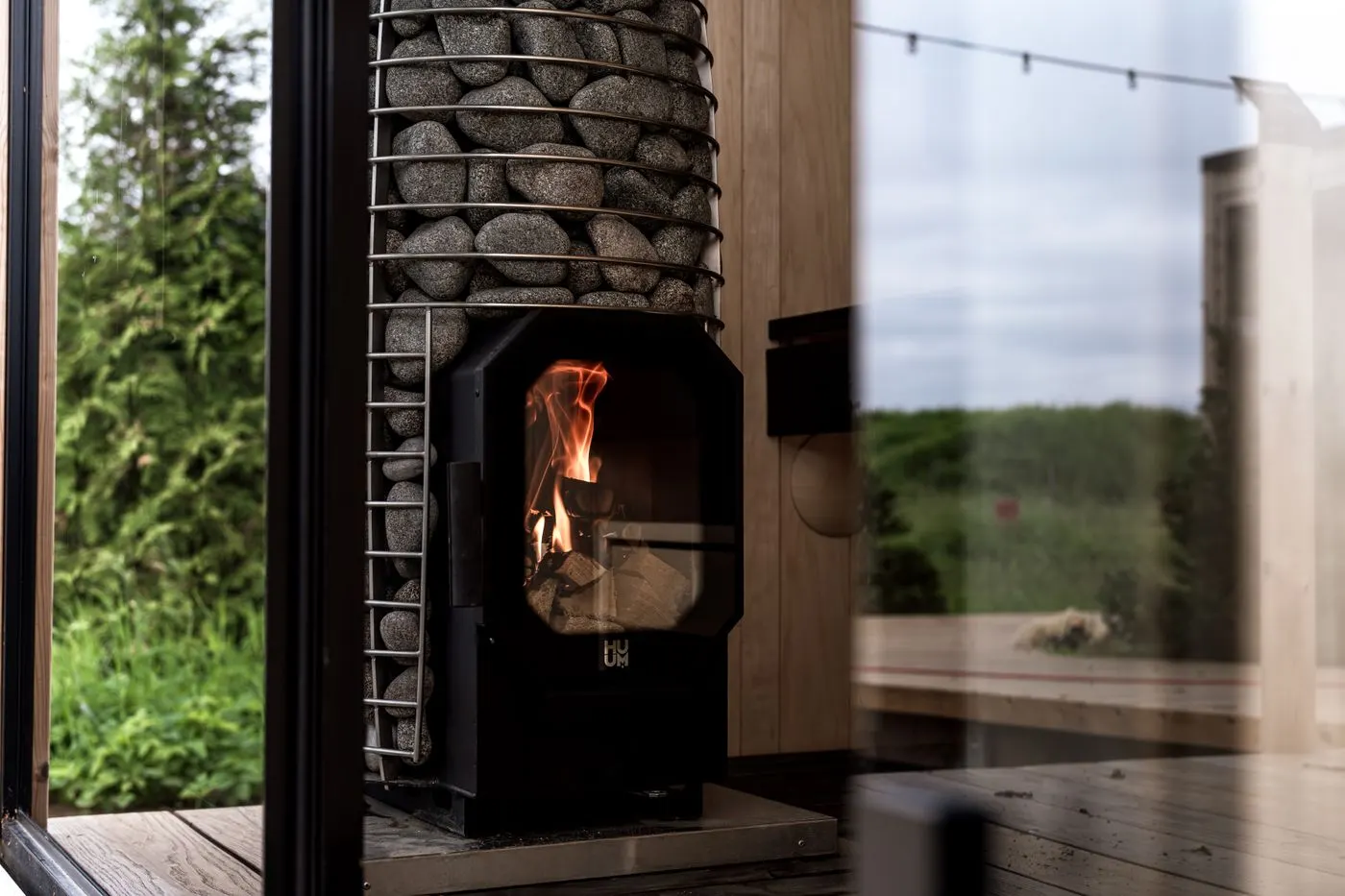
A wood-burning heater burns fuel, and that brings two extra ventilation requirements:
- Combustion air — the air the fire needs to burn. The sauna must supply enough, often via the intake near the heater, sometimes a dedicated supply. A starved fire draws poorly, smokes, and makes more soot and creosote.
- A flue (chimney) — to carry exhaust gases safely outside. This must be installed and maintained correctly; flue gases contain carbon monoxide.
Electric heaters: just comfort ventilation
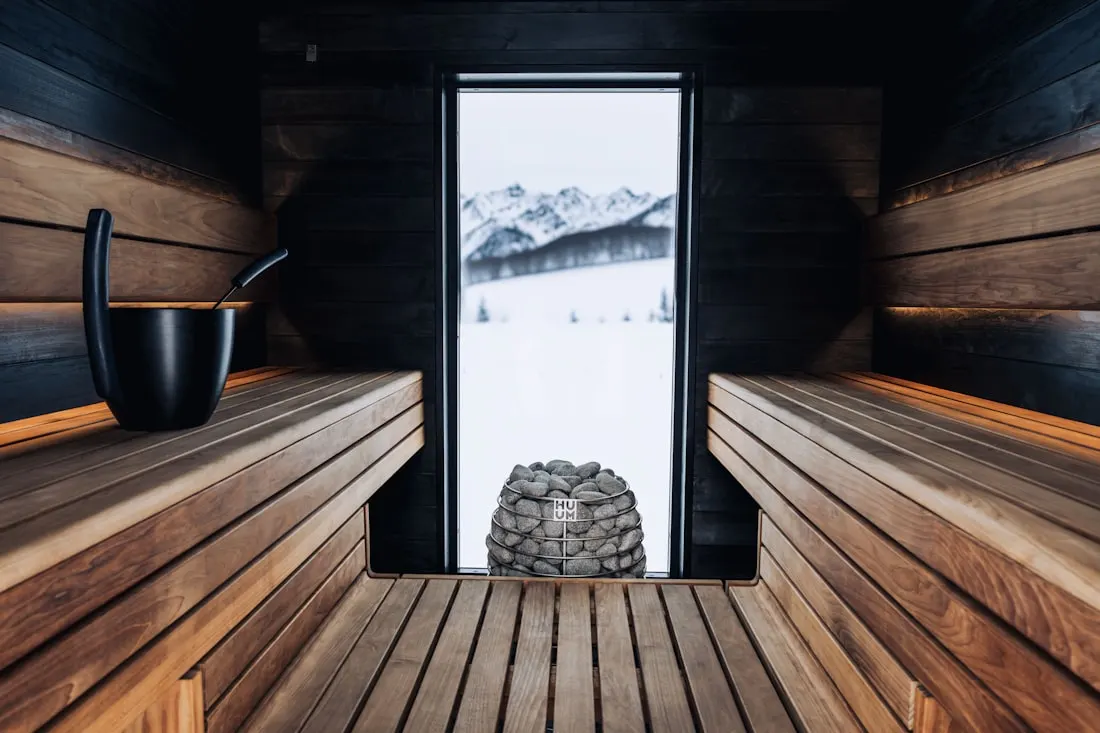
An electric heater burns nothing. So it needs:
- No combustion air.
- No flue.
- No exhaust-gas management, and no carbon monoxide risk.
It needs only the comfort ventilation — intake and adjustable exhaust — every sauna uses. This makes electric ventilation the simpler of the two, which is one reason many find electric heaters straightforward for outdoor saunas.
Side by side
| Requirement | Wood heater | Electric heater |
|---|---|---|
| Comfort ventilation (intake + exhaust) | Yes | Yes |
| Combustion air | Yes — feed the fire | None |
| Flue / chimney | Yes — vent exhaust gases | None |
| Carbon monoxide risk | Yes — manage the flue | None |
| Ventilation complexity | Higher | Lower |
Which is right for you?
Ventilation isn’t the only factor in choosing a heater, but it’s a real one. A wood heater rewards you with the traditional fire and independence from electricity, at the cost of combustion-air and flue requirements you must get right. An electric heater trades that atmosphere for simpler, safer ventilation with nothing to burn. Weigh it alongside fuel, siting and the experience you want.
Common mistakes
- Treating wood-heater ventilation as just comfort and ignoring combustion air and the flue.
- Starving a wood fire of combustion air by blocking the intake.
- Neglecting flue maintenance, raising the CO risk.
- Assuming electric needs a flue — it doesn’t.
- Skipping comfort ventilation on an electric sauna because “there’s no fire.”
Next steps
Start from the shared comfort ventilation — intake and exhaust — for either heater. For a wood stove, add the manufacturer’s combustion-air and flue requirements and mind carbon monoxide safety. For electric, the comfort pair is all you need. See choosing a sauna heater to weigh the rest.
Frequently asked questions
How is ventilation different for wood vs electric sauna heaters?
A wood heater burns fuel, so it needs combustion air to feed the fire and a flue to carry exhaust gases safely outside — its ventilation is a safety matter. An electric heater burns nothing, so it needs only comfort ventilation: a fresh-air intake and adjustable exhaust for fresh, even air. Both use the same intake-and-exhaust circulation, but wood adds combustion-air and flue requirements.
Does a wood-burning sauna heater need more ventilation?
It needs additional ventilation of a specific kind: a supply of combustion air to feed the fire, plus a flue (chimney) to carry exhaust gases outside. This is separate from the comfort ventilation both heater types use. A wood fire starved of air draws poorly and makes more soot, and flue gases must vent safely — so follow the wood heater manufacturer's guidance closely.
What is combustion air in a sauna?
Combustion air is the air a wood fire needs to burn. A wood-burning heater draws in air to feed the flames, and the sauna must supply enough — often via the fresh-air intake near the heater, sometimes a dedicated supply. Too little combustion air and the fire draws poorly, smokes and makes more soot and creosote. Electric heaters don't burn anything, so they need none.
Do electric sauna heaters need ventilation?
Yes, but only comfort ventilation — a fresh-air intake and an adjustable exhaust to keep the air fresh, the heat even, and moisture clearing. An electric heater burns nothing, so there's no combustion air or flue to manage. Its ventilation is the simpler of the two: the standard intake-and-exhaust pair, with no exhaust-gas safety dimension.
Is carbon monoxide a risk with electric sauna heaters?
No — electric heaters burn no fuel, so they produce no combustion gases and no carbon monoxide. CO is a risk with wood-burning (and other fuel-burning) heaters, whose flue must vent exhaust gases safely outside and be maintained. With electric, that risk isn't present; the concern is comfort ventilation. This is one reason many find electric heaters simpler for outdoor saunas.
Can I use the same ventilation layout for both heater types?
The comfort ventilation — fresh-air intake low near the heater, adjustable exhaust opposite and higher — is broadly the same for both. But a wood heater adds requirements the layout must accommodate: combustion air for the fire and a flue for exhaust gases. So start from the same circulation principle, then follow the wood heater manufacturer's specific combustion-air and flue guidance on top.