A wood-burning sauna can be used during a power outage because it needs no electricity to heat — one of the traditional advantages of wood, and genuinely useful in a cold climate where winter storms cause outages. An electric sauna can't be heated without power, so a prolonged winter outage means it's unusable and, importantly, its freeze-protection measures that rely on electricity won't work, so any water and vulnerable components need protecting from freezing. If a wood sauna is used in an outage, all the normal wood-heater safety applies — the flue, combustion air and carbon-monoxide safety — plus care with lighting and access in the dark. Independence from the grid is a real point in wood's favour for cold-climate resilience.
Winter storms and power outages go together — and they raise a practical question for sauna owners: can you still use it when the power’s out? The answer depends entirely on your heater. A wood sauna carries on regardless; an electric one doesn’t, and a prolonged winter outage brings a freezing risk to manage. This guide covers using a sauna in an outage and protecting it through one.
Wood: works without power
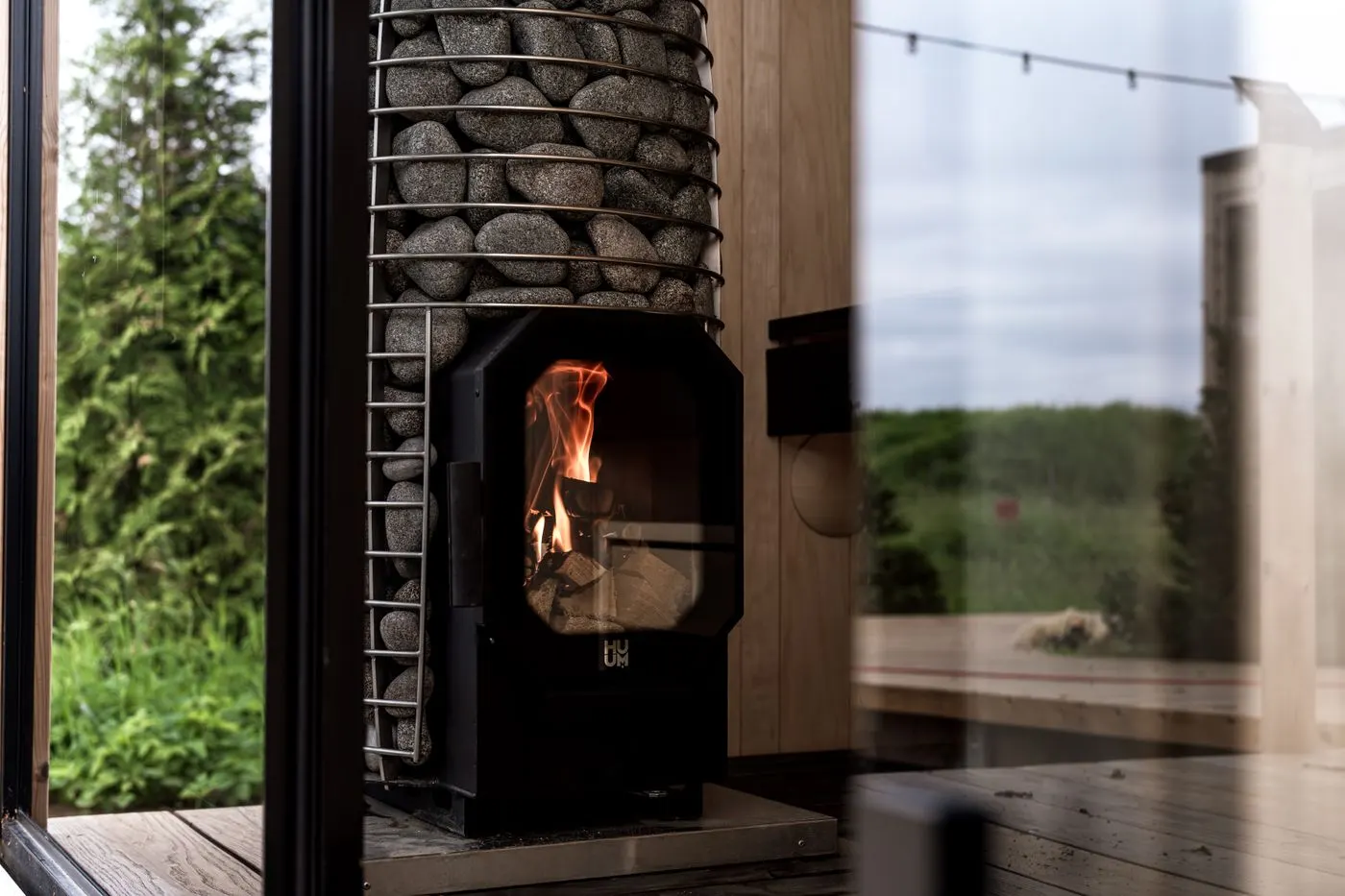
A wood-burning sauna needs no electricity to heat — you light and tend the fire as normal. This is a traditional advantage of wood and genuinely useful in a cold climate where winter storms cause outages. If you want a sauna that works during outages, a wood heater gives you that independence from the grid — see electric vs wood.
Electric: depends on the grid
An electric sauna heater runs entirely on electricity, so without power it can’t produce heat — there’s no fuel to burn. During an outage the electric sauna is unusable until power returns. And crucially:
The resilience difference
| Wood sauna | Electric sauna | |
|---|---|---|
| Usable in an outage | Yes — light the fire | No — needs power |
| Freeze-protection in an outage | N/A (no water heating needed) | Stops working — drain water |
| Grid independence | High | None |
For resilience during winter outages, wood has a clear edge — grid independence is one of its traditional benefits. It comes with the trade-offs of tending a fire and managing a flue and combustion air, but it works regardless of the power.
Using a wood sauna safely in an outage
A power outage doesn’t change the wood-heater safety requirements — if anything it adds the challenge of doing things in the dark:
- The flue must draw and vent exhaust gases safely.
- Combustion air must be adequate.
- Carbon-monoxide safety must never be compromised.
- Have safe, non-electric lighting and take care on icy paths.
Apply all the usual wood-heater precautions, plus extra care in the dark.
Protecting an electric sauna through an outage
Prepare for a prolonged outage by protecting against freezing:
- Drain water from tanks, steamers, containers and plumbing.
- Remember electric freeze-protection won’t work without power.
- Follow the manufacturer’s and trades’ guidance for winterizing.
Being prepared — knowing what to drain and protect — prevents freeze damage. See protecting sauna electrical in winter.
Common mistakes
- Expecting an electric sauna to work in an outage.
- Forgetting freeze-protection stops without power.
- Leaving water in tanks and plumbing during a prolonged outage.
- Compromising wood-heater safety while working in the dark.
- No safe lighting for the path and sauna during an outage.
Next steps
If grid-independent winter use matters, a wood sauna keeps working through outages — used with full wood-heater and CO safety. If you have an electric sauna, prepare for outages by protecting water and components from freezing. Either way, resilience in a cold-climate winter is worth planning for.
Frequently asked questions
Can you use a sauna during a power outage?
A wood-burning sauna can, because it needs no electricity to heat — you light and tend the fire as normal, which is a traditional advantage of wood and genuinely useful in a cold climate where winter storms cause outages. An electric sauna cannot be heated without power, so a prolonged outage means it's unusable until power returns. If you want a sauna that works during outages, a wood heater provides that independence from the grid. Just apply all the normal wood-heater safety, plus care with lighting and access in the dark.
Why can't you use an electric sauna without power?
An electric sauna heater runs entirely on electricity, so without power it simply can't produce heat — there's no fuel to burn as there is with a wood heater. During a power outage the electric sauna is unusable until power returns. Equally important, any electric freeze-protection or heating measures won't work during the outage, so water and vulnerable components can be at risk of freezing in a cold climate. Electric saunas are convenient when powered, but they depend on the grid, unlike wood heaters.
What happens to an electric sauna in a winter power outage?
It can't be heated, and any freeze-protection that relies on electricity stops working, so in a cold climate water and vulnerable components can freeze during a prolonged outage. This means protecting water — draining tanks, containers and any plumbing — and being aware that electric heat-tracing or similar measures won't function without power. So a winter outage for an electric sauna is both an inability to use it and a freezing risk to manage. Preparing for outages by draining water and following freeze-protection guidance helps. See our winter water and electrical guides.
Is a wood sauna better for power outages?
For resilience during outages, yes — a wood-burning sauna's independence from electricity means it works during winter storms and outages when an electric sauna can't, which is a real advantage in a cold climate prone to power interruptions. This grid independence is one of the traditional benefits of wood heat. It comes with the trade-offs of tending a fire and managing a flue, combustion air and carbon-monoxide safety, but for reliable use regardless of the power, wood has a clear edge. See our guide comparing electric and wood heaters.
Is it safe to use a wood sauna during a power outage?
It can be, provided all the normal wood-heater safety is applied — the flue must draw and vent exhaust gases safely, combustion air must be adequate, and carbon-monoxide safety must never be compromised — plus extra care with lighting and access in the dark during an outage. A power outage doesn't change the wood-heater safety requirements; if anything it adds the challenge of doing things in the dark, so have safe, non-electric lighting and take care on icy paths. Follow all the usual wood-heater and carbon-monoxide precautions.
How do I protect my electric sauna during a winter outage?
Protect it from freezing: drain water from any tanks, steamers, containers or plumbing, since electric freeze-protection won't work without power, and follow the manufacturer's and relevant trades' guidance for winterizing. Being prepared — knowing what to drain and protect before or during a prolonged outage — prevents freeze damage to water and vulnerable components. Because the specifics depend on your setup, follow the relevant guidance, but the general principle is to remove standing water and protect vulnerable parts when power (and electric freeze-protection) is unavailable. See our winter water guide.