Any water in an outdoor sauna setup — a shower, tap, cold plunge or drain — can freeze and burst pipes in a Canadian winter. Protect water systems by insulating and heat-tracing pipes, keeping them running or draining them between uses, sloping drains to clear, and designing everything to be drainable. A dry sauna interior needs no drain; added water features are what need winter planning. Never leave standing water in outdoor plumbing unprotected.
Water and a Canadian winter are an uneasy pair. The traditional sauna sidesteps the problem — a dry hot room needs no plumbing at all. But the moment you add a shower, a tap, a cold plunge or a floor drain, you’ve introduced water that can freeze and burst. Here’s how to keep those systems safe.
The dry sauna needs no drain
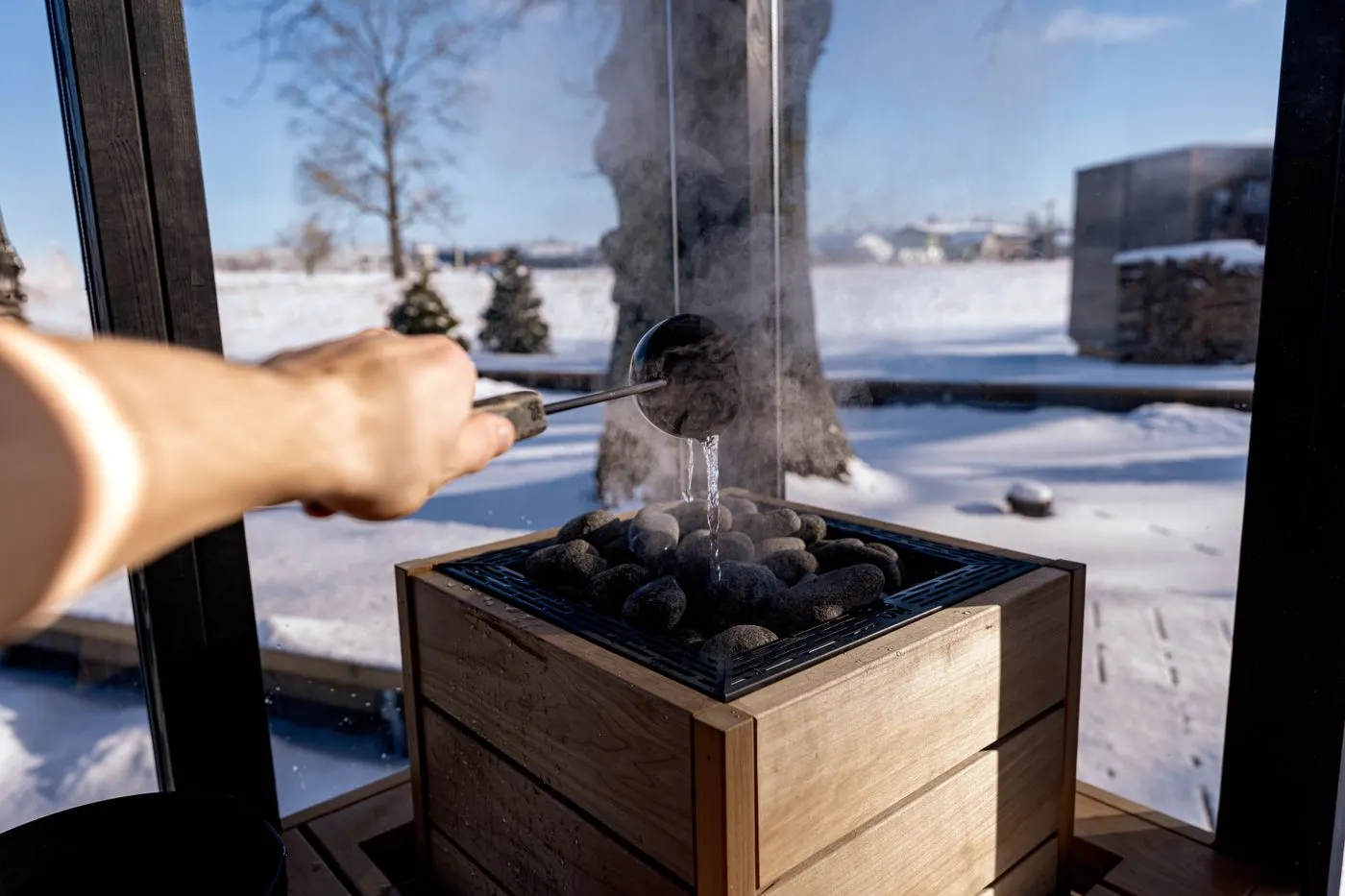
Worth stating plainly: a traditional dry sauna needs no drain or plumbing. You throw water on the stones, and you ventilate and dry the room afterward. Many outdoor saunas in Canada have no plumbing for exactly this reason — it removes a whole category of winter risk. If you don’t need water features, not having them is the simplest winterization of all.
What needs protecting
Freeze risk comes with added water:
- Showers and taps.
- Cold plunges and hot tubs.
- Floor drains and wet-floor designs.
Each holds water that can freeze in an unheated outdoor system.
The four defences
Protect any water system with some combination of:
- Insulate exposed pipes and fittings.
- Heat-trace (heating cable) pipes that must stay above freezing — installed to code.
- Keep water moving or the system heated so it can’t sit and freeze.
- Drain it between uses so there’s nothing to freeze.
The safest designs are fully drainable or kept above freezing. Never leave standing water in outdoor plumbing through winter.
Drains and frost
If you fit a floor drain, it adds a freezing point and must be designed to be frost-safe and to clear fully — a drain that holds water freezes and blocks. In a cold climate, weigh whether you need one; a dry sauna avoids the issue. See drainage in construction for the wider picture.
Cold plunges
A cold plunge should stay cold but not frozen solid or burst. Options: a chiller with circulation and insulation, or draining between uses. Its plumbing gets the same protect-or-drain treatment as any water system.
The simplest defence: bring water only when you bathe
The most reliable way to avoid frozen water is to keep no standing water at the sauna in freezing weather. For löyly, bring a bucket of clean water out when you bathe and take it back in afterward — nothing left to freeze. For cooling off, the snow itself or a bucket you fill each time sidesteps plumbing entirely. This bring-it-and-take-it-back approach is why so many cold-climate outdoor saunas run happily with no plumbing at all, avoiding the freeze protection, insulation and heat-tracing that plumbed water demands. If you do want plumbed water or a shower, design it drainable from the start so you can empty the lines when the sauna isn’t in use. And always drain tanks, steamers and containers before a hard freeze. Less standing water means less to protect, and less to go wrong on the coldest nights.
Common mistakes
- Leaving standing water in outdoor pipes over winter.
- A floor drain that holds water and freezes.
- No insulation or heat-trace on exposed plumbing.
- Adding water features without planning freeze protection.
Next steps
If you want water features, design them drainable or heated from the start, and insulate exposed plumbing. If you don’t, a dry sauna sidesteps the whole problem. Either way, freeze protection is part of guarding against freeze-thaw damage across the sauna.
Frequently asked questions
Do outdoor saunas need plumbing?
Not necessarily. A traditional dry sauna needs no drain or plumbing — you dry it after use. Plumbing comes in when you add a shower, tap, cold plunge or wet floor with a drain. Those additions are what need winter freeze protection; the basic hot room does not.
How do I keep sauna pipes from freezing?
Insulate and, where needed, heat-trace the pipes, keep water moving or drain the system between uses, and design everything to be drainable. Standing water in an unheated outdoor pipe will freeze and can burst it. The safest systems can be fully drained, or are kept above freezing.
Does a sauna need a floor drain?
A dry sauna doesn't — you ventilate and dry it after use. A drain is useful for a wet floor, a shower or heavy washing-down, but in a cold climate a drain adds a freezing risk and must be designed to be frost-safe and to clear fully. Many outdoor saunas skip the drain for simplicity.
How do I winterize a cold plunge or outdoor shower?
Protect or drain the plumbing so it can't freeze, insulate exposed pipes, and keep water moving or empty the system between uses. A cold plunge should stay cold but not freeze solid or burst — a chiller with circulation, insulation, or draining are the options. Plan freeze protection into any water feature.
What happens if sauna water pipes freeze?
Freezing water expands and can burst pipes and crack fittings, causing leaks and damage that often only show when things thaw. It's among the most preventable winter failures. Insulating, heat-tracing, keeping water moving, or draining systems between uses avoids it entirely.