A sauna house adds a changing or relaxation room (an anteroom) to the hot room, so you undress, cool down and relax somewhere warm and dry rather than out in the cold. In a Canadian winter that buffer is transformative — it keeps snow and cold out of the hot room, protects the door from freezing, and makes the whole experience more comfortable. It costs and takes more space than a hot room alone, but it's the upgrade serious year-round users value most.
There’s a moment that separates a good winter sauna from a great one: what happens when you step out of the heat. If it’s straight into a −20 °C night to fumble with cold clothes, the magic fades fast. If it’s into a warm, dry room to cool down and relax, the whole ritual is transformed. That room — the changing or relaxation anteroom — is what turns a hot box into a sauna house.
What a sauna house is
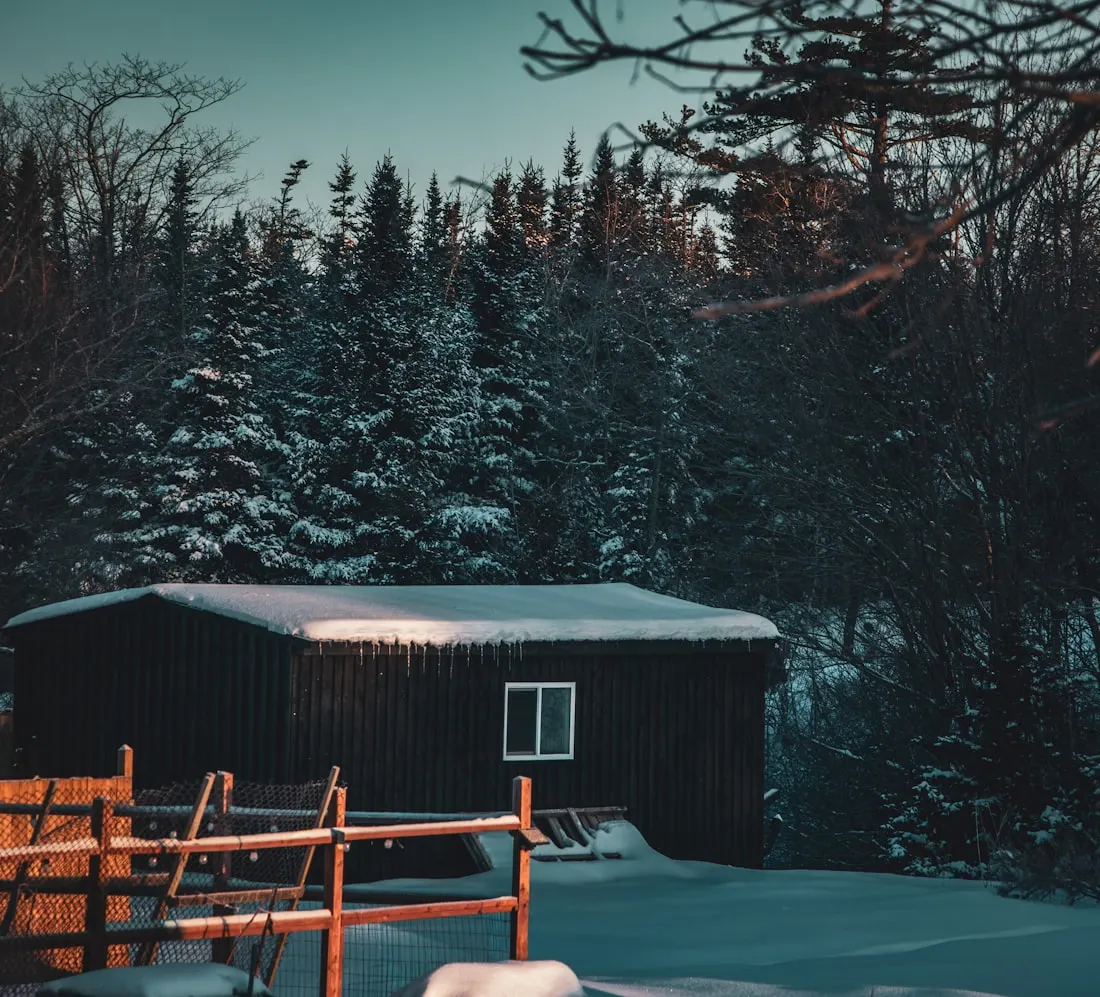
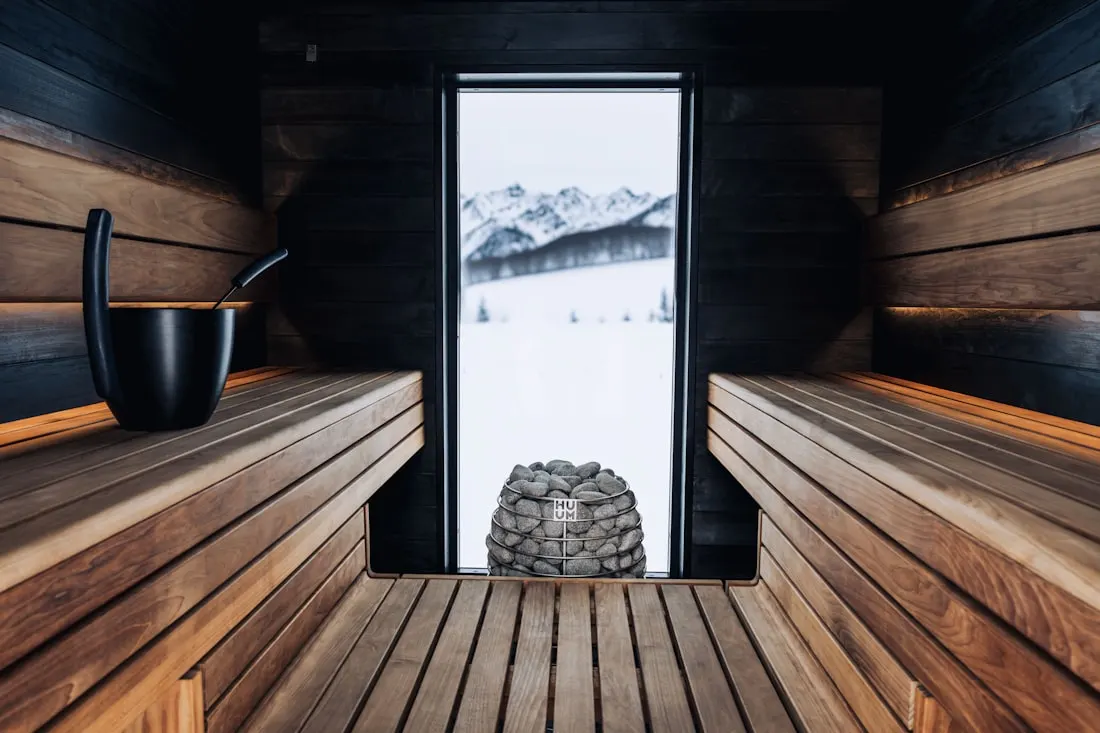
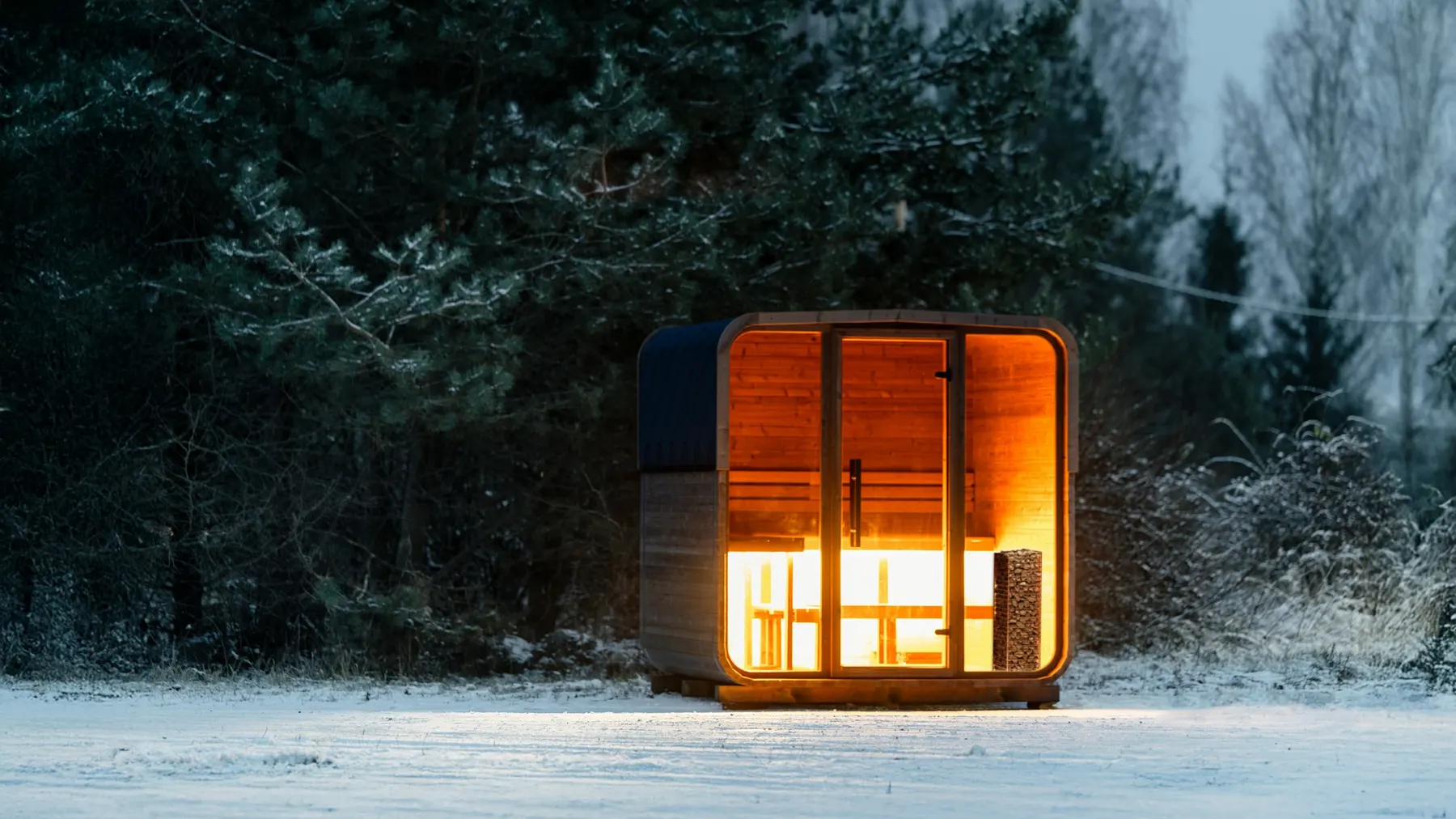
A sauna house is an outdoor sauna with two spaces: the hot room, and a changing or relaxation room (an anteroom) beside it. You enter through the anteroom, undress and store your things there, use the hot room, and return to the anteroom to cool down between rounds and relax afterward. It’s the traditional Nordic arrangement, and in a Canadian winter it earns its keep.
The anteroom’s role in winter
In cold weather the anteroom does several valuable jobs:
- A warm, dry place to change — instead of undressing outdoors.
- A cool-down and relaxation space between rounds, without going back into the cold.
- A buffer that keeps snow, wind and freezing air out of the hot room every time the door opens.
- Protection for the hot-room door, which opens into shelter rather than driving snow, helping keep it from freezing.
- Storage for towels, firewood and gear.
That buffer effect alone improves comfort and efficiency; the comfort of a warm changing space is what people fall in love with.
Layout
A sauna house is usually a framed cabin divided into two: a well-insulated hot room, and an anteroom that can be simpler but should still be sheltered and, ideally, kept above freezing. Plan the flow — outside → anteroom → hot room — and where the benches, hooks, and any window or glazing go. A porch or covered entry can extend the buffer further.
Heating the changing room
The anteroom doesn’t need to be sauna-hot, but it’s far nicer if it stays comfortable and above freezing. That can come from:
- Heat leaking from the hot room next door.
- A small separate heater for the anteroom.
- Good insulation that holds passive warmth.
Even a passively sheltered, insulated anteroom beats the open cold; a gently warmed one is a genuine luxury in winter.
Cost and space
The trade-off is honest: an anteroom roughly doubles the footprint and adds materials, foundation and cost compared with a hot room alone. It needs the room in your yard and the budget. Whether it’s worth it depends on how often you’ll use the sauna in deep winter and how much you value the comfort — see our cost guidance.
Pros and cons
Advantages
- Warm, dry changing and cool-down space
- Keeps cold and snow out of the hot room
- Helps protect the door from freezing
- Storage for towels, firewood and gear
- A complete, comfortable year-round building
Limitations
- Roughly double the footprint
- Higher cost and bigger foundation
- Anteroom is nicer if separately heated
- Overkill for occasional or budget use
Common mistakes
- An unheated, uninsulated anteroom that stays as cold as outside.
- Undersizing the yard space for the larger footprint.
- Treating the anteroom as an afterthought instead of planning the flow.
- Skimping on the hot-room envelope to fund the extra room.
Who it suits
A sauna house suits dedicated, year-round users in a cold climate who want the full, comfortable ritual and have the space and budget. For occasional use or a tight yard, a hot room alone — a barrel, cabin or compact sauna — is perfectly good. But for many Canadians who sauna through the winter, the warm changing room is the upgrade they’d never give up.
Frequently asked questions
Do I need a changing room with an outdoor sauna?
Not strictly, but in a Canadian winter it makes a big difference. A warm, dry anteroom to undress, cool down and relax in — instead of the freezing outdoors — greatly improves comfort, keeps snow out of the hot room, and helps protect the door from freezing. Serious year-round users rate it highly.
What is a sauna anteroom for?
It's a transitional space between outside and the hot room — for changing, cooling down between rounds, storing towels and firewood, and relaxing. In winter it acts as a warm buffer that keeps cold air and snow out of the hot room and gives you somewhere pleasant to rest without going back into the cold.
Does a changing room need heating?
It doesn't need to be sauna-hot, but a changing or relaxation room is far more useful if it stays above freezing and comfortable — through the heat leaking from the hot room, a small separate heater, or good insulation. Even a passively warm, sheltered anteroom beats undressing outdoors in winter.
How much bigger is a sauna house?
Enough to add a room — the anteroom roughly doubles the footprint compared with a hot room alone, though it can be modest. That means more materials, a bigger foundation and higher cost, but also a much more complete, comfortable building. Balance the space and budget against how you'll use it.
Is a sauna house worth the extra cost?
For dedicated year-round use in a cold climate, many say yes — the warm changing and cool-down space transforms winter sessions. For occasional or budget builds, a hot room alone is fine. It comes down to how often you'll use it in deep winter and how much you value comfort and shelter.