There is no single best foundation for an outdoor sauna in Canada — the right choice matches your soil, slope, drainage and local frost depth. Concrete piers, ground screws, a gravel pad, a concrete slab or a skid frame can all work, as long as the foundation reaches below the frost line or is built to tolerate movement, and drains well so frost heave can't lift and rack the sauna.
The foundation is the least glamorous part of an outdoor sauna and the one most likely to ruin it. Get it wrong and the ground itself will lift, tilt and rack the building over a single winter — jamming the door, cracking the cladding and knocking the heater out of level. Get it right and you’ll never think about it again. The good news: there’s no exotic answer, just a choice matched to your site.
Why cold-climate foundations are different
In much of Canada the deciding factor isn’t the weight of the sauna — it’s frost heave. When moisture in the soil freezes it expands, pushing the ground (and anything sitting on it) upward. Because that movement is uneven, it tilts a foundation rather than lifting it cleanly, which is what does the damage.
Two strategies beat frost heave, and every good foundation uses one or both:
- Go below the frost line, so the load-bearing points sit beneath the depth that freezes and can’t be pushed up.
- Remove the water, by draining the ground so there’s little moisture to freeze and heave in the first place.
Your soil type, slope, drainage and local frost depth decide which strategy — and which foundation — fits.
The main options
| Foundation | How it works | Best for | Watch out for |
|---|---|---|---|
| Gravel pad | Compacted gravel over a drainage layer; drains water away | Lighter saunas on well-drained ground | Poorly drained or clay soils; keeping it level |
| Skid / timber frame | Sauna sits on treated skids on gravel; can move slightly as one unit | Small, light, semi-portable saunas | Soft or uneven ground; long-term settling |
| Concrete piers | Footings poured below the frost line | Most framed saunas on frost-susceptible soil | Digging to frost depth; getting piers level |
| Ground screws | Steel screws driven below the frost line | Fast installs, sloped or awkward sites | Rocky ground; needs the right soil |
| Concrete slab | Reinforced slab, ideally frost-protected | Larger or permanent builds; wet floors | Cost; must be designed for frost |
Matching the foundation to your site
Well-drained, stable ground. A compacted gravel pad or a skid on gravel can be enough for a light barrel or small cabin, because good drainage removes the water that would otherwise freeze.
Frost-susceptible or clay soil. Clay holds water and heaves readily. Here, load-bearing points that reach below the frost line — concrete piers or ground screws — are the safer bet, paired with good surface drainage.
Sloped or awkward sites. Ground screws and piers let you build a level platform above uneven ground without a huge amount of excavation. Compare them directly in ground screws vs concrete piers.
Rocky ground. Screws may not drive into rock; piers or a surface approach can suit better. Local conditions really do decide.
Whatever you choose, plan for drainage and moisture separation: keep water away from and out from under the sauna, provide airflow beneath a raised floor, and separate the structure from ground moisture. A dry base is a stable base.
Check your frost depth
Required foundation depth for piers and screws depends on your local frost line, which varies widely across the country. Confirm the figure for your municipality — and any permit requirements — before you dig.
Cost in Canada
Foundations range from inexpensive to a significant share of the build. A DIY gravel pad is at the low end; ground screws and concrete piers sit in the middle and depend on how many points and how deep; a properly frost-protected slab is usually the most involved and costly. Site access, soil and how much you do yourself move the number. Treat any figure as an approximate range, and see our broader cost guidance.
Common mistakes
- Setting the sauna on bare or unprepared soil. Almost guarantees settling and frost heave.
- Ignoring drainage. Water that can’t escape is the fuel for heave; grade and drain the site.
- Not reaching the frost line with piers or screws in frost-susceptible soil.
- Building an out-of-level base. A sauna that starts crooked only gets worse; get the platform flat and true.
- Assuming a light sauna needs no real base. Even a barrel’s cradles concentrate load and need stable, level support.
Next steps
Once the foundation is settled, move on to the cold-climate envelope and insulation. If you’re deciding between the two most common frost-bearing options, read ground screws vs concrete piers. And remember: where soil, slope or load raise real questions, a qualified builder or structural engineer is the right call.
Frequently asked questions
What is the best foundation for an outdoor sauna?
The one matched to your site. On well-drained ground a gravel pad or skid can be enough for a light sauna; on frost-susceptible soil, piers or ground screws that reach below the frost line are safer; a slab suits larger or permanent builds. Soil, slope, drainage and frost depth decide it.
How deep should a sauna foundation go?
Frost-bearing foundations like piers and screws should extend below your local frost line so they aren't lifted by frost heave. Frost depth varies widely across Canada, so check your local requirement — it can range from under a metre to well over 1.5 m in colder regions.
Does a barrel sauna need a foundation?
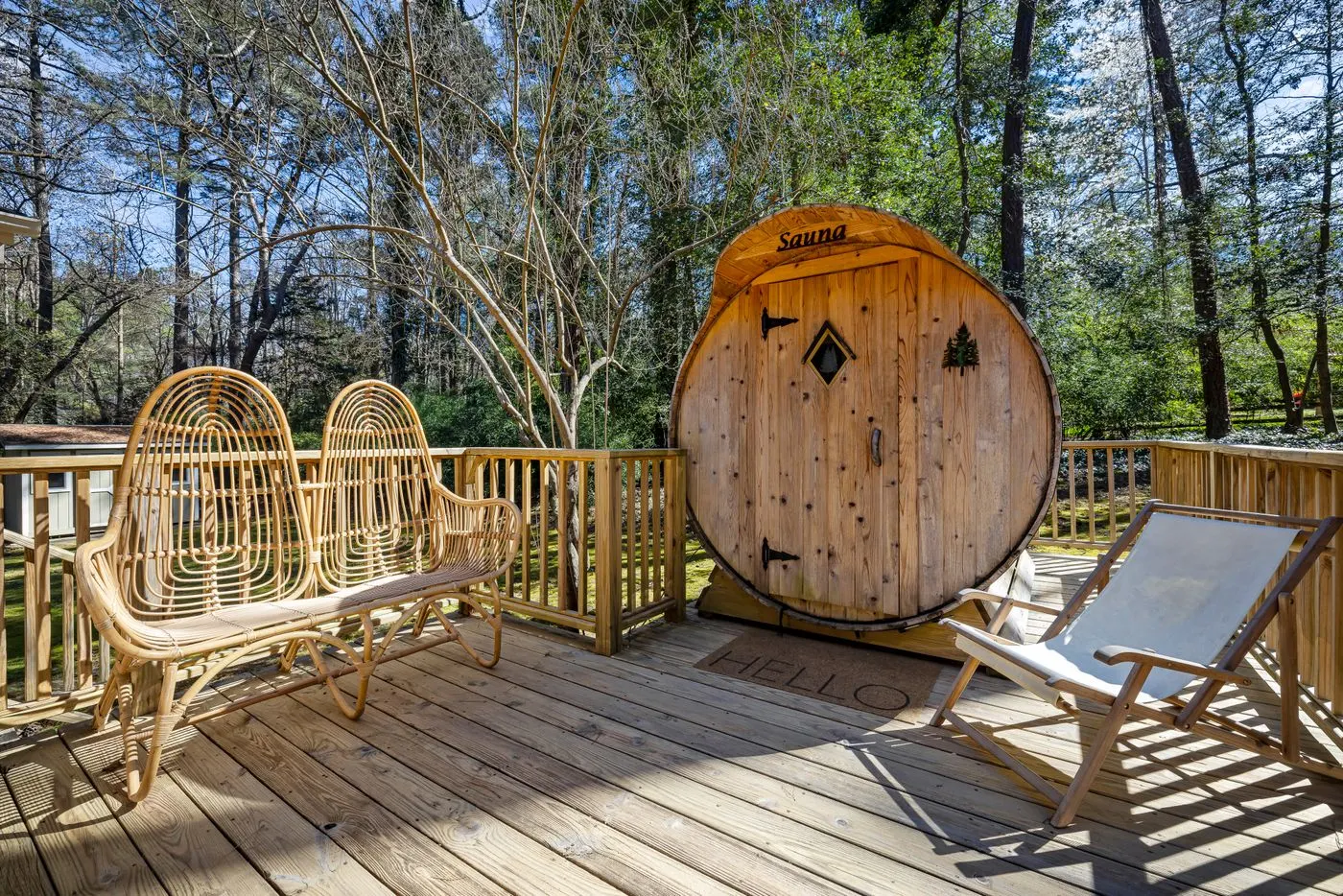
It needs a stable, level, well-drained base — commonly a gravel pad, concrete piers or a rated deck. Even though a barrel is light, its cradles concentrate the load at a few points, so the base still has to resist settling and frost heave.
Can I put an outdoor sauna on a gravel pad?
Often, yes — a compacted gravel pad over a drainage layer is a common, affordable base for lighter saunas on well-drained ground. It works by draining water away so there's little moisture to freeze and heave. On poorly drained or frost-susceptible soil, piers or screws are safer.
What is frost heave and why does it matter?
Frost heave is the upward movement of the ground when moisture in the soil freezes and expands. It can lift and tilt a foundation unevenly, racking doors, cracking cladding and knocking a heater out of level. Foundations resist it by reaching below the frost line or by draining water away.
Do I need a permit for a sauna foundation?
Possibly. Requirements depend on your municipality and the sauna's size, foundation type and services. Some foundations and structures need a building permit, and setbacks apply. Confirm with your local building department before you build.