A shed-style sauna is a simple, stud-framed outdoor sauna with a single-slope (mono-pitch) roof. It uses the same insulation and vapour control as a cabin sauna but in the plainest possible form, which makes it the most affordable and DIY-friendly way to build a genuinely winter-capable outdoor sauna.
If a cabin sauna is a small building and a barrel is a kit, a shed-style sauna is the honest middle: a plain, framed box with a single-slope roof that you can build yourself and insulate properly. It’s the format to choose when you want real winter performance without a premium price or a complicated build.
What a shed-style sauna is
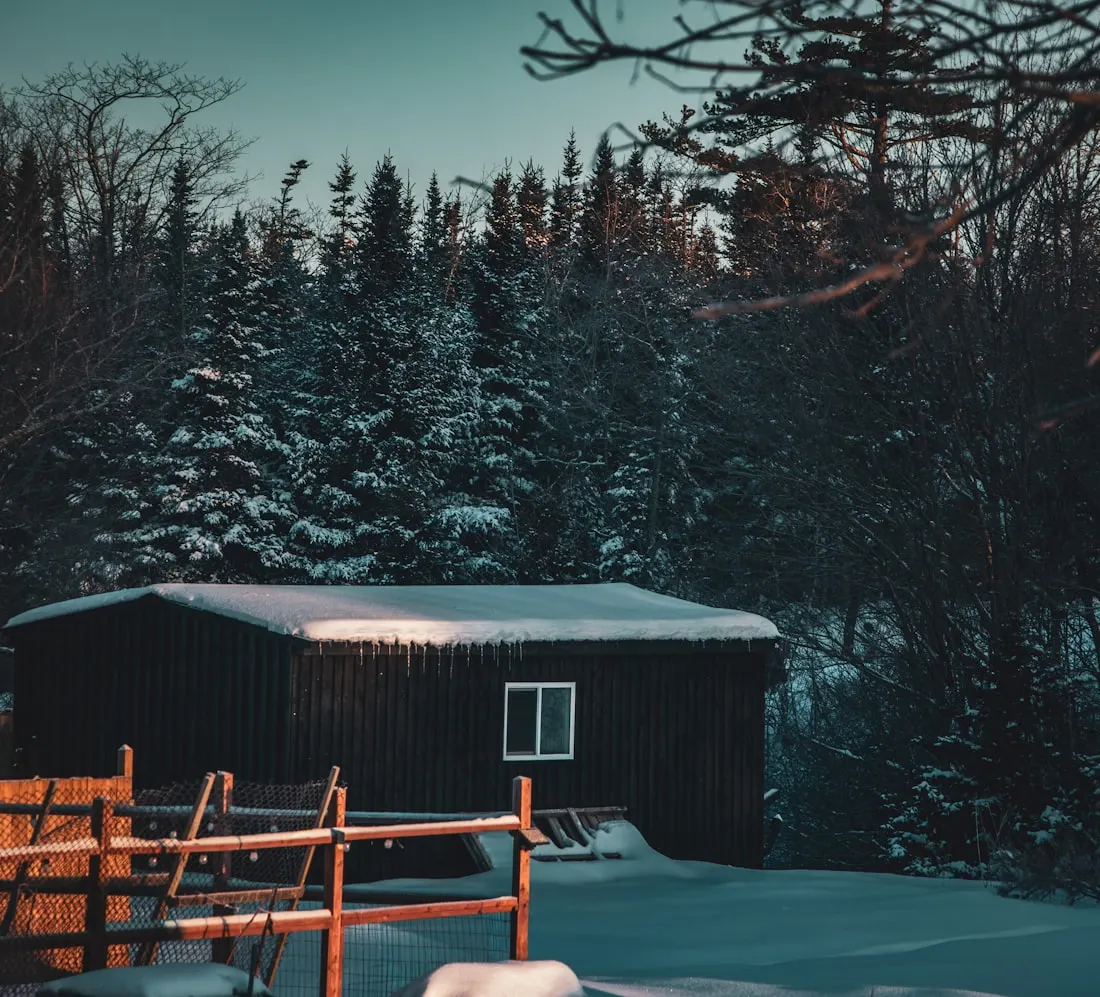
A shed-style sauna is a stud-framed outdoor sauna with a mono-pitch (single-slope) roof. Structurally it’s a simplified cabin sauna: a floor platform, framed walls, an insulated ceiling and a plain sloped roof, lined inside with sauna wood over insulation and a vapour barrier and clad outside for weather. There’s no pitched roof, porch or elaborate glazing to complicate the build — which is the whole point.
Why it’s the DIY favourite
Everything about a shed build is standard carpentry. Rectangular framing goes up fast, a single-slope roof is the easiest to frame, insulate and seal, and the plain form means fewer tricky junctions where heat and water can escape. For a competent DIY builder, a shed-style sauna is the most achievable way to get a genuinely insulated, winter-capable sauna — and to keep the cost down by doing the labour yourself.
The one part that isn’t DIY: the heater’s electrical connection belongs to a licensed electrician, and a wood stove’s chimney and clearances must be installed to code.
Roof slope and snow
Orient the single slope so it sheds snow and meltwater away from the door and any path — you don’t want a sheet of snow sliding onto your entrance. Give the roof enough pitch and structure for your local snow load, and insulate and vapour-seal the ceiling thoroughly, since that’s where most heat is lost. A modest overhang on the low side protects the cladding.
The envelope
Because it’s framed, a shed-style sauna takes the same cold-climate wall as a cabin: interior wood, an air gap, a sealed foil vapour barrier, mineral-wool insulation, sheathing, a weather membrane and clad exterior. Get the vapour barrier and its seams right and the plain shape actually helps — fewer corners and penetrations mean fewer places to get the detailing wrong. See outdoor sauna insulation for the specifics.
Heaters and layout
Both heater types suit a shed. Electric heaters are the simplest choice where the site has power; a wood-burning stove works off-grid but needs room for clearances and a chimney. The rectangular interior lets you lay out benches sensibly — an upper tier at sitting-in-the-heat height and a lower tier below. Size the heater to the room volume and adjust for any window glass and the cold, as covered in how to size a heater.
Pros and cons
Advantages
- Cheapest route to a properly insulated sauna
- Simple framing; very DIY-friendly
- Single-slope roof is easy to build and seal
- Full winter performance when insulated
- Flexible rectangular layout
Limitations
- Plain, utilitarian appearance
- Still needs a proper foundation and roof design
- Performance depends on careful envelope detailing
- Less "wow" than a pod or premium cabin
Common mistakes
- Insulating without a sealed vapour barrier. The barrier is what keeps moisture out of the framing.
- Too little roof pitch. A shallow slope can pond snow and water; give it enough fall and structure.
- Sloping snow onto the door. Orient the slope away from the entrance and pathway.
- Sizing the heater to the floor area. Size to volume, and add for glass and the cold climate.
Cost in Canada
A shed-style sauna is usually the most affordable way to get a properly insulated outdoor sauna, particularly as a DIY build. Materials, the heater and the foundation drive the total; doing your own labour is where the big savings are. As always, treat any figure as an approximate range and see our cost guidance.
Alternatives
Want more polish or a porch and larger glazing? Step up to a full cabin sauna. Prefer a kit you assemble rather than a build? A barrel sauna trades some winter efficiency for speed and simplicity. The shed-style sauna is the pick when value and a straightforward build matter most.
Frequently asked questions
Is a shed-style sauna good for a cold climate?
Yes. Because it's stud-framed, it takes full insulation and a vapour barrier just like a cabin sauna, so it can perform very well in winter. It simply does it in the plainest form, which keeps the cost and the build complexity down.
Can I build a shed-style sauna myself?
It's the most DIY-friendly format. The framing, single-slope roof, insulation and cladding are standard carpentry within reach of many competent builders. The heater's electrical connection must be done by a licensed electrician, and a wood stove's chimney and clearances to code.
Which way should the roof slope?
Slope the roof so it sheds snow and water away from the door and any pathway, and give it enough pitch and structure for your local snow load. A single slope is simple to frame and easy to insulate and seal at the ceiling.
How is it different from a cabin sauna?
It's essentially a simplified cabin: the same framed, insulated envelope, but with a plain mono-pitch roof and minimal detailing instead of a pitched roof, porch or large glazing. That trims cost and effort while keeping the winter performance.
What does a shed-style sauna cost?
It's usually the cheapest way to get a properly insulated outdoor sauna, especially as a DIY build with a mid-range heater. Materials, heater choice and foundation drive the total. Treat figures as approximate ranges rather than quotes.
What heater suits a shed-style sauna?
Both electric and wood-burning heaters work. Electric is simplest if you have power to the site; a wood stove suits off-grid builds but needs a chimney and clearances. Size the heater to the room volume and adjust for any glass and the cold climate.