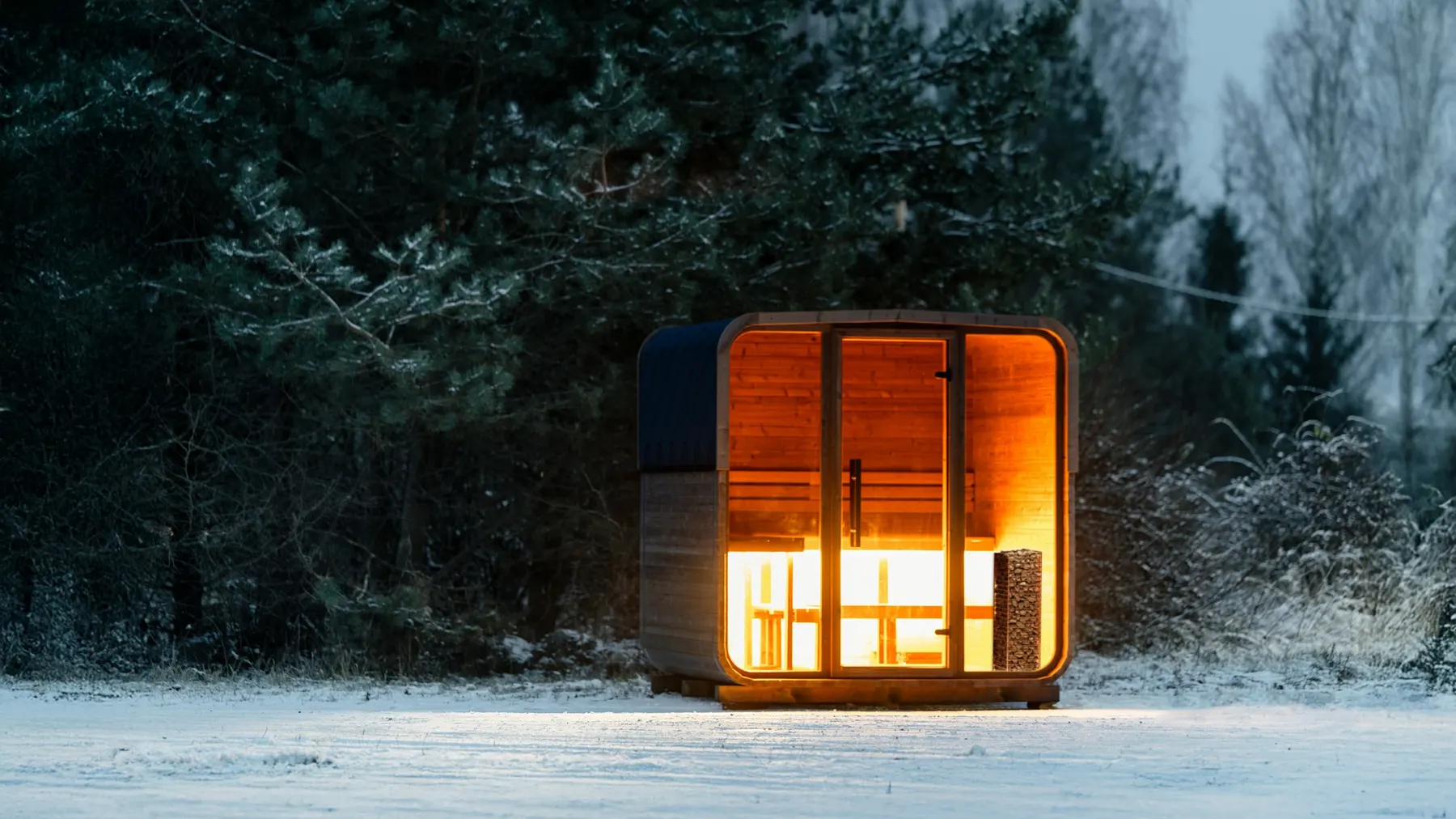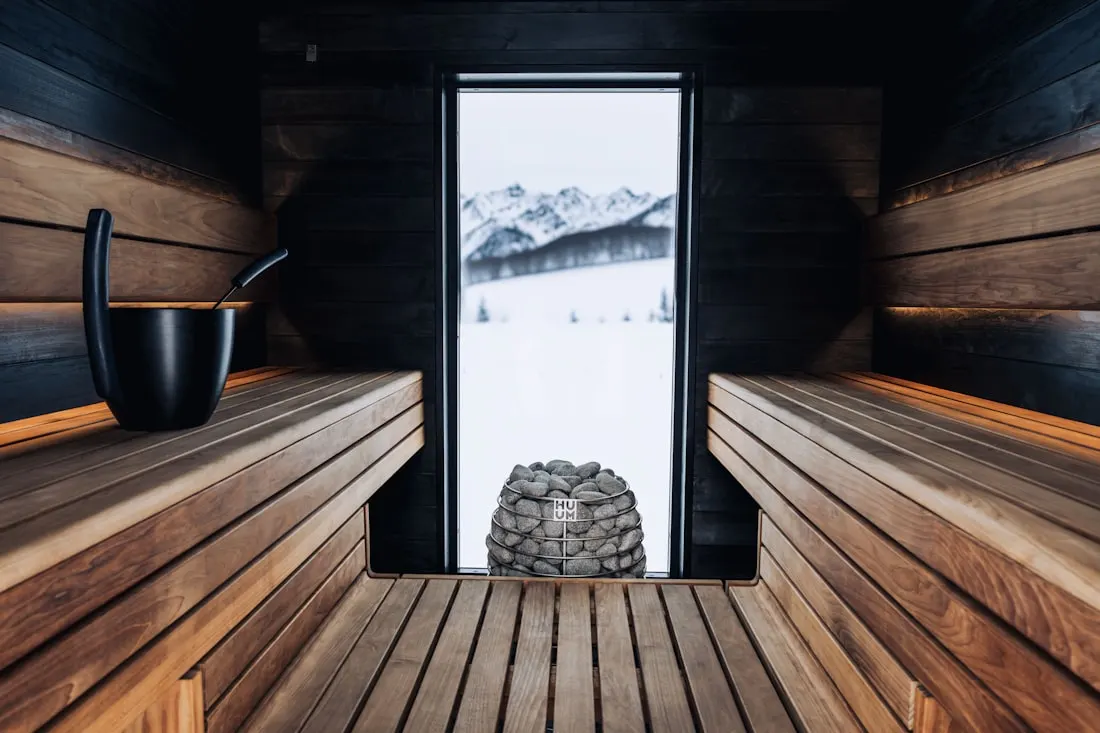
A glass-front or panoramic sauna uses a large glazed wall or door to frame the outdoors — stunning against a snowy view. The trade-off is heat: glass loses far more heat than an insulated wall and stores none, so a glass-front sauna needs a larger heater, benefits greatly from double or triple glazing, and condenses more. Beautiful and worth it for the view, provided you size the heater and glazing for the cold.
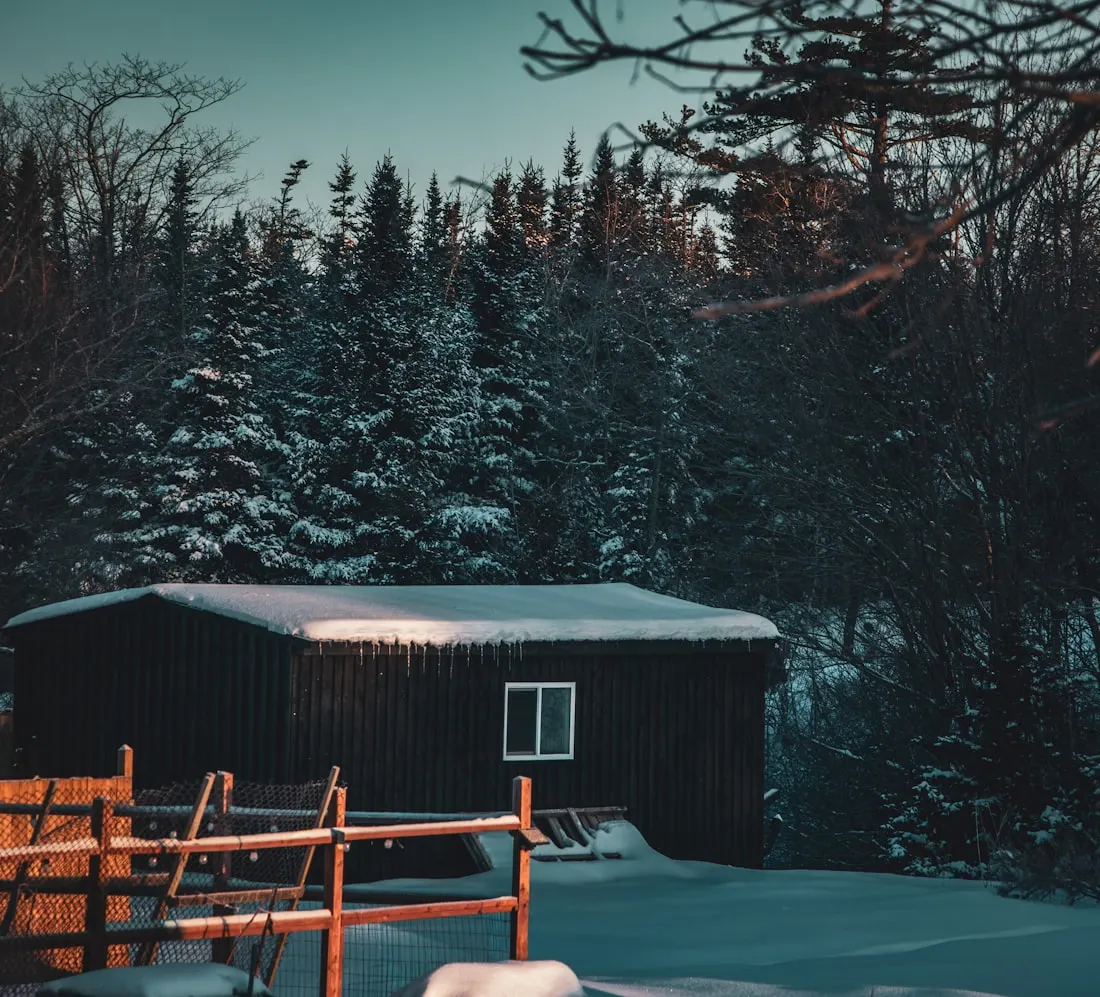
A wall of glass turns a sauna into a viewing box for the Canadian winter: sit in the heat, watch snow fall on the pines or steam drift over a frozen lake. The panoramic, glass-front sauna is one of the most striking formats — and the one where the tension between beauty and heat loss is sharpest. Get the glazing and heater right and it’s spectacular.
What a glass-front sauna is
A glass-front sauna features a large glazed wall, door, or panoramic window as a defining element — often the entire front. The rest of the structure is usually a framed, insulated cabin or a pod; it’s the glazing that sets it apart. The purpose is the view and the light, and against a winter landscape the effect is hard to beat.
The heat trade-off
Glass is the weak point in any warm building’s envelope, and a sauna is no exception. Compared with an insulated wall, glass:
- Conducts heat out far faster.
- Stores no heat — unlike wood or masonry.
- Runs cold on the inside surface, which affects comfort and condensation.
So a glass-front sauna inherently loses more heat than a solid one. That’s not a reason to avoid it — it’s a reason to design for it.
Glazing: go double or triple
The single biggest lever is the glazing itself. Double or triple glazing dramatically cuts heat loss, keeps the inner pane warmer (more comfort, less condensation and frost), and reduces fogging so you actually keep the view. In a Canadian winter, single glazing on a large sauna wall is a mistake; the upgrade pays back in comfort, running cost and clarity. It also makes the door less prone to freezing.
Heater sizing
Because glazing loses heat and stores none, it directly increases the heater size you need. Sizing methods add extra effective volume for each square metre of glass, and a full glazed wall can push you up a heater size — or more. Never size a glass-front sauna on volume alone: include the glass area using the manufacturer’s method, and lean toward the larger option for cold-climate use. Our heater sizing guide walks through it.
Condensation and the view
Glass is the coldest surface inside, so moisture condenses there first — you’ll see it fog and, in deep cold, frost at the edges. Double glazing keeps the inner pane warmer and reduces this, but good ventilation and drying the sauna after use are what keep the glass clear and prevent the damp that follows. Ironically, the better you manage moisture, the better your view.
Privacy and orientation
A whole wall of glass makes orientation a bigger deal. Point the glazing toward a private, worthwhile view — trees, water, your own yard — and away from neighbours and the street. Where the outlook is exposed, landscaping, fencing or careful placement restores privacy. Plan this early, as part of siting the sauna.
Pros and cons
Advantages
- Stunning panoramic view of the winter
- Light, open, modern feel
- Connects the heat to the landscape
- Great over a lake or into a treeline
Limitations
- More heat loss than a solid wall
- Needs a larger heater
- Condenses and frosts at the glass first
- Privacy depends on orientation
- Quality glazing adds cost
Common mistakes
- Single glazing on a big glass wall in a cold climate.
- Sizing the heater on volume alone, ignoring the glass.
- Facing the glazing at neighbours instead of a private view.
- Neglecting ventilation and drying, so the glass stays fogged and damp.
Next steps
A glass-front sauna is worth it for the view when you commit to good glazing and a properly sized heater. Build it on an insulated cabin or pod base, site it for privacy and outlook, and manage condensation so the glass stays clear. Then enjoy the best seat in the winter.
Frequently asked questions
Do glass-front saunas lose a lot of heat?
More than a solid insulated wall, yes — glass conducts heat out and stores none. That means a glass-front sauna needs a larger heater and warms up a little slower, though good double or triple glazing greatly reduces the loss. The view is usually worth it if you size the heater accordingly.
How does glass affect heater sizing?
Glazing increases the heater size you need. Manufacturers add extra effective volume per square metre of glass when sizing, and a large glazed wall can push you up a heater size or more. Always size using the manufacturer's method with the glass area included — see our heater sizing guide.
Should a glass-front sauna have double glazing?
For a Canadian winter, strongly yes. Double or triple glazing stays warmer, loses far less heat, and condenses and frosts less than single glazing. It costs more upfront but improves comfort, running cost and the view (less fogging), and is well worth it in a cold climate.
Do glass saunas get more condensation?
They can, because glass is the coldest interior surface and moisture condenses there first. Double glazing helps by keeping the inner pane warmer. Good ventilation and drying the sauna after use keep the glass clear and prevent the damp that follows persistent condensation.
What about privacy with a glass-front sauna?
Orient the glazed wall toward a private view — trees, a lake, your own yard — not toward neighbours or the street. Siting for privacy is part of planning any sauna, but it matters more when a whole wall is glass. Landscaping or fencing can help where the outlook is exposed.