A sauna heats air (dry heat you sit in), while a hot tub heats water (you soak in). The big practical differences are cost and upkeep: a sauna is heated only when used and has no water to treat, so its running and maintenance demands are simpler, while a hot tub holds heated, chemically treated water continuously and needs ongoing water care and energy to stay warm. In a cold climate, a sauna suits the hot-cold ritual and avoids the challenge of keeping water from freezing, whereas a hot tub must be kept warm and maintained year-round. Which is right depends on whether you want to sit in heat or soak in water, and how much ongoing upkeep you want.
Sauna or hot tub? Both promise warmth and relaxation in a cold-climate backyard, but they’re fundamentally different — one heats air, the other heats water — and those differences run deep into cost, upkeep and how each handles a Canadian winter. If you’re deciding between them (or whether to have both), this guide lays out the practical trade-offs.
The core difference: hot air vs hot water
- Sauna: heats air — you sit in dry heat from a stove and stones.
- Hot tub: heats water — you soak in a warm bath.
One is a hot, dry room; the other a warm bath. From that single difference flow most of the practical distinctions.
Cost and upkeep: the big divide
The biggest practical gap is when each is heated and whether there’s water to maintain:
| Sauna | Hot tub | |
|---|---|---|
| Heated | Only when used | Continuously, to stay warm |
| Water to treat | None | Yes — chemistry, filters, cleaning |
| Routine upkeep | Cleaning, drying, wood care | Ongoing water care, kept warm |
A sauna is heated on demand and has no water to treat, so its running and maintenance demands are simpler. A hot tub holds heated, chemically treated water continuously — energy and water care even when unused. Exact costs depend on models, usage and energy prices, so compare for your situation.
Winter practicality
Both are used in winter, but differently:
- Sauna — gives the hot-dry-inside, freezing-outside contrast and the cold-plunge ritual, and holds no standing water, so there’s nothing to keep from freezing.
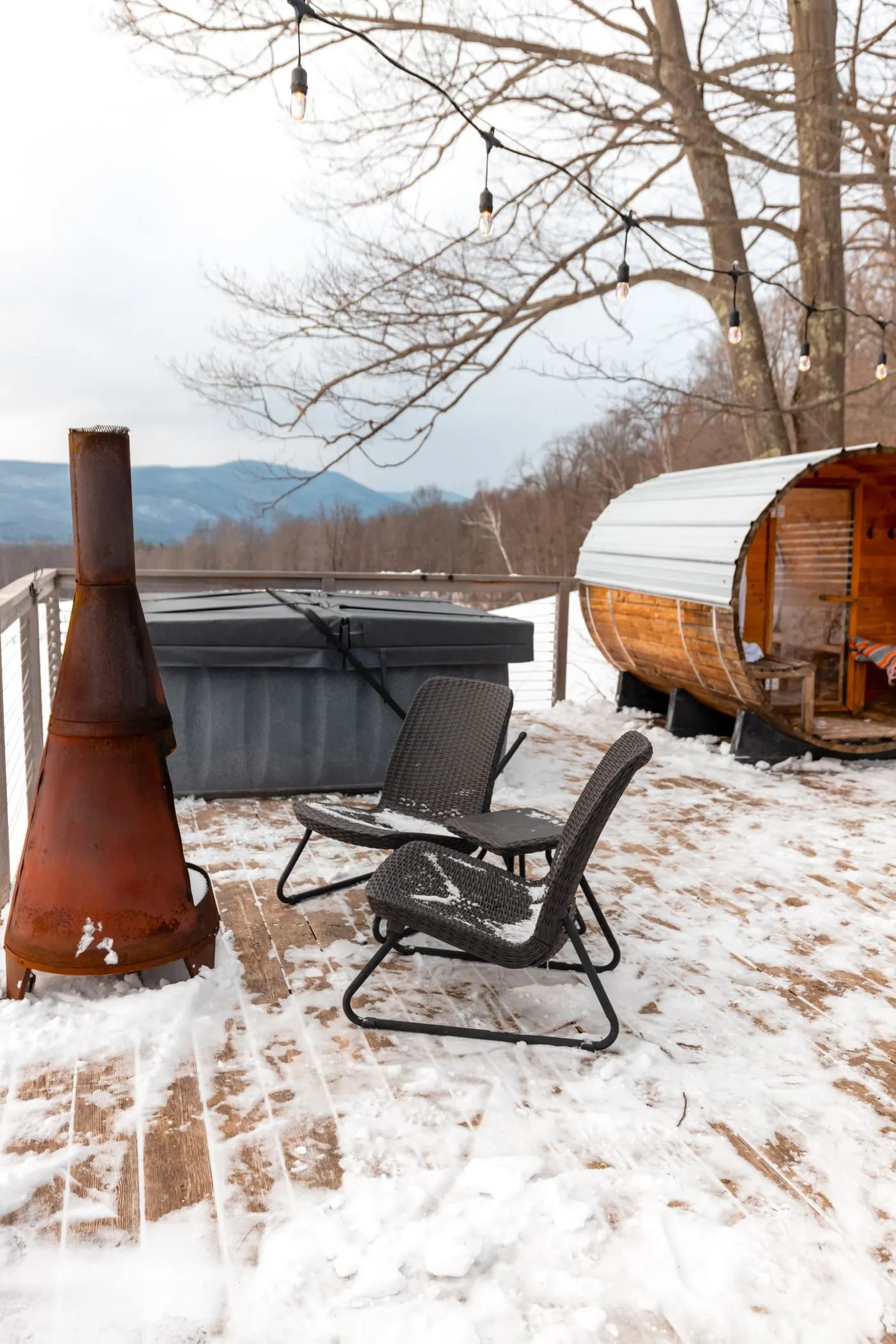
- Hot tub — offers a warm soak in the cold, but must be kept warm and maintained continuously to prevent freezing and keep the water safe.
A sauna is often the simpler winter proposition; a hot tub the warm-soak one.
Can you have both?
Yes — many enjoy pairing hot dry heat with a water element. But each is a separate project with its own cost, siting, servicing and upkeep. If you specifically want the hot-cold ritual, a sauna with a cold plunge is a common pairing — a hot tub is a warm soak rather than a cold contrast.
How to choose
It comes down to two questions:
- Sit in dry heat, or soak in warm water?
- How much ongoing upkeep are you willing to do?
A sauna offers dry heat, the hot-cold ritual, heat-on-demand and simpler upkeep. A hot tub offers a warm soak with continuous heating and water maintenance. Weigh the experience, your climate, budget and appetite for upkeep.
Common mistakes
- Underestimating a hot tub’s continuous heating and water care.
- Expecting a sauna to be a warm soak — it’s dry heat you sit in.
- Not budgeting the ongoing costs of whichever you choose.
- Assuming both without planning two separate projects.
Next steps
Decide whether you want to sit in heat or soak in water, and how much upkeep suits you. If it’s the sauna, plan the size, heater and running cost, and consider adding a cold plunge for the full hot-cold ritual — the sauna’s simpler upkeep and winter practicality make it a natural fit for a Canadian backyard.
Frequently asked questions
What is the difference between a sauna and a hot tub?
A sauna heats air — you sit in dry heat produced by a stove and stones — while a hot tub heats water, which you soak in. Beyond that, they differ hugely in upkeep: a sauna is heated only when used and has no water to treat, while a hot tub holds heated, chemically treated water continuously. One is a hot, dry room; the other is a warm bath. They're different experiences with very different running and maintenance demands.
Is a sauna or hot tub cheaper to run?
Generally a sauna's running demands are simpler because it's only heated when you use it and has no water to treat, whereas a hot tub holds heated water continuously and needs ongoing water care and energy to stay warm — even when unused. Exact costs depend on the models, usage, energy prices and climate, so compare for your situation. But the key difference is that a sauna heats on demand while a hot tub is kept warm around the clock.
Which is better for winter, a sauna or a hot tub?
Both are used in winter, but they suit it differently. A sauna gives the hot-dry-inside, freezing-outside contrast and the cold-plunge ritual, and avoids the challenge of keeping water from freezing since it holds no standing water. A hot tub offers a warm soak in the cold but must be kept warm and maintained continuously to prevent freezing and keep the water safe. A sauna is often the simpler winter proposition; a hot tub the warm-soak one.
Does a hot tub need more maintenance than a sauna?
Typically yes — a hot tub holds standing water that must be kept chemically balanced, clean and warm continuously, with filters and water care as ongoing tasks. A sauna has no water to treat; its maintenance is periodic cleaning, drying after use and wood care. So a hot tub generally carries more routine upkeep because of the water, while a sauna's upkeep is simpler and less frequent. Weigh the ongoing effort you want to commit.
Can you have both a sauna and a hot tub?
Yes, and many people enjoy pairing them — a sauna for hot dry heat and a hot tub or cold plunge for the water side. But each is a separate project with its own cost, siting, servicing and upkeep, so a combined setup means planning and budgeting for both. If you want the hot-cold ritual specifically, a sauna with a cold plunge is a common pairing; a hot tub is a warm soak rather than a cold contrast.
Which should I choose, a sauna or a hot tub?
It comes down to whether you want to sit in dry heat or soak in warm water, and how much ongoing upkeep you're willing to do. A sauna offers dry heat, the hot-cold ritual, heat-on-demand and simpler upkeep with no water to treat. A hot tub offers a warm soak but continuous heating and water maintenance. Consider the experience you want, your climate, budget and appetite for upkeep, and choose the one that fits your life.