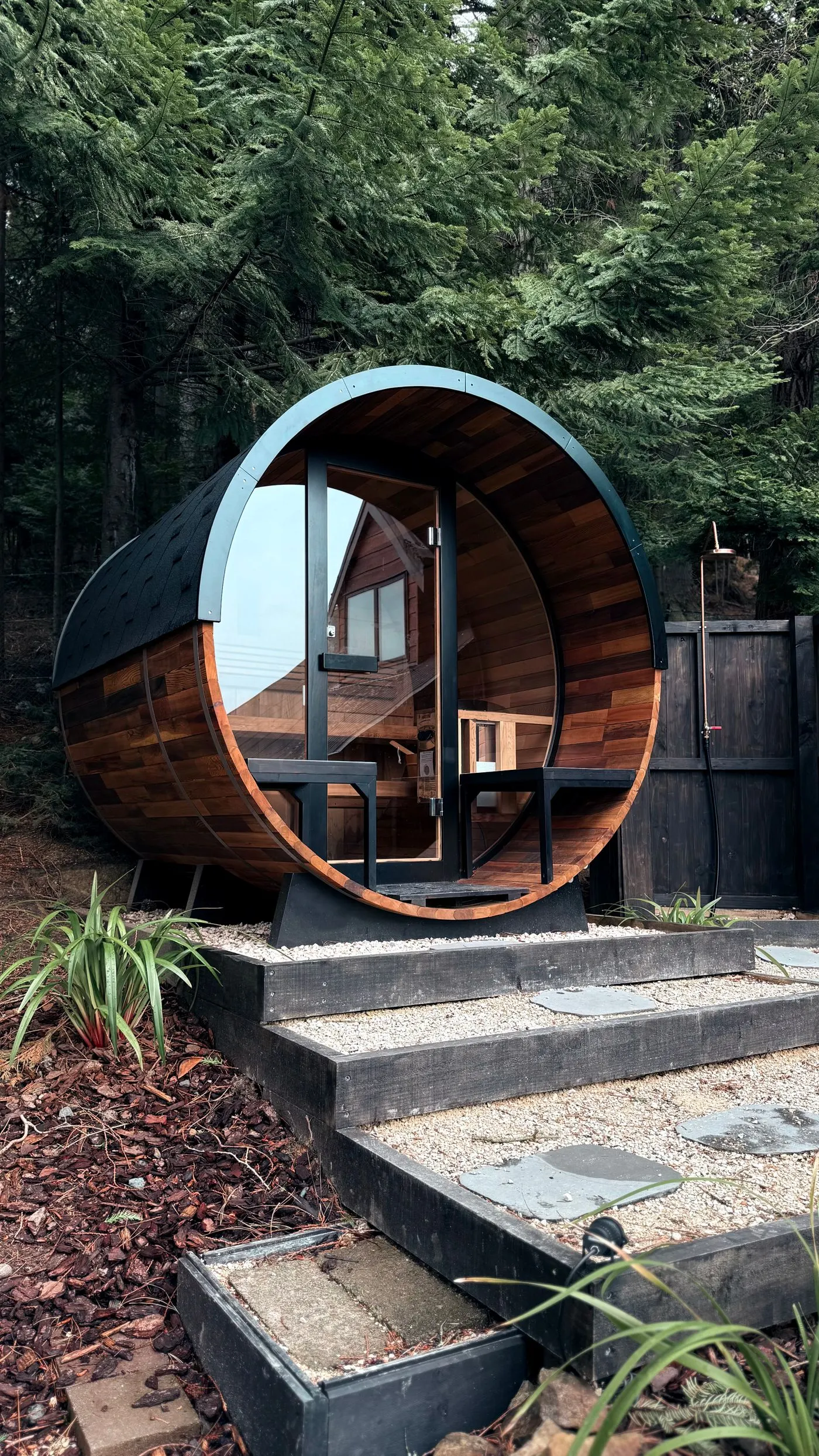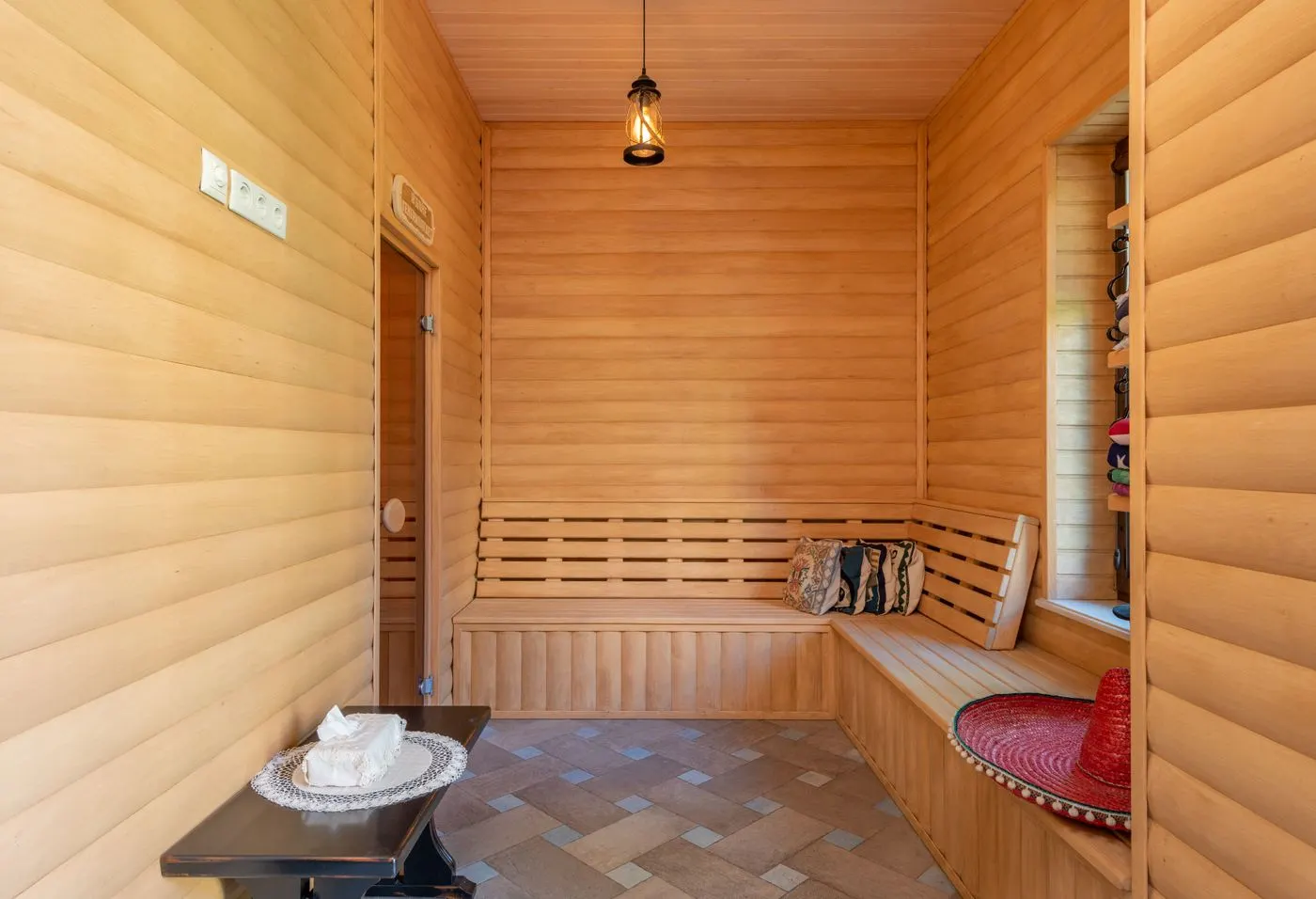
Single-tier saunas have one bench level, while two-tier saunas add an upper bench, and the choice affects heat, comfort and capacity. Because heat stratifies — it's hotter higher up — a higher bench lets you sit in the warmer air, so two tiers give a choice of heat levels: cooler lower, hotter upper. Two tiers also add seating and let bathers sit or lie at different heights, suiting larger saunas and groups, while a single tier suits compact saunas where space or ceiling height is limited. The key is that the upper (löyly) bench should be high enough to reach comfortable heat. Choose tiers based on your sauna's size, ceiling height and how you'll use it, ensuring the top bench sits well up in the warm air.
How you arrange the benches shapes the whole sauna experience — because in a sauna, where you sit determines how hot you are. The choice between single-tier (one level) and two-tier (an added upper bench) comes down to heat, comfort and capacity, and it’s governed by one bit of physics: heat rises. This guide compares single and two-tier bench layouts.
The physics: heat stratifies
In a sauna, warm air rises, so it’s hotter near the ceiling and cooler lower down — stratification. This is why bench height matters so much: the higher you sit, the warmer the air. Bench tiers are really about accessing the right heat.
Single tier vs two tier
| Single tier | Two tier | |
|---|---|---|
| Heat choice | One level | Cooler lower, hotter upper |
| Capacity | Fewer | More; sit/lie at heights |
| Suits | Compact saunas | Larger saunas, groups |
| Needs | Less space/height | Room and ceiling height |
A two-tier layout gives a choice of heat — sit cooler low or hotter high — plus more seating, suiting larger saunas and groups. A single tier suits compact saunas where space or ceiling height is limited.
The upper (löyly) bench must be high
Does a single tier get hot enough?
A single-tier sauna can get hot, but the bench must be set high enough to sit in the warm, stratified air. In a compact single-tier build, position the bench to reach comfortable heat given the ceiling height. A single bench set low leaves bathers in cooler air — so a single tier works when the bench is high enough, which is more constrained than a two-tier layout’s high upper bench. See bench design.
Capacity
Adding an upper tier increases seating and lets bathers sit or lie at different heights, so two tiers typically offer more capacity in the same footprint — better use of the vertical space. Capacity still depends on overall bench length, but two levels help where capacity matters and there’s room.
Which for your sauna?
- Single tier — a small or compact sauna, or limited ceiling height, with the bench set high enough.
- Two tier — a larger sauna with the room and height for an upper bench, offering heat choice and capacity.
Match the layout to your sauna’s size, ceiling height and use — see sauna size.
Common mistakes
- A bench set too low to reach good heat.
- Cramming two tiers into a sauna without the ceiling height.
- Ignoring stratification when placing benches.
- Judging capacity by tiers alone rather than bench length.
- An upper bench not high enough in the warm air.
Next steps
Choose bench tiers to match your sauna’s size, ceiling height and use: a well-placed single tier for compact builds, two tiers for larger saunas wanting heat choice and capacity. Above all, set the upper bench high in the warm air — see bench design and air circulation to get the heights right.
Frequently asked questions
Should a sauna have one or two tiers of benches?
It depends on the sauna's size, ceiling height and use. Two-tier benches add an upper level that sits in the warmer, higher air, giving a choice of heat levels and more seating, suiting larger saunas and groups. A single tier suits compact saunas where space or ceiling height is limited. Because heat is hotter higher up, the upper bench lets you reach comfortable heat, so a two-tier layout is common where there's room. The key is that the top bench sits high enough in the warm air. Choose tiers to match your sauna and how you'll use it. See our bench design guide.
Why are sauna benches often on two levels?
Because heat stratifies — warm air rises, so it's hotter near the ceiling and cooler lower down — a two-tier layout lets bathers choose their heat: sit on the cooler lower bench or the hotter upper bench. The upper bench sits up in the warm air where comfortable sauna heat is, while the lower bench serves as a cooler seat or a step up. This choice of heat levels, plus extra seating, is why two tiers are common where there's room. So two levels are about accessing the right heat and adding capacity. See our air circulation guide.
How high should the top sauna bench be?
High enough to sit in the hot upper layer of air, since heat stratifies and the warmth is greatest higher up — the upper (löyly) bench is typically set well up, often near the level of the top of the heater or its stones, so bathers are in the warm air. The exact height depends on the heater and design, so follow the heater and design guidance, but the principle is to sit high where the heat is. A top bench set too low leaves bathers in cooler air. So get the upper bench high enough. See our air circulation and stratification guide.
Does a single-tier sauna get hot enough?
A single-tier sauna can get hot, but the bench needs to be set high enough to sit in the warm, stratified air, since heat is hotter higher up. In a compact single-tier sauna, the bench should be positioned to reach comfortable heat given the ceiling height. If the single bench is set low, bathers sit in cooler air. So a single tier works when the bench is high enough relative to the heat, which is more constrained than a two-tier layout that offers a high upper bench. Ensure the bench height suits the heat. See our sauna benches guide.
Do two-tier benches hold more people?
Generally yes — adding an upper tier increases seating and lets bathers sit or lie at different heights, so two-tier layouts typically offer more capacity than a single tier in the same footprint, which suits larger saunas and groups. Capacity still depends on bench length overall, but two levels make better use of the vertical space for seating. So if capacity matters and there's room and ceiling height, two tiers help. A compact single-tier sauna seats fewer. Match the layout to how many you'll seat. See our sauna size guide.
Which is better for a small sauna, single or two tiers?
A single tier often suits a small or compact sauna, where limited space or ceiling height may not accommodate two levels comfortably, provided the bench is set high enough to reach good heat. Two tiers suit larger saunas with the room and height for an upper bench. So for a small sauna, a well-placed single tier is often the practical choice, while bigger builds benefit from two tiers' heat choice and capacity. Match the bench layout to your sauna's size and ceiling height. See our guides on sauna size and bench design.