A barrel sauna is the round, iconic form: its curved shape circulates heat well over a small volume and it looks distinctive, but its rounded body usually can't take full insulation, so it holds heat less well in extreme cold and its bands need occasional re-tensioning. A pod sauna is a modern, often better-insulated compact cabin with a rounded or curved profile, giving good heat retention and a contemporary look, typically at a higher cost than a basic barrel. For the coldest winters and efficiency, a well-insulated pod tends to edge ahead; for iconic looks, fast circulation and value, a barrel appeals. Both are excellent compact choices — the decision comes down to insulation, look and budget.
Two of the most popular compact outdoor saunas sit side by side in most people’s shortlists: the barrel — round, iconic, traditional — and the pod — modern, often better-insulated, contemporary. Both fit small yards and suit couples or small families, but they differ in insulation, look and cost. This guide compares barrel and pod saunas to help you pick the right compact form for a cold climate.
The two shapes
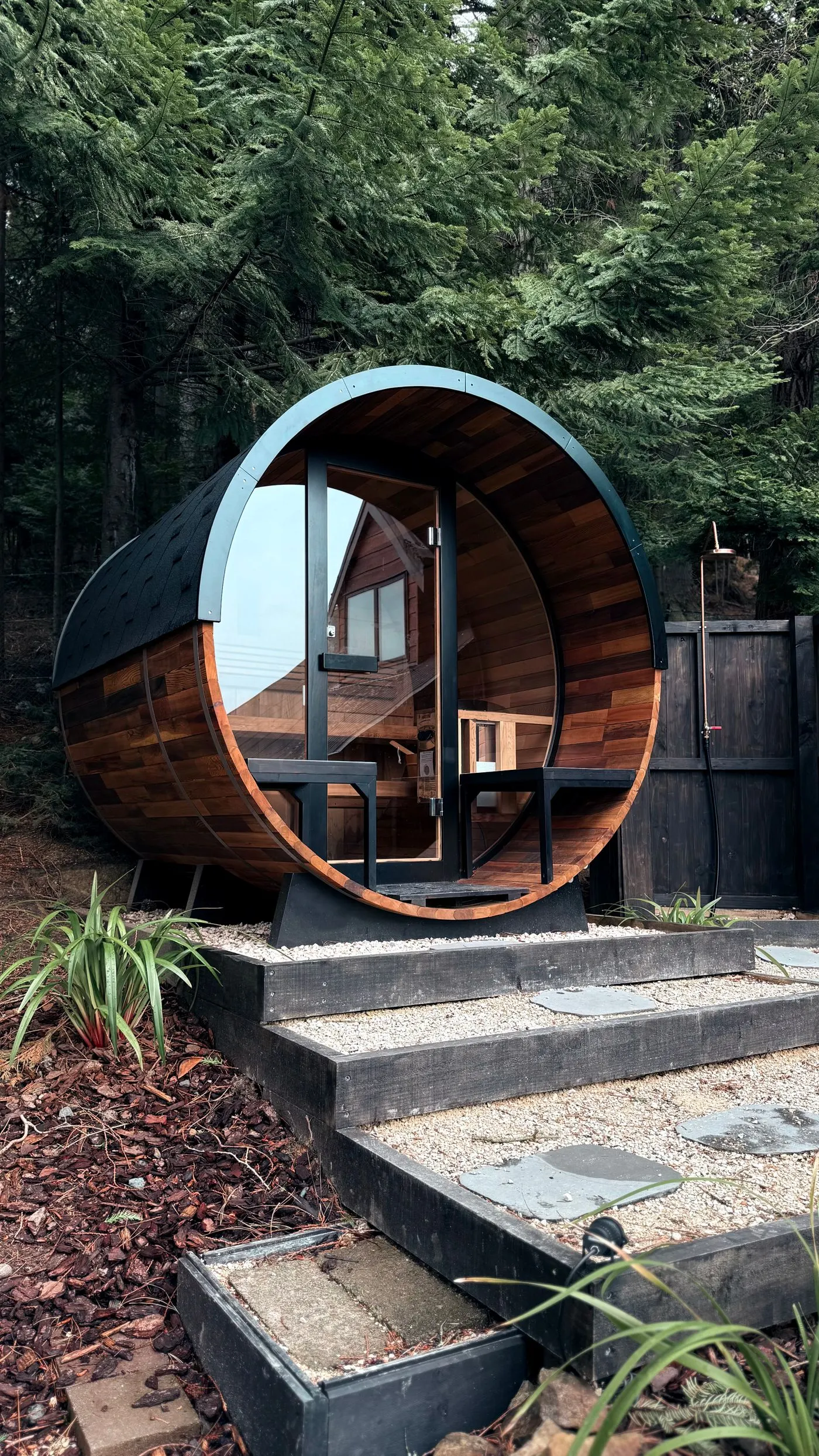
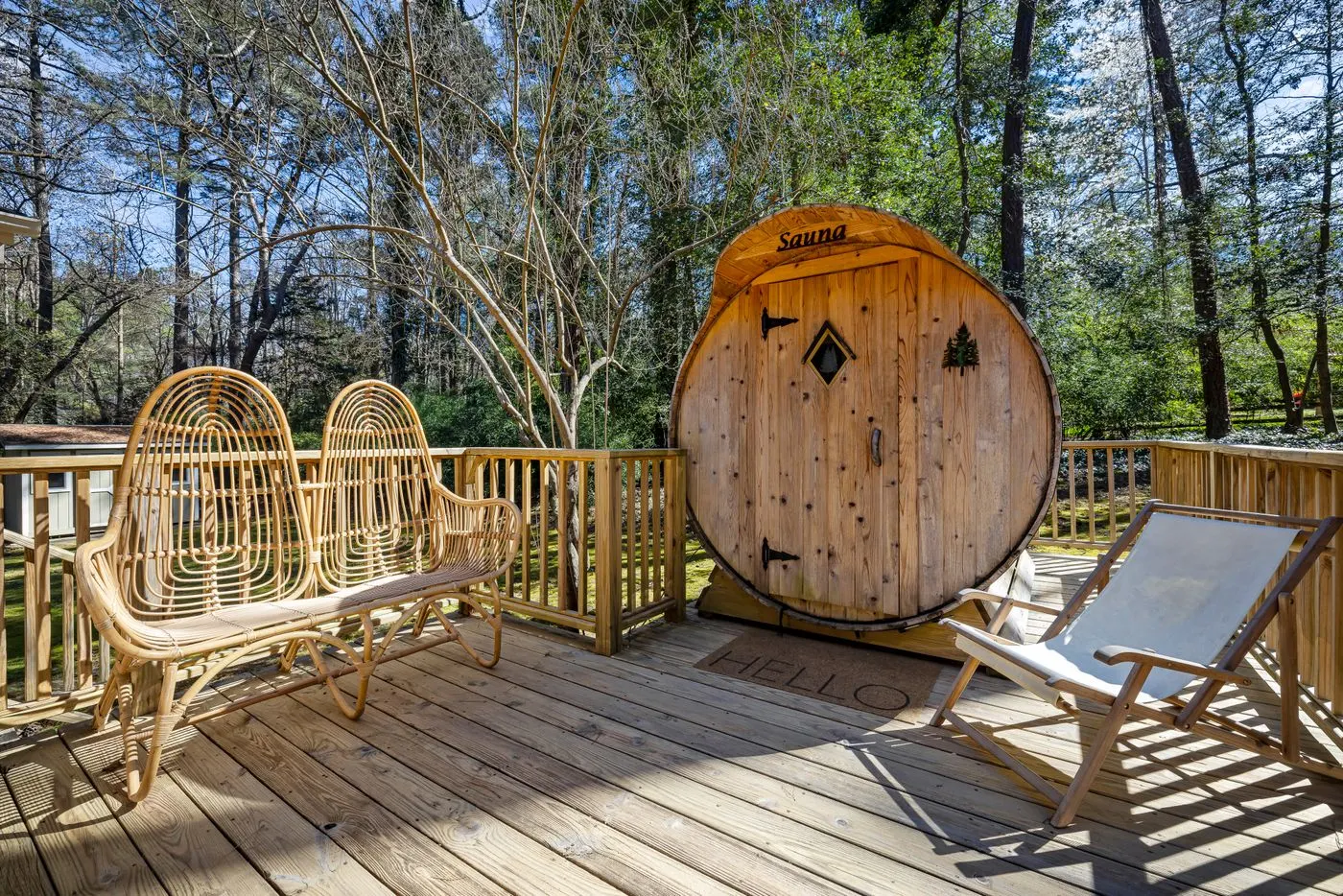
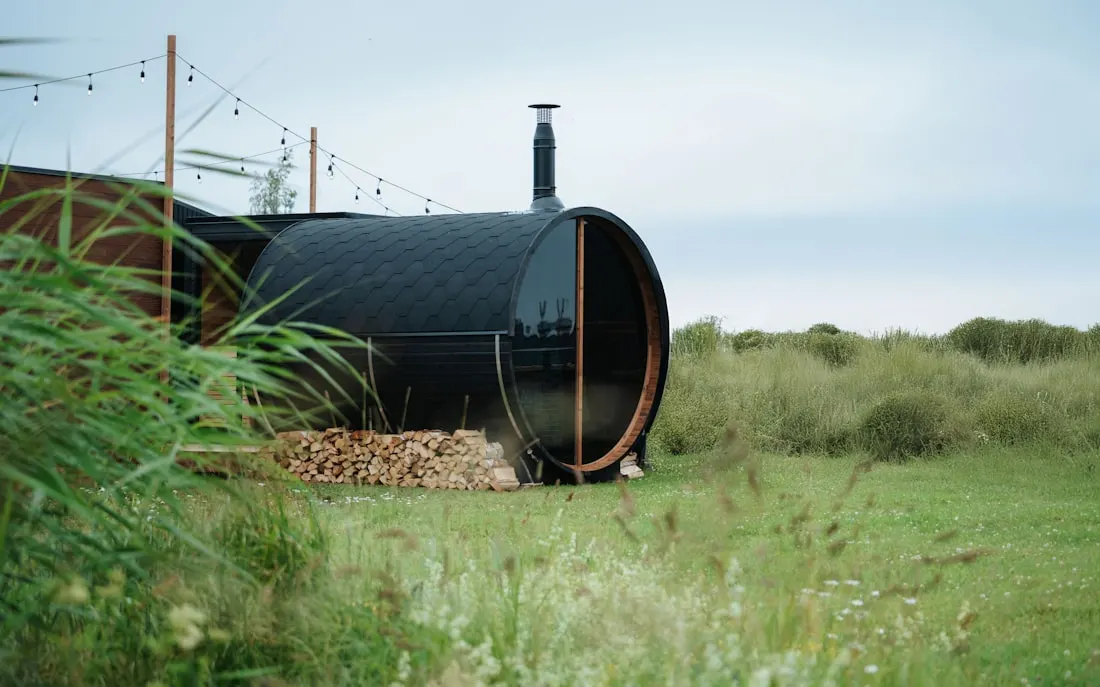
- Barrel sauna: the round, iconic form. Its curved shape circulates heat well over a small volume, and it looks distinctive — but its rounded body usually can’t take full insulation, and its bands need occasional re-tensioning.
- Pod sauna: a modern, often better-insulated compact cabin with a rounded or curved profile — good heat retention and a contemporary look, typically at a higher cost.
Heat retention: the key difference
| Barrel | Pod | |
|---|---|---|
| Insulation | Usually can't be fully insulated | Often better insulated |
| Heat behaviour | Fast circulation; loses heat faster | Good retention |
| Extreme cold | Capable; site sheltered | Tends to edge ahead |
A well-insulated pod generally holds heat better, because its construction can take fuller insulation than a barrel’s rounded body. A barrel’s curved shape circulates heat efficiently — so it can feel quick to warm — but tends to lose heat faster. For sustained warmth in extreme cold, the pod usually has the edge; the barrel’s strength is circulation, not maximum retention. See barrel vs cabin for the barrel against a full cabin.
Cost
Barrels are often the more affordable, especially as basic kits; pods — modern and better-insulated — typically cost more. Prices vary by size, materials, insulation and features, so compare specific models and total project cost including foundation and installation. Value → barrel; efficiency and contemporary build → pod may justify the cost.
Look
Purely personal:
- Barrel — the iconic, traditional round form that reads instantly as a sauna.
- Pod — modern, sleek, often curved, suiting contemporary yards.
Neither is objectively better-looking — let your taste and setting guide this part.
Foundations
Both are relatively compact and light versus large cabins, so both often suit a well-drained gravel pad, with cradles for a barrel’s round body or the pod’s base. The exact foundation depends on the specific sauna’s weight, shape, the manufacturer’s guidance and your ground and frost conditions. Neither typically needs a large slab.
Which for a cold climate?
Both work, with different strengths. For the coldest winters, a well-insulated pod tends to be the stronger performer; a barrel remains capable and characterful, especially sited sheltered. Insulation and siting matter most for cold-climate performance.
Common mistakes
- Expecting a barrel to hold heat like an insulated pod.
- Comparing on upfront price alone, not total cost.
- Siting a barrel exposed, worsening its heat loss.
- Neglecting a barrel’s band re-tensioning over time.
- Choosing on looks without weighing cold-climate performance.
Next steps
Choose on insulation, look and budget: a pod for efficiency and a modern build in the coldest climates, a barrel for iconic looks, fast circulation and value. Both are excellent compact choices — match to your yard, winters and taste, plan a suitable foundation, and size it to your real use.
Frequently asked questions
Is a barrel or pod sauna better?
Neither is universally better — it depends on your priorities. A barrel is iconic, circulates heat well over a small volume, and offers good value, but usually can't take full insulation and needs its bands re-tensioned occasionally. A pod is a modern, often better-insulated compact cabin with good heat retention and a contemporary look, typically at a higher cost. For the coldest winters and efficiency a well-insulated pod tends to edge ahead; for iconic looks, fast circulation and value a barrel appeals. Choose based on insulation, look and budget.
Which holds heat better, a barrel or a pod sauna?
A well-insulated pod generally holds heat better, because its construction can usually take fuller insulation than a barrel's rounded body, which typically can't be fully insulated. A barrel's curved shape circulates heat efficiently over its small volume, so it can feel quick to warm, but it tends to lose heat faster than a well-insulated pod. So for sustained warmth in extreme cold, the pod usually has the edge, while the barrel's strength is efficient circulation rather than maximum retention. Insulation is the key difference between them.
Which is cheaper, a barrel or pod sauna?
Barrels are often the more affordable of the two, especially as basic kits, while pods — being modern, often better-insulated compact cabins — typically cost more. That said, prices vary by size, materials, insulation and features, so compare specific models and their total project cost including foundation and installation. If value is a priority, a barrel often wins on upfront cost; if efficiency and a contemporary build matter more, a pod's higher cost may be justified. Weigh cost against insulation and the look you want.
Do barrel and pod saunas need different foundations?
Both are relatively compact and light compared with large cabins, so both often suit foundations like a well-drained gravel pad, with cradles or supports as the design requires — a barrel needs cradles to hold its round body, while a pod sits on its base. The exact foundation depends on the specific sauna's weight, shape and the manufacturer's guidance, plus your ground and frost conditions. Neither typically needs the mass of a large slab. Follow the manufacturer's foundation guidance and match it to your site. See our foundation guides.
Which looks better, a barrel or pod sauna?
That's personal — a barrel has the iconic, traditional round-log look that many people love and that reads instantly as a sauna, while a pod has a modern, sleek, often curved profile that suits contemporary yards. Neither is objectively better-looking; it depends on your taste and the style of your home and garden. If you want the classic, recognisable sauna form, the barrel appeals; if you prefer a modern, minimalist look, the pod does. Let your own aesthetic and setting guide this part of the choice.
Are barrel and pod saunas good for a cold climate?
Both are used in cold climates, but with different strengths. A pod, if well insulated, performs well in extreme cold with good heat retention. A barrel works too and circulates heat efficiently, but usually can't be fully insulated, so it holds heat less well in the harshest conditions and benefits from being sited sheltered. For the coldest winters, a well-insulated pod tends to be the stronger performer, while a barrel remains a capable, characterful choice, especially with good siting. Insulation and siting matter most for cold-climate performance.