A cabin sauna is the better choice for the harshest winters and lowest running cost, because its framed walls take full insulation and vapour control. A barrel sauna is the better choice when fast heat-up, lower cost and a compact, iconic form matter more than maximum efficiency. Both are used year-round in Canada — the decision comes down to how cold your winters are and what you value.
Barrel and cabin are the two formats most Canadians choose between, and they represent a genuine trade-off rather than a right-and-wrong. A barrel is a quick, charming, cost-effective kit; a cabin is a small, insulated building that shrugs off deep cold. This guide compares them across everything that matters, then helps you decide.
At a glance
| Factor | Barrel sauna | Cabin sauna |
|---|---|---|
| Construction | Cylindrical staves, steel bands; kit | Stud-framed, insulated; small building |
| Insulation | Limited; no stud cavity | Full wall and ceiling insulation |
| Heat retention | Loses heat faster | Holds heat well |
| Winter warm-up | Feels fast; longer to sustain | Efficient and steady |
| Cold-climate suitability | Good with care | Excellent |
| Installation | Kit; assembles in a weekend | More build work or a bigger kit |
| Layout flexibility | Fixed diameter; some wasted space | Flexible; benches, porch, glazing |
| Maintenance | Re-tension bands; watch end walls | More surfaces; standard upkeep |
| Upfront cost | Usually lower | Usually higher (when finished) |
| Running cost | Higher (more heat loss) | Lower (insulated) |
Construction
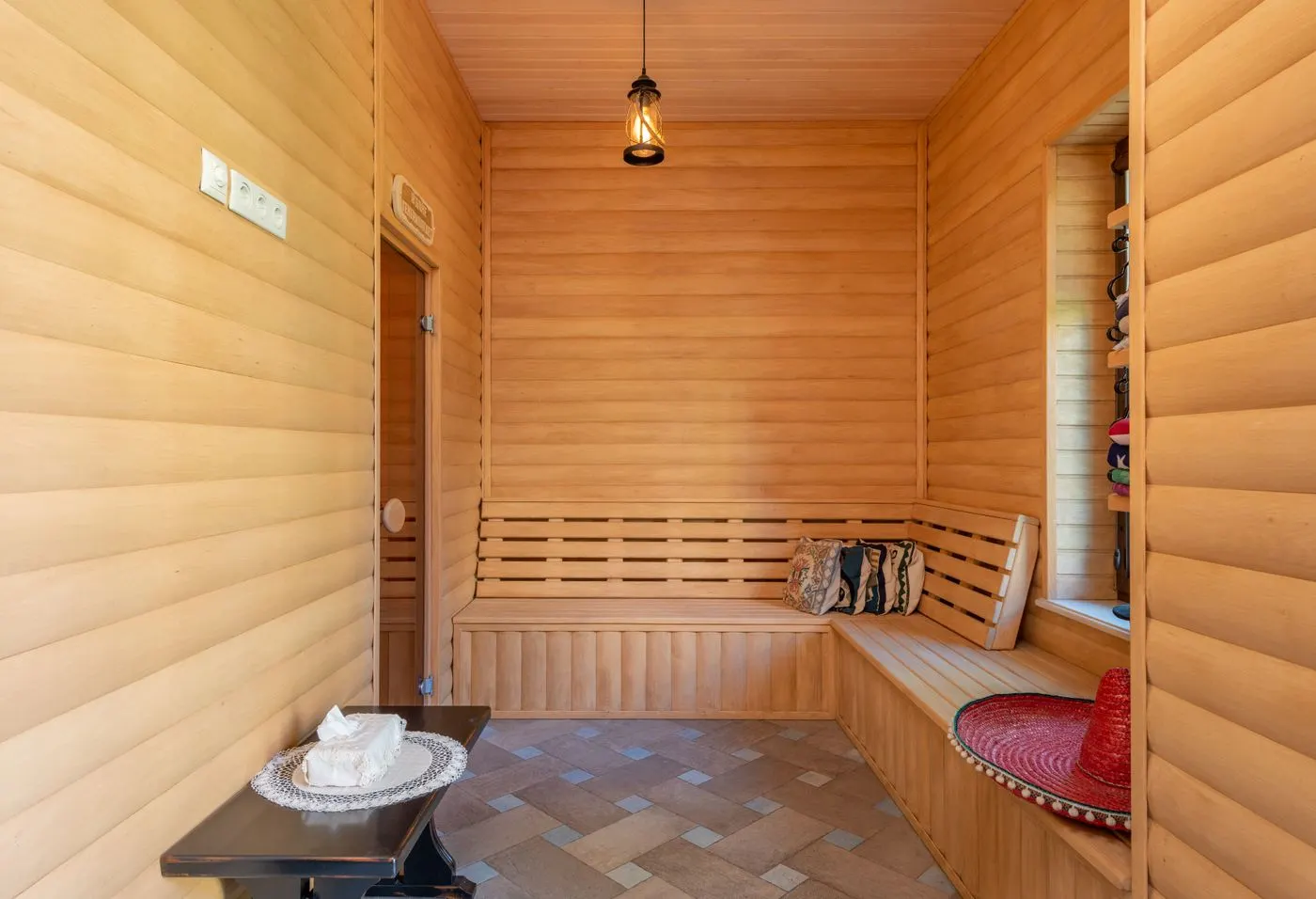
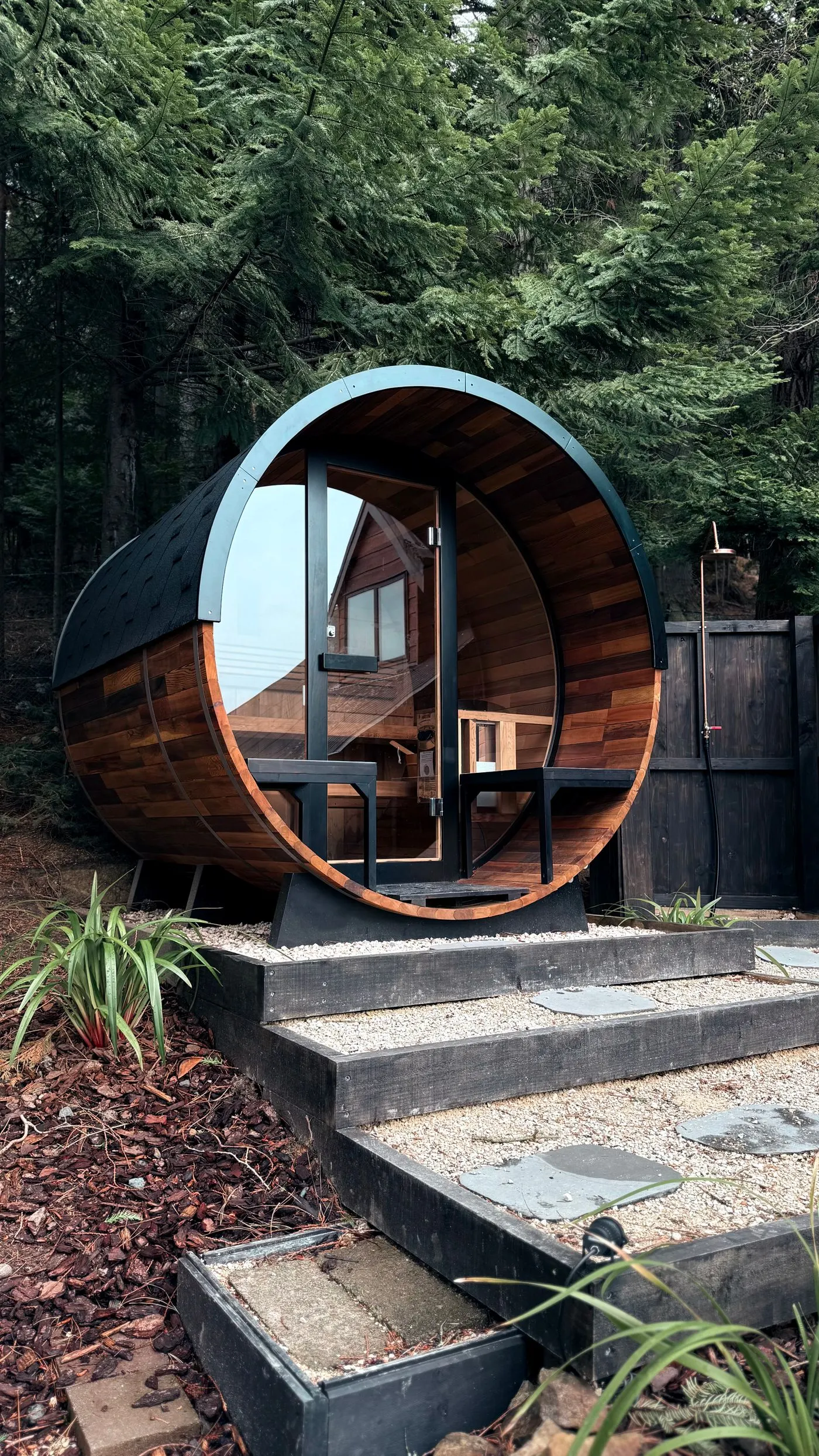
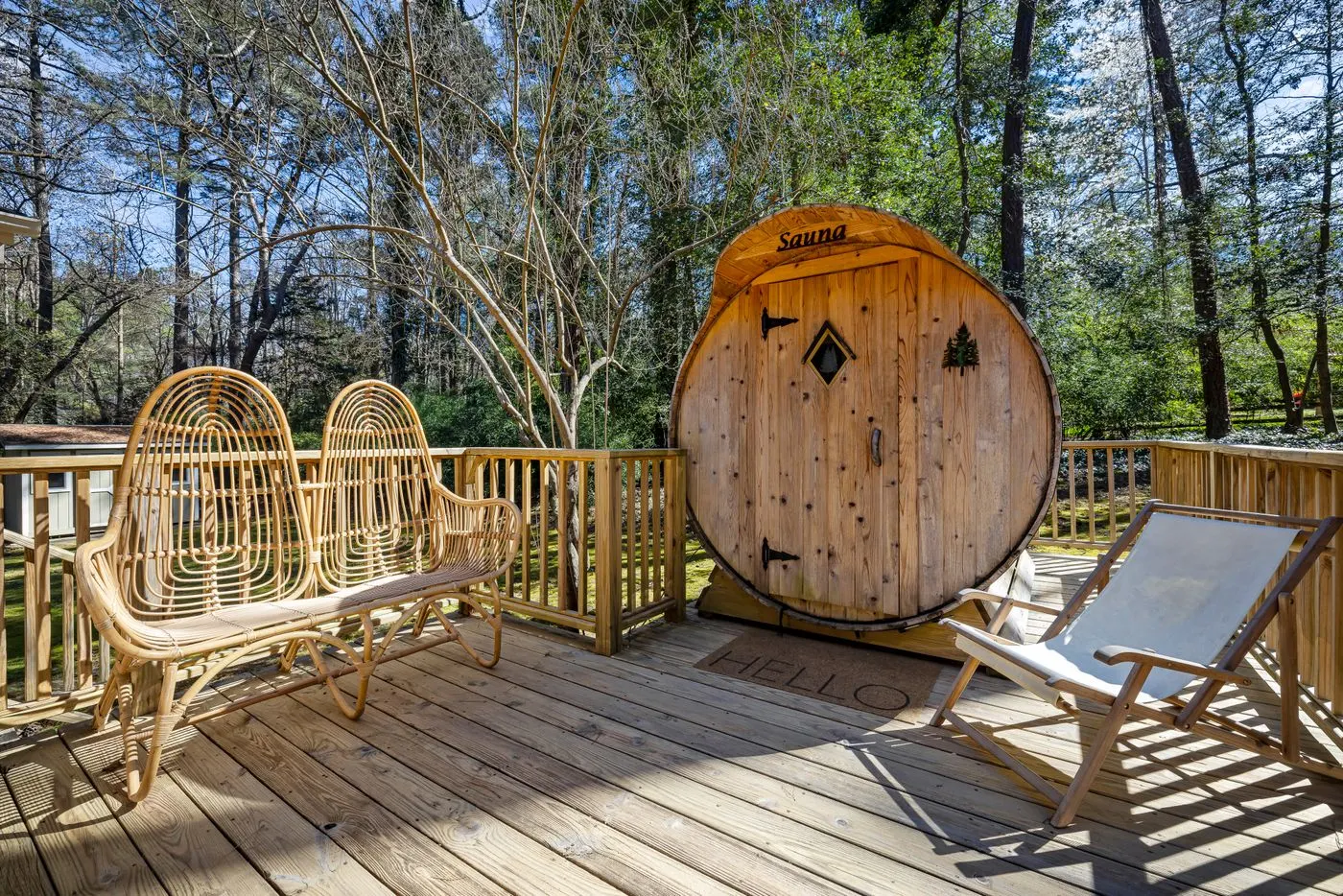
A barrel sauna is a horizontal cylinder of thick tongue-and-groove staves held by steel tension bands, with circular end walls. It’s self-supporting and arrives as a kit. A cabin sauna is a stud-framed rectangular structure — floor, walls, insulated ceiling, pitched or sloped roof — built or delivered like a small building. That structural difference drives everything else.
Insulation and heat retention
This is the heart of the comparison. A cabin’s framed walls have a cavity you fill with mineral wool and seal with a foil vapour barrier, so it heats efficiently and holds heat through a cold night. A barrel usually has no cavity — the staves are the wall — so it can only be partly improved and loses heat faster. A barrel feels quick to heat because its shape circulates warm air over a small volume, but the cabin sustains comfort with less energy. In the coldest climates, insulation wins.
Cold-climate suitability and winter use
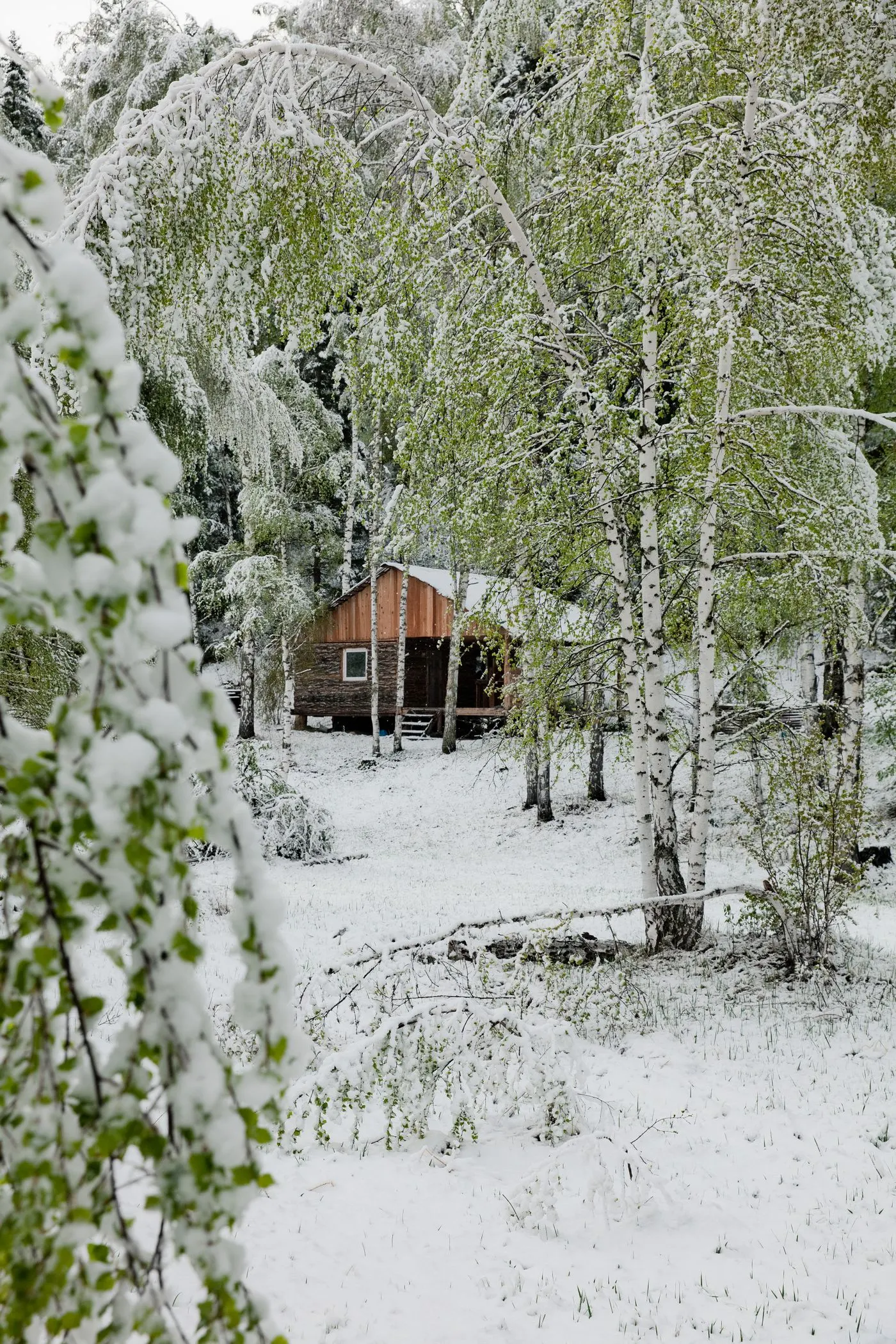
Both run year-round in Canada. The cabin is the more forgiving in deep cold: faster to reach a stable temperature, cheaper to hold there, and less prone to condensation thanks to warmer interior surfaces. The barrel is perfectly usable in winter with the right steps — a correctly sized (often larger) heater, a wind-sheltered site, a roof cover or skirt, and diligent drying after use.
Installation
The barrel wins on speed and simplicity: a kit that assembles in a weekend with few tools. A cabin is more work — either a longer build or a larger, pricier kit — and needs a proper roof and foundation plan. If you want minimal effort and fast results, the barrel is appealing; if you’re happy to build (or invest) for performance, the cabin repays it.
Maintenance and durability
Neither is high-maintenance, but the tasks differ. A barrel needs its steel bands re-tensioned as the wood settles, and its end walls watched as the usual leak point. A cabin has more surfaces and roof detailing to maintain but no bands. Both need routine cleaning, drying, and — with a wood heater — chimney care. Longevity for either comes down to build quality, drainage and upkeep more than the shape.
Safety
Safety requirements are driven by the heater, not the shell, and apply equally: certified clearances and an insulated chimney with non-combustible floor protection for a wood stove; a dedicated circuit and licensed electrician for an electric heater. A cabin’s more generous interior can make it easier to achieve heater clearances and a comfortable layout; a compact barrel needs careful attention to fit a wood stove and its clearances.
Cost
Generally, barrels win on upfront cost and cabins can win on running cost. A kit barrel is usually cheaper to buy and set up. A cabin can be affordable as a DIY build but climbs when finished to a high standard — yet its insulation means lower heating bills over the years. Foundation, heater, glazing and finish move both totals, so treat any figure as an approximate range and see our cost guidance.
How to choose
- Choose a barrel if: budget and fast setup matter most, you love the iconic look, your winters are manageable, and you’ll keep up with drying and band tension.
- Choose a cabin if: you face harsh winters, want the lowest running cost and most even heat, value a flexible layout, and are happy to build or invest more upfront.
The verdict
For maximum winter performance and long-term efficiency, the cabin is the stronger choice. For lowest upfront cost, fastest setup and a compact, characterful sauna, the barrel is hard to beat. Both are legitimate — match the format to your climate, budget and how you’ll use it.
Still deciding on format? Compare all the sauna types, or read the full barrel and cabin guides.
Frequently asked questions
Is a barrel or cabin sauna better for a Canadian winter?
For the coldest climates and lowest running cost, a cabin sauna generally performs better because it takes full insulation and vapour control. A barrel is a strong choice where fast heat-up, lower cost and a compact form matter more. Both can be used year-round in Canada.
Which heats up faster, a barrel or a cabin?
A barrel often feels fast to heat because the curved shape circulates warm air over a small volume, but it also loses heat quickly. A well-insulated cabin reaches temperature efficiently and, crucially, holds it far longer. For sustained winter comfort, the cabin wins.
Which is cheaper, a barrel or a cabin sauna?
Kit barrels are usually cheaper to buy and quicker to set up. A cabin can be inexpensive as a DIY build but typically costs more when finished to a high standard. So barrels tend to win on upfront cost, while cabins can win on running cost thanks to insulation.
Which needs less maintenance?
A cabin has no steel bands to re-tension, but has more surfaces and detailing to look after. A barrel is simple but its bands need periodic re-tensioning and its end walls watching for leaks. Both need routine cleaning, drying and, for wood heaters, chimney care.
Can you insulate a barrel like a cabin?
Not fully. A cabin has a stud cavity for insulation and a vapour barrier; a barrel usually has no cavity, so it can only be partly improved with thicker staves, a skirt, a cover or a premium inner shell. This is the core reason cabins hold heat better in the cold.
Which lasts longer?
Both last well when built and maintained properly. A cabin's longevity depends on its envelope and roof detailing; a barrel's on band tension, the roof cover and its end walls. Durability comes down to build quality and upkeep more than the shape itself.