Rust and soot are the metal-and-fire side of sauna maintenance. Prevent rust by using corrosion-resistant fixings and hardware and keeping the sauna dry, since humidity drives corrosion; wipe and dry the heater and metal parts, and address any water ingress. Soot, from wood fires, is cleaned gently from stove surfaces and glass, and managed by burning dry wood in hot, clean fires and keeping the chimney clean. Keeping the sauna dry and burning clean minimises both.
Wood gets most of the attention in sauna maintenance, but two other things need managing: rust on the metal parts, and — in a wood sauna — soot from the fire. Neither is a big job, but both are easier to prevent than to fix, and both come down to familiar principles: keep the sauna dry, use the right materials, and burn clean. This guide covers dealing with metal and fire residue.
Rust: a moisture problem
Rust in a sauna is really a moisture problem. A sauna is hot and humid, and ordinary metal corrodes in those conditions — staining the wood, sometimes getting hot against skin, and looking poor. Two defences:
- Corrosion-resistant fixings and hardware. Cladding, benches, hinges and fittings should use hidden, corrosion-resistant fixings suited to a hot, humid environment.
- Keep it dry. Since humidity drives corrosion, drying after use and good ventilation are the main defences — the same habits that prevent mould help here.
Wipe and dry the heater and metal parts, and address any water ingress promptly.
Rust on the heater
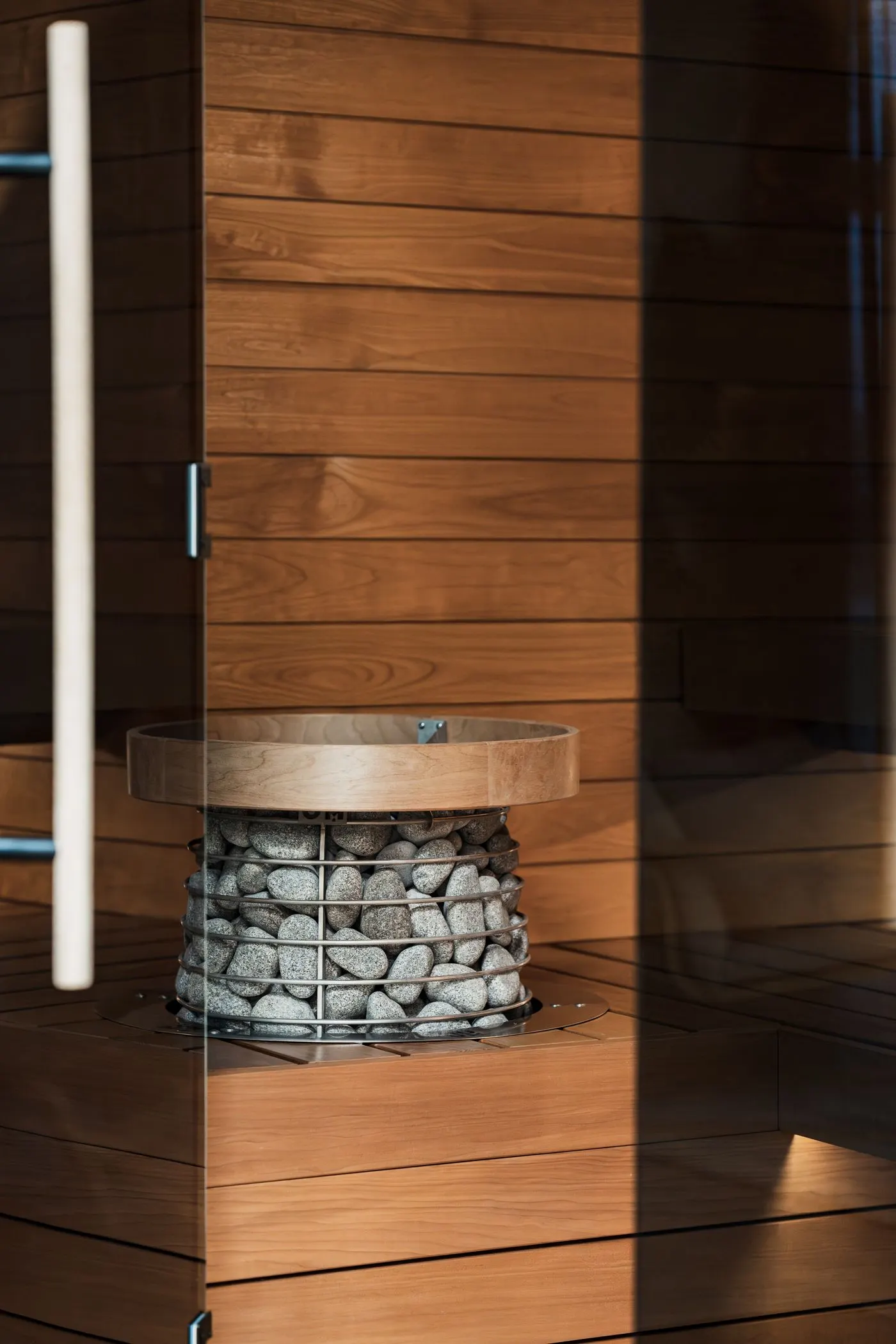
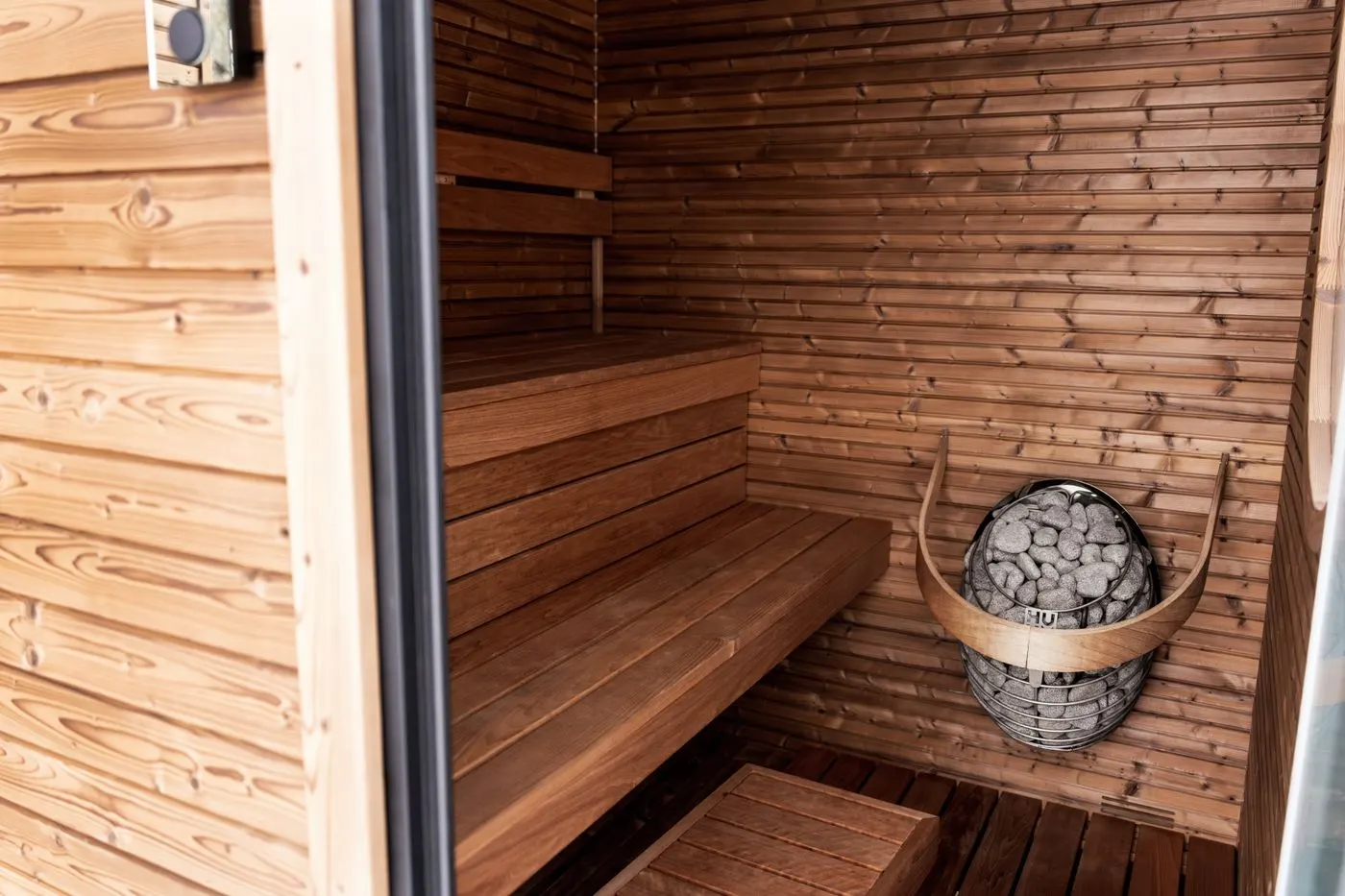
Surface rust on a heater’s body from humidity is common and mostly cosmetic. But treat it seriously when it’s more than surface:
- Significant corrosion, or rust with any electrical or structural concern, should be checked.
- For an electric heater, by a licensed electrician.
- For a wood stove, assess the firebox and flue.
Keep the heater dry, and don’t ignore corrosion that affects function or safety.
Soot: a combustion problem
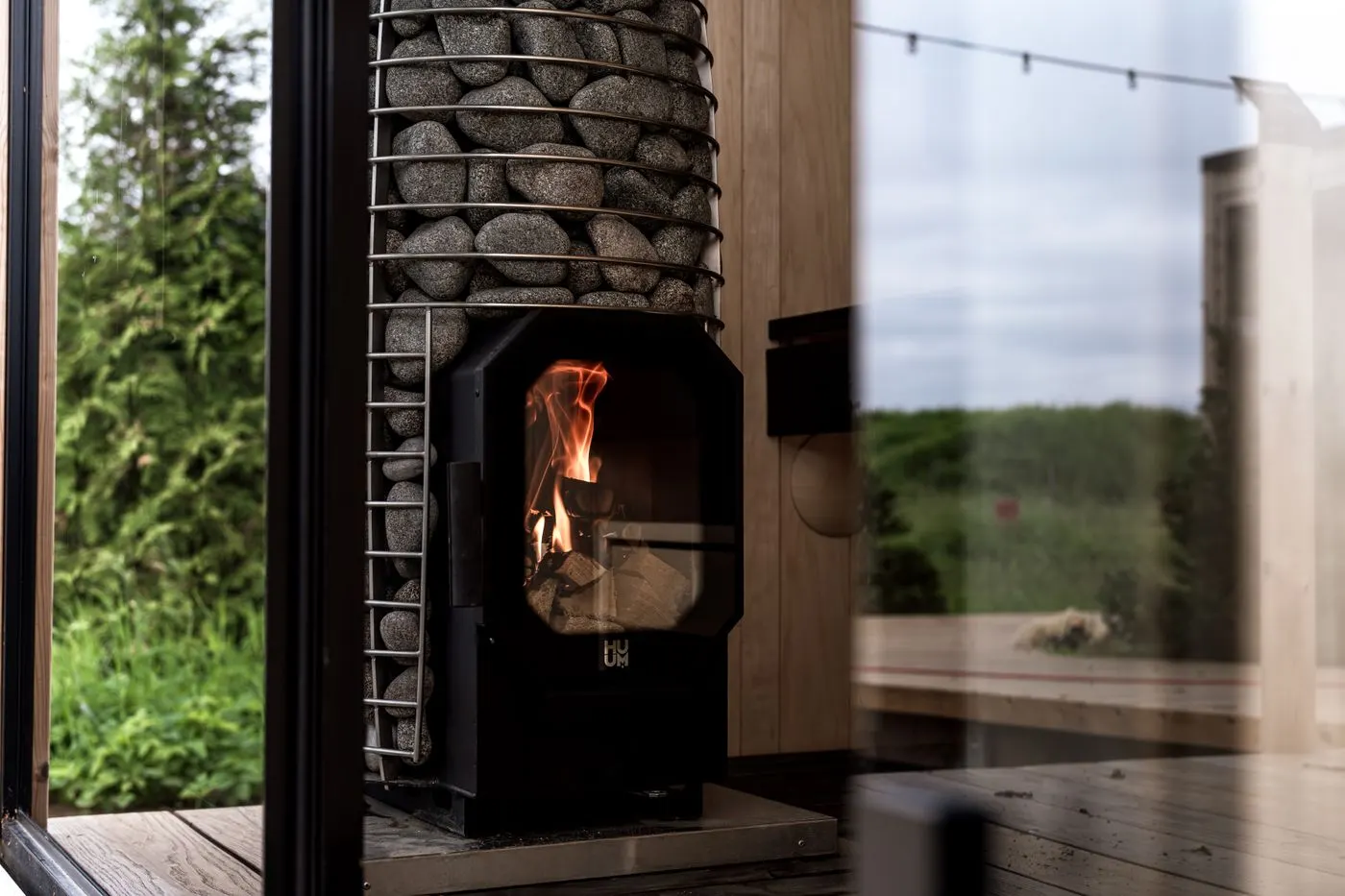
Soot only concerns wood-burning saunas, and it’s a combustion problem. Incomplete combustion — smouldering fires and wet or green wood — produces soot and creosote that coat stove surfaces, glass and the flue. So:
- Manage it at the source: burn dry, seasoned wood in hot, clean fires with adequate combustion air. Clean combustion produces far less soot and creosote.
- Clean it gently: wipe soot from stove surfaces and any glass with appropriate methods once cool, avoiding harsh chemicals that leave fumes.
- Keep the chimney clean: the same clean burning that reduces soot reduces the creosote you must sweep.
Prevention at a glance
| Problem | Prevent by |
|---|---|
| Rust on fixings/hardware | Corrosion-resistant materials + dryness |
| Rust on heater body | Keep dry; check if more than surface |
| Soot on stove/glass | Dry wood, hot clean fires |
| Creosote in flue | Clean burning + regular chimney cleaning |
Common mistakes
- Non-corrosion-resistant fixings that rust and stain.
- Leaving the sauna damp, driving corrosion.
- Burning wet or green wood, producing soot and creosote.
- Smouldering fires instead of hot, clean ones.
- Harsh chemicals on soot, leaving fumes.
Next steps
Keep rust and soot in check by using corrosion-resistant materials, keeping the sauna dry, and burning clean with dry wood. Fold heater and chimney checks into your heater maintenance and chimney cleaning, and the metal-and-fire side of the sauna stays sound.
Frequently asked questions
How do I stop rust in a sauna?
Use corrosion-resistant fixings and hardware suited to a hot, humid environment, and keep the sauna dry — humidity is what drives corrosion, so drying after use and good ventilation are the main defences. Wipe and dry the heater and any metal parts, and address water ingress promptly. Rust is largely a moisture problem, so the same drying that prevents mould helps here.
Why do sauna fixings rust?
Because a sauna is hot and humid, and ordinary metal corrodes in those conditions. That's why sauna cladding and benches should use hidden, corrosion-resistant fixings, and why keeping the interior dry matters. Exposed, non-corrosion-resistant metal rusts, stains the wood and can get hot against skin — so both the material choice and dryness matter.
How do I clean soot in a sauna?
Soot from a wood fire is cleaned gently from stove surfaces and any glass with appropriate methods once cool, avoiding harsh chemicals that leave fumes. Manage it at the source by burning dry, seasoned wood in hot, clean fires rather than wet or green wood in smouldering ones, and keeping the chimney clean. Clean combustion produces far less soot and creosote.
What causes soot in a wood sauna?
Incomplete combustion — smouldering fires and wet or green wood — produces soot and creosote, coating stove surfaces, glass and the flue. Hot, clean fires with dry, seasoned wood and adequate combustion air produce far less. So the way to minimise soot is good burning habits, which also reduces the creosote that must be cleaned from the chimney.
Does rust on a sauna heater matter?
Surface rust on a heater's body from humidity is common and mostly cosmetic, but significant corrosion, or rust with any electrical or structural concern, should be checked — for an electric heater, by a licensed electrician; for a wood stove, assess the firebox and flue. Keep the heater dry, and don't ignore corrosion that affects function or safety.
How do I keep metal parts from corroding in a sauna?
Choose corrosion-resistant materials for fixings, hinges and hardware; keep the interior dry with after-use drying and good ventilation; wipe and dry metal parts; and address any water ingress. Since humidity drives corrosion, a sauna that dries out between uses has far fewer rust problems. Material choice plus dryness is the recipe.