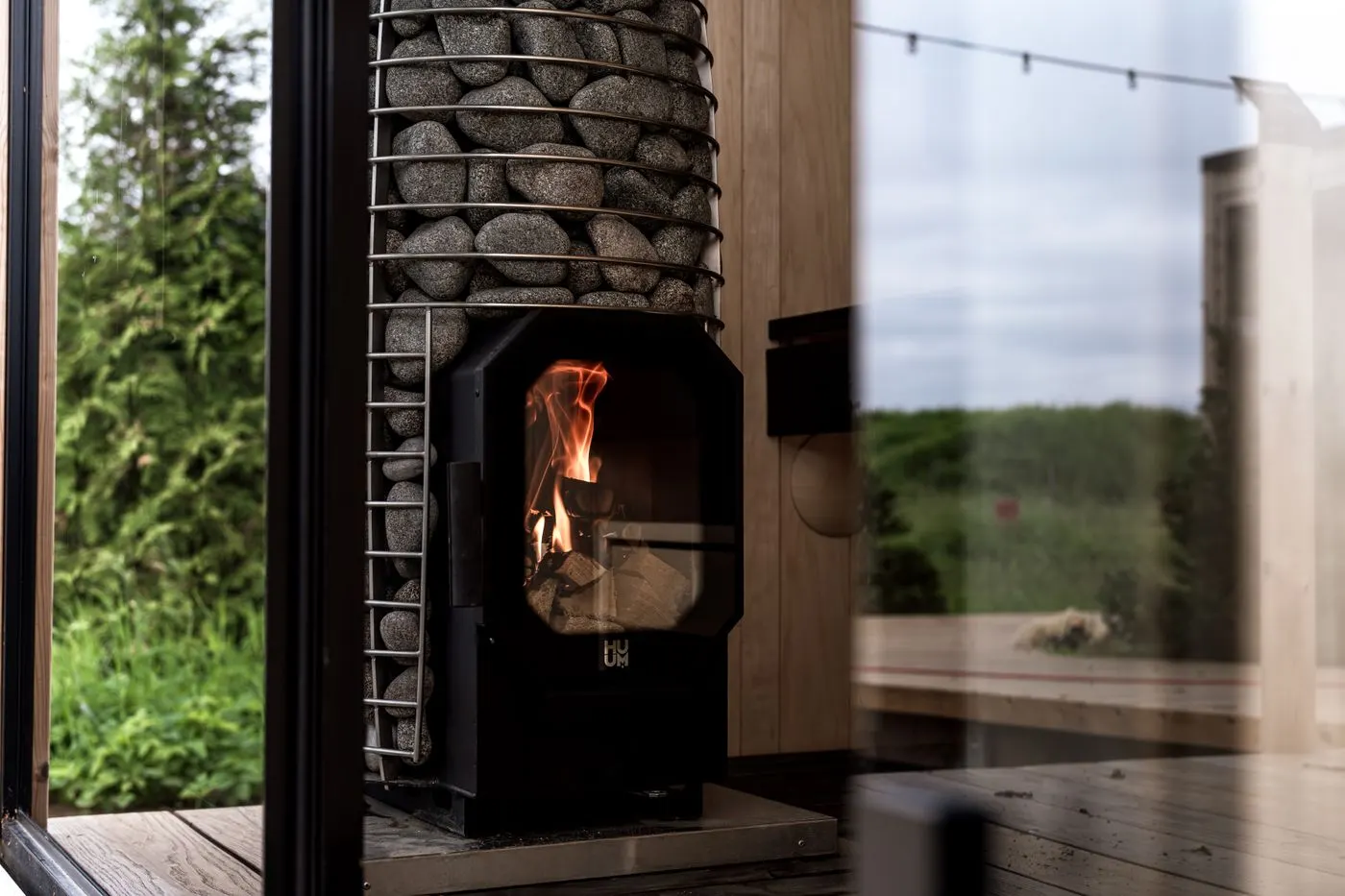
A wood-burning sauna chimney needs regular cleaning to remove creosote, the tar-like residue that builds up from burning wood and can restrict draft and cause chimney fires. Clean the flue at least once a season, and more with heavy use, and inspect the flashing, cap and clearances at the same time. Burning dry, seasoned wood in hot, clean fires slows creosote build-up. If you're unsure how, or the flue is heavily fouled, have it cleaned and inspected by a professional.
For a wood-burning sauna, cleaning the chimney is the maintenance task you can’t skip. Every fire deposits a little creosote inside the flue, and left to build up it chokes the draft and — far more seriously — can ignite into a chimney fire. Regular cleaning keeps the sauna drawing well and, above all, safe. This guide covers how often to clean, how it’s done, and how to slow the build-up in the first place.
Why chimneys need cleaning: creosote
As wood burns, it deposits creosote — a tar-like residue — inside the flue. It matters for two reasons:
- Draft. Build-up restricts the chimney, weakening the draw and making the fire harder to run hot.
- Fire. Creosote can ignite into a chimney fire that burns extremely hot and can spread to the structure.
That second reason makes chimney cleaning a safety task, not just a performance one. See chimney safety for the fire picture.
How often
Clean the flue at least once a season, and more with heavy use. How fast creosote builds depends on how much and what you burn — wet or green wood and smouldering fires build it faster. Don’t wait for obvious problems; a seasonal clean (a natural part of your spring or fall inspection) keeps ahead of it.
Signs it’s due sooner:
- Reduced or poor draft, a smoky fire, or difficulty burning hot.
- Visible creosote build-up in the flue.
- It’s simply been a season or more since the last clean.
How it’s cleaned
A wood chimney is cleaned by brushing the flue to remove creosote — usually with a chimney brush and rods sized to the flue — and inspecting the cap, flashing and clearances at the same time. It’s a job many owners learn to do safely, but it must be done properly and safely, especially given roof access.
DIY or professional?
Many owners clean their own sauna flue with the right brush and rods. But choose a professional chimney sweep if:
- You’re unsure of the method.
- The flue is heavily fouled.
- Access is awkward or unsafe.
- You suspect a problem with the chimney.
The key point: don’t skip cleaning because you’re unsure — get help instead. A professional cleans and inspects the whole system.
Reduce creosote in the first place
The best way to make cleaning easier is to build up less creosote:
- Burn dry, seasoned wood — not wet or green.
- Burn hot, clean fires rather than cool, smouldering ones.
- Ensure adequate combustion air.
- Use a certified, well-drawing chimney of correct height.
Hot, clean combustion produces far less creosote — meaning less frequent cleaning and a safer flue.
Common mistakes
- Skipping seasonal cleaning until the flue is fouled.
- Burning wet or green wood, loading the flue with creosote.
- Cool, smouldering fires instead of hot, clean ones.
- Attempting an unsafe DIY clean instead of calling a professional.
- Ignoring poor draft or a smoky fire.
Next steps
Clean the chimney at least seasonally, inspect it as you go, and burn dry wood in hot fires to slow creosote. Treat it as a safety essential, fold it into your seasonal inspection, and call a professional whenever you’re unsure. It’s the maintenance that keeps a wood sauna both performing and safe.
Frequently asked questions
How often should you clean a sauna chimney?
At least once a season, and more often with heavy use, because creosote builds up as you burn and is both a draft problem and a chimney-fire risk. How fast it builds depends on how much and what you burn — wet or green wood and smouldering fires build creosote faster. If you're unsure or the flue is heavily fouled, have it cleaned professionally.
What is creosote and why does it matter?
Creosote is a tar-like residue deposited inside the flue as wood burns. It matters because build-up restricts the chimney's draft and, critically, can ignite into a chimney fire that burns extremely hot and can spread to the structure. Regular cleaning removes it; burning dry, seasoned wood in hot fires slows how fast it forms.
How do you clean a sauna chimney?
A wood-burning chimney is cleaned by brushing the flue to remove creosote, usually with a chimney brush and rods sized to the flue, and inspecting the cap, flashing and clearances. It's a job many owners learn to do, but if you're unsure, the flue is heavily fouled, or access is awkward or unsafe, have it done by a professional chimney sweep.
Can I clean a sauna chimney myself?
Many owners do clean their own sauna flue with the right brush and rods, working safely. But if you're unsure of the method, the chimney is heavily fouled, access is difficult or unsafe, or you suspect a problem, a professional chimney sweep is the safe choice — they clean and inspect the whole system. Don't skip cleaning because you're unsure; get help instead.
How do I reduce creosote build-up?
Burn dry, seasoned wood in hot, clean fires rather than wet or green wood in smouldering ones, ensure the heater has adequate combustion air, and use a certified, well-drawing chimney of correct height. Hot, clean combustion produces far less creosote than a cool, smouldering fire. Good burning habits mean less frequent cleaning and a safer flue.
What are the signs a sauna chimney needs cleaning?
Reduced or poor draft, a smoky fire, difficulty getting the fire to draw or burn hot, visible creosote build-up in the flue, or simply that it's been a season or more since the last clean. Don't wait for obvious problems — clean at least seasonally. A heavily fouled flue is both a performance and a serious fire-safety issue.