A seasonal sauna safety inspection keeps a hot, fire-and-electricity appliance safe over time. At least once or twice a year, check the heater and its clearances, clean and inspect the chimney (for wood heaters), test the carbon-monoxide alarm, look over the electrical for damage or moisture, confirm the door opens freely and can't be blocked, and check the structure, floor protection and drainage. Catching wear, creosote, damage or moisture early prevents fires, carbon-monoxide risk and structural problems.
An outdoor sauna is a hot, fire-and-electricity appliance living outdoors through Canadian seasons — and like any such thing, it needs a periodic once-over to stay safe. A seasonal inspection takes little time and catches the problems that develop quietly: creosote in the chimney, worn clearances, moisture in the electrics, a door that’s started to bind. This guide is a practical checklist to run at least once or twice a year.
When to inspect
Two natural times bookend the season:
- Before the main season of use, so everything is ready and safe.
- After winter, to catch freeze-thaw and snow-load effects — see the after-winter checkup.
Wood-burning saunas benefit from more frequent chimney checks on top of this. Pick a routine that fits how you use the sauna, and stick to it.
The heater and clearances
Look over the heater and its surroundings:
- Clearances — confirm nothing combustible has crept into the heater’s clearance zone, and no towels or items are stored against it.
- Heater guard — present and sound where people could touch the heater.
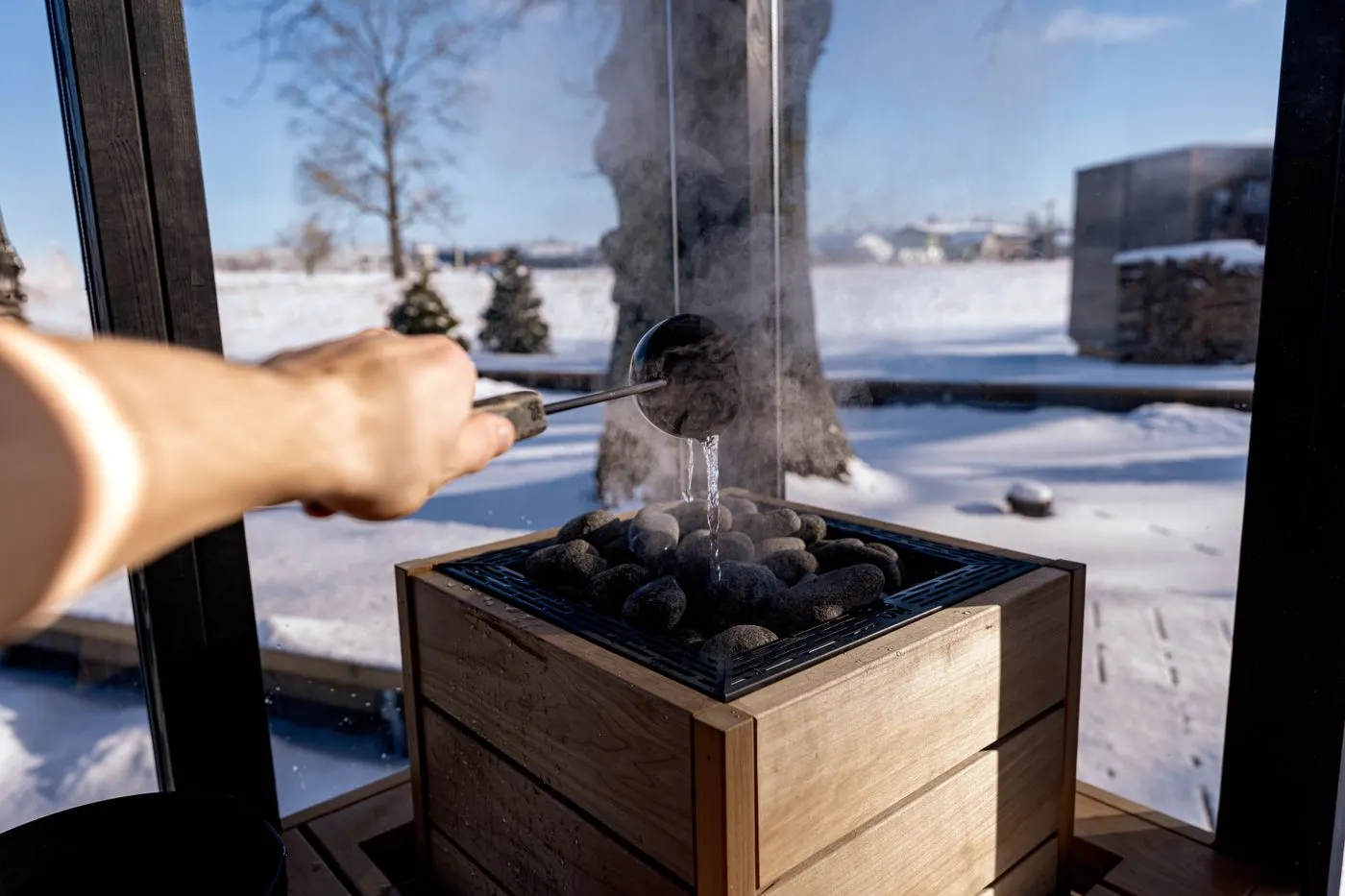
- Stones — replace cracked or crumbling ones, loaded loosely.
- Electric heater — note anything amiss for a licensed electrician.
The chimney (wood heaters)
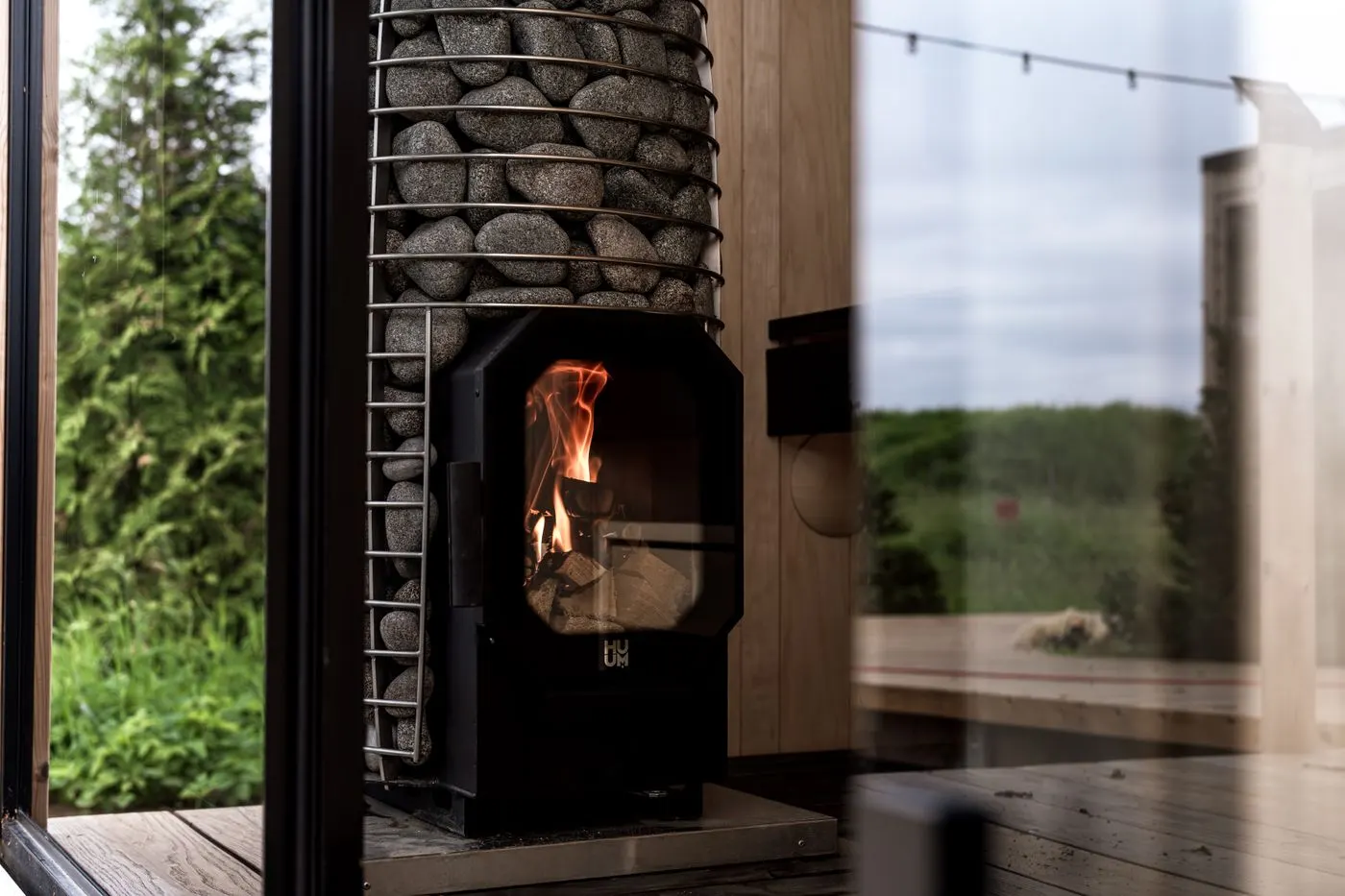
For a wood-burning sauna, the chimney is a priority:
- Clean the flue of creosote — at least seasonally, more with heavy use.
- Inspect the flashing, cap, clearances and general condition.
- Address any poor draw — a safety issue.
This is where a professional is valuable; see chimney safety.
The carbon-monoxide alarm
For any wood-burning or fuel-burning sauna, test the carbon-monoxide alarm and replace batteries or the unit per its instructions. An untested or dead alarm gives false reassurance — this is a quick, essential check.
Electrical
Visually check for obvious damage, moisture, or a repeatedly tripping breaker, and confirm the controls work. But any real electrical inspection or repair is a licensed electrician’s job. If you see damage, water ingress or tripping, stop using the sauna and call a professional — don’t open or troubleshoot live equipment yourself.
The door and exit
Confirm the exit is safe:
- The door opens outward, freely, with a simple push.
- It can’t be blocked or locked from outside.
- The threshold is clear and, in winter, not frozen.
- Nothing is stored where it blocks the exit.
Structure and drainage
Finally, the building itself:
- Foundation and level — any frost-heave movement, sticking doors or new gaps.
- Wood, roof and floor protection — damage, rot or moisture.
- Drainage — clear and flowing away from the sauna.
- Interior — any musty smell or mould from moisture.
The seasonal checklist
| Check | Looking for |
|---|---|
| Heater & clearances | Combustibles clear, guard sound, stones OK |
| Chimney (wood) | Creosote, flashing, cap, draw |
| CO alarm | Tested and working |
| Electrical | No damage, moisture or tripping |
| Door & exit | Opens freely, unobstructed, unfrozen |
| Structure & drainage | Level, sound, dry, draining |
Common mistakes
- Never inspecting until something fails.
- Skipping the chimney clean and check on a wood sauna.
- An untested or dead CO alarm.
- Ignoring electrical damage instead of calling an electrician.
- A door that’s started to bind left unaddressed.
Next steps
Run this inspection at least once or twice a year, and fold in the after-winter checkup and regular maintenance. For wood saunas, pair it with professional chimney service. A short seasonal walkthrough keeps every safety-critical part sound — see the overall safety essentials.
Frequently asked questions
How often should I do a sauna safety inspection?
At least once or twice a year — commonly before the main season of use and after a hard winter. Wood-burning saunas benefit from more frequent chimney checks. A regular inspection catches creosote build-up, worn clearances, electrical or structural damage and a failing CO alarm before they become dangerous, which is far cheaper than dealing with the consequences.
What should a sauna safety inspection include?
The heater and its clearances, the chimney (cleaning and condition, for wood heaters), the carbon-monoxide alarm, the electrical for damage or moisture, the door opening freely and unobstructed, floor protection, the stones, and the structure and drainage. It's a walkthrough of every safety-critical part — fire, combustion, electrical, exit and structure.
When is the best time to inspect a sauna?
Two natural times: before the main season of use, so everything is ready and safe, and after winter, to catch freeze-thaw and snow-load effects — see our after-winter checkup. Wood-burning saunas also benefit from cleaning the chimney at least seasonally. Pick a routine that fits how and when you use the sauna.
Should I test the carbon-monoxide alarm?
Yes, for any wood-burning or fuel-burning sauna. Test the CO alarm as part of every inspection and replace batteries or the unit per its instructions. A working carbon-monoxide alarm is your early warning if venting fails, so it must actually be functional — an untested or dead alarm gives false reassurance.
What electrical checks are safe to do myself?
You can visually check for obvious damage, moisture or a repeatedly tripping breaker, and confirm controls work — but any actual electrical inspection or repair should be done by a licensed electrician. If you see damage, water ingress, or tripping, stop using the sauna and call a professional. Don't open or troubleshoot live electrical equipment yourself.
Can I inspect a wood-burning sauna myself, or do I need a professional?
You can do the visual walkthrough — clearances, floor protection, the door, structure and testing the CO alarm — yourself. The chimney cleaning and inspection is where a professional is valuable, especially if you're unsure, since creosote and flue condition are safety-critical. Combine your regular checks with professional chimney service.