For a wood-burning sauna, store firewood dry, seasoned and close to hand. Season it for months so it burns hot and clean, stack it off the ground and under cover with airflow, keep a smaller supply near the sauna for easy winter access, and protect it from snow. Dry, seasoned wood lights faster, burns hotter and makes far less creosote than wet or green wood — which matters for both performance and chimney safety.
A wood-burning sauna is only as good as its wood. Damp, green firewood smoulders, struggles to heat the sauna, and cakes the chimney with creosote; dry, seasoned wood lights fast and burns hot. Getting there is simple — it just takes the right storage and a bit of foresight before winter.
Dry wood is everything
The single rule of sauna firewood: use dry, seasoned wood. Well-dried wood:
- Lights faster and burns hotter, heating the sauna quickly.
- Produces far less creosote, keeping the chimney safer and drawing well.
- Makes a cleaner, more pleasant fire.
Green or wet wood does the opposite on every count, and a fouled chimney is a safety issue, not just an inconvenience.
Seasoning
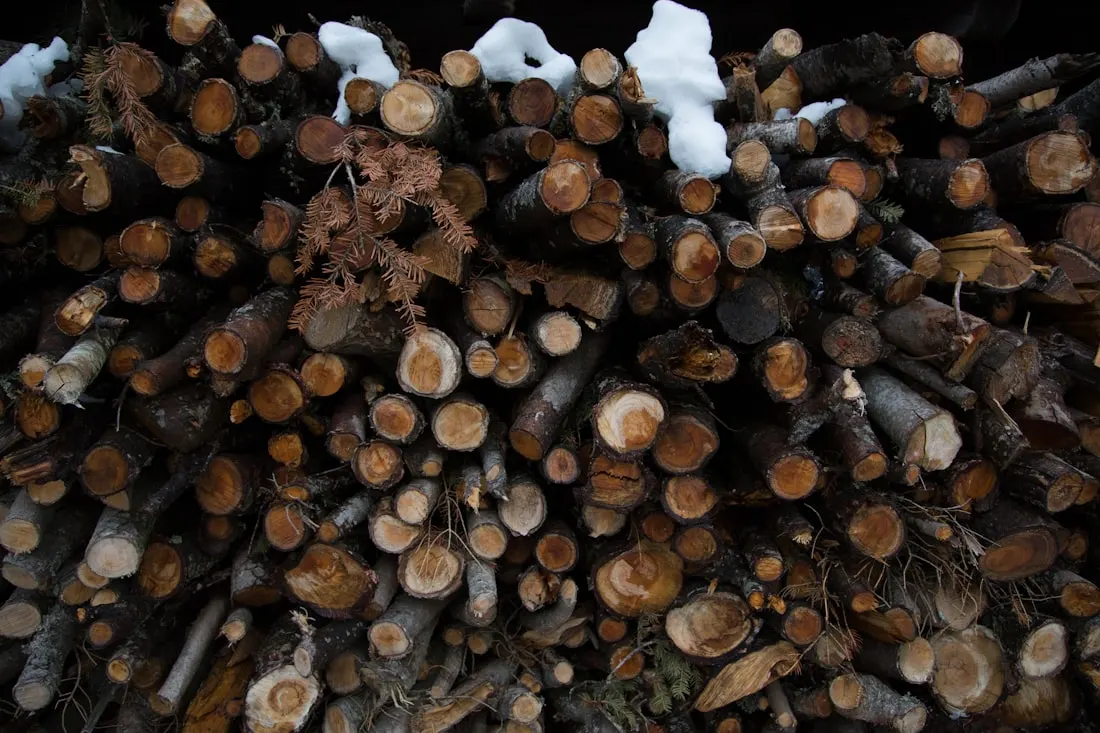
Seasoning is just drying over time — typically several months to a year or more, depending on species, splitting and climate. To season well:
- Split the wood so it dries from more surfaces.
- Stack it off the ground with airflow through the pile.
- Give it time — hardwood takes longer than softwood but burns hotter and longer.
Plan ahead: the wood you burn this winter should have been drying since spring or earlier.
Storing it
Good storage keeps seasoned wood dry:
- Off the ground on a rack or pallet, so it doesn’t wick moisture.
- Under cover on top against snow and rain, but open at the sides for airflow — a woodshed or a covered stack.
- Protected from snow so it doesn’t sit buried and re-wet.
Keep some close
For winter, convenience matters. Store the bulk somewhere practical, and keep a smaller ready supply right by the sauna — a covered rack by the door or in the changing room — so you’re not hauling wood through deep snow before every session. Just don’t stack a large pile against the hot stove or block its clearances and ventilation; bring only a session’s worth close to the heater.
Keeping a season’s supply close and dry
For a wood-burning sauna, the practical goal in winter is a season’s worth of dry, seasoned firewood within easy reach — because hauling wood across deep snow from a distant store is exactly the chore that discourages you from firing up the sauna at all. Store the bulk somewhere sheltered and well-ventilated, and keep a smaller working supply right by the sauna — a covered porch or canopy is ideal, doubling as sheltered wood storage and a cleared entry. Keep the stack off the ground and covered on top but open at the sides so air moves through and the wood stays dry rather than trapping moisture. Bring the next session’s wood inside to warm and finish drying before burning. A clear, cleared path to the woodpile, kept free of snow, is what keeps a wood sauna genuinely practical through a long winter.
Common mistakes
- Burning green or wet wood — poor heat and creosote.
- Storing on the ground or fully wrapped, so it can’t dry.
- No cover, letting snow re-wet the pile.
- Running out of seasoned wood mid-winter with only green left.
Next steps
Season and store your wood well ahead of winter, keep the chimney clean, and see the wood-burning heater guide for firing and maintenance. Good wood is half of a good wood-fired sauna.
Frequently asked questions
How should I store firewood for a sauna?
Off the ground, under cover, with airflow — a woodshed, rack or covered stack works. Keep the top covered against snow and rain but the sides open so air can dry the wood. Store the bulk somewhere convenient and keep a smaller supply right by the sauna for easy winter access.
Why does firewood need to be seasoned?
Seasoned (well-dried) wood burns hotter, lights faster and produces far less creosote than green or wet wood, which smoulders and fouls the chimney. Since a hot, clean fire is what heats the sauna and keeps the flue safe, seasoning your wood for months before use is well worth it.
How long does firewood take to season?
Typically several months to a year or more, depending on the species, how it's split and stacked, and your climate. Split it, stack it off the ground with airflow, and give it time. Hardwood generally takes longer to season than softwood but burns longer and hotter.
How much firewood does a sauna use?
It varies with the sauna's size, insulation, the weather and how long you heat, so there's no single figure. Keep enough dry, seasoned wood on hand for the season, and a smaller ready supply by the sauna. It's easy to underestimate; err toward having more seasoned wood than you think you'll need.
Can I store firewood inside the sauna?
A small amount in the changing room or under a covered porch is handy for a session, but don't store a large woodpile against a hot stove or block clearances and ventilation. Keep the bulk in a proper woodshed or covered rack, and only bring a session's worth close to the heater.