A sauna's roof is its first defence against rain, snow and weather, so keeping it sound protects the whole build: check periodically for leaks, damaged or lifted roofing, and worn flashing (especially around any flue), and repair promptly, since a roof leak lets water into the structure. Keep water and snow shedding away from the sauna and foundation, clear any gutters and downpipes of leaves and debris so they drain, and in a cold climate manage snow load and ice so the roof isn't overloaded and meltwater doesn't pool or back up. Routine roof and gutter care is simple but important upkeep that prevents water damage and keeps the sauna dry and protected.
The roof is the sauna’s first defence against rain, snow and weather — and like any roof, it needs the occasional check to keep doing its job. A sound roof that sheds water away keeps the whole structure dry; a small leak, left unnoticed, lets water into the build. This guide covers simple roof and gutter care to protect your sauna from the weather, all year and especially through a cold-climate winter.
The roof protects everything
Because the roof shields the entire build, keeping it sound is important upkeep. Check periodically for:
- Leaks — water stains, damp or drips inside.
- Damaged or lifted roofing visible from outside.
- Worn or failed flashing — especially around any flue on a wood-burning sauna.
Repair promptly — a roof leak lets water into the structure, causing damp, mould and rot. Catching small issues early prevents bigger damage. See roof construction.
Spotting a leak
Signs of a leaking roof:
| Inside | Outside |
|---|---|
| Water stains, damp or drips | Damaged or lifted roofing |
| Signs of water ingress | Worn or failed flashing (esp. flue) |
Check after storms or heavy snow. If you suspect a leak, investigate and repair the roofing or flashing promptly, and address any water damage inside.
Gutters (if fitted)
Not every sauna has gutters, but where it does, they need care:
- Keep them clear of leaves and debris so they drain freely.
- Ensure they carry roof water away from the sauna and foundation.
Gutters help direct runoff away from the base, protecting against moisture and, in a cold climate, frost problems. If your sauna has no gutters, ensure roof runoff still sheds away by other means — the goal is always water away from the build, not pooling at its base.
Water shedding away
Water that doesn’t shed away — pooling on or beside the sauna, or draining toward the foundation — causes moisture problems, rot and frost/ice issues. The roof and any gutters should carry rain and snowmelt away from the sauna and its foundation — part of the wider drainage picture that protects the build.
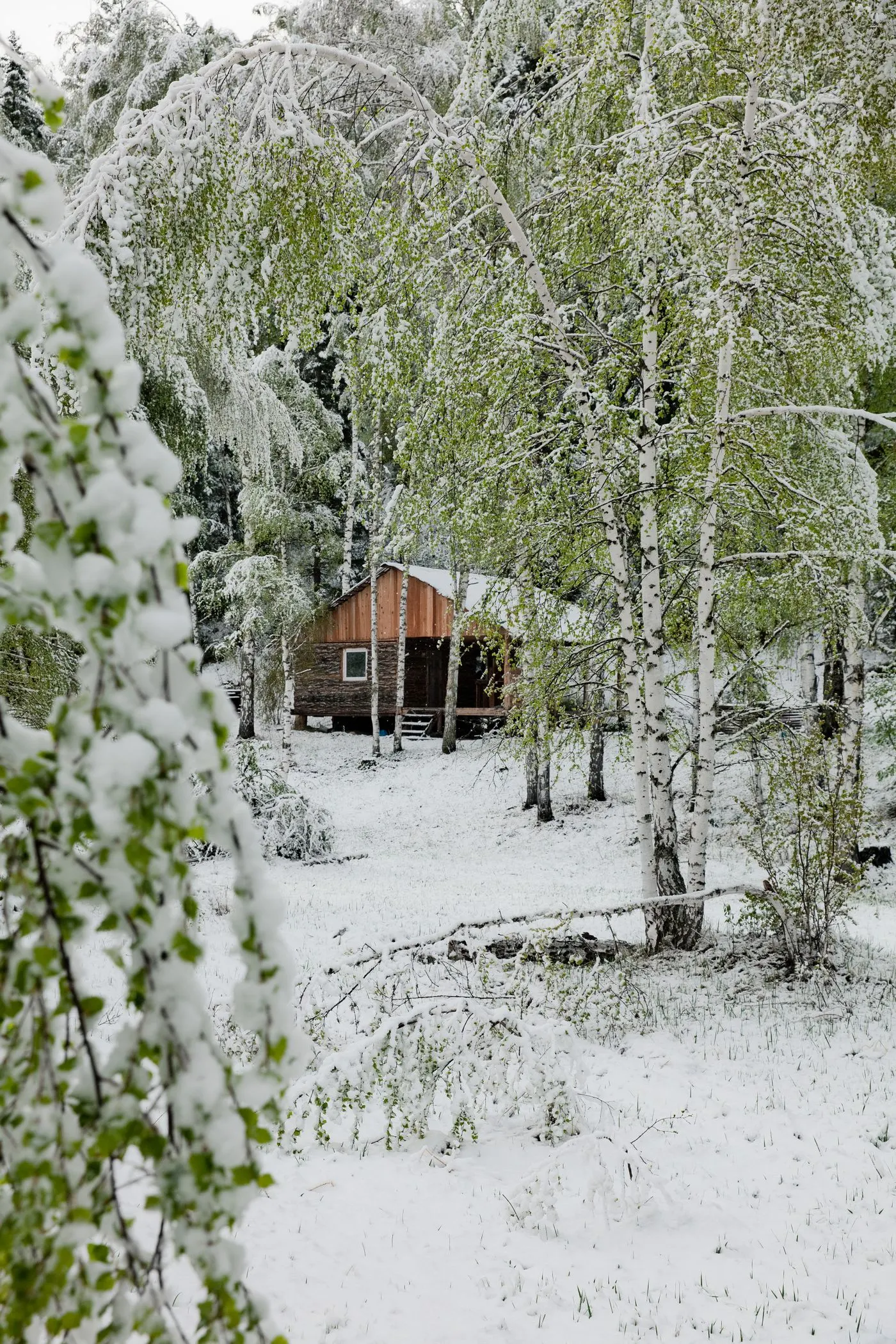
Snow and ice in the cold
In winter, the roof faces extra demands:
- Manage snow load so the roof isn’t overloaded.
- Watch for ice and meltwater that can pool or back up.
- Freeze-thaw can stress roofing and flashing — include the roof in winter checks.
When to check
Check the roof and gutters periodically, and especially after storms, heavy snow, or seasonal changes — with checks before and after winter being sensible in a cold climate. There’s no strict schedule, but regular seasonal checks catch problems early. Fold roof and gutter care into your overall maintenance routine.
Common mistakes
- Ignoring a small leak until it causes real water damage.
- Blocked gutters overflowing toward the foundation.
- Overlooking flashing around the flue.
- Letting snow overload a roof, or clearing it unsafely.
- Roof runoff draining toward the base instead of away.
Next steps
Keep the roof sound and shedding water away: check for leaks and damage periodically, clear any gutters, manage roof snow safely, and include the roof in seasonal checks. As the sauna’s first defence against the weather, a well-maintained roof keeps the whole build dry — part of the maintenance schedule that protects your sauna for years.
Frequently asked questions
How do I look after my sauna's roof?
Check it periodically for leaks, damaged or lifted roofing, and worn flashing — especially around any flue on a wood-burning sauna — and repair problems promptly, since a roof leak lets water into the structure and causes damage. Keep water and snow shedding away from the sauna and foundation, clear debris off the roof, and in a cold climate manage snow load. Routine roof checks and prompt repairs are simple but important, because the roof protects the entire build from the weather. Catching and fixing small issues early prevents bigger water damage.
Does an outdoor sauna need gutters?
Not always, but where a sauna has gutters and downpipes, they need care — kept clear of leaves and debris so they drain freely and carry roof water away from the sauna and foundation. Gutters help direct runoff away from the base, which protects against moisture and, in a cold climate, frost problems around the foundation. If your sauna has them, clear them periodically; if it doesn't, ensure roof runoff still sheds away from the sauna by other means. Either way, the goal is water shedding away from the build, not pooling at its base.
How do I know if my sauna roof is leaking?
Signs include water stains, damp or drips inside, damaged or lifted roofing visible from outside, and worn or failed flashing, particularly around a flue penetration. Check the interior for any signs of water ingress and the roof exterior for damage periodically, especially after storms or heavy snow. A roof leak lets water into the structure where it causes damp, mould and rot, so catching it early matters. If you suspect a leak, investigate and repair the roofing or flashing promptly, and address any water damage inside. See our guide on roof construction.
How do I manage snow and ice on a sauna roof?
Manage snow load so the roof isn't overloaded, and watch for ice and meltwater that can pool or back up, which depends on the roof design, pitch and local snow loads. Some roofs shed snow naturally; others may need clearing — done safely and never at personal risk. Building the roof for local snow loads in the first place is the foundation of this. In a cold climate, freeze-thaw and ice can stress roofing and flashing, so include the roof in winter checks. See our guides on managing roof snow and roof construction.
Why does keeping water shedding away from the sauna matter?
Because water that doesn't shed away — pooling on or beside the sauna, or draining toward the foundation — causes moisture problems, rot and, in a cold climate, frost and ice issues around the base. The roof and any gutters should carry rain and snowmelt away from the sauna and its foundation, keeping the structure and base dry. This is part of the wider drainage picture that protects a sauna. Keeping the roof shedding properly and gutters clear is a simple way to protect the whole build from water damage. See our foundation drainage guide.
How often should I check the sauna roof and gutters?
Periodically as part of routine maintenance, and especially after storms, heavy snow, or seasonal changes — checking the roof for damage and leaks and clearing any gutters of debris. In a cold climate, checks before and after winter are sensible, since snow, ice and freeze-thaw are hard on roofing. There's no strict schedule, but regular seasonal checks catch problems early, before a small issue becomes water damage inside. Fold roof and gutter checks into your overall sauna maintenance routine. See our sauna maintenance schedule.