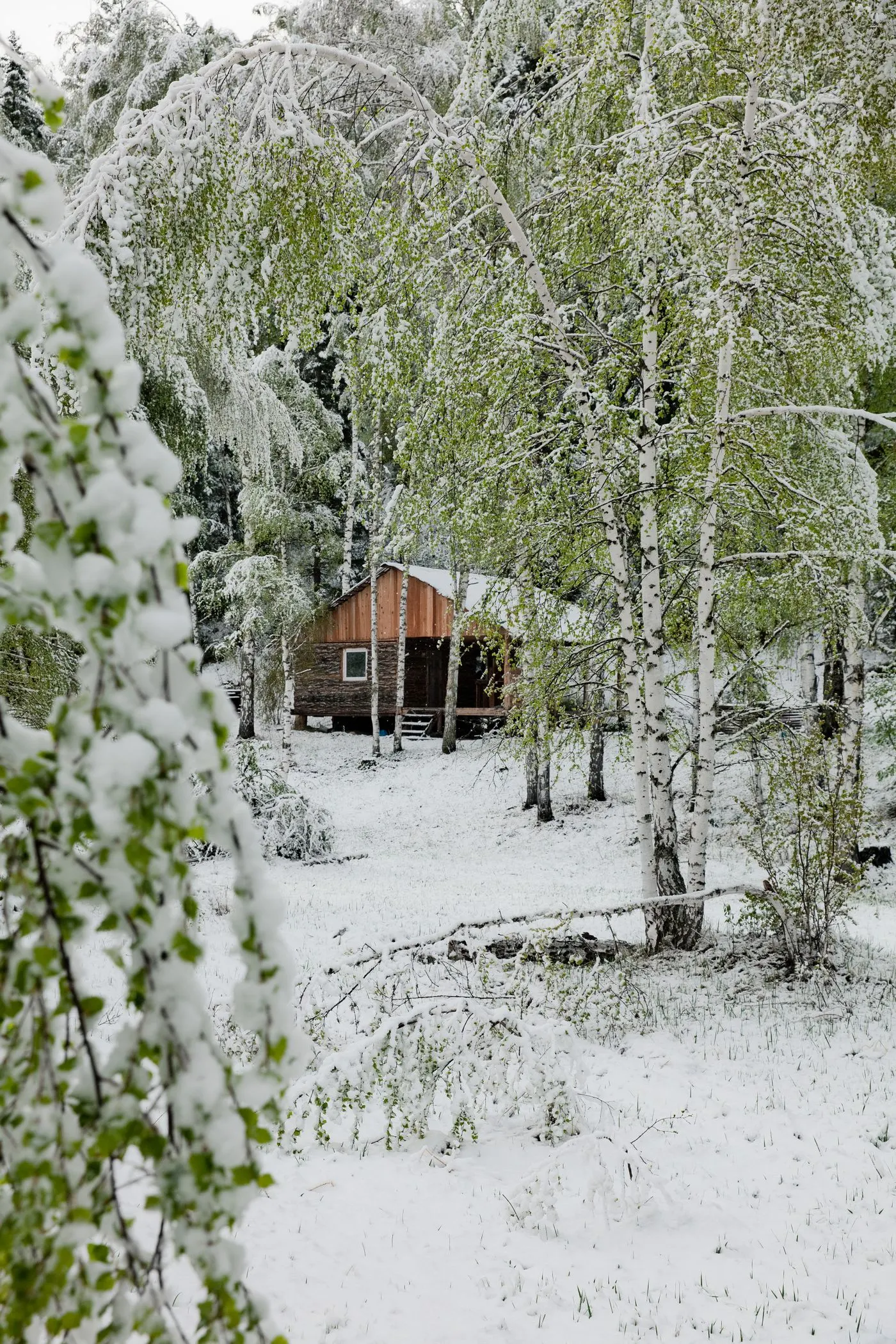
An outdoor sauna roof must carry your local snow load, shed water and snow, protect the walls with generous overhangs, and — above the insulated ceiling — keep heat in. Favour a pitched or metal roof that sheds snow, structure it for your snow load, insulate and vapour-seal the ceiling beneath, detail the chimney penetration and flashing carefully for wood heaters, and give it good overhangs. The roof is where snow load, water and the chimney all meet, so it rewards careful design.
The roof is where an outdoor sauna faces the full force of a Canadian winter: heavy snow bearing down, meltwater trying to get in, and — for a wood sauna — a hot chimney passing through. It’s also the lid on your best-insulated surface, the ceiling. Get the roof right and it quietly does its job for decades; get it wrong and you’ll fight leaks, ice dams and snow load every winter. This guide covers building a sauna roof for snow country.
Carry the snow load
The first job of the roof is structural: carry your local snow load. Snow — especially wet snow — is heavy, and loads vary enormously across Canada. The roof must be framed and rated for your area’s snow load, which is a design decision to get right at construction, not something to retrofit. See snow on a sauna roof for managing it in use.
Shed the snow: pitch and material
Beyond carrying snow, a good roof sheds it:
- A steeper pitch sheds snow and reduces accumulated load — an advantage in heavy-snow areas.
- Metal roofing sheds snow readily and is durable; asphalt shingle and membrane roofs also work when well detailed.
A flat or low-slope roof (as on some cube saunas) holds snow and must be designed for the full load and drainage. In snow country, favour a shedding roof unless you commit to designing a flat one properly.
Insulate the ceiling beneath
The roof sits above the ceiling — the hottest, highest-heat-loss surface. So roof construction and ceiling insulation go together: insulate and vapour-seal the ceiling generously beneath the roof structure. This keeps heat in and, by keeping the roof surface cold and even, helps prevent ice dams (where escaping heat melts snow that refreezes at the eaves). Good ceiling insulation is both an efficiency and a roof-durability measure.
Overhangs: cheap protection
Generous roof overhangs are one of the best-value protections on the whole sauna:
- They keep rain and snowmelt off the walls and cladding, greatly extending their life.
- They shelter the door and windows from weather and drifting snow — helping the door not freeze.
Short overhangs let water run down the walls, accelerating wear. Generous overhangs are cheap insurance in a wet, freeze-thaw climate.
The chimney penetration (wood heaters)
For a wood-burning sauna, the roof has one more critical detail: the chimney penetration. It must follow the certified chimney system’s specifications and your local fire code — correct clearances through the roof and proper flashing to keep water out. It’s a common leak and fire-risk point, so detail it carefully and have a qualified installer confirm it. Never improvise the penetration or flashing. See chimney safety.
Roof construction at a glance
| Element | Requirement |
|---|---|
| Structure | Rated for local snow load |
| Pitch & material | Sheds snow (metal, steeper pitch) |
| Ceiling beneath | Well insulated and vapour-sealed |
| Overhangs | Generous, to protect walls and openings |
| Chimney (wood) | Certified penetration, correct flashing |
Common mistakes
- Under-designing for snow load.
- A flat roof with no proper load and drainage design.
- Short overhangs that let water run down the walls.
- A poorly detailed chimney penetration — leaks and fire risk.
- Skimping on ceiling insulation, worsening ice dams and heat loss.
Next steps
Build the roof to carry and shed snow, over a well-insulated ceiling, with generous overhangs and — for wood heaters — a carefully detailed chimney. Frame it as part of the whole structure, and manage snow in use per snow on a sauna roof.
Frequently asked questions
How should an outdoor sauna roof be built for snow?
Structure it for your local snow load, favour a pitch and material (like metal) that shed snow rather than let it accumulate, insulate and vapour-seal the ceiling beneath, and give it generous overhangs to protect the walls. For a wood heater, detail the chimney penetration and flashing carefully. Snow-load design and shedding are the priorities in snow country.
What roof pitch is best for a sauna in snow country?
A steeper pitch sheds snow better and reduces accumulated load, which is an advantage in heavy-snow areas — especially with metal roofing. A flat or low-slope roof (as on some modern cube saunas) holds snow and must be designed for the full snow load and drainage. Match the pitch to your snow and the look you want, favouring shedding.
Do sauna roofs need big overhangs?
Generous overhangs are one of the best, cheapest protections for a sauna — they keep rain and snowmelt off the walls and cladding, greatly extending their life, and shelter the door and windows. Short overhangs let water run down the walls, accelerating wear and moisture problems. In a wet, freeze-thaw climate, generous overhangs are well worth it.
How do you seal a chimney through a sauna roof?
A wood-burning sauna's chimney penetration must be detailed to the certified chimney system's specifications and your local fire code — correct clearances through the roof, and proper flashing to keep water out. It's a common leak and fire-risk point, so it's worth doing carefully and having a qualified installer confirm it. Never improvise the penetration or flashing.
What is the best roofing material for a sauna?
Metal roofing is popular because it sheds snow well and is durable; asphalt shingle and membrane roofs also work when properly detailed. More important than the material is the structure (for snow load), the ceiling insulation beneath, the overhangs, and — for wood heaters — the chimney detailing. A well-detailed roof of any suitable material outlasts a poorly detailed premium one.
Does the sauna roof affect ice dams?
Yes. Ice dams form when heat escaping through the roof melts snow that refreezes at the cold eaves. A well-insulated, well-detailed ceiling keeps the roof surface cold and even, reducing dams; poor ceiling insulation makes them worse. So good ceiling insulation isn't just about heat loss — it also helps prevent ice dams on a sauna roof.