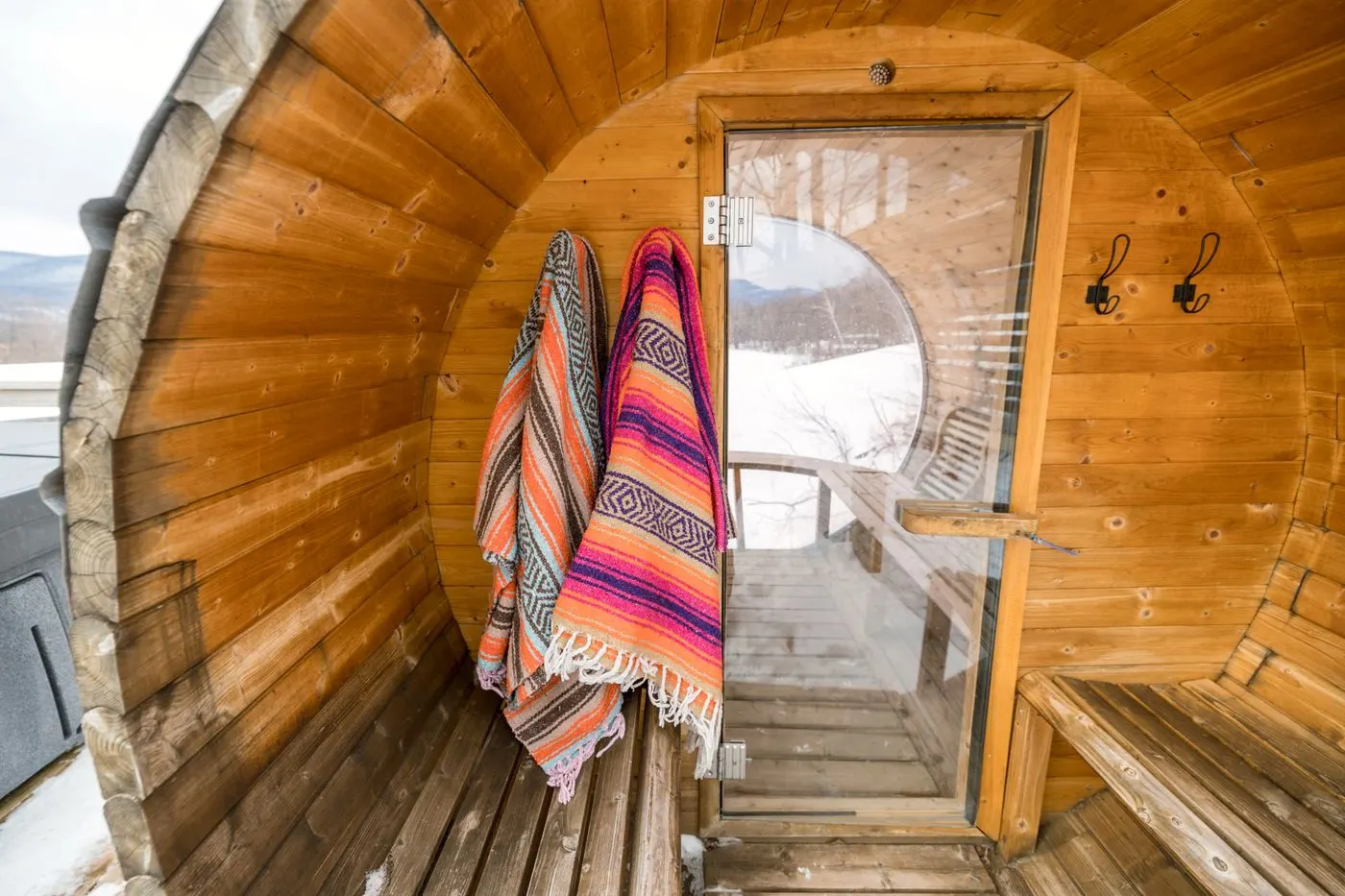
A barrel sauna is ventilated like any sauna — fresh-air intake low near the heater, adjustable exhaust on the opposite side — but its round wall and lighter insulation make ventilation and after-use drying even more important. Because a barrel's interior surfaces run colder, it is more prone to condensation, so a working intake-and-exhaust path plus drying the barrel out after every use is essential.
The general rules of sauna ventilation apply to a barrel sauna — but a barrel makes getting them right more important, not less. Its defining feature, the round single-layer wall, is exactly what makes it prone to condensation, and ventilation plus drying are your main defences.
Why barrels need extra attention
A barrel sauna is hard to insulate because the staves are the wall — there’s usually no cavity to fill. That means its interior surfaces run colder than a framed, insulated cabin’s, and cold surfaces are precisely where warm, humid air condenses. So while every sauna needs ventilation, a barrel needs it — and diligent drying — to stay healthy through a Canadian winter.
Where the vents go
The layout follows the standard principle:
- Fresh-air intake low, near or beneath the heater.
- Adjustable exhaust on the opposite end or wall, higher up.
The round shape gives you fewer flat spots and more constrained positions than a boxy cabin, so plan the vent locations deliberately rather than as an afterthought, and follow your heater manufacturer’s ventilation guidance. The adjustable exhaust matters especially here — open it up to dump moisture, close it to hold heat.
Drying: the barrel’s best friend
Given the colder surfaces, the after-use routine does even more work in a barrel:
- Open the exhaust fully and prop the door open after every session.
- Let the barrel air out while it’s still warm so the wood dries.
- Watch the low points and end walls, where moisture and cold concentrate.
This habit, more than anything, keeps a barrel free of damp, musty smells and mould.
Attack the cold surfaces too
Ventilation removes moisture; reducing cold surfaces stops it forming. A roof cover, an insulated skirt, or thicker staves make the interior warmer and less prone to condensation — a useful complement to good ventilation and drying.
Electric vs wood barrels
If your barrel has a wood-burning stove, it draws combustion air and vents through a chimney, which changes the intake picture; an electric heater has no flue, so the intake-and-exhaust pair does all the work. Don’t assume one vent layout suits both — follow the guidance for your specific heater, and for wood stoves mind carbon-monoxide safety.
Managing the vents through a session
As with any sauna, a barrel’s ventilation is something you manage through the session, not set and forget. Keep the adjustable exhaust mostly closed during warm-up so the barrel reaches temperature — barrels can feel quick to heat but also lose heat readily — then open it while bathing for fresh air and even heat, and open it fully afterward to dry the interior. Never block the fresh-air intake to hold heat, since that leaves the barrel stuffy and holds moisture in a shape that’s already harder to dry. In a cold climate, keep the external vents clear of snow so they keep working. Because a barrel’s rounded body usually can’t be fully insulated, disciplined vent management and thorough drying matter that bit more — they’re what keep a barrel fresh, even and free of the damp its curved shape can otherwise trap.
Common mistakes
- Treating a barrel like it’s well insulated. It isn’t — ventilate and dry accordingly.
- A fixed or missing exhaust. You need an adjustable outlet to clear moisture.
- Closing the barrel up wet. The fast track to condensation and mould.
- Ignoring the end walls and low points. Watch them for damp.
Next steps
Start with the ventilation fundamentals, pair them with condensation prevention, and see the full barrel sauna guide for the wider trade-offs of the format.
Frequently asked questions
Do barrel saunas need ventilation?
Yes, arguably more than most. A barrel's lightly insulated, round interior has colder surfaces where steam condenses, so a working fresh-air intake and adjustable exhaust, plus drying after use, are essential to prevent damp, musty smells and mould.
Where do the vents go in a barrel sauna?
Follow the same principle as any sauna: a fresh-air intake low, near or under the heater, and an adjustable exhaust on the opposite end or wall. The round shape gives fewer flat spots, so plan the positions deliberately and follow your heater manufacturer's guidance.
Why does my barrel sauna get so much condensation?
Because the curved, single-layer wall is hard to insulate, its interior surfaces stay colder than a framed cabin's, and cold surfaces are where humid air condenses. Better drying after use, a working exhaust, and measures like a roof cover or insulated skirt all help.
Should I leave a barrel sauna door open after use?
Yes. Opening the exhaust fully and propping the door open lets the barrel dry out, which is the single best defence against condensation and mould given its colder surfaces. Make it a habit after every session.
Can you improve a barrel sauna's ventilation after buying it?
Often yes — you can add or adjust vents and, importantly, adopt a strict drying routine. Pairing that with heat-loss measures like a roof cover or skirt reduces the cold surfaces that cause condensation in the first place. Follow the heater manufacturer's guidance for any changes near it.
Is ventilation different for electric vs wood barrel heaters?
The principle is the same, but a wood-burning heater draws combustion air and vents through its chimney, which affects intake needs, while an electric heater does not. Follow your specific heater's ventilation guidance rather than assuming one layout fits both.