Burns in a sauna come mainly from contact with the very hot heater and stones, from steam produced by löyly, and from hot metal fittings — so preventing them means keeping clear of the heater, being careful with löyly, and mindful of hot surfaces. Keep a safe distance from the heater and stones, use a guard rail where helpful, don't touch the heater or throw water so that steam scalds you or others, take care with hot metal fittings and jewellery, and supervise children closely, since the heater is a serious burn hazard for them. Move carefully around the heater, keep the area clear, and treat the heater and stones as what they are — extremely hot. Sensible habits prevent almost all sauna burns.
The sauna’s warmth is a pleasure — but a few things inside are hot enough to burn: the heater, the stones, the steam from löyly, and hot metal fittings. The risk is real but easily managed: a handful of sensible habits around the heater prevent almost all sauna burns. This guide covers where burns come from and how to avoid them.
Where sauna burns come from
| Source | Risk |
|---|---|
| The heater and stones | Serious contact burns — extremely hot |
| Steam from löyly | Scalds if too close or directed at someone |
| Hot metal fittings / jewellery | Heat up enough to burn |
Knowing the sources makes them easy to avoid.
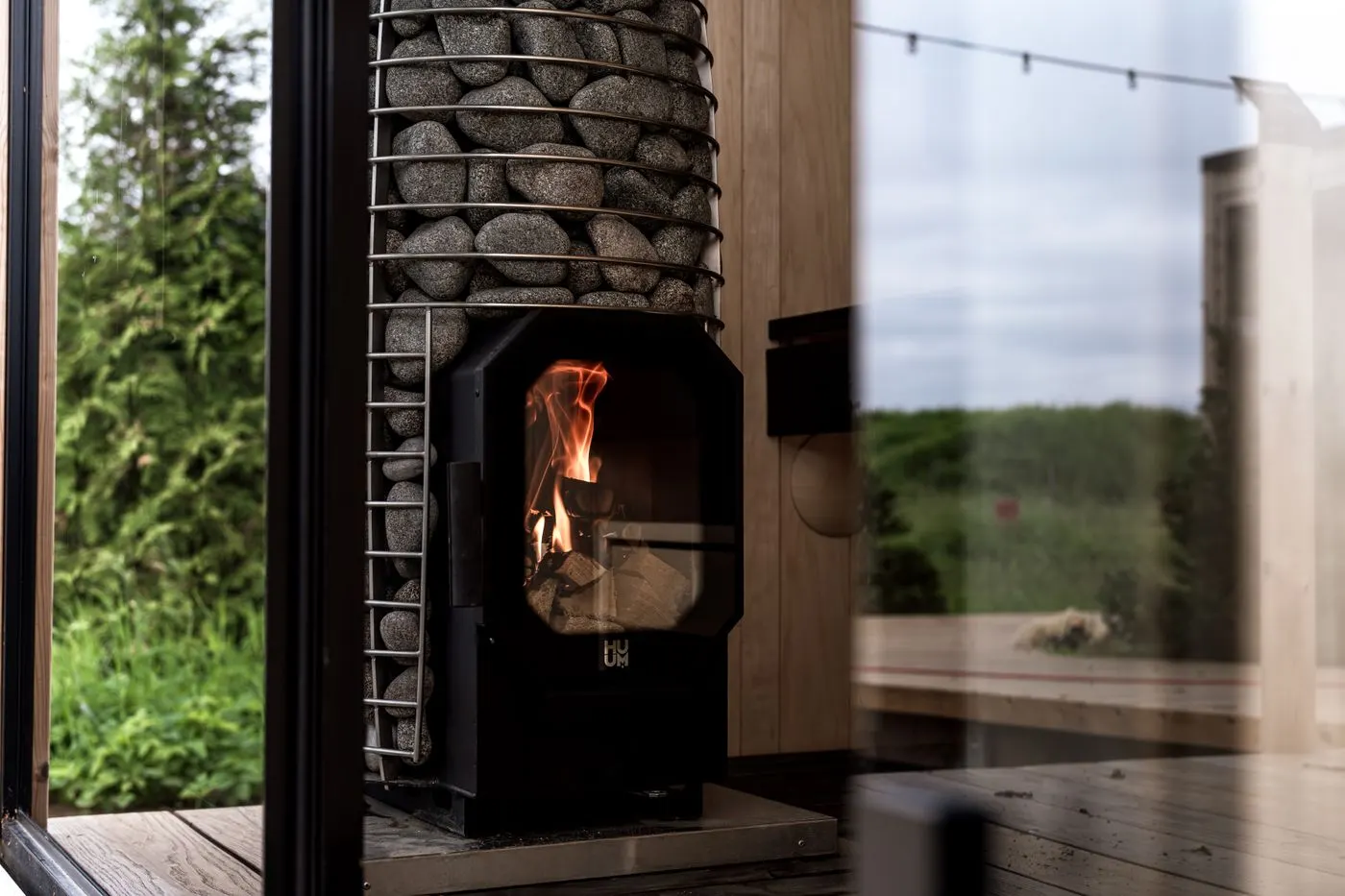
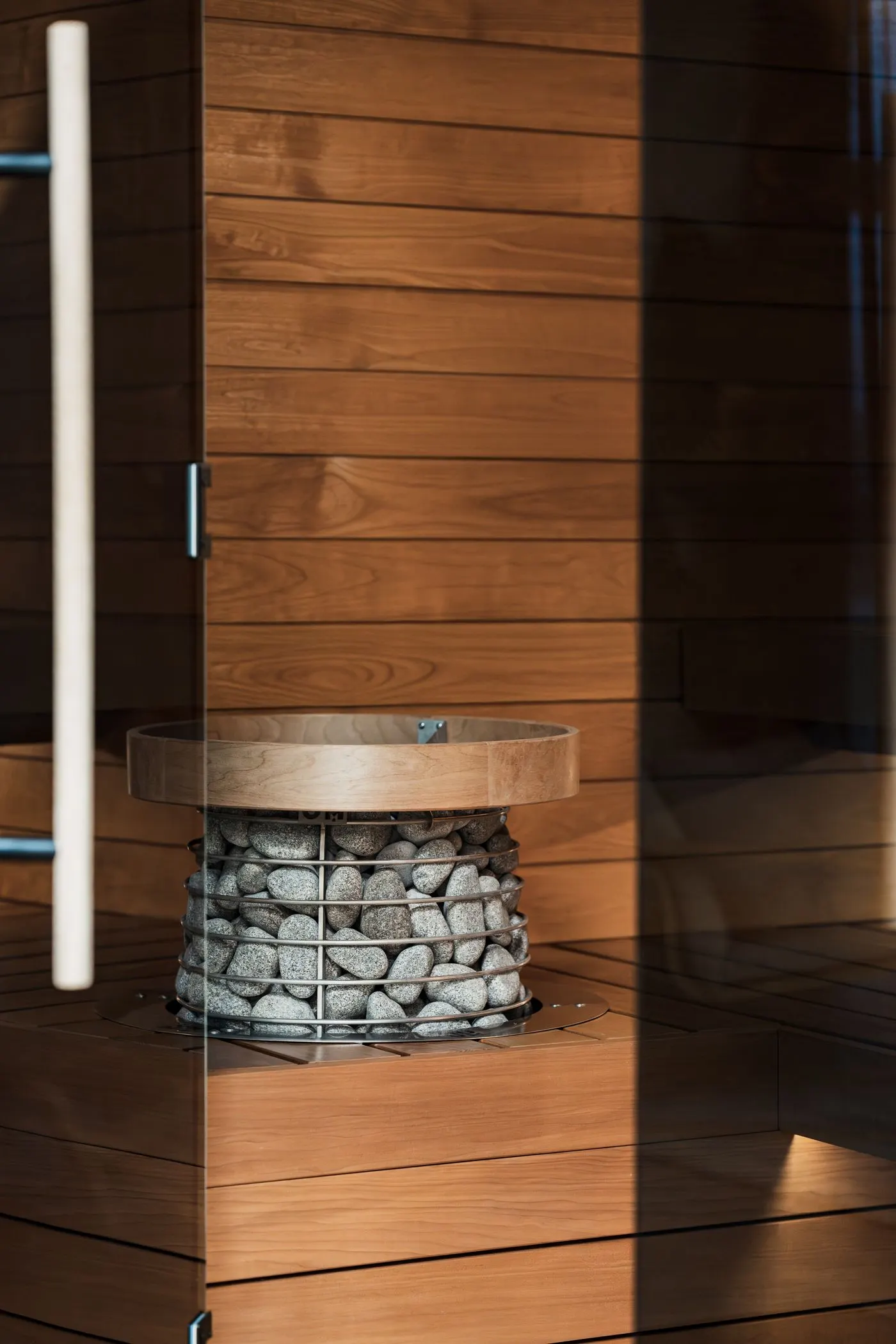
The heater and stones
The heater and its stones reach high temperatures and cause serious burns on contact. So:
- Keep clear of them — never touch during or shortly after use.
- Use a guard rail where helpful to prevent accidental contact.
- Move carefully near the heater.
- Keep the heater area clear.
Treat the heater and stones as what they are — extremely hot.
Steam from löyly
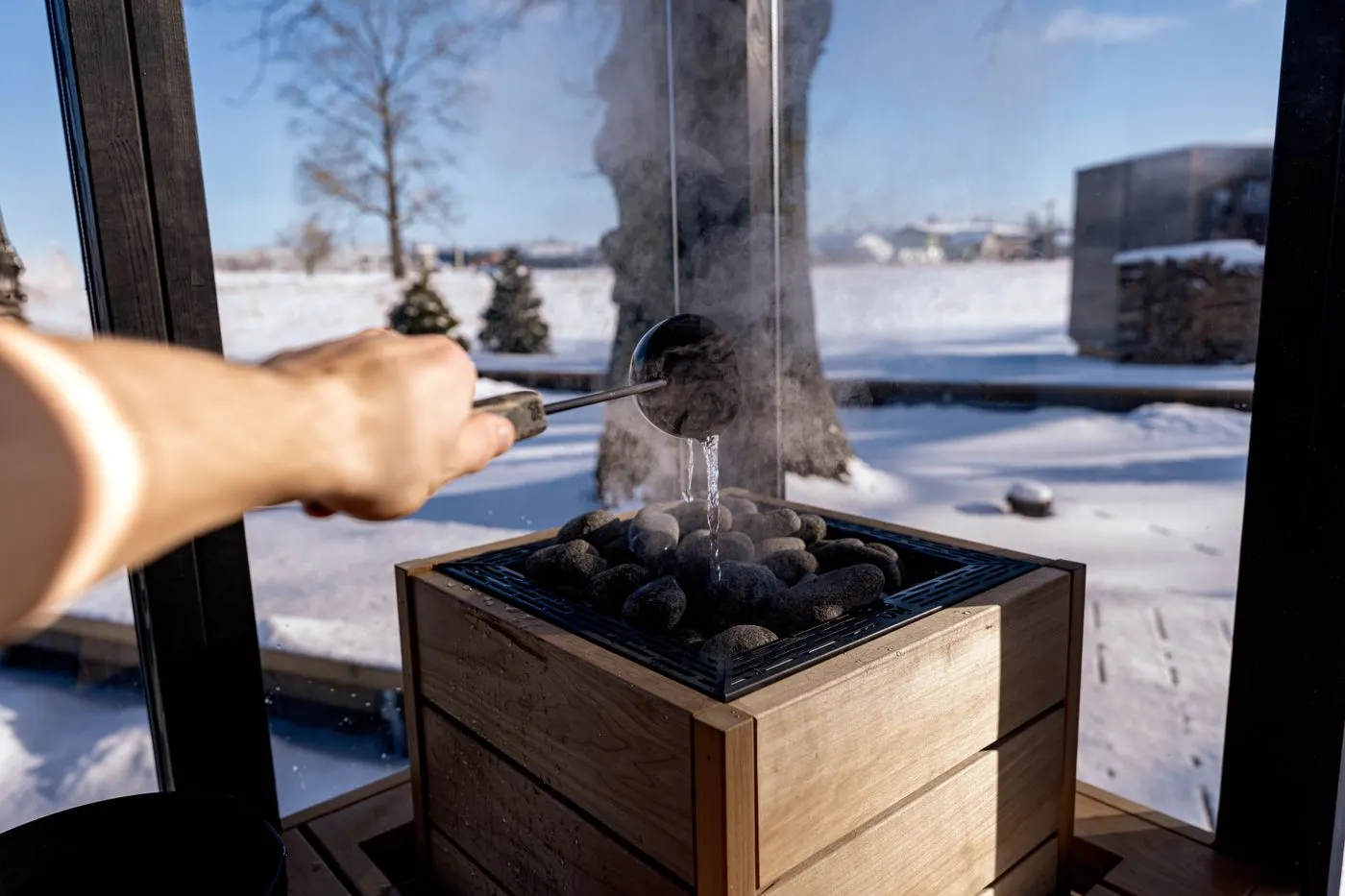
The steam produced when water hits the hot stones (löyly) is hot and can scald if you’re too close or it’s directed at someone:
- Add water modestly and considerately.
- Don’t lean over the stones as you pour.
- Be mindful of where the steam goes and of others in the sauna.
Careful löyly avoids a scald — and is good etiquette too.
Hot metal fittings and jewellery
Metal fittings, and metal jewellery or watches, heat up in a sauna and can become hot enough to burn or be uncomfortable against the skin. So:
- Remove metal jewellery before a session — see what to wear.
- Be mindful of hot metal fittings.
Protecting children
If a burn happens
Common mistakes
- Touching or brushing the hot heater or stones.
- Blasting steam at yourself or others with careless löyly.
- Wearing metal jewellery that heats up.
- Leaving children unsupervised near the heater.
- A cluttered heater area inviting contact.
Next steps
Prevent burns with sensible habits: keep clear of the heater and stones, add löyly carefully, remove metal jewellery, and supervise children closely. Treat the heater as extremely hot, keep its area clear, and move carefully — part of the wider safety checklist that keeps a sauna safe for everyone.
Frequently asked questions
How do you prevent burns in a sauna?
Keep clear of the very hot heater and stones, use a guard rail where helpful to prevent accidental contact, be careful with löyly so steam doesn't scald you or others, take care with hot metal fittings and remove metal jewellery, move carefully around the heater, keep the heater area clear, and supervise children closely. Burns come mainly from contact with the hot heater and stones, from steam, and from hot metal. Treating the heater and stones as extremely hot, and following sensible habits, prevents almost all sauna burns. See our guides on heater guard rails and safety for children.
Can you get burned by sauna steam?
Yes — the steam produced when water hits the hot stones (löyly) is hot and can scald if you're too close to it or if it's directed at someone, so it's important to add löyly carefully and be mindful of where the steam goes. Throwing water so steam blasts you or others, or leaning over the stones as you pour, risks a scald. Add water modestly and considerately, keep clear of the immediate steam, and be aware of others in the sauna. So yes, steam can burn, which is why careful löyly matters. See our löyly guide.
Are sauna stones and the heater hot enough to burn?
Very much — the heater and its stones reach high temperatures and will cause serious burns on contact, which is why keeping clear of them, using a guard rail where helpful, and supervising children are important. Accidental contact with the hot heater or stones is a real burn risk, so the heater area should be treated with respect and kept clear. Never touch the heater or stones during or shortly after use, and be careful moving nearby. So yes, they're hot enough to burn seriously, and contact prevention is key. See our heater guard rail guide.
How do I protect children from sauna burns?
Supervise children closely at all times, since the hot heater and stones are a serious burn hazard for them — a guard rail can help reduce the risk of accidental contact, but it does not replace direct supervision. Keep children away from the heater, watch them constantly, and be aware they may not appreciate how hot surfaces are. Combined with sensible temperatures, shorter times and a physician's guidance on children using saunas at all, close supervision is the key protection against burns for children. See our guides on sauna safety for children and heater guard rails.
Can hot metal fittings burn you in a sauna?
They can — metal fittings, and metal jewellery or watches, can heat up in a sauna's high temperature and become hot enough to burn or be uncomfortable against the skin, which is why it's best to remove metal jewellery before a session and be mindful of hot metal fittings. Non-metal or suitably designed fittings and being aware of what's hot help avoid this. So hot metal is a burn and discomfort risk worth attention, alongside the heater and steam. Remove jewellery and take care with metal surfaces. See our guide on what to wear in a sauna.
What should I do for a sauna burn?
For any burn, follow appropriate first-aid guidance and seek medical help for anything beyond very minor, since burns can be serious. This site provides general safety information, not medical advice, and can't guide burn treatment. The priority is prevention — keeping clear of the heater and stones, careful löyly, mindful handling of hot metal, and supervising children — so burns don't happen. If a burn does occur, treat it as you would any burn per proper first-aid guidance, and get medical attention if needed. So prevent burns first, and seek proper help if one happens. See our safety checklist.