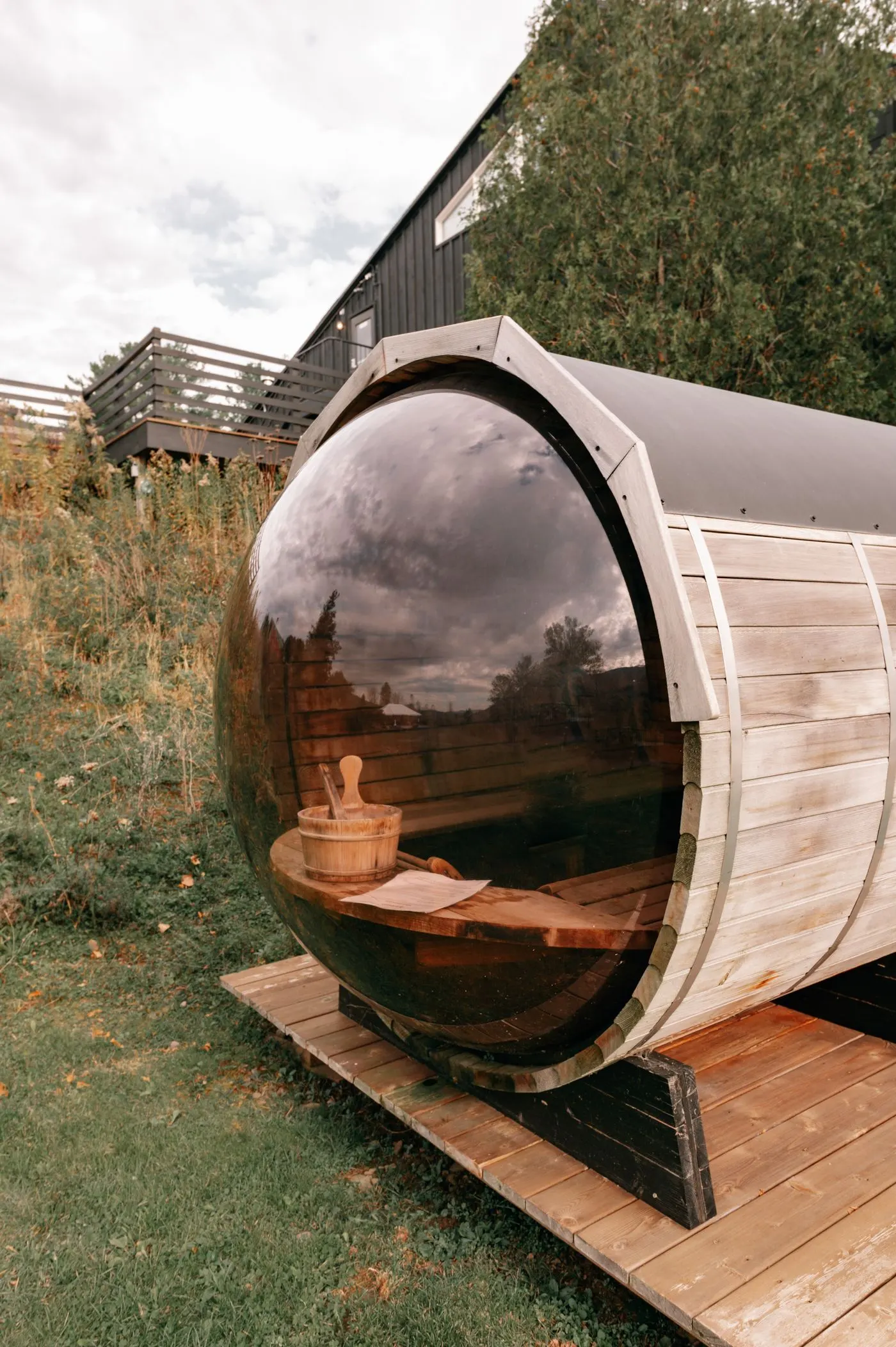
A barrel sauna is usually the most affordable outdoor sauna to buy, with basic kits starting in the low thousands and larger, premium or fully outfitted models running much higher. The price is driven by size, wood species and stave thickness, the heater (electric or wood), the foundation, extras like a roof cover or insulated skirt, and delivery. Treat any figure as an approximate range and price the extras, not just the kit.
Barrel saunas are popular partly because they’re the most affordable way into an outdoor sauna. But the advertised kit price is only part of the story — the foundation, heater, delivery and cold-climate extras all add to what you’ll actually spend. Here’s what drives a barrel’s cost and how to budget realistically.
The realistic range
Barrel saunas span a wide band:
- Basic kit barrels: the lowest entry point, often in the low thousands for a small two- to four-person model.
- Larger, premium or fully outfitted models: considerably more, with thicker staves, better wood, glazing, a quality heater and extras.
These are approximate ranges — where you land depends on the choices below, and on what the price actually includes.
What drives the price
| Factor | Effect on cost |
|---|---|
| Size | Longer barrels and porches cost more |
| Wood & stave thickness | Premium species and thicker staves add cost (and retain heat better) |
| Heater | Electric (plus wiring) or wood (plus chimney and clearances) |
| Foundation | Gravel pad, piers or screws — rarely included |
| Cold-climate extras | Roof cover, insulated skirt, larger heater |
| Glazing | Larger or panoramic windows add cost |
| Delivery | Distance and site access; significant for remote lots |
Why barrels are cheaper
A barrel sauna is a self-supporting kit: no stud framing, no insulation cavity, no complex roof. Less material and far less labour than a cabin, and it assembles in a weekend. That simplicity is exactly why the purchase price is low — and also why it’s harder to insulate and loses heat faster, which can raise running cost. You’re trading some winter efficiency for a lower upfront price.
Look past the kit price
The number that catches your eye is usually just the barrel. Budget for the extras that make it a working sauna:
- Foundation — a level, drained base; rarely in the kit price.
- Heater and installation — electric wiring by an electrician, or a wood stove’s chimney and clearances.
- Delivery — bulky, and pricey to remote sites.
- Cold-climate extras — roof cover, insulated skirt, thicker staves or a larger heater for winter.
Ask exactly what's included
Before comparing barrel prices, ask each supplier what the figure covers — heater, foundation, delivery, extras. A cheaper kit with nothing included can end up costing more than a dearer one that's ready to run.
Budget vs quality
A very cheap barrel can be excellent value for fast, occasional heat. But rock-bottom kits may use thinner staves and lower-grade wood that lose heat faster and wear sooner, which matters more if you’ll use it hard through winter. Match the spend to the use: occasional summer-and-shoulder-season use tolerates a budget kit; year-round Canadian winters reward thicker staves, better wood and a properly sized heater.
Common mistakes
- Budgeting only for the kit, forgetting foundation, heater and delivery.
- Skipping cold-climate extras on a sauna you’ll use all winter.
- Ignoring delivery cost to a remote or awkward site.
- Chasing the cheapest kit without checking stave thickness and wood grade.
Next steps
Compare the barrel’s total against a cabin if you want maximum winter performance, see the overall cost guide for the full component breakdown, and factor in running cost — where a barrel’s easy purchase price can be partly offset by its heat loss.
Frequently asked questions
How much does a barrel sauna cost in Canada?
Basic kit barrels often start in the low thousands, with larger, premium or fully outfitted models costing considerably more. The final price depends on size, wood, heater, foundation, extras and delivery. Treat any figure as an approximate range, and remember the advertised kit price rarely includes everything you need.
Why are barrel saunas cheaper than cabins?
A barrel is a self-supporting kit with no framing, insulation cavity or complex roof, so it uses less material and labour and assembles quickly. That simplicity keeps the purchase price down. The trade-off is weaker winter efficiency, which can mean higher running cost over time.
What's not included in a barrel sauna kit price?
Often the foundation, the heater and its installation (wiring for electric, or chimney and clearances for wood), delivery, and extras like a roof cover or insulated skirt. Always check exactly what a quoted price includes, because these items can add up to a significant share of the total.
Does a barrel sauna need extra spending to work in winter?
It can benefit from it. A roof cover, an insulated skirt, thicker staves or a larger heater all help a barrel perform better in a Canadian winter, and each adds cost. Budget for the cold-climate extras if you'll use the sauna year-round, rather than just the base kit.
Is a cheap barrel sauna worth it?
A budget barrel can be great value for fast, occasional heat, but very cheap kits may use thinner staves and lower-grade wood that lose heat faster and wear sooner. Weigh the upfront saving against winter performance, durability and running cost for how you'll actually use it.
How much does delivery add?
It varies with distance and access, and can be significant for remote or off-road sites. A barrel is bulky, so delivery to a difficult location adds meaningfully to the total. Factor it in early, especially for cottage and rural properties.