A comfortable winter sauna session comes down to small, practical habits: start the heater early since it takes longer to warm up in the cold, so the sauna is ready when you are; have a robe and warm, non-slip footwear for the cold approach and cool-down; use a sheltered or warmed changing spot rather than undressing in the freezing outdoors; keep the path cleared, lit and non-slip; and embrace the hot-cold contrast that makes winter sauna so rewarding. Manage the door and vents to hold heat, dry the sauna after use, and dress warmly for the walk back. These little touches turn a cold-weather sauna from a chilly dash into a genuine winter pleasure.
There’s nothing quite like a sauna on a cold winter night — the heat, the snow, the contrast. But the difference between a chilly dash and a genuine winter pleasure comes down to a few small habits: timing the warm-up, having a robe and warm footwear, a sheltered spot to change. None of them change the sauna itself; they just make using it in the cold a joy. This guide shares practical winter comfort tips.
Start the heater early
An outdoor sauna takes longer to reach temperature in the cold — especially in deep winter — so start the heater well before you want to bathe, and it’ll be ready when you are. There’s no fixed figure (it depends on the heater, insulation and how cold it is), but the key is not to expect quick heat. Keep the exhaust closed during warm-up to hold heat. See how long an outdoor sauna takes to heat in winter.
Robe and warm footwear
Between the house and sauna, and during outdoor cool-downs, you’re exposed to the cold. So:
- Have a robe to throw on for the approach and cool-down.
- Wear warm, non-slip footwear for icy ground.
- Dress warmly for the walk back — stepping from heat into cold can chill you quickly.
Simple comfort and safety measures for the cold transitions.
A warm, sheltered place to change
Undressing in the freezing outdoors is the fastest way to make winter sauna miserable. Instead, use a sheltered or gently warmed changing spot:
- A changing room — ideal.
- At least a covered porch.
- Or change in the house if it’s close.
Even an unheated but sheltered, dry space beats the open cold. A warm place to change is one of the biggest comforts for winter use.
Keep the path clear, lit and safe
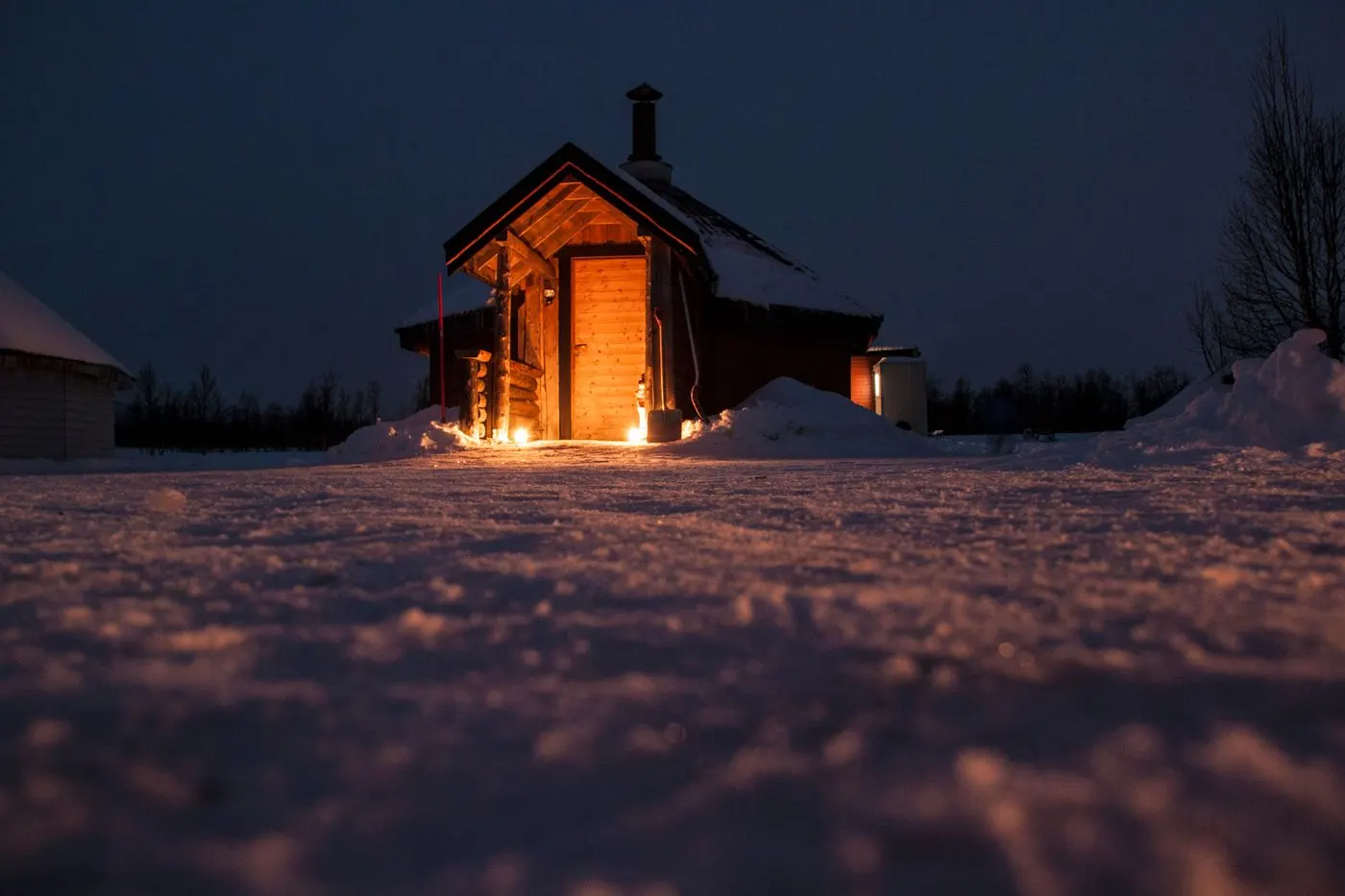
A cleared, lit, non-slip path makes the winter approach safe and pleasant rather than a treacherous trudge. Keep it cleared of snow after snowfall, and light it for dark evenings — see planning winter access.
Manage heat during the session
In winter, every open door lets cold in and heat out, so:
- Keep the door closed except when entering or leaving.
- Open and close it quickly.
- Keep the exhaust only as open as needed while bathing.
Then dry the sauna after use with the vent and door open. Good heat management keeps sessions comfortable.
Embrace the contrast — comfortably
Common mistakes
- Starting the heater late and waiting in the cold.
- Undressing outdoors with no sheltered spot.
- No robe or warm footwear for the transitions.
- Leaving the door open, losing heat to the cold.
- Pushing the cold past enjoyable into miserable.
Next steps
Make winter sessions a pleasure with small habits: start early, have a robe and warm footwear, change somewhere sheltered, keep the path safe, manage the heat, and enjoy the contrast comfortably. Pair these with a well-insulated, well-maintained sauna, and cold-weather bathing becomes one of winter’s great pleasures.
Frequently asked questions
How do I make a winter sauna session more comfortable?
Start the heater early, since it takes longer to warm up in the cold, so the sauna's ready when you are; have a robe and warm, non-slip footwear for the cold approach and cool-down; use a sheltered or warmed changing spot rather than undressing outdoors; keep the path cleared, lit and non-slip; and embrace the hot-cold contrast. Manage the door and vents to hold heat, and dress warmly for the walk back. These small habits turn a winter sauna from a chilly dash into a genuine pleasure, without changing anything about the sauna itself.
How early should I start heating the sauna in winter?
Earlier than in mild weather — an outdoor sauna takes longer to reach temperature in the cold, especially in deep winter, so allow extra warm-up time and start the heater well before you want to bathe. There's no fixed figure since it depends on the heater, insulation and how cold it is, but the key is not to expect quick heat in winter. Starting early, and keeping the exhaust closed during warm-up to hold heat, means the sauna is comfortably hot when you're ready. See our guide on how long an outdoor sauna takes to heat in winter.
What should I wear going to and from a winter sauna?
A robe and warm, non-slip footwear make the cold approach and cool-down far more comfortable, and warm clothing for the walk back keeps you from getting chilled after the heat. Between the house and sauna, and during outdoor cool-downs, you're exposed to the cold, so having a robe to throw on and grippy, warm footwear for icy ground is a simple comfort and safety measure. Dress warmly for the return trip too, since stepping from a hot sauna into the cold and then cooling further can chill you quickly.
How do I stay warm changing for a winter sauna?
Use a sheltered or gently warmed changing spot — a changing room, or at least a covered porch — rather than undressing in the freezing outdoors, which makes the whole experience far more comfortable in winter. Even an unheated but sheltered, dry space to change beats the open cold. If you don't have a changing room, changing in the house (if it's close) or under a covered porch helps. A warm, dry place to change is one of the biggest comforts for winter sauna use. See our guide on planning a changing room.
Is the cold part of winter sauna meant to be uncomfortable?
No — the hot-cold contrast is meant to be invigorating and enjoyable, not miserable. Stepping from the heat into the cold or snow is the essence of the winter sauna ritual, and done right it's exhilarating rather than unpleasant. The trick is easing into the cold sensibly, keeping cool-downs to your comfort, and having a robe and warm footwear so the transitions are pleasant. If the cold feels miserable rather than refreshing, ease off the intensity. The contrast should invigorate, and comfort measures let you enjoy it.
How do I keep the sauna warm during a winter session?
Manage the door and vents: keep the door closed except when entering or leaving, open and close it quickly to minimise heat loss, and keep the exhaust closed during warm-up and only as open as needed while bathing. In winter, every open door lets cold in and heat out, so being mindful of it keeps the sauna comfortable. A well-insulated sauna and a cleared, sheltered entry help too. Then dry the sauna after use with the vent and door open. Good heat management makes winter sessions much more comfortable.