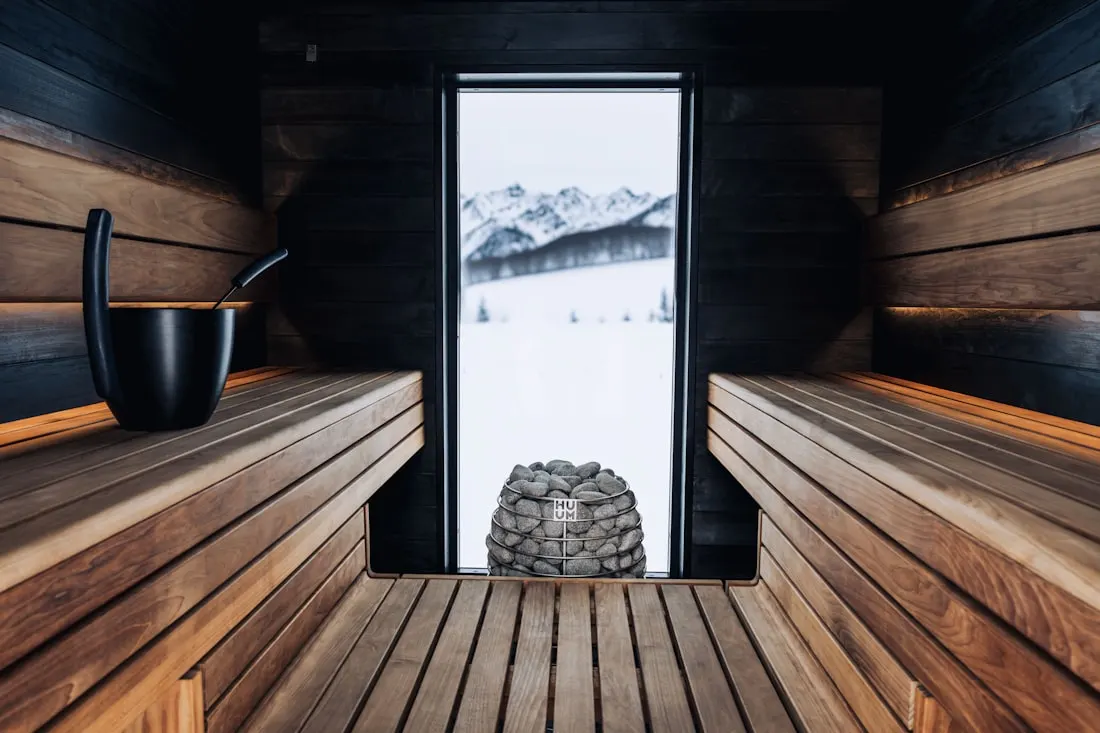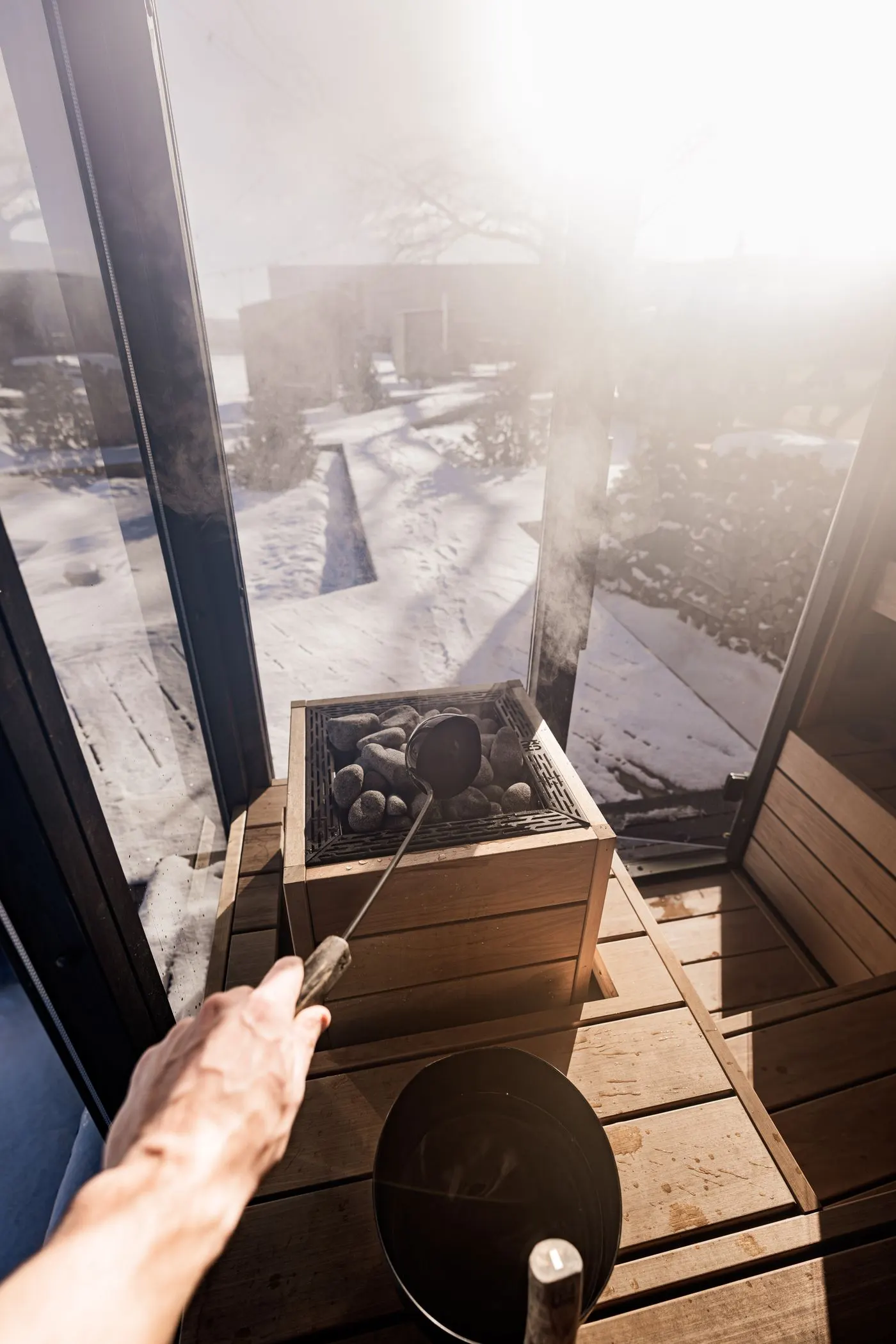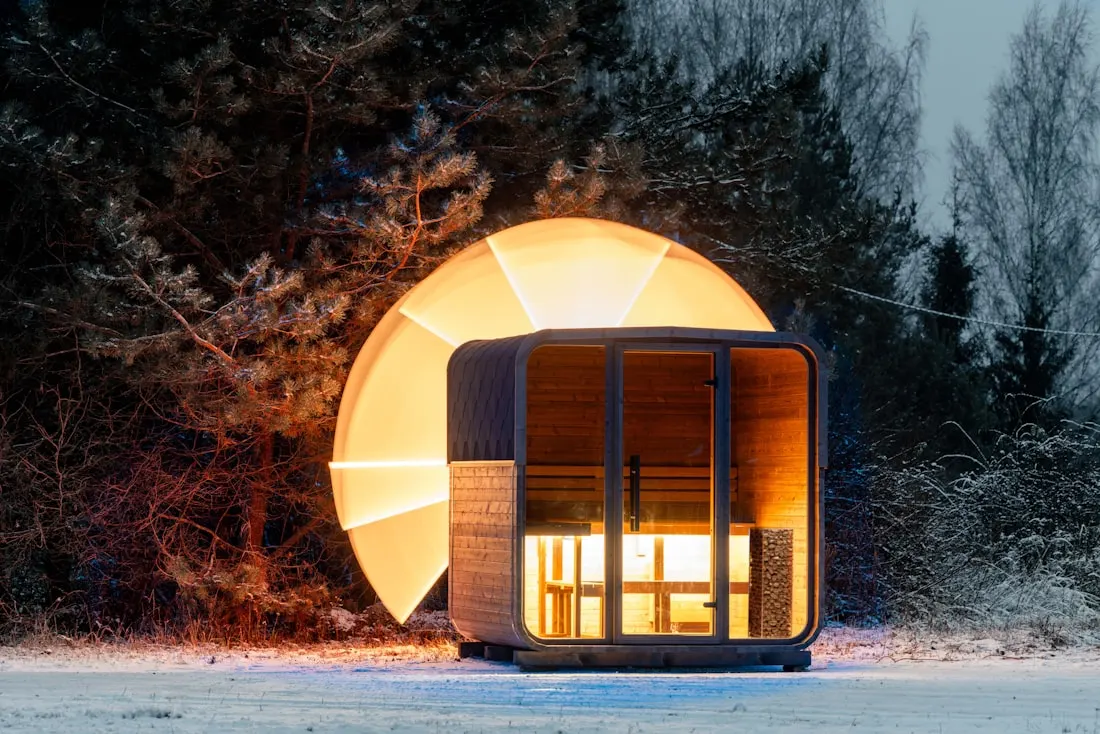
A pod or cube sauna is compact, but it still needs the full ventilation pair: a fresh-air intake low near the heater and an adjustable exhaust on the opposite side, higher up, following the heater manufacturer's guidance. The small volume means it heats and can go stuffy or damp quickly, so circulation and drying matter as much as in a larger sauna. Place the intake and exhaust as far apart as the compact space allows to drive circulation, and open the exhaust and door after use to dry the small room out.
Pod and cube saunas — compact, modern, space-efficient — are increasingly popular for small yards. It’s tempting to think a small room needs less ventilation, but the opposite is closer to true: the small air volume fills with warm, moist air fast, so a pod can go stuffy or damp quickly if the airflow isn’t right. The good news is the same passive pair works well; placement just gets tighter. This guide covers ventilating compact builds.
Small room, same requirements
A pod or cube still needs the full ventilation pair:
- Fresh-air intake — low, near the heater.
- Adjustable exhaust — opposite side, higher up.
Being compact doesn’t remove the need — if anything, the small volume makes good circulation and drying matter more, because problems show up faster. Don’t skip ventilation because the room is small.
Placement in a tight footprint
The principle is unchanged; the challenge is separation. In a small room it’s tempting to put the intake and exhaust close together, but that lets air short-circuit instead of circulating. So:
- Place them as far apart as the compact space allows — ideally opposite sides.
- Keep the intake low near the heater, the exhaust higher opposite.
- Follow the heater manufacturer’s guidance for the specifics.
Good separation in a small room takes a little care, but the circulation works the same way.
Why pods go stuffy or damp fast
The small air volume is the reason:
- It fills with warm, moist air quickly.
- A missing, blocked or unused vent shows up faster than in a big room.
- Moisture that isn’t cleared concentrates in the small space.
So the basics — clear intake, working adjustable exhaust, and drying after use — matter even more. A pod is less forgiving of neglect than a roomy cabin.
Drying a small sauna
After every session, open the exhaust fully and prop the door to dry the small room out with the residual heat. Because the volume is small, a pod actually clears and dries quickly once air can move — so the after-use habit is both important and fast. Don’t close a small sauna up wet, especially in winter.
Do you need a fan?
Usually not. A pod or cube ventilates well passively — the compact space circulates and clears quickly once air can move. Focus on separating the vents and drying after use. A fan is only for uncommon, specific constraints, even in small builds.
Common mistakes
- Skipping ventilation because the room is small.
- Intake and exhaust too close, letting air short-circuit.
- Not drying the small room, so moisture concentrates fast.
- Blocking the intake to hold heat in the compact space.
- Assuming a fan is needed where passive works well.
Next steps
Give a pod or cube the full passive pair — intake low near the heater, adjustable exhaust opposite and higher, separated as much as the footprint allows — per your heater’s guidance. Then dry after every use. A small sauna is less forgiving, but with the basics right, it ventilates and clears beautifully.
Frequently asked questions
How do you ventilate a small pod sauna?
With the same pair a larger sauna uses: a fresh-air intake low near the heater and an adjustable exhaust on the opposite side, higher up, per the heater manufacturer's guidance. Being compact doesn't remove the need — a small room can go stuffy and damp quickly. Place the intake and exhaust as far apart as the space allows to drive circulation, and open the exhaust and door after use to dry it out.
Do small saunas need ventilation too?
Yes — a small pod or cube sauna needs the full intake-and-exhaust pair just like a larger one. In fact, the small air volume means it can become stuffy and hold moisture quickly, so good circulation and drying matter as much or more. Don't skip ventilation because the room is small; place the vents to circulate air and dry the room after every use.
Where do vents go in a compact cube sauna?
Intake low near the heater, exhaust on the opposite side and higher — the same principle as any sauna, just in a tighter space. Separate them as much as the compact footprint allows so air circulates across the room rather than short-circuiting. The exact placement follows the heater manufacturer's guidance. Getting good separation in a small room takes a little care but works the same way.
Why does my pod sauna get stuffy or damp fast?
Because the small air volume fills with warm, moist air quickly, so a missing, blocked or unused vent shows up faster than in a big room. Check the intake is clear low near the heater, the exhaust opens fully opposite and higher, and that you open the exhaust while bathing and after use to dry it. Small rooms are less forgiving, so the ventilation basics matter even more.
Is it harder to ventilate a small sauna?
Not harder, but less forgiving — the small volume means problems appear faster and drying matters more, and separating the intake and exhaust in a tight footprint takes a little care. But the same passive intake-and-exhaust pair works well in a pod or cube. Place the vents thoughtfully, use the adjustable exhaust, and dry after each session, and a small sauna ventilates just fine.
Does a pod sauna need a fan?
Usually not. A pod or cube ventilates well with the passive intake-and-exhaust pair — the compact space actually circulates and clears quickly once air can move. Focus on separating the vents as much as the footprint allows and drying after use. A fan is only worth considering if a specific constraint defeats passive means, which is uncommon even in small builds.