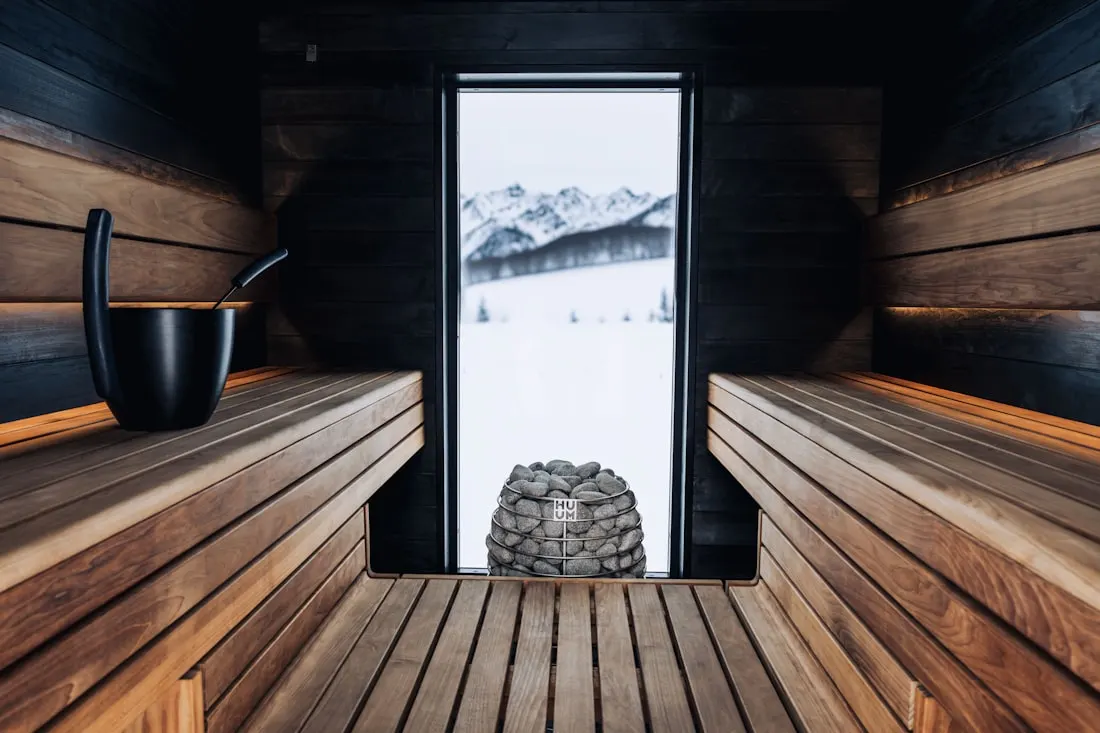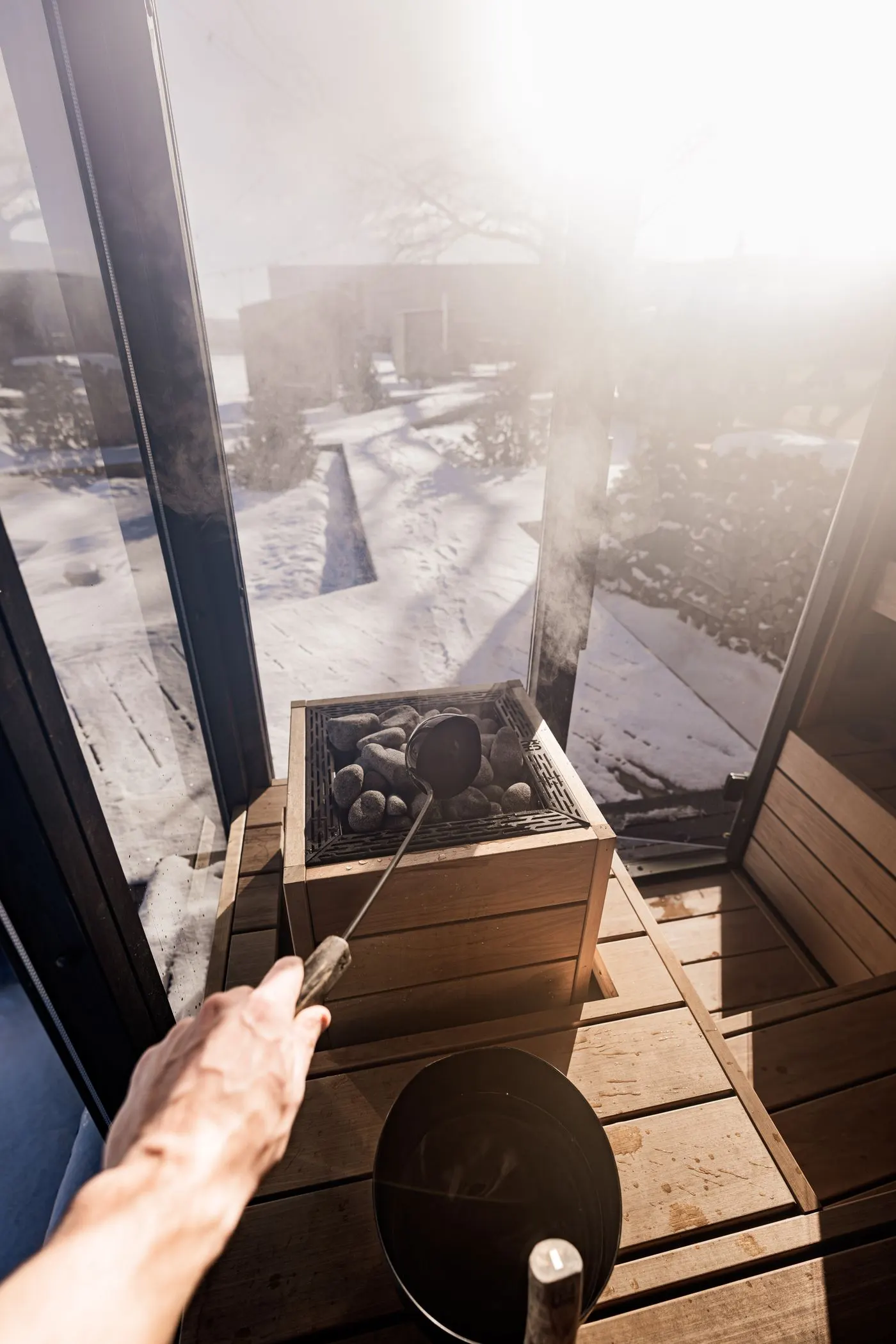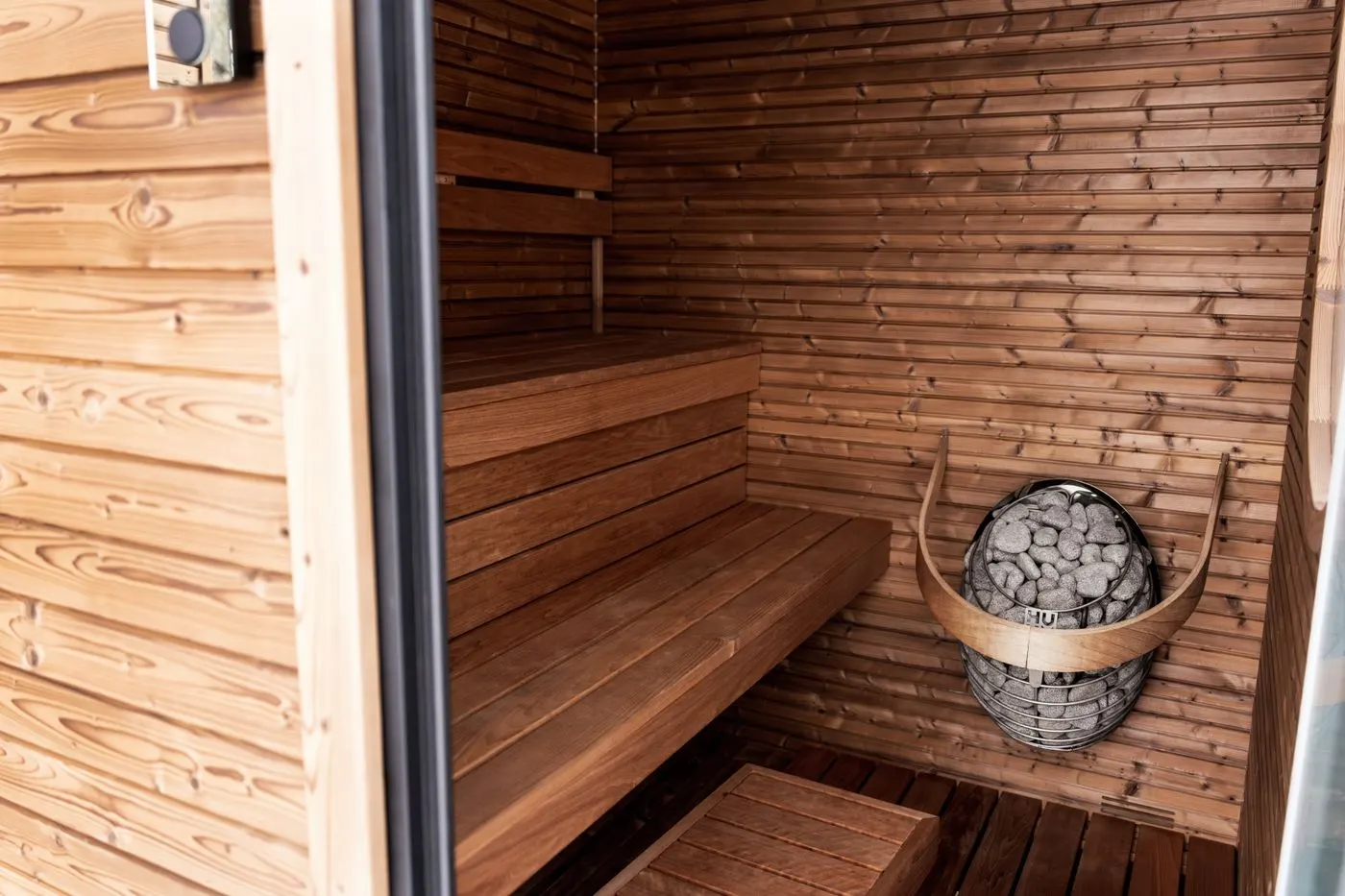
Passive (natural) ventilation moves air through a sauna by convection and pressure differences, using a well-placed intake and adjustable exhaust with no fan — it's simple, silent, reliable and suits most outdoor saunas. Mechanical ventilation adds a fan to move air, which can help in specific situations such as difficult layouts or drying, but it adds complexity and something to maintain. For a typical cold-climate outdoor sauna, a well-planned passive layout plus drying after use does the job.
When people plan sauna ventilation, one question comes up early: do I need a fan? The answer, for most outdoor saunas, is no. Well-placed passive ventilation moves plenty of air by nature alone, silently and reliably, with nothing to break. Mechanical ventilation has its place, but it’s the exception, not the rule. This guide explains both and helps you decide.
Passive (natural) ventilation
Passive ventilation moves air through the sauna using natural forces — convection and pressure differences — with no fan. Warm air rises and creates pressure that:
- Draws cool fresh air in through a low intake near the heater.
- Pushes warm, stale air out through a higher exhaust on the opposite side.
The heater and the room’s geometry drive the airflow. It’s simple, silent, reliable, and has nothing to break — which is exactly why it suits the great majority of outdoor saunas.
Mechanical ventilation
Mechanical ventilation adds a fan to move air. It can help in specific situations:
- A difficult layout where natural airflow is hard to achieve.
- A need to actively speed drying.
- Particular design goals.
A fan can move air where passive means struggle. But it adds complexity, noise and maintenance, and any powered component must be installed to code — so it’s worth using only when a well-planned passive layout genuinely can’t do the job.
Passive vs mechanical, at a glance
| Factor | Passive | Mechanical |
|---|---|---|
| How it moves air | Convection & pressure | A fan |
| Complexity | Simple; nothing to break | More; a component to maintain |
| Noise | Silent | Some |
| Maintenance | None | Clean, maintain, replace |
| Best for | Most outdoor saunas | Difficult layouts, specific needs |
Why most saunas do well with passive
A well-planned passive layout — intake low near the heater, adjustable exhaust opposite and higher — moves air well throughout a session, and combined with drying after use, it keeps a cold-climate sauna comfortable and dry. There’s no fan to power, wire, clean or replace, and nothing to fail in the hot, humid environment. For most people, passive is not a compromise — it’s the better choice.
Start passive, add mechanical only if needed
The sensible approach:
- Design a good passive layout first.
- Use it properly — manage the adjustable exhaust, dry after use.
- Add mechanical only if a specific problem (a genuinely difficult layout, persistent drying trouble) calls for it — and check the passive ventilation and habits first.
If drying is a persistent issue, the fix is usually better passive ventilation or habits, not a fan.
Common mistakes
- Assuming you need a fan when passive would do.
- A poor passive layout blamed on “needing mechanical.”
- Adding a fan without addressing the passive design first.
- Neglecting an installed fan’s maintenance.
- Blocking passive vents instead of using the adjustable exhaust.
Next steps
For most outdoor saunas, a well-planned passive layout plus drying after use is the answer — simple, silent and reliable. Get the intake and exhaust right per the ventilation fundamentals, and reach for mechanical only if a specific need genuinely arises.
Frequently asked questions
Do saunas need mechanical ventilation?
Most don't. A well-planned passive layout — a fresh-air intake low near the heater and an adjustable exhaust opposite and higher — moves air naturally by convection and pressure, which suits most outdoor saunas. Mechanical ventilation (a fan) can help in specific cases, but for a typical cold-climate sauna, passive ventilation plus drying after use is enough.
How does passive sauna ventilation work?
By natural forces: warm air rises and creates pressure differences, drawing cool fresh air in through a low intake near the heater and pushing warm, stale air out through a higher exhaust on the opposite side. There's no fan — the heater and the room's geometry drive the airflow. It's simple, silent and reliable, with nothing to break.
When is mechanical ventilation useful in a sauna?
In specific situations — for example, a difficult layout where natural airflow is hard to achieve, a need to actively speed drying, or particular design goals. A fan can move air where passive means struggle. But it adds complexity, noise and maintenance, so it's worth using only when a well-planned passive layout genuinely can't do the job.
Is passive or mechanical ventilation better for a sauna?
For most outdoor saunas, passive is better: simpler, silent, reliable, with nothing to break, and it moves air well when the intake and exhaust are well placed. Mechanical suits particular cases where natural airflow falls short. Start with a good passive layout; add mechanical only if a specific problem calls for it.
Can a fan help dry a sauna faster?
A fan can move air to speed drying, and some setups use one for that. But for most saunas, opening the exhaust fully and the door after use, using the residual heat, dries the interior well without a fan. If drying is a persistent problem, first check the passive ventilation and habits before adding mechanical help.
Does mechanical ventilation need maintenance?
Yes — a fan is a mechanical component in a hot, humid environment, so it's something to install correctly, keep clean, and maintain or eventually replace, and any powered component must be installed to code. That extra complexity is a reason most saunas stick with passive ventilation, which has nothing to break.