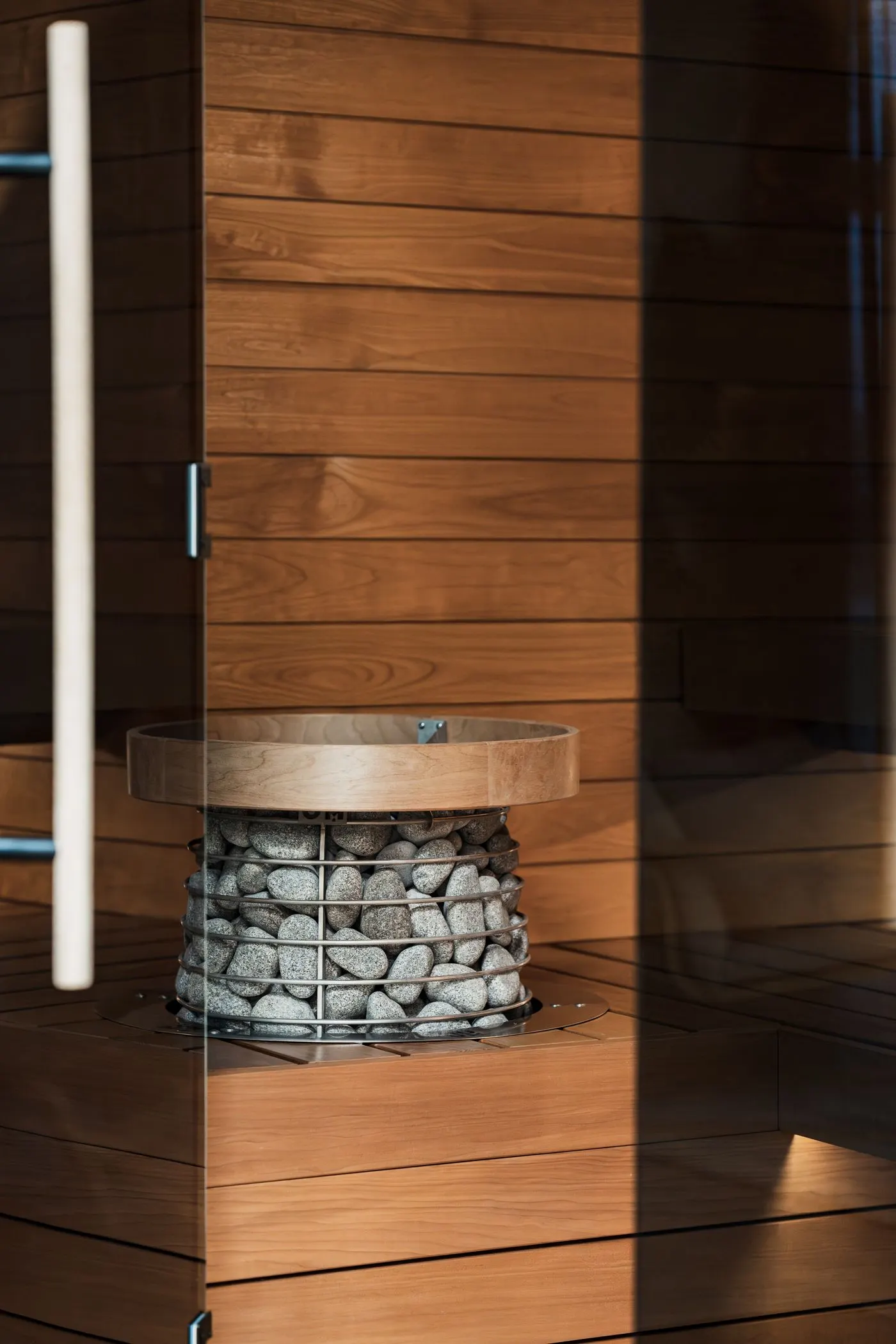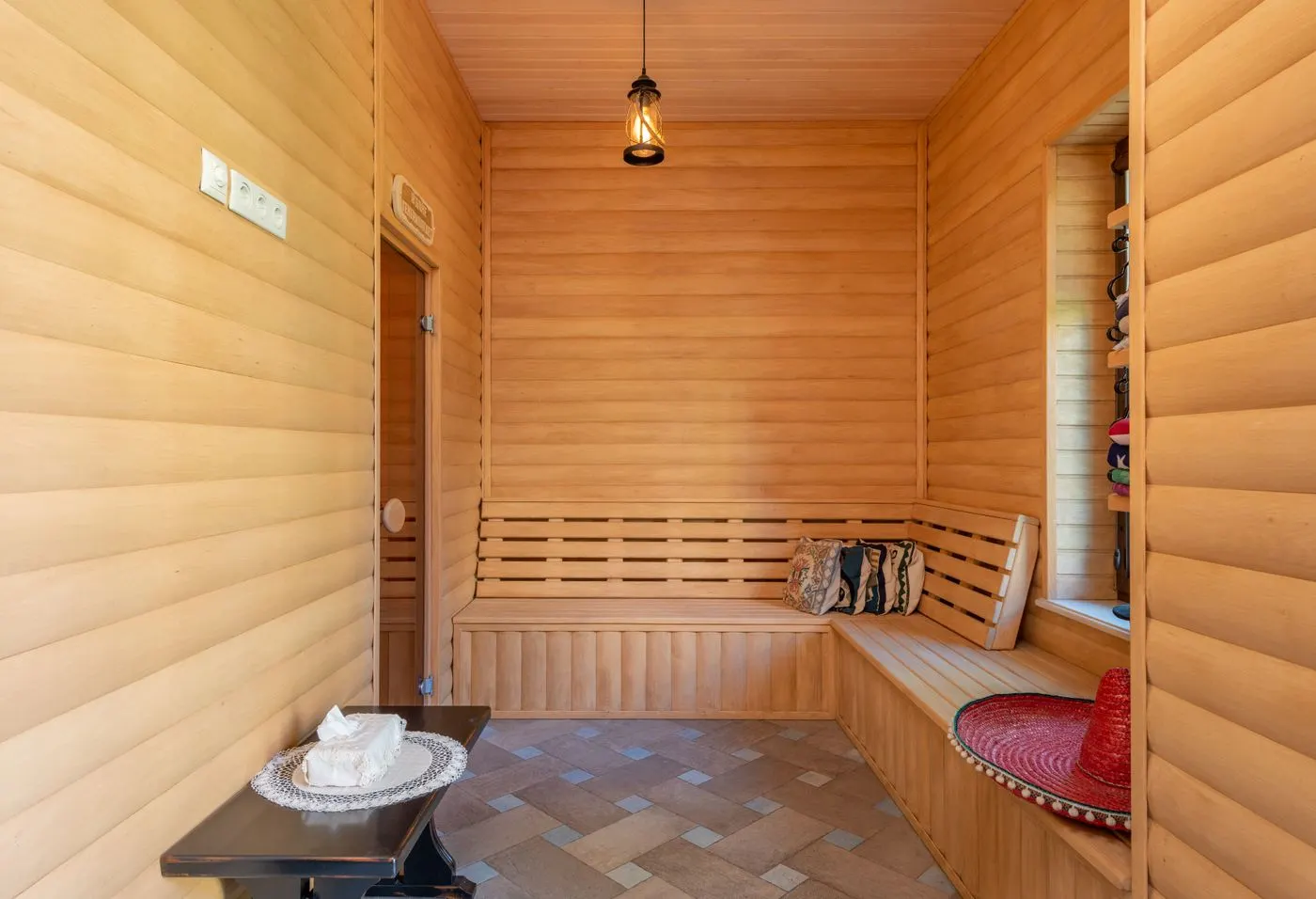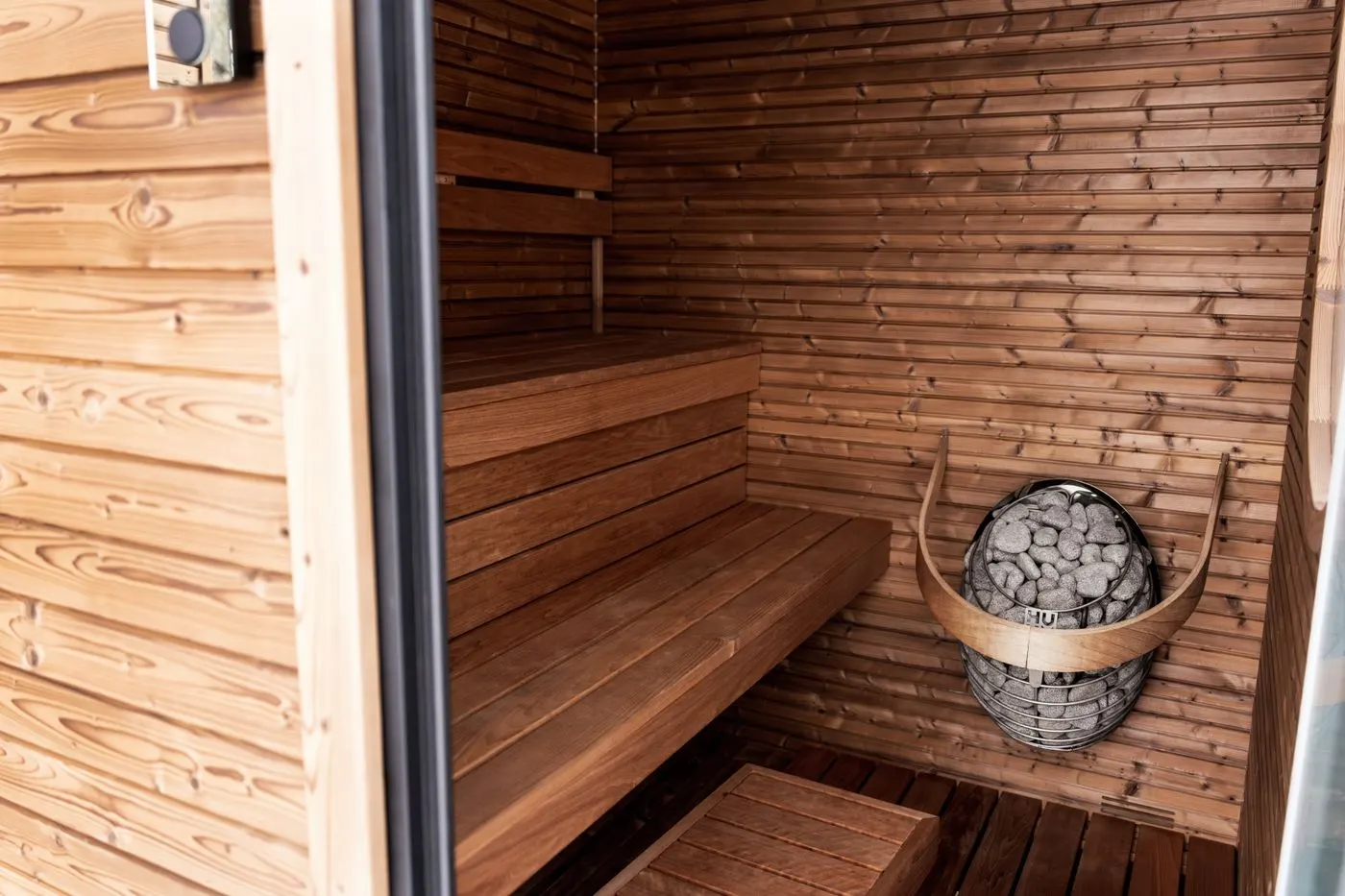
Clean an outdoor sauna regularly with gentle methods: wipe or lightly scrub the benches and floor with warm water and mild, sauna-safe cleaning, rinse, and dry thoroughly. Avoid harsh chemicals, strong detergents and anything with a lingering scent, which the heat can drive out and which can harm the wood. Wipe down surfaces after heavy use, do a deeper clean periodically, and always dry the sauna fully afterward. Keeping the wood clean and dry is what keeps a sauna fresh and free of stains and mould.
A sauna that’s kept clean and, above all, dry stays fresh, pleasant and long-lived; one that’s neglected picks up stains, smells and eventually mould. The good news is that cleaning a sauna is gentle, simple work — the enemy isn’t dirt so much as trapped moisture. This guide covers a practical cleaning routine and, just as importantly, the drying habit that keeps a sauna fresh between cleans.
The golden rule: gentle and dry
Two principles run through all sauna cleaning:
- Clean gently — warm water and mild, sauna-safe methods, not harsh chemicals.
- Dry thoroughly — every clean, and after every use.
Wood is the surface, humidity is the challenge, and gentle cleaning plus thorough drying is the whole philosophy. Aggressive chemicals harm the wood and can leave fumes the heat drives out; trapped moisture causes the stains and smells you’re trying to avoid.
Benches, floor and walls
Work through the interior:
- Benches — where sweat collects, so the priority. Sit on a towel to keep sweat off the wood, wipe the benches after use, and clean them gently and periodically. Remove any duckboards or removable benches to clean and dry separately.
- Floor — wipe or lightly scrub, rinse, and let it dry. Duckboards come out for cleaning.
- Walls — the interior wood needs less frequent attention; wipe touched areas and give it a gentle clean periodically.
Rinse after cleaning, and dry everything fully.
Products: what to use and avoid
| Use | Avoid |
|---|---|
| Warm water | Bleach-heavy products |
| Mild, sauna-safe cleaner | Harsh chemicals and strong detergents |
| A little mild soap (rinsed) | Strongly fragranced cleaners |
| A soft brush for stains | Anything leaving a residue or fumes |
The heat can drive fragrances and fumes out into the air you breathe, so avoid anything strongly scented. Gentle is safer for you and the wood.
The habit that matters most: drying
More than any cleaning product, drying the sauna after every use keeps it fresh. Open the exhaust vent and door so the interior dries fully, and space the bench boards so they dry too. A sauna that dries between sessions rarely develops stains, smells or mould; one that’s closed up damp does. Regular light cleaning plus this drying routine beats occasional deep cleans.
Dealing with stains and musty smells
- Stains — a gentle scrub with a soft brush and sauna-safe cleaning usually lifts sweat and water marks; rinse and dry.
- Musty smells — these mean moisture that isn’t drying out. Clean the affected wood, but the real fix is better drying and addressing any ventilation or insulation issue behind the dampness. A musty smell is a warning to improve drying before mould takes hold.
How often
- After heavy use: wipe benches and high-contact surfaces.
- Periodically: a deeper clean of the whole interior — frequency depends on use.
- After every session: dry the sauna (the non-negotiable).
Common mistakes
- Harsh chemicals or bleach that harm the wood and leave fumes.
- Strongly scented cleaners the heat drives into the air.
- Not drying the sauna after use — the top cause of smells and mould.
- Letting sweat soak the benches instead of using a towel.
- Never removing duckboards to clean and dry beneath.
Next steps
Clean gently, dry thoroughly, and sit on a towel. Pair this routine with preventing mould, wood care, and good ventilation and drying, and fold it into your overall maintenance. A clean, dry sauna is a sauna you’ll love using for years.
Frequently asked questions
How do you clean a sauna?
Gently. Wipe or lightly scrub the benches, floor and touched surfaces with warm water and a mild, sauna-safe cleaner, rinse, and dry thoroughly. Remove any duckboards to clean and dry them separately. Avoid harsh chemicals and strong scents. Regular gentle cleaning plus thorough drying keeps the wood fresh and prevents stains, smells and mould.
What can I use to clean a sauna?
Warm water and a mild, sauna-safe cleaner is the mainstay; some use a little mild soap or a purpose-made sauna cleaner. Avoid harsh chemicals, strong detergents, bleach-heavy products and anything with a strong lingering fragrance, which the heat can drive out into the air. Rinse after cleaning, and always dry the sauna fully afterward.
How often should you clean a sauna?
Wipe down benches and high-contact surfaces after heavy use or regularly, and do a deeper clean of the whole interior periodically — how often depends on how much you use it. The most important routine, though, is drying the sauna after every session; that, plus regular light cleaning, keeps it far fresher than occasional deep cleans alone.
Can you use bleach or strong chemicals in a sauna?
It's best avoided. Harsh chemicals, bleach and strong detergents can damage or discolour the wood, leave residues, and give off fumes the heat drives out into the air you breathe. Stick to gentle, sauna-safe cleaning and warm water. For mould, clean early surface growth promptly with an appropriate method and, most importantly, fix the moisture cause.
How do I keep sauna benches clean?
Sit on a towel to keep sweat off the wood, wipe the benches after use, clean them gently and periodically, and — crucially — let them dry between sessions by spacing the boards and drying the sauna. Removable benches or duckboards can be taken out to clean and dry. Clean, dry benches stay fresh; damp, sweat-soaked ones stain and smell.
Why does my sauna smell musty?
A musty smell almost always means moisture that isn't drying out — the wood is staying damp, and mould or mildew is starting. The fix is better drying (ventilate and open the door after use), light cleaning, and addressing any ventilation or insulation issue behind the dampness. Clean the affected wood and, above all, get it drying properly.