Outdoor sauna flooring choices — concrete, tile, wood, or removable duckboards, with or without a drain — trade off drainage, slip resistance, freezing and cleaning. A dry sauna needs no drain; a wet floor with a drain suits heavy washing but adds a freezing point in a cold climate. Tile or sealed concrete gives a hard, washable floor, often topped with removable duckboards for warmth and grip underfoot. Whatever you choose, prioritise slip resistance, drainage or drying, and — in the cold — avoiding trapped water that can freeze.
The floor is the surface you stand on wet and barefoot, so it has to be safe underfoot — and, in a Canadian climate, it has to drain or dry rather than trap water that can freeze. There’s no single right answer; the best floor depends on whether you want a dry sauna or a wet, washable one. This guide walks through the options and the factors — slip resistance, drainage, freezing and cleaning — that decide between them.
The first question: dry or wet floor?
Your whole floor decision follows from this:
- A dry sauna needs no drain. You throw water on the stones and dry the room afterward. A simple wood or board floor works, and many Canadian saunas take this route to avoid a freezing point.
- A wet floor with a drain suits heavy washing-down, a shower area, or a cold plunge splash zone — but in a cold climate a drain adds a freezing point that must be frost-safe and clear fully.
Decide this first; it shapes the material and whether you need a drain.
The main flooring options
| Floor | Strengths | Watch out for |
|---|---|---|
| Tile (over a base) | Hard, washable, durable; takes a drain | Can be slippery wet; adds a freezing point with a drain |
| Sealed concrete | Solid, washable, low-maintenance | Cold and hard; slip resistance; needs a frost-safe drain if wet |
| Wood floor | Warm, comfortable underfoot | Must dry; trapped water rots and can freeze |
| Removable duckboards | Grip, warmth, lift above water; dry-able | Need cleaning and drying to avoid mould |
Tile and concrete: hard, washable bases
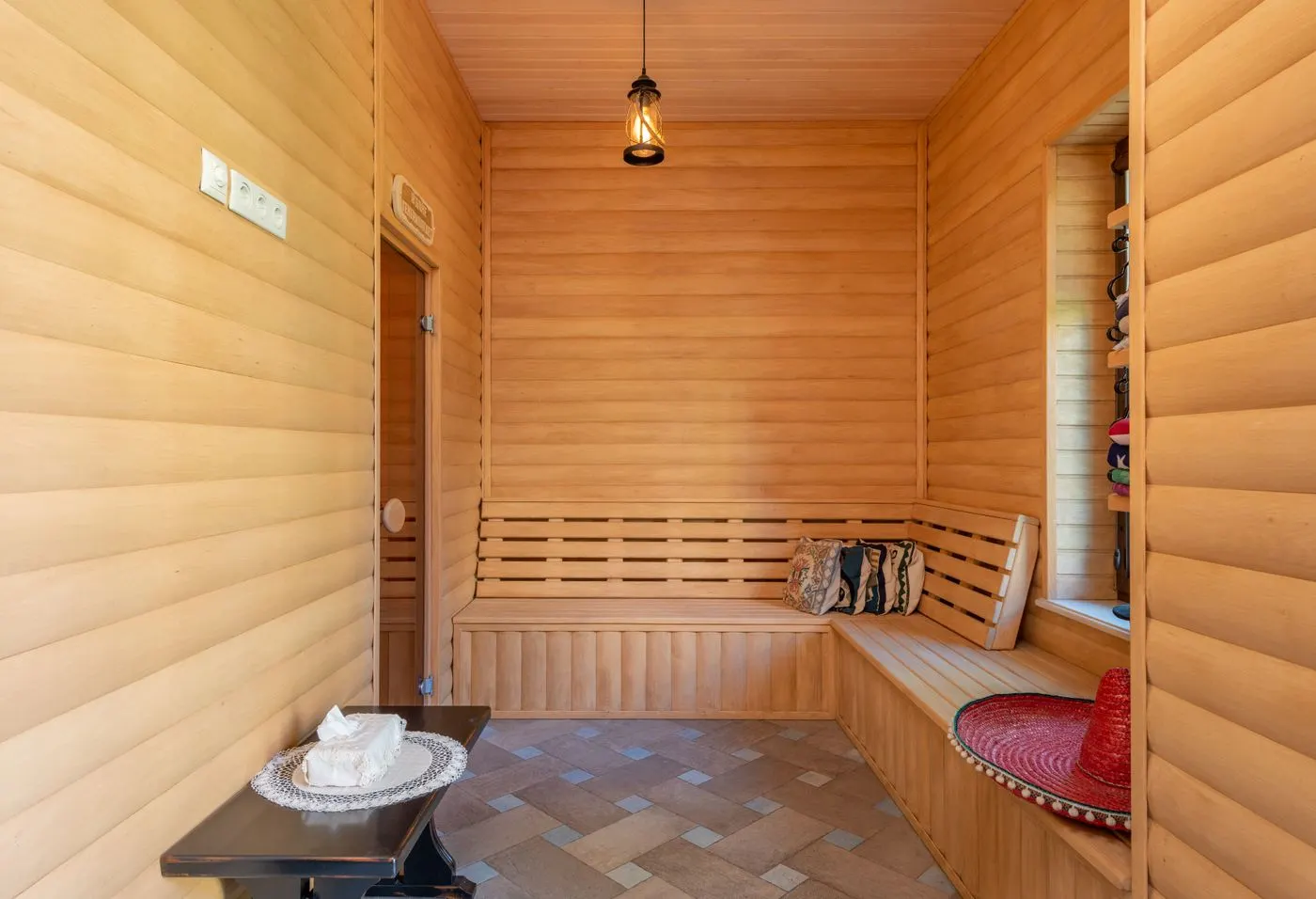
Tile (over a suitable base, often a slab) and sealed concrete give a hard, washable, durable floor that suits a wet, wash-down sauna and can take a drain. The trade-offs are that they’re cold and hard underfoot and can be slippery when wet — which is why they’re often topped with duckboards. If you want a wet floor you can hose out, tile or concrete is the durable base.
Wood floors and duckboards
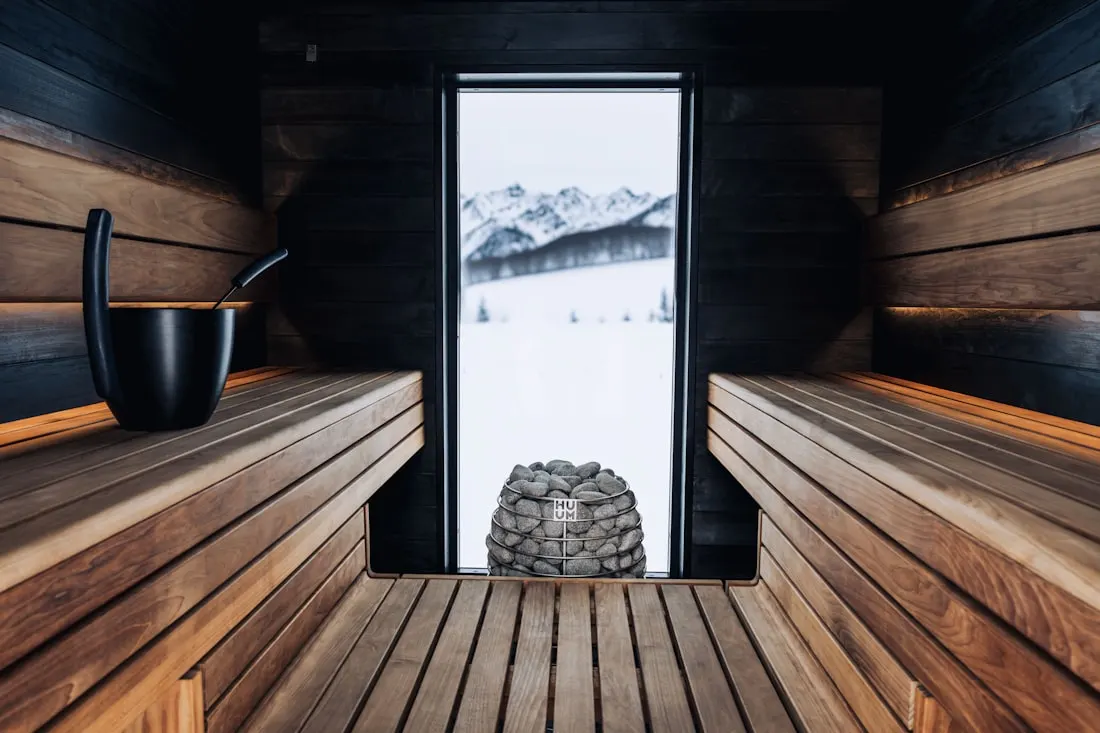
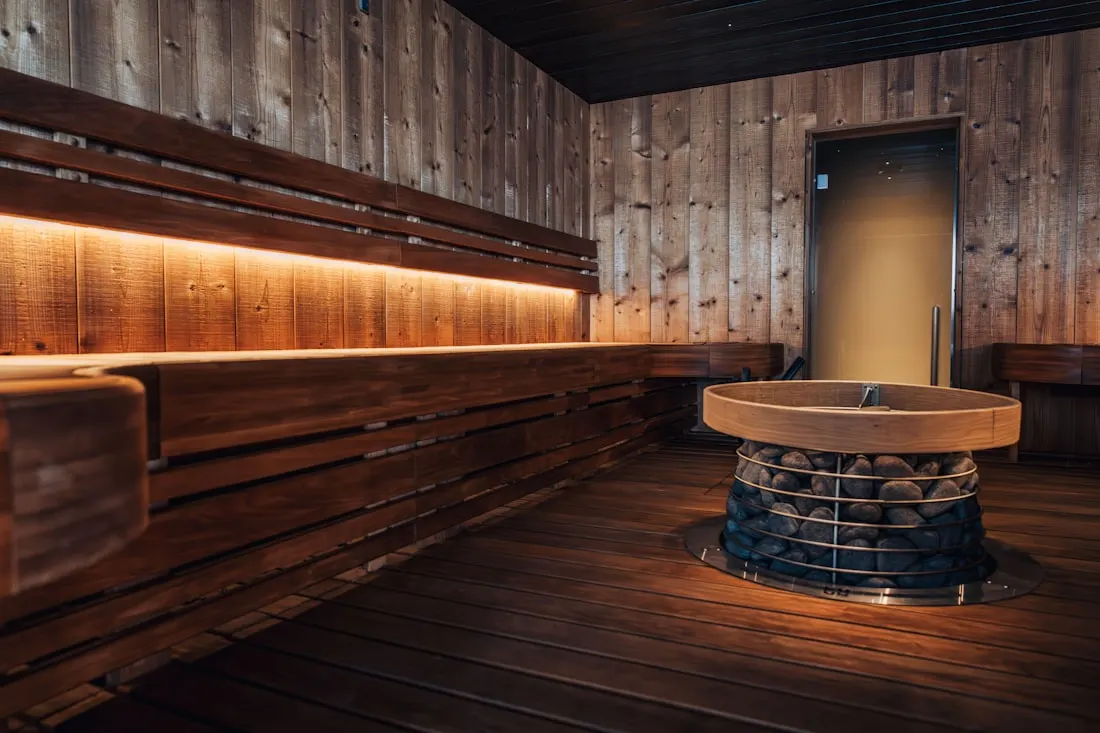
Wood is warm and comfortable, and a dry sauna often uses a simple board floor — but it must be able to dry (spaced boards, drainage or drying), since trapped water rots wood and can freeze. The popular hybrid is removable wooden duckboards over a hard tile or concrete base: you get a washable base plus a warm, grippy, removable surface that lifts you above any water and can be taken out to dry and clean. Duckboards are a practical, comfortable, safe topping.
Slip resistance and safety
You’re wet, barefoot and warm on this floor, so slip resistance matters for safety. Textured tile, a suitable concrete finish, or wooden duckboards all provide grip; smooth wet tile or sealed concrete can be slippery. Choose a slip-resistant surface — or top it with duckboards — especially where you step in and out. This ties into overall sauna safety.
Freezing and drainage
In the cold, the floor rule is avoid trapped standing water:
- Use a floor that drains or dries rather than holds water.
- If you fit a drain, make it frost-safe and ensure it clears fully.
- Grade and detail so water flows away — the same drainage and freeze-thaw principles as the rest of the sauna.
A dry floor with no standing water has little to freeze.
Common mistakes
- A drain that holds water and freezes in winter.
- Smooth, slippery wet tile or concrete with no grip.
- A wood floor that can’t dry, trapping water and rotting.
- Adding a drain you don’t actually need, for a dry sauna.
- Duckboards never cleaned or dried, growing mould.
Next steps
Decide dry or wet floor first, then choose a slip-resistant, drain-or-dry surface — often tile or concrete topped with duckboards. Keep it free of trapped water in the cold, and clean and dry duckboards as part of maintenance. For the base beneath, see foundations and drainage.
Frequently asked questions
What is the best floor for an outdoor sauna?
It depends on how you use it. Tile or sealed concrete gives a hard, washable, durable floor, often topped with removable wooden duckboards for grip and warmth underfoot. A dry sauna can use a simple wood or board floor with no drain. Prioritise slip resistance, drainage or drying, and avoiding trapped water that can freeze in a cold climate.
Does a sauna floor need a drain?
Only if you want a wet, washable floor or a shower area. A traditional dry sauna needs no drain — you dry it after use. In a cold climate a drain adds a freezing point and must be frost-safe and clear fully, so many outdoor saunas skip it for simplicity. Add a drain only if your use genuinely calls for a wet floor.
Are duckboards good in a sauna?
Yes — removable wooden duckboards over a hard floor give grip and warmth underfoot, and lift you above any water. Being removable, they can be taken out to dry and clean, which prevents them trapping moisture. They're a popular, practical topping over tile or concrete, combining a washable base with a comfortable, safe surface.
Can you have a wood floor in an outdoor sauna?
Yes, and a dry sauna often does. A wood floor is warm and comfortable, but it must be able to dry — spaced boards, good drainage or drying, and moisture-tolerant detailing — since trapped water rots wood and can freeze. For heavy wet use or a wash-down floor, tile or concrete is more durable; wood suits a drier sauna or as removable duckboards.
How do I stop a sauna floor from freezing?
Avoid trapped standing water: use a floor that drains or dries rather than holding water, and if you fit a drain, make it frost-safe and ensure it clears fully. A dry sauna floor with no standing water has little to freeze. Grading, drainage and drying are the defences — the same principles that protect the whole sauna from freeze-thaw.
Should a sauna floor be slip-resistant?
Yes — the floor gets wet, and you're often barefoot and warm, so slip resistance matters for safety. Textured tile, a suitable finish on concrete, or wooden duckboards all provide grip. Smooth, wet tile or sealed concrete can be slippery, so choose a slip-resistant surface or top it with duckboards, especially where you step in and out.