A gravel pad is an economical, well-draining foundation — a compacted bed of gravel that lets water pass through, is relatively simple to build, and handles frost gently by draining and moving with the ground, suiting lighter saunas like barrels and smaller cabins. A concrete slab is a solid, permanent, level platform that provides maximum stability and a durable floor, better suited to heavier or larger builds, but costs more, takes more work, and must be designed for frost in a cold climate. Choose a gravel pad for economy, drainage and simplicity; a slab for permanence, stability and a solid floor — matched to your sauna's weight, your ground and your budget.
Every outdoor sauna needs a foundation, and two of the most common choices sit at opposite ends of the spectrum: a gravel pad — economical, draining, forgiving — and a concrete slab — solid, permanent, level. Which is right depends on your sauna’s weight, your ground, and your budget. This guide compares them for a cold-climate build, so you don’t over- or under-build the base.
Gravel pad: economical and draining
A gravel pad is a compacted bed of gravel that:
- Drains well — water passes straight through into the ground.
- Is relatively simple and economical to build.
- Handles frost gently — draining and moving evenly with the ground.
- Suits lighter saunas — barrels and smaller cabins.
It’s a forgiving, well-drained bed rather than a rigid platform.
Concrete slab: solid and permanent
A concrete slab is a solid, permanent, level platform that:
- Provides maximum stability and a durable floor.
- Suits heavier or larger builds.
- Costs more and takes more work.
- Must be designed for frost in a cold climate.
It’s the choice for permanence and a solid floor.
Side by side
| Factor | Gravel pad | Concrete slab |
|---|---|---|
| Cost | Economical | Higher |
| Effort | Simpler | More work, forming |
| Drainage | Excellent — drains through | Sheds by grading/slope |
| Frost behaviour | Forgiving, moves evenly | Rigid — needs frost design |
| Stability / floor | Stable bed | Solid, permanent platform |
| Best for | Barrels, smaller cabins | Heavier, larger builds |
Drainage: the gravel pad’s strength
A gravel pad’s stone lets water pass straight through into the ground — excellent for keeping the base dry and managing drainage and snowmelt. A concrete slab is solid, so surface water must be shed by grading and slope rather than draining through. Where managing water around the sauna matters, the gravel pad has a real edge.
Frost in a cold climate
Both need frost attention (see frost heave):
- Gravel pad — drains water away and moves gently and evenly with the ground, which can reduce frost problems — but must be built properly on suitable, well-drained ground.
- Concrete slab — rigid, so it must be designed for frost (adequate depth, drainage or frost-protection measures) or risk heave.
The gravel pad is more forgiving; the slab needs deliberate frost-conscious design. Follow local practice.
Cost and durability
A gravel pad is generally cheaper — less material and labour. A concrete slab costs more but delivers permanence, stability and a solid floor that justify the expense for heavier or larger builds. A well-built gravel pad is durable and forgiving in its own right; the slab wins on sheer permanence. Match durability to your actual needs.
Which for a barrel sauna?
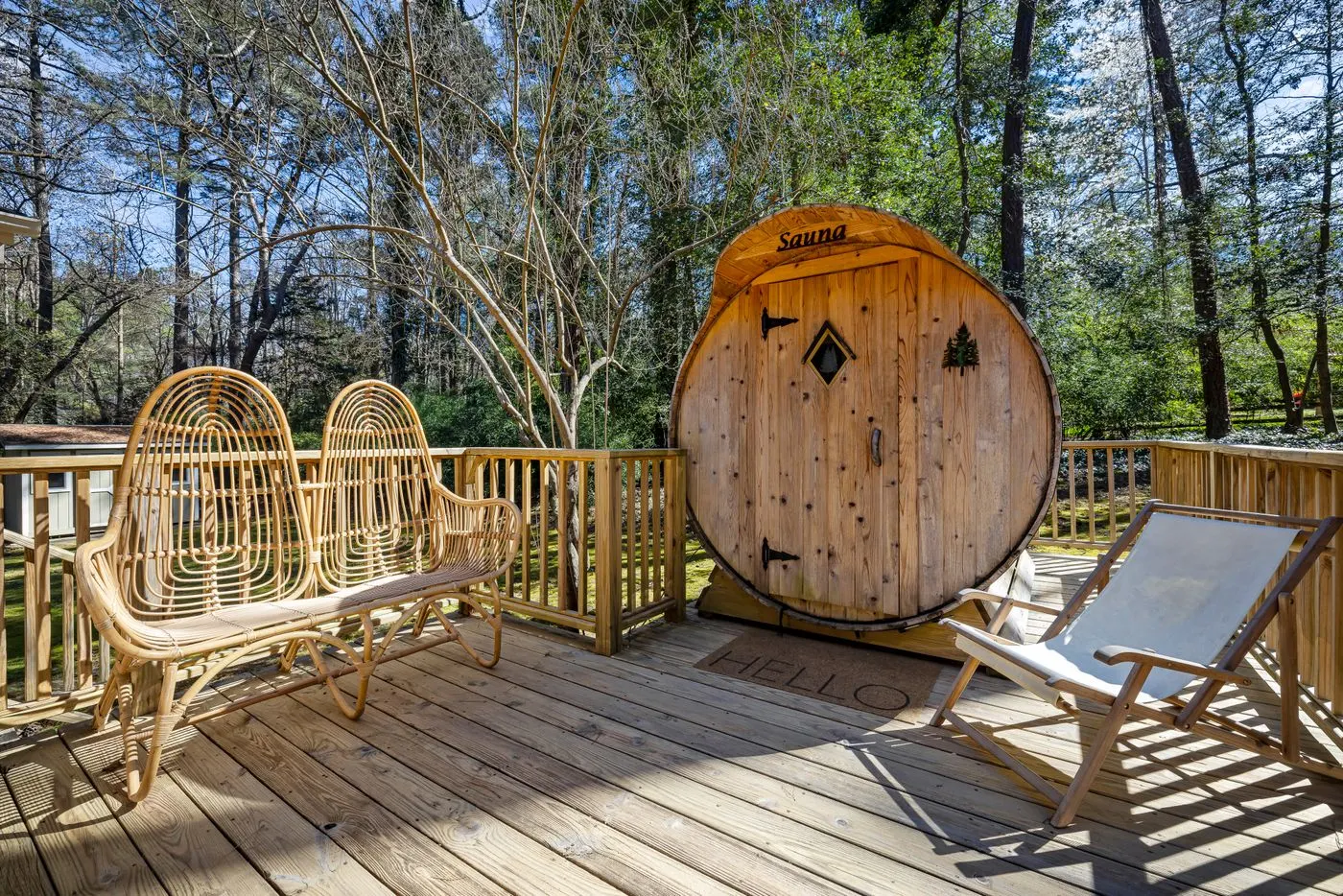
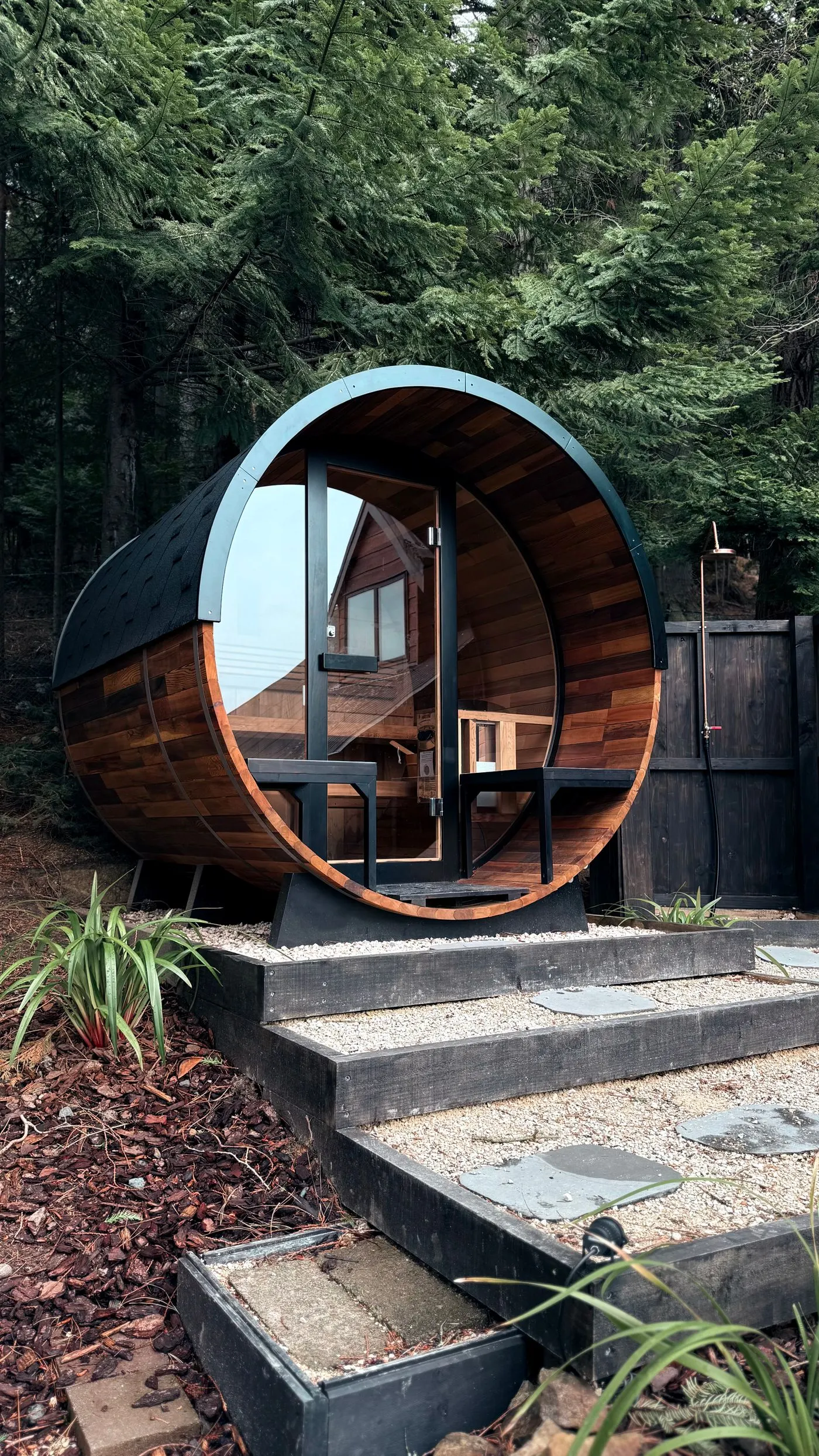
A gravel pad suits a barrel well — barrels are relatively light and don’t need a slab’s mass, so a properly built, well-draining pad is a common, practical, economical choice. Follow the manufacturer’s foundation guidance.
Common mistakes
- Over-building a slab for a light barrel that a gravel pad would suit.
- A slab with no frost design in a cold climate.
- A poorly compacted or under-drained gravel pad.
- Ignoring drainage around a solid slab.
- Choosing on cost alone without matching to the sauna’s weight and ground.
Next steps
Match the foundation to your sauna’s weight, your ground and your budget: a gravel pad for economy, drainage and lighter builds; a concrete slab for permanence, stability and heavier ones. Whichever you choose, mind frost and drainage — see choosing a foundation to weigh all the options.
Frequently asked questions
Is a gravel pad or concrete slab better for a sauna?
It depends on the sauna and site. A gravel pad is economical, drains well, is simpler to build, and handles frost gently, suiting lighter saunas like barrels and smaller cabins. A concrete slab is solid, permanent and level, giving maximum stability and a durable floor for heavier or larger builds, but costs more and needs frost-conscious design. Choose a gravel pad for economy, drainage and simplicity; a slab for permanence and stability.
Does a gravel pad drain better than a concrete slab?
Yes — a gravel pad's compacted stone lets water pass straight through into the ground, which is excellent for drainage and helps keep the sauna base dry. A concrete slab is solid, so surface water must be shed by grading and slope rather than draining through it. This natural drainage is one of the gravel pad's main advantages, especially where managing water and snowmelt around the sauna matters. A slab needs drainage designed around it.
How does each foundation handle frost in a cold climate?
A gravel pad drains water away and tends to move gently and evenly with the ground, which can reduce frost problems, though it must still be built properly on suitable, well-drained ground. A concrete slab is rigid, so it must be designed for frost — for example with adequate depth, drainage or frost-protection measures — or it can be affected by frost heave. Both require attention to frost; the gravel pad is more forgiving, the slab needs deliberate frost-conscious design. Follow local practice.
Is a gravel pad cheaper than a concrete slab?
Generally yes — a gravel pad uses less material and labour and is simpler to build, making it the more economical option, while a concrete slab costs more in materials, forming and work. This cost difference is a major reason gravel pads are popular for barrels and smaller saunas. That said, a slab's permanence, stability and solid floor can justify the extra cost for heavier or larger builds. Compare cost against what your sauna actually needs.
Which foundation is more durable, gravel or concrete?
A concrete slab is a solid, permanent, long-lasting platform that provides a durable floor and maximum stability, which is why it suits heavier and larger builds. A gravel pad is durable in its own way — a well-built, well-drained pad lasts and forgives ground movement — but it's a bed rather than a rigid platform. For sheer permanence and a solid floor, the slab wins; for a forgiving, drained, economical base, the gravel pad excels. Match durability to your needs.
Can a barrel sauna sit on a gravel pad?
Yes — a gravel pad is a common and suitable foundation for a barrel sauna and other lighter builds, providing a stable, well-draining base with cradles or supports as the design requires. Barrels are relatively light and don't need the mass of a slab, so a properly built gravel pad often suits them well and economically. Follow the sauna manufacturer's foundation guidance, but gravel is a popular, practical choice for barrels.