A glass-front sauna trades wall for glazing, giving a striking connection to the landscape, natural light and an open feel — but glass loses more heat than an insulated wall, so a large glass front lengthens warm-up and raises running cost, and it offers less privacy. A solid-wall sauna maximises heat retention, running efficiency and privacy, at the cost of the view and light. In a cold climate the choice is a real trade-off: glass for the winter-landscape experience, accepting the heat cost, or solid walls (perhaps with a modest window) for efficiency and privacy. Many people compromise with a well-placed window rather than a full glass wall.
Few sauna features are as striking — or as debated — as a glass front: a wall of window framing a winter landscape while you sit in the heat. Against it stands the solid, insulated wall: less romantic, but far better at holding heat and privacy. In a cold climate the choice is a genuine trade-off between experience and efficiency. This guide compares glass-front and solid-wall saunas.
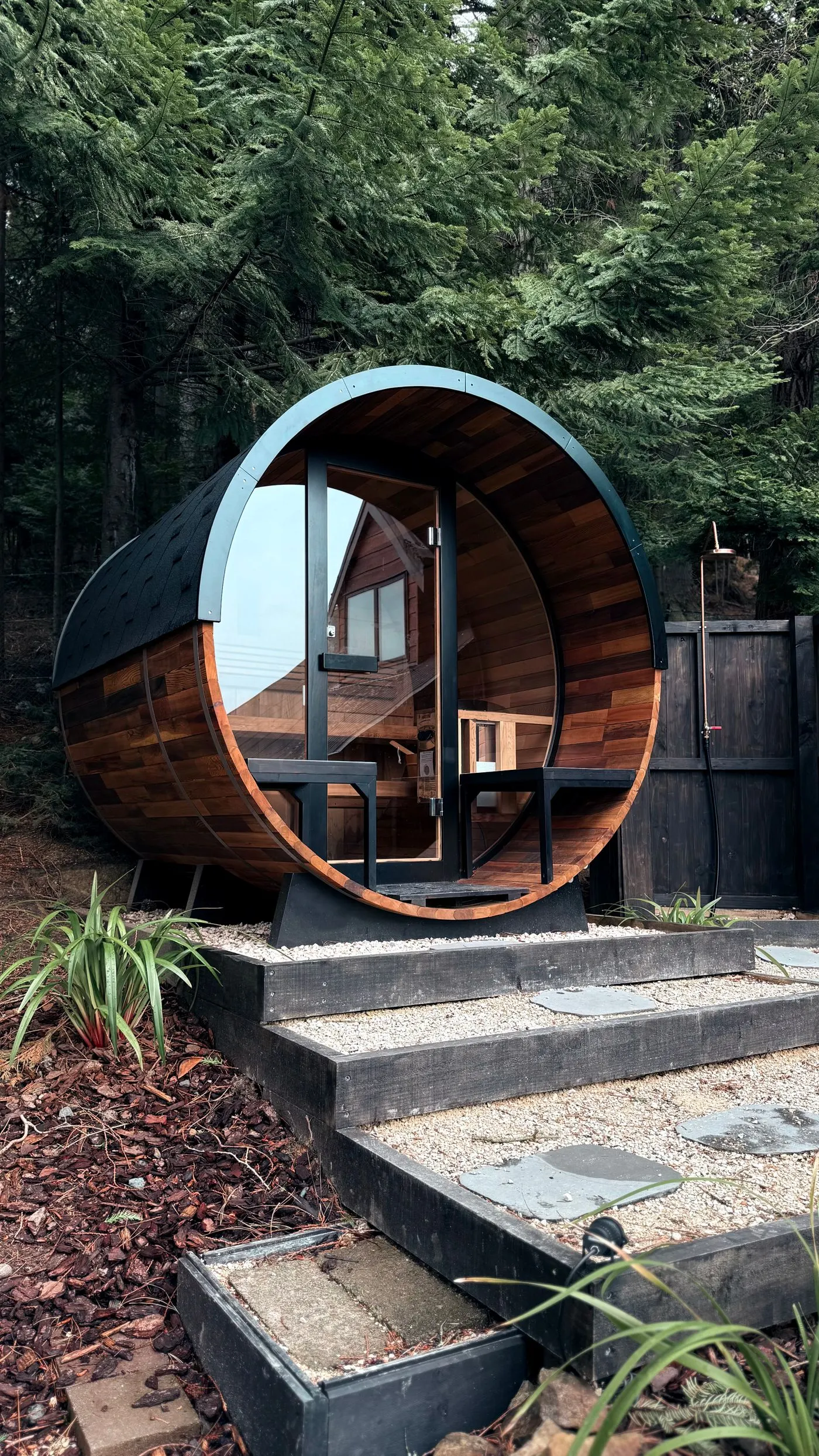
Glass front: view, light, openness
A glass-front sauna trades wall for glazing, giving:
- A striking connection to the landscape — wonderful onto a winter scene.
- Natural light and an open feel.
The trade-offs: glass loses more heat than an insulated wall, and it offers less privacy.
Solid wall: heat retention and privacy
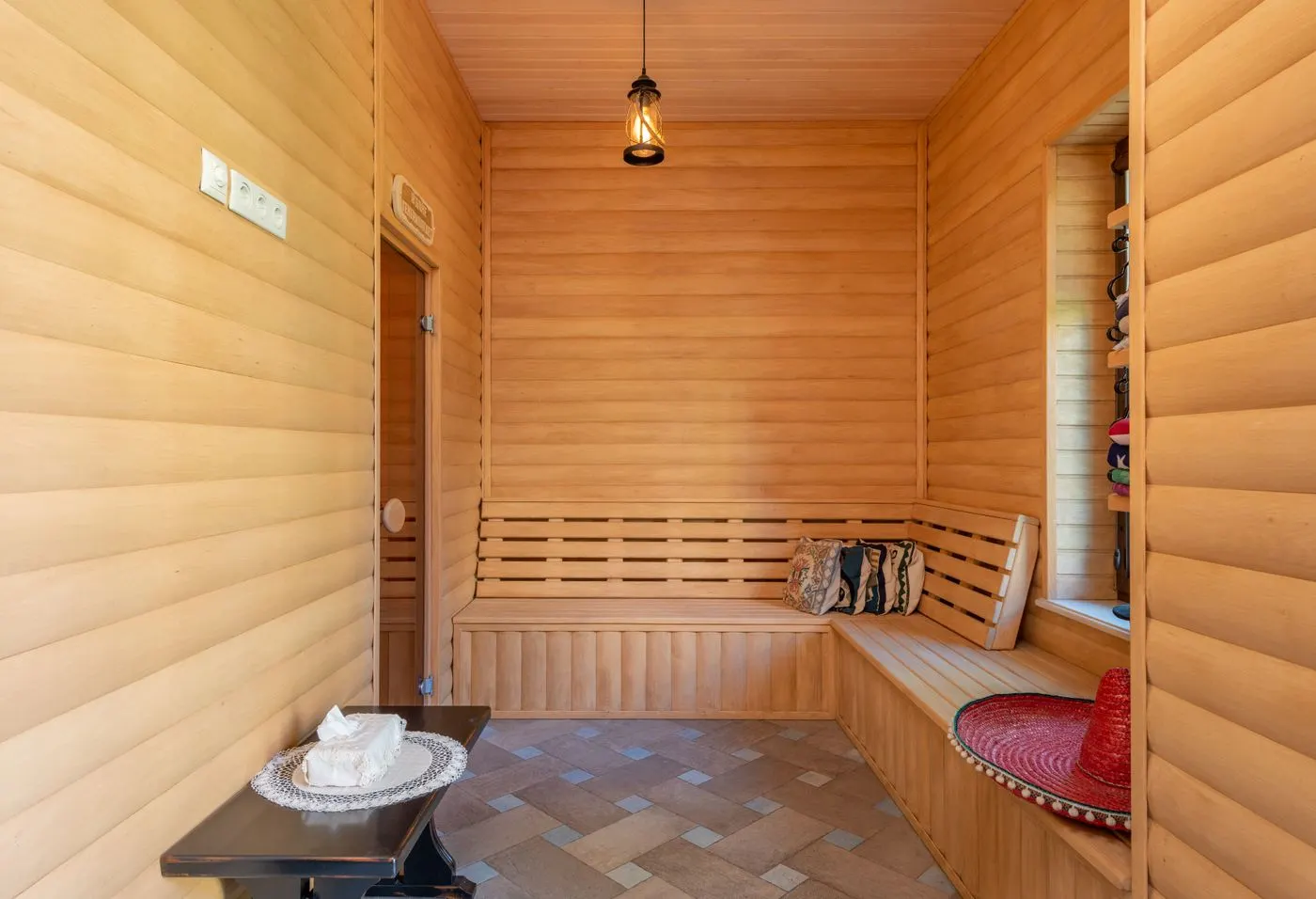
A solid-wall sauna maximises:
- Heat retention — faster warm-up, lower running cost.
- Efficiency in the cold.
- Privacy.
The trade-off: you lose the view, light and openness a glass front gives.
The core trade-off
| Glass front | Solid wall | |
|---|---|---|
| View & light | Excellent | Limited |
| Heat retention | Lower — glass loses heat | High |
| Warm-up & running cost | Longer / higher | Faster / lower |
| Privacy | Reduced | Good |
Because glass loses more heat than an insulated wall — even good glazing — a large glass front lengthens warm-up and raises running cost every session, which matters most in a cold climate.
Privacy and siting
A glass front means people can see in, so privacy depends on your site, neighbours and orientation. Siting the glass toward a private view — a lake, trees, open land — rather than toward neighbours helps a great deal. If privacy is a priority, solid walls or a smaller window suit better. Consider your site’s sightlines when deciding — see orientation and views.
Making glass work in the cold
Glass-front saunas do work in cold climates — the winter view is the appeal. To manage the trade-off:
- Use quality glazing suited to the heat (see doors and windows).
- Site the glass toward the view and away from the worst wind.
- Accept that a large glass front trades efficiency for experience.
The popular compromise: a well-placed window
Most people land in the middle: a well-placed window in an otherwise solid, insulated wall. It captures much of the view and light for far less heat loss and better privacy than a full glass front — a framed connection to the landscape while keeping most of the efficiency. Size and position it toward the view, away from wind and neighbours, and you get much of the best of both.
Common mistakes
- A full glass wall in a cold climate without weighing the heat cost.
- Facing glazing toward neighbours, sacrificing privacy.
- Ordinary glass rather than glazing suited to the sauna.
- Assuming solid walls mean no view — a window is the compromise.
- Ignoring wind exposure on a large glass front.
Next steps
Weigh view and light against heat retention and privacy for your site and climate. For maximum efficiency and privacy, solid walls (with perhaps a modest window) win; for the winter-landscape experience, a glass front delivers, at a heat cost. For most people, a well-placed window is the sweet spot — plan it with orientation and views and quality glazing.
Frequently asked questions
Is a glass-front sauna worth it?
It's worth it if the view and light matter more to you than maximum efficiency and privacy. A glass front gives a striking connection to the landscape, natural light and an open feel — wonderful onto a winter scene. The trade-offs are that glass loses more heat than an insulated wall, so warm-up and running cost rise, and privacy is reduced. Many people find a well-placed window a better compromise than a full glass wall, capturing much of the view for less heat cost.
Do glass-front saunas lose more heat?
Yes — even good glazing loses more heat than an insulated solid wall, so a large glass front lengthens warm-up and raises running cost every session, which matters most in a cold climate. This is the central trade-off of a glass-front sauna: you gain the view and light but pay in heat. Quality glazing suited to the sauna reduces the loss, but glass will always be less insulating than a solid, insulated wall. Weigh the view against the heat cost.
Are solid-wall saunas more efficient?
Generally yes — a solid, insulated wall retains heat far better than glazing, so a solid-wall sauna warms up faster and costs less to run, and it offers more privacy. This efficiency is the main advantage of solid walls, especially in a cold climate. The trade-off is the loss of the view, light and open feel a glass front gives. If running efficiency and privacy are priorities, solid walls win; if the landscape connection matters most, glazing does.
Can a glass-front sauna work in a cold climate?
Yes — glass-front saunas are used in cold climates and the winter-landscape view is a big part of their appeal. But it's a genuine trade-off: the glazing costs heat, so warm-up is longer and running cost higher than a solid-wall sauna. Using quality glazing suited to the heat, and siting the glass toward the view and away from the worst wind, helps. Just go in knowing a large glass front trades efficiency for the experience.
Do glass-front saunas offer less privacy?
Yes — a glass front means people can see in, so privacy is reduced compared with solid walls, which matters depending on your site, neighbours and how the sauna faces. Siting the glass toward a private view (a lake, trees, open land) rather than toward neighbours helps a lot. If privacy is a priority, solid walls or a smaller, well-placed window suit better than a full glass front. Consider your site's sightlines when deciding.
What's a good compromise between glass and solid walls?
A well-placed window in an otherwise solid, insulated wall is the popular middle ground — it captures much of the view and light for far less heat loss and better privacy than a full glass front. You get a framed connection to the landscape while keeping most of the efficiency and privacy of solid walls. Size and position the window toward the view and away from wind and neighbours, and you get much of the best of both.