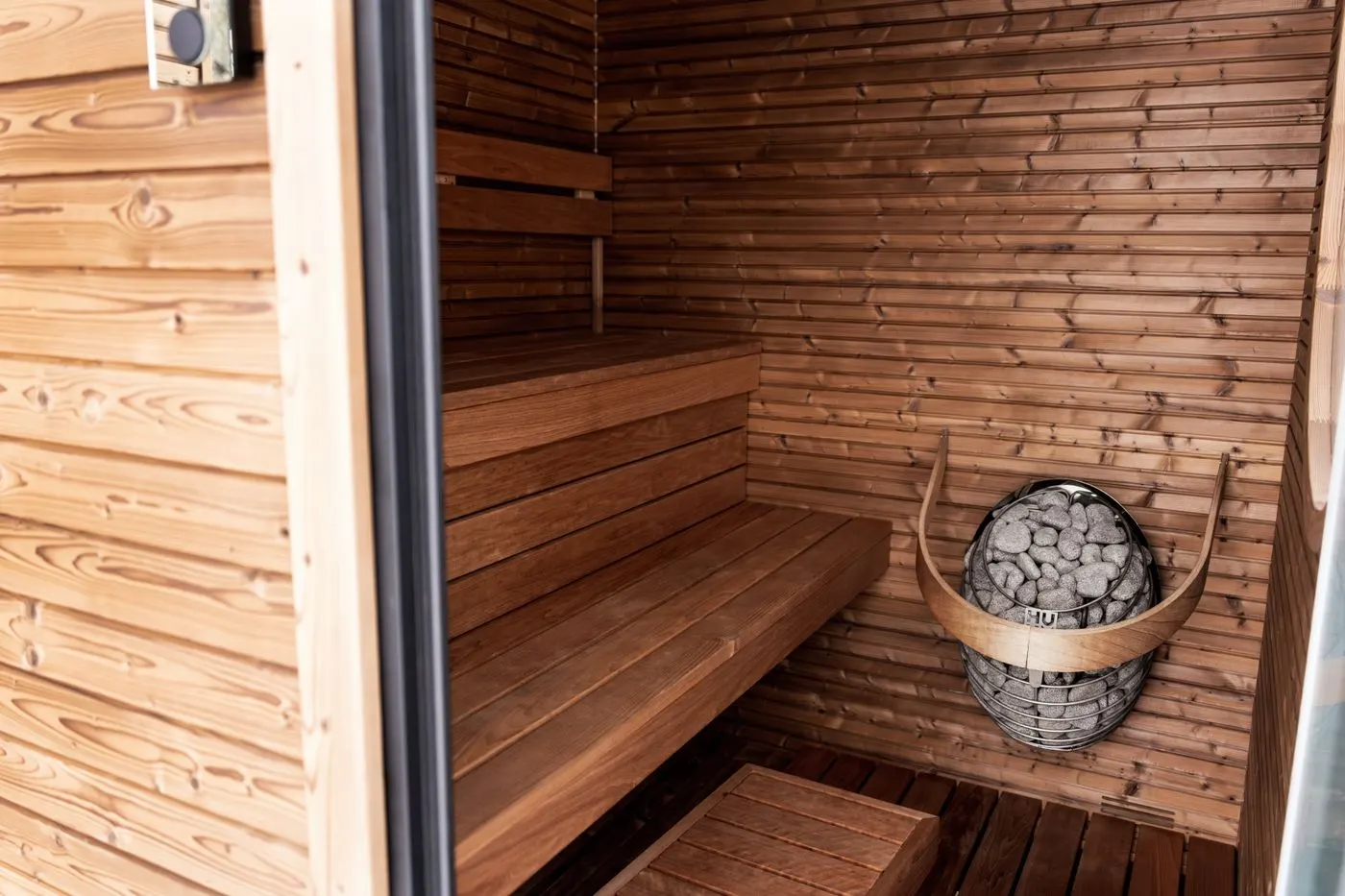
Sauna exhaust vents can be placed high on a wall or in the ceiling, and both are used — the key is that the exhaust sits high, opposite the low fresh-air intake, so warm, stale, moist air is drawn up and out. A high wall vent is the common arrangement and is easy to make adjustable; a ceiling vent draws from the very top of the room. Which suits your sauna depends on the heater and room design, so the heater manufacturer's ventilation guidance should decide it. What matters most isn't wall versus ceiling but that the exhaust is high, opposite the intake, adjustable, and used correctly through a session.
When planning sauna ventilation, a common question is where the exhaust should go — high on the wall, or up in the ceiling? Both are used, and people often overthink it. The truth is that the exact position matters less than the principle: the exhaust needs to be high, opposite the low intake, and adjustable. This guide compares ceiling and wall vents and explains what really decides it.
Both work — the exhaust just needs to be high
Whether high on a wall or in the ceiling, the exhaust does the same job: it draws warm, stale, moist air up and out, while cool fresh air enters low near the heater. Because warm air rises, a high exhaust captures it; a low one would leave stale air trapped at the top. So the non-negotiable is that the exhaust is high — see the air circulation principle.
High wall vent vs ceiling vent
| High wall vent | Ceiling vent | |
|---|---|---|
| Position | Near the top of a wall | In the ceiling |
| Draws from | High on the wall, opposite intake | The very top of the room |
| Common? | The common arrangement | Also used |
| Adjustable | Easy to make adjustable | Depends on design |
A high wall vent is the common arrangement — easy to place opposite the low intake and to make adjustable. A ceiling vent draws from the very top of the room. Both remove warm, stale, moist air; they differ in where they draw from and how they suit the room’s shape.
What actually decides it
Don’t overthink wall vs ceiling
What matters most isn’t wall versus ceiling — it’s that the exhaust is:
- High in the room.
- Opposite the low intake.
- Adjustable.
- Used correctly through the session (closed to warm up, open to bathe, fully open to dry).
Get those right, and either position works. Fixating on wall versus ceiling misses the point — see common ventilation mistakes.
Changing an existing vent
Any change to a sauna’s ventilation should follow the heater manufacturer’s guidance and sound building practice — vent position, size, and the vapour barrier and insulation around it all matter. Adding or moving a vent isn’t just cutting a hole; it must maintain the wall or ceiling assembly’s moisture control. If your ventilation is poor, first check the existing layout and habits; if a change is needed, plan it properly.
Common mistakes
- Placing the exhaust low — it must be high to work.
- Obsessing over wall vs ceiling instead of the high/opposite/adjustable principle.
- A fixed vent with no adjustability.
- Cutting a new vent without maintaining the vapour barrier and insulation.
- Ignoring the heater’s guidance on vent position.
Next steps
Whether high on a wall or in the ceiling, put the exhaust high, opposite the intake, and adjustable, per your heater’s guidance — and use it correctly through the session. That principle, not the wall-versus-ceiling detail, is what makes a sauna fresh, even and dry.
Frequently asked questions
Should a sauna exhaust vent go in the wall or ceiling?
Both are used, and the right choice depends on your heater and room design, so the heater manufacturer's ventilation guidance should decide it. The key principle either way is that the exhaust sits high — high on a wall or in the ceiling — opposite the low fresh-air intake, so warm, stale, moist air is drawn up and out. A high wall vent is the common, easily adjustable arrangement; a ceiling vent draws from the very top. What matters most is a high, opposite, adjustable exhaust, not wall versus ceiling specifically.
What's the difference between a ceiling vent and a high wall vent?
A high wall vent sits near the top of a wall, opposite the intake, and is the common arrangement — easy to make adjustable and to place opposite the low intake for good cross-circulation. A ceiling vent draws air from the very top of the room, the hottest, highest point. Both remove warm, stale, moist air; they differ in exactly where they draw from and how they suit the room's shape and the heater. The heater manufacturer's guidance indicates which suits a given sauna.
Does it matter whether the sauna vent is in the ceiling or wall?
Less than people think — what matters most is that the exhaust is high, opposite the low intake, adjustable, and used correctly through the session, rather than whether it's technically in the wall or ceiling. Both positions can work well when they follow this principle and the heater manufacturer's guidance. So rather than fixating on wall versus ceiling, focus on getting a high, well-placed, adjustable exhaust opposite the intake. The correct position for your specific sauna comes from the heater's ventilation guidance.
Why does the sauna exhaust go high?
Because warm, stale, moist air rises, so a high exhaust — whether high on a wall or in the ceiling — draws that air up and out, while cool fresh air enters low near the heater. This high-exhaust, low-intake arrangement sets up the circulation that keeps the sauna fresh and clears moisture. Placing the exhaust high is fundamental; placing it low would leave the warm, stale air trapped at the top. Whether it's a high wall vent or a ceiling vent, the exhaust needs to be high to work.
Is a ceiling vent better for a sauna?
Not necessarily better — a ceiling vent draws from the very top of the room, which suits some designs, but a high wall vent is common, effective and easy to make adjustable. Neither is universally better; the right choice depends on the heater and room, per the manufacturer's guidance. Both remove warm, stale, moist air when placed high and opposite the intake. So a ceiling vent is a valid option, not an automatic upgrade — choose based on your sauna's design and the heater guidance, not a blanket rule.
Can I add a ceiling vent to an existing sauna?
Possibly, but any change to a sauna's ventilation should follow the heater manufacturer's guidance and sound building practice, since vent position, size and the vapour barrier and insulation around it all matter. Adding or moving a vent isn't just cutting a hole — it must maintain the wall or ceiling assembly's moisture control and suit the airflow design. If your ventilation is poor, first check the existing layout and habits. If a change is needed, plan it properly per the guidance rather than improvising. See our guide on fixing poor ventilation.