Adjustable vents — usually a slider or cover on the exhaust — let you tune the sauna through a session: close during warm-up to reach temperature, open while bathing for fresh air, and open fully after use to dry the room. A door undercut or small gap can provide or supplement air movement, and the door itself becomes a big adjustable vent when propped open to dry the sauna after use. Together, these controls are how you balance heat against moisture without any mechanical parts.
Sauna ventilation isn’t just about where the vents are — it’s about the small controls that let you tune the room through a session. An adjustable vent on the exhaust, and the gap under the door, are how you balance heat against moisture with no mechanical parts at all. Learn to work them and the same sauna warms faster, feels fresher, and dries better. This guide covers the controls.
The adjustable vent: your tuning dial
An adjustable vent — usually a slider or cover on the exhaust — lets you control airflow through the session:
| Phase | Adjustable exhaust | Why |
|---|---|---|
| Warm-up | Mostly closed | Reach temperature, hold heat |
| Bathing | Open | Fresh air, even heat |
| After use | Fully open (door propped) | Dry the sauna |
This adjustability is the control — it’s why the exhaust should be adjustable, and why you manage it through the session rather than setting and forgetting it.
The door undercut
A door undercut is a small gap under (or a vent near) the door that allows some air movement. In some layouts it provides or supplements the fresh-air path or helps circulation; in others, dedicated intake and exhaust vents do the work and the door seals.
Whether you need one depends on the design and heater manufacturer’s guidance — so follow that. In a cold climate, an oversized gap can leak warm air during warm-up, so it’s sized deliberately.
The door as your biggest vent
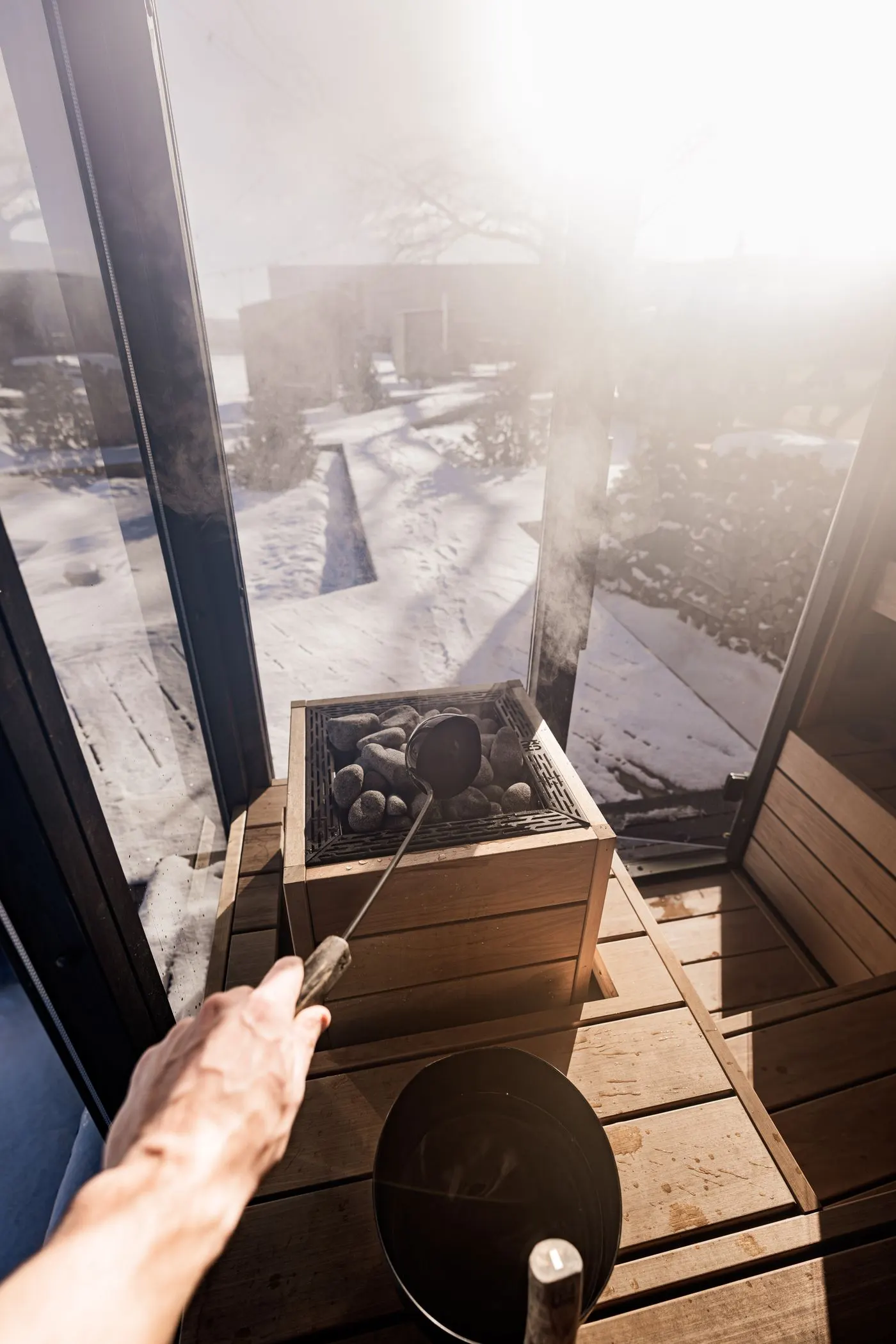
Separately from any undercut, the door itself is a large adjustable vent — the most powerful airflow you have. Prop it wide open after use, with the exhaust fully open, and it gives the strongest possible airflow to dry the sauna. This is central to the after-use routine.
During a session, though, you keep the door closed to hold heat and rely on the intake and adjustable exhaust. The door is a drying vent afterward, not something you leave open while bathing.
Using the controls together
A full session, run through the controls:
- Warm-up: door closed, exhaust closed — hold heat, reach temperature.
- Bathing: door closed, exhaust open — fresh, even air.
- After use: door propped wide, exhaust fully open — dry the room with residual heat.
No fan, no complexity — just the passive controls, worked through the session.
Common mistakes
- Leaving the exhaust open during warm-up, wasting heat.
- An oversized door gap leaking heat in a cold climate.
- Never propping the door after use to dry.
- Leaving the door open while bathing, losing heat.
- Treating vents as set-and-forget instead of tuning them.
Next steps
Learn the controls: close the adjustable exhaust to warm up, open it to bathe, and prop the door wide with the exhaust fully open to dry after use. Size any door undercut per your heater’s guidance. Master these small adjustments and the same sauna works noticeably better.
Frequently asked questions
What does an adjustable vent do in a sauna?
It lets you control airflow through the session. Usually a slider or cover on the exhaust, an adjustable vent is closed during warm-up to reach temperature and hold heat, opened while bathing for fresh air and even heat, and opened fully after use to dry the sauna. This adjustability is the control that balances heat against moisture, which is why the exhaust in particular should be adjustable.
What is a door undercut in a sauna?
A door undercut is a small gap left under (or a vent near) the door that allows some air movement. In some layouts it provides or supplements the fresh-air path or helps circulation. Its role depends on the design and heater guidance. Separately, the door itself acts as a large adjustable vent when you prop it open to dry the sauna after use — the most powerful airflow you have.
How do I use adjustable sauna vents through a session?
In phases: keep the exhaust mostly closed during warm-up to reach temperature and hold heat; open it while bathing for fresh air and even heat; and open it fully, with the door propped, after use to dry the sauna with the residual heat. Managing the adjustable exhaust like this — rather than setting it and forgetting it — is how you keep heat when you want it and clear moisture when you don't.
Should the door have a gap for ventilation?
Some sauna designs include a small door gap or undercut to allow air movement, while others rely on dedicated intake and exhaust vents. Whether you need one depends on the layout and the heater manufacturer's ventilation guidance, so follow that. Regardless, propping the door open after use is a key part of drying the sauna — the door is your biggest adjustable vent when you want maximum airflow.
Can I use the door to ventilate the sauna?
For drying, absolutely — propping the door wide open after use, with the exhaust fully open, gives the strongest airflow to dry the room, and it's central to the after-use routine. During a session, though, you keep the door closed to hold heat and rely on the intake and adjustable exhaust. So the door is a powerful drying vent afterward, not something you leave open while bathing.
Why won't my sauna hold heat during warm-up?
Often the adjustable exhaust is left open, or a door gap is letting too much warm air escape while you're trying to reach temperature. Close the exhaust during warm-up to hold heat, and check that any door undercut isn't oversized for your climate. Use the adjustable vents to hold heat when warming up, then open them while bathing — that's what the controls are for.