Deck blocks (precast concrete pier blocks) are a quick, inexpensive surface-laid support sometimes used for light structures, and they can work for a light sauna such as a small barrel or pod on stable, well-drained ground. But because they typically sit on or near the surface rather than below the frost line, they can be vulnerable to frost heave in a cold climate, where freezing ground lifts and shifts them. For frost-prone ground, heavier saunas, or where stability matters, a foundation that resists frost — such as screw piles or piers below the frost line, or a well-drained gravel pad — is the safer choice. Assess your ground and frost honestly, and follow local practice.
Deck blocks — those precast concrete pier blocks you see under decks and sheds — are quick, cheap and tempting as a sauna base. And for a light sauna on good ground, they can work. But there’s a catch that matters a great deal in a Canadian winter: they sit on the surface, not below the frost line — which makes them vulnerable to frost heave. This guide covers when deck blocks are OK for a sauna, and when to choose something sturdier.
What deck blocks are
Deck blocks are precast concrete pier blocks, often shaped to hold a post or beam, used as a quick, inexpensive, surface-laid support for light structures. They:
- Sit on prepared ground rather than being set deep.
- Are fast and cheap — no digging or driving.
- Don’t go below the frost line the way driven or dug foundations do.
That last point is the crux.
The frost catch
When deck blocks can work
Deck blocks are most defensible for:
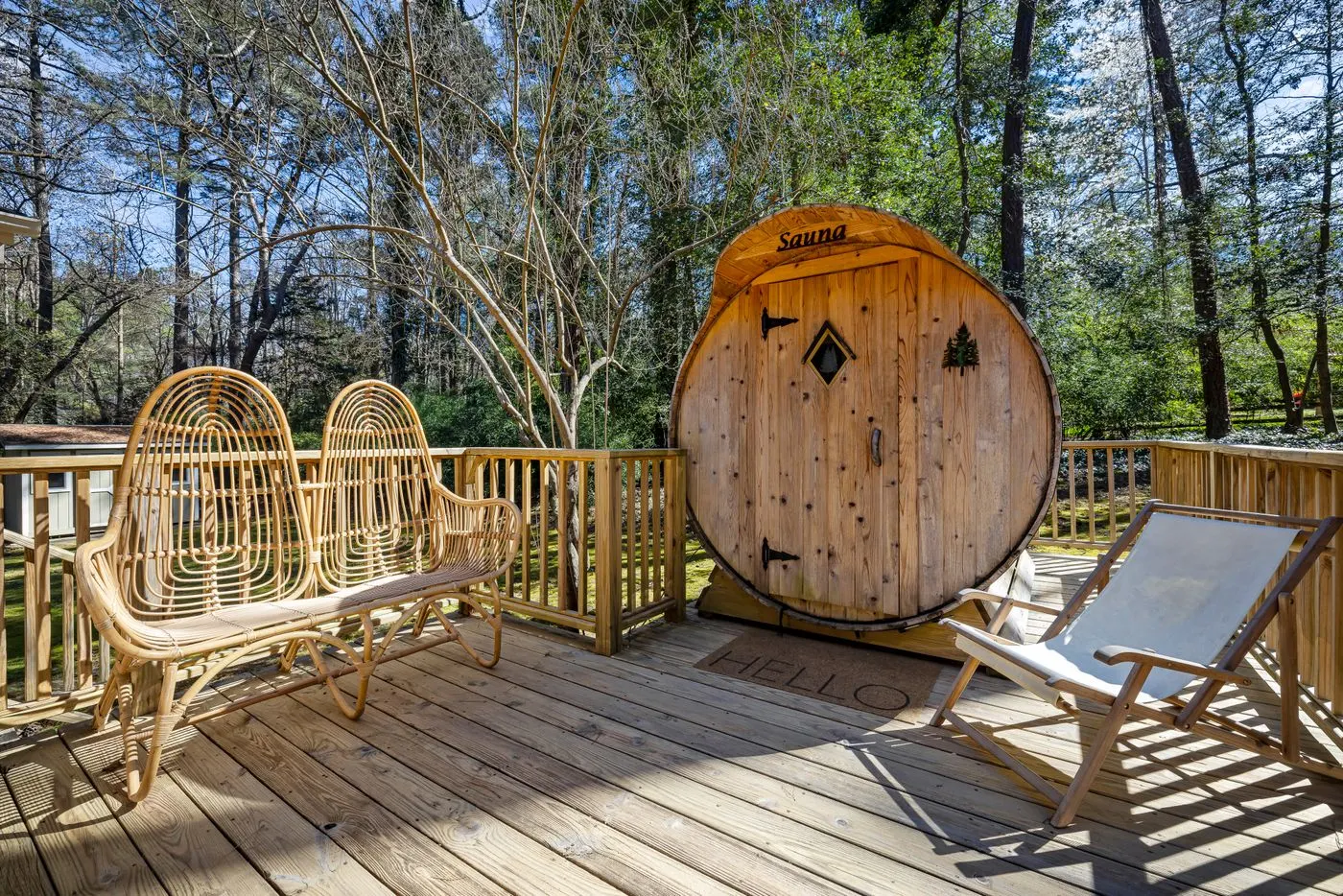
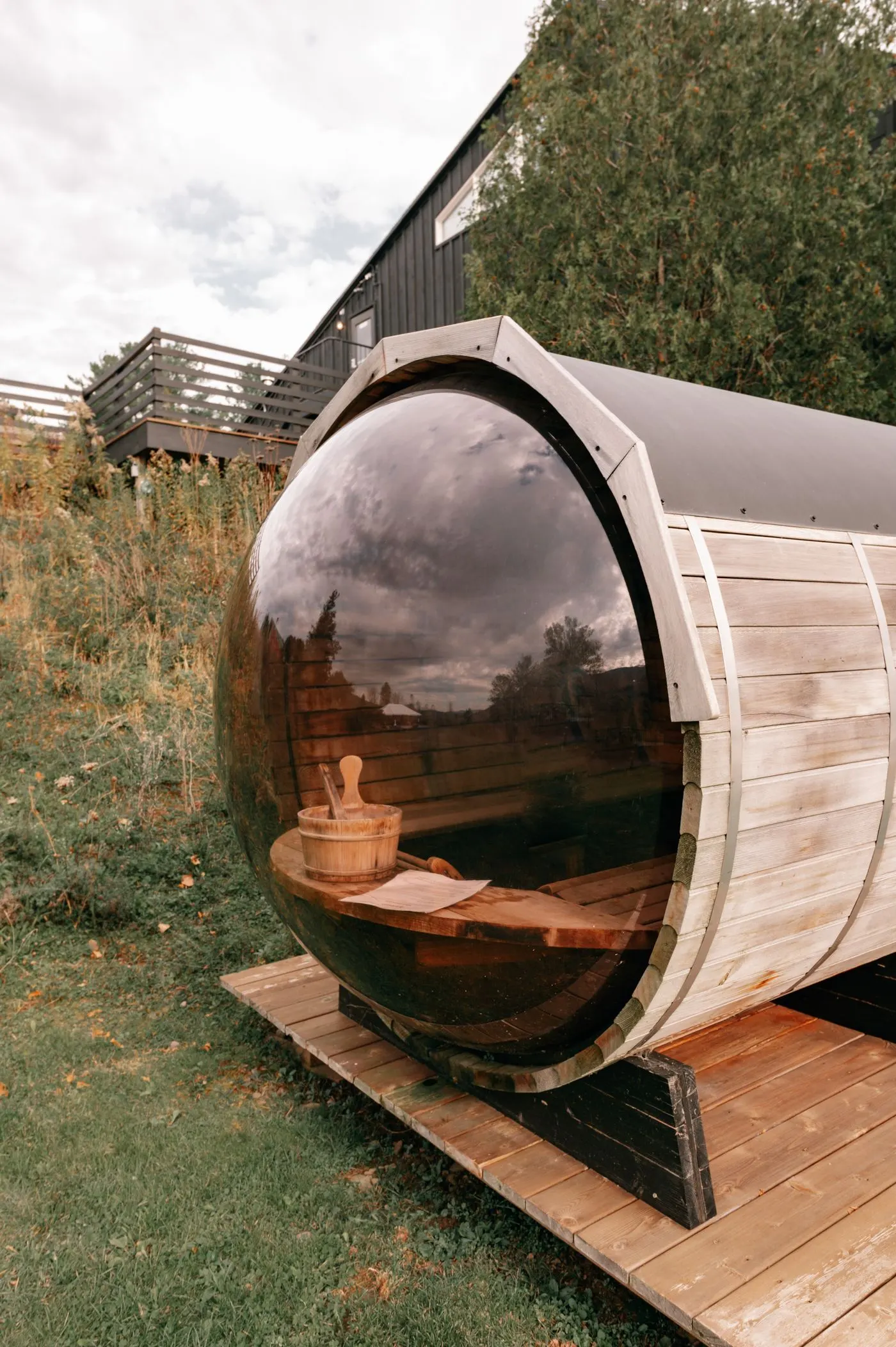
- A light sauna — a small barrel or pod.
- Stable, well-drained ground that isn’t badly frost-prone.
- When you want a quick, inexpensive base and accept some risk of movement.
Even then, good drainage and a prepared base under them help. Match the foundation to the sauna’s weight — deck blocks suit light builds on good ground.
When to choose something sturdier
For frost-prone ground, heavier saunas, or reliable long-term stability, choose a frost-resisting foundation:
| Alternative | How it resists frost |
|---|---|
| Screw piles / piers | Set below the frost line (depth) |
| Gravel pad | Drains and moves evenly (drainage) |
These are designed to cope with a cold climate’s freezing ground in ways surface-laid deck blocks aren’t — see choosing a foundation.
Assess honestly
The deck-block decision comes down to an honest assessment:
- Is the sauna light?
- Is the ground stable, well-drained and not badly frost-prone?
- Are you OK with some risk of movement?
If yes to all, deck blocks may suit a budget light build. If no to any, choose a frost-resisting foundation — and follow local practice either way.
Common mistakes
- Using deck blocks on frost-prone ground.
- Putting a heavy sauna on surface-laid blocks.
- Ignoring drainage under the blocks.
- Expecting frost resistance from a surface support.
- Choosing on price alone over your ground’s needs.
Next steps
Reserve deck blocks for a light sauna on stable, well-drained, not-badly-frost-prone ground — with good drainage and a prepared base. For frost-prone ground, heavier builds, or long-term stability, choose screw piles, piers or a gravel pad instead. Assess your ground and frost honestly, and see choosing a foundation to pick the right base.
Frequently asked questions
Can you use deck blocks for a sauna foundation?
They can work for a light sauna such as a small barrel or pod on stable, well-drained ground — deck blocks (precast concrete pier blocks) are a quick, inexpensive surface-laid support. But because they typically sit on or near the surface rather than below the frost line, they can be vulnerable to frost heave in a cold climate, where freezing ground lifts and shifts them. So they suit light saunas on suitable ground, but for frost-prone ground, heavier builds or where stability matters, a frost-resisting foundation is safer. Assess your ground and frost honestly. See our frost heave guide.
What are deck blocks?
Deck blocks are precast concrete pier blocks, often shaped to hold a post or beam, used as a quick, inexpensive, surface-laid support for light structures like decks and sheds. They sit on prepared ground rather than being set deep, which makes them fast and cheap but also means they don't go below the frost line the way driven or dug foundations do. For a sauna, they can support a light build on stable, well-drained ground, but their surface-laid nature makes them vulnerable to frost heave in a cold climate. See our foundation depth guide.
Do deck blocks work with frost in a cold climate?
That's their main limitation — because deck blocks typically sit on or near the surface rather than below the frost line, freezing ground can heave and shift them in a cold climate, moving the sauna and affecting its level. On frost-prone ground, this makes them a risky choice. A well-drained base under them helps, but they don't resist frost the way screw piles or piers below the frost line do. So on frost-prone ground, a frost-resisting foundation is safer than deck blocks. See our guides on frost heave and foundation depth.
Are deck blocks strong enough for a sauna?
For a light sauna such as a small barrel or pod on stable ground, deck blocks may provide adequate support, but for heavier or larger saunas, or where the ground is difficult, they're generally not the best choice — a purpose-built foundation designed for the load and ground is more appropriate. Match the foundation to the sauna's weight: deck blocks suit light builds on good ground, while heavier saunas need something more substantial. Combined with their frost vulnerability, this makes deck blocks a limited-use option best reserved for light saunas on suitable ground.
What's a better alternative to deck blocks for a sauna?
For frost-prone ground, heavier saunas, or where stability matters, better alternatives include screw piles or concrete piers taken below the frost line, which resist frost heave, or a well-drained gravel pad, which handles frost by draining and moving evenly. These are designed to cope with a cold climate's freezing ground in ways surface-laid deck blocks aren't. So while deck blocks can suit a light sauna on stable ground, a frost-resisting foundation is the safer, more durable choice for most cold-climate saunas. See our foundation comparison guides.
When are deck blocks OK for a sauna?
Deck blocks are most defensible for a light sauna, such as a small barrel or pod, on stable, well-drained ground that isn't badly frost-prone, where you want a quick, inexpensive base and accept some risk of movement. Even then, good drainage and a prepared base under them help. For frost-prone ground, heavier builds, or where you want reliable long-term stability, choose a frost-resisting foundation instead. So they're a budget option for light saunas on good ground, not a universal solution. Assess your specific ground and frost, and follow local practice. See our best-foundation guide.