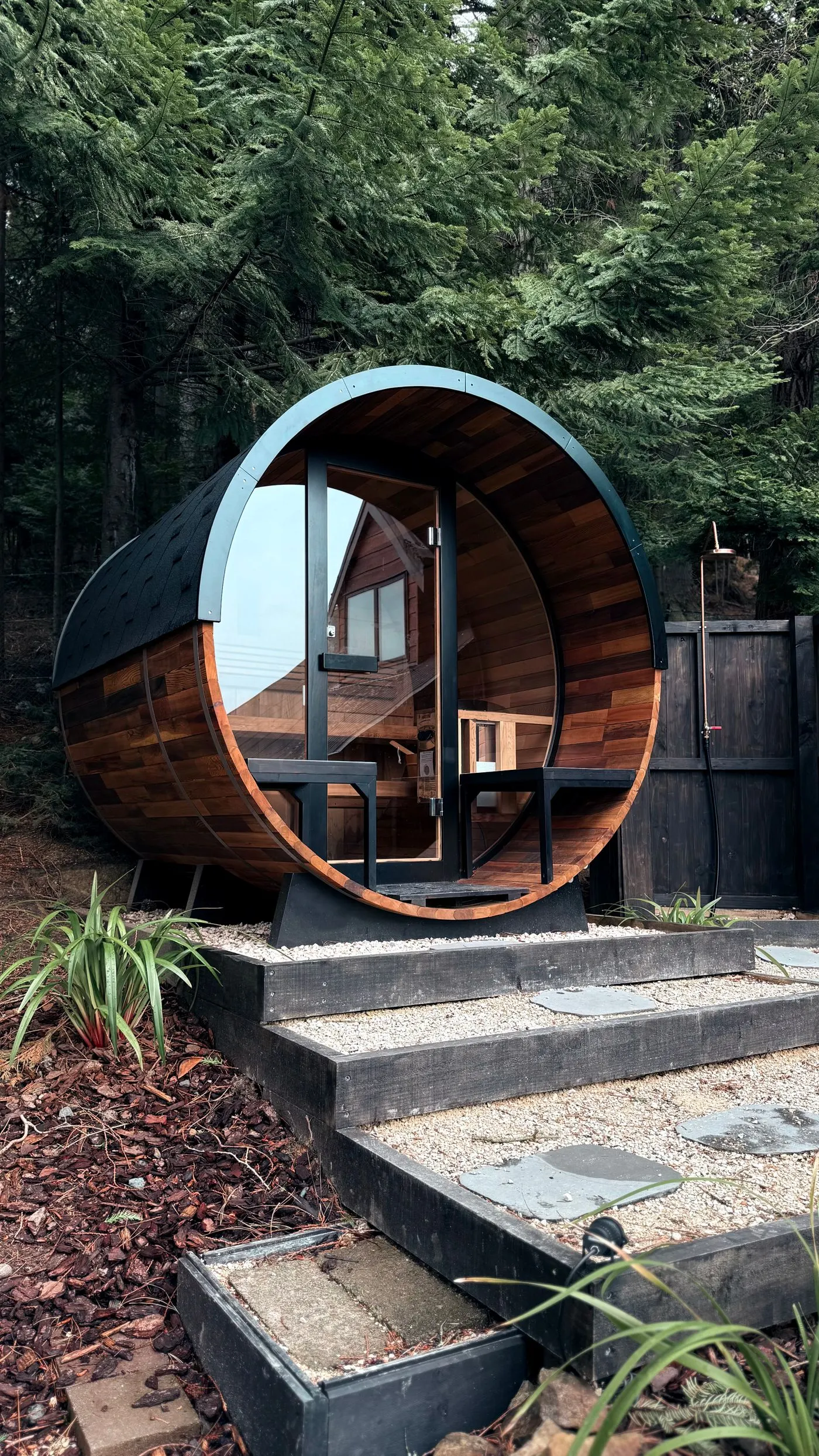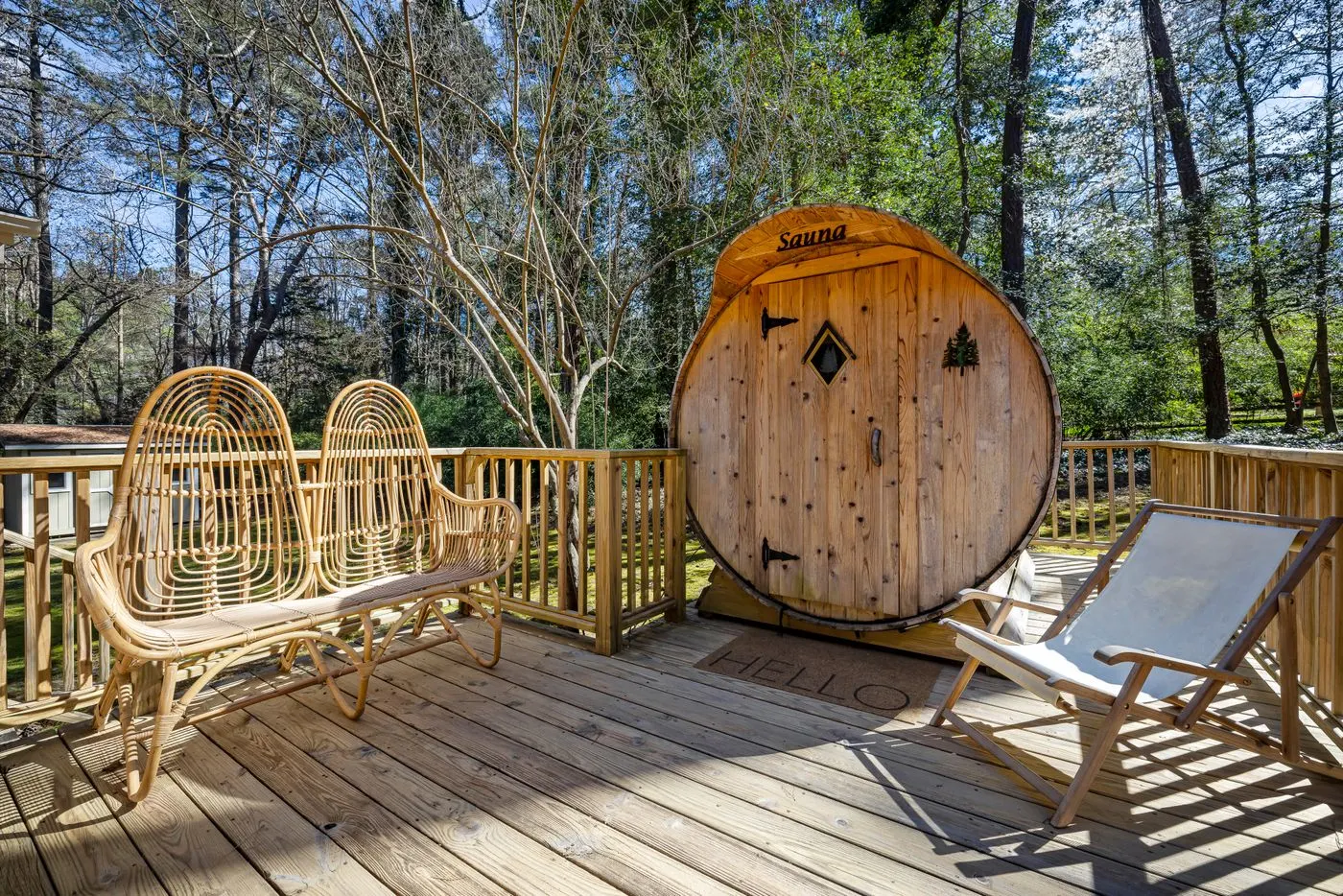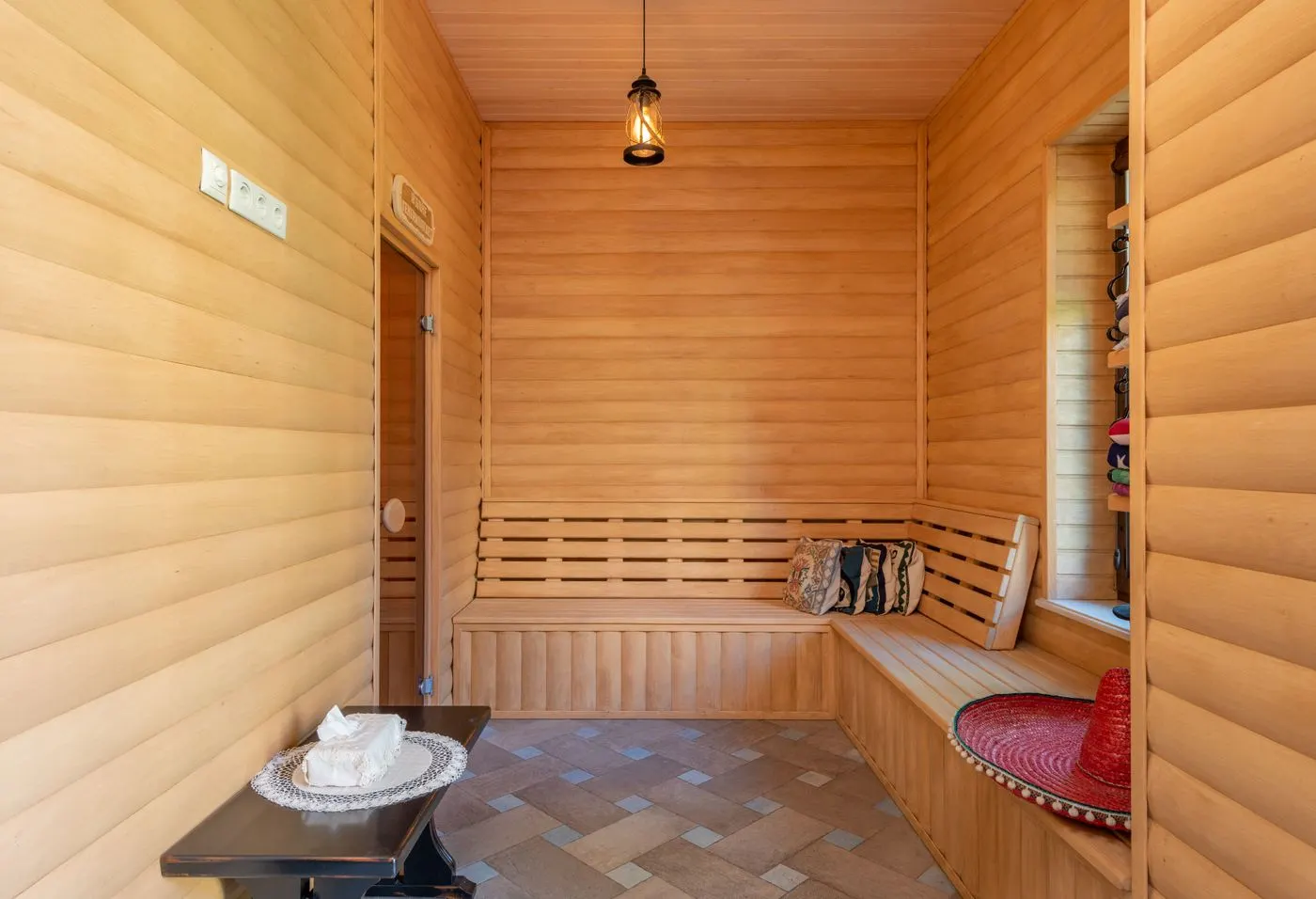
Choose cedar for a warm colour, a strong classic aroma and natural durability, at a higher price. Choose hemlock for a pale, smooth, nearly odourless interior at a lower cost. Both are low-resin, stay comfortable to touch when hot, and perform well in a sauna — the decision is mostly about aroma, colour and budget rather than performance.
Cedar and hemlock are the two woods most people weigh up when lining an outdoor sauna. Both are proper sauna woods — low-resin, stable and comfortable to touch when hot — so you can’t really go wrong on performance. The choice is about the things you notice every session: aroma, colour, and cost.
The short comparison
| Factor | Cedar | Hemlock |
|---|---|---|
| Aroma | Strong, classic, mellows over time | Very mild / nearly odourless |
| Colour | Warm red-brown (western) to tan | Pale, even, light |
| Durability | Naturally durable, rot-resistant | Stable and durable when dry |
| Heat feel | Cool to touch, low resin | Cool to touch, smooth |
| Cost | Higher (premium) | Lower (value) |
| Best for | Aroma and warm looks | Neutral, budget-friendly rooms |
Cedar
Cedar — western red cedar especially — is the premium choice. Its aroma is the classic sauna scent, its colour is a warm red-brown that ages beautifully, and it’s naturally durable and rot-resistant. Eastern white cedar, common in Canada, offers similar durability with a milder scent, often more knots, and usually a lower price than western red. If the smell and the warm, characterful look are what you want, cedar delivers — at a cost.
The one caveat is that aroma: some find fresh cedar strong. It mellows over months of use, but if you’re sensitive to scent, factor that in.
Hemlock
Hemlock is the value favourite. It’s pale, smooth and nearly odourless, giving a clean, bright, neutral interior that lets the experience — not the wood’s scent — take centre stage. It’s stable, comfortable to touch, and noticeably more affordable than cedar, which is why it’s so widely used in kit and custom saunas alike. What it lacks is cedar’s inherent aroma and rich colour; whether that’s a downside depends entirely on your taste.
How to choose
Ask yourself three questions:
- Do you want a scented room or a neutral one? Cedar for aroma, hemlock for near-odourless.
- Warm tones or pale and bright? Cedar for warmth, hemlock for a light, clean look.
- How does the budget sit? Hemlock stretches it further; cedar is the premium.
There’s no wrong answer — both make excellent saunas.
You don't have to pick just one
A common approach is cedar (or another aromatic wood) on the walls and a cool, neutral wood like aspen or hemlock for the benches. Mixing lets you place the aroma and colour where you want them and manage cost.
What matters more than the species
Whichever you choose, the wood only performs if the wall behind it is right. Insulation and a sealed vapour barrier keep moisture out of the structure and the wood dry; good ventilation and after-use drying keep it that way. Great wood over a damp, uninsulated wall will still go dark and musty. See outdoor sauna insulation and best wood for a sauna for the wider picture.
Common mistakes
- Choosing on looks alone without considering aroma preference.
- Assuming hemlock is inferior — it’s an excellent, comfortable sauna wood.
- Great wood over a bad wall. Insulation and vapour control come first.
- Using the wrong finish. The hot room uses bare or sauna-appropriate treatment, not ordinary varnish.
Next steps
For the full range of interior woods — including spruce, aspen and thermowood — see best wood for a sauna. And whatever you line it with, get the insulation and ventilation right so the wood stays beautiful for years.
Frequently asked questions
Is cedar or hemlock better for a sauna?
Neither is simply better — they suit different tastes. Cedar gives a strong aroma, warm colour and natural durability at a premium price; hemlock is pale, smooth and almost odourless for less money. Both stay cool to the touch and perform well, so it comes down to scent, look and budget.
Does cedar smell too strong for a sauna?
Some people love cedar's aroma and others find it strong, especially when new; it mellows over time. If you prefer a neutral, scent-free room — or you're sensitive to aromas — hemlock or aspen is a better fit. It's a matter of personal preference.
Is hemlock durable in a sauna?
Yes. Hemlock is a stable, smooth, low-resin wood that performs well in a sauna interior when the wall behind it is properly insulated and vapour-controlled. Cedar has a natural edge in inherent durability and rot resistance, but both last well in a correctly built, well-dried sauna.
Which is more expensive, cedar or hemlock?
Cedar is generally the more expensive, particularly western red cedar, reflecting its aroma and durability. Hemlock is a popular value choice that gives a clean, comfortable interior for less. Your total also depends on how much wood the sauna needs and the grade you choose.
Can you mix cedar and hemlock?
Yes. Mixing woods is common — for example cedar walls with cool-to-touch aspen or hemlock benches. You can use cedar where you want the aroma and colour, and a paler, neutral wood elsewhere, to balance look, feel and cost.
Do both stay cool to the touch?
Both are low-density, low-resin softwoods that stay comfortable to touch at sauna temperatures, which is what you want for cladding and especially benches. That property comes from the type of wood rather than a big difference between cedar and hemlock specifically.